


Views: 277 Author: BorCart Publish Time: 2026-08-16 Origin: Site


Content Menu
● Quick Comparison: Golf Carts, LSVs, and NEVs
>> Common golf cart characteristics
● What Is a Low-Speed Vehicle?
● What Is a Neighborhood Electric Vehicle?
● The Most Important Differences
>> 1. Intended operating environment
>> 3. Safety and road-use equipment
● How Brands Should Choose the Right Vehicle Platform
>> Choose an NEV-style electric platform when
● OEM Development Checklist for Golf Carts and LSVs
>> 1. Define the target market
>> 2. Confirm vehicle classification
>> 3. Build the compliance specification
>> 4. Design for serviceability
>> 5. Align branding with real capability
● Expert Insight: Compliance Is a Product Strategy
● Build the Right Electric Mobility Product With BorCart
● FAQ
>> Is a golf cart the same as an LSV?
>> Can a golf cart be driven on public roads?
>> What safety equipment does an LSV need?
>> Can an LSV drive on roads with a 45 mph speed limit?
>> What should an OEM buyer provide before starting a custom project?
A golf cart, a low-speed vehicle (LSV), and a neighborhood electric vehicle (NEV) may look similar, but they are built for very different legal, operational, and commercial purposes. For brands, distributors, resorts, and fleet operators, choosing the right platform affects product specification, market access, compliance planning, customer safety, and long-term service costs.
At BorCart, we work with international partners developing electric mobility products for golf courses, communities, hospitality sites, industrial facilities, and private estates. In our experience, the most important question is not simply, "Which vehicle has more features?" It is: Where will the vehicle operate, and what regulatory category must it meet before entering that market?
This guide explains the difference between golf carts, LSVs, and NEVs, including their speed range, safety equipment, road-use considerations, manufacturing requirements, and purchasing criteria.
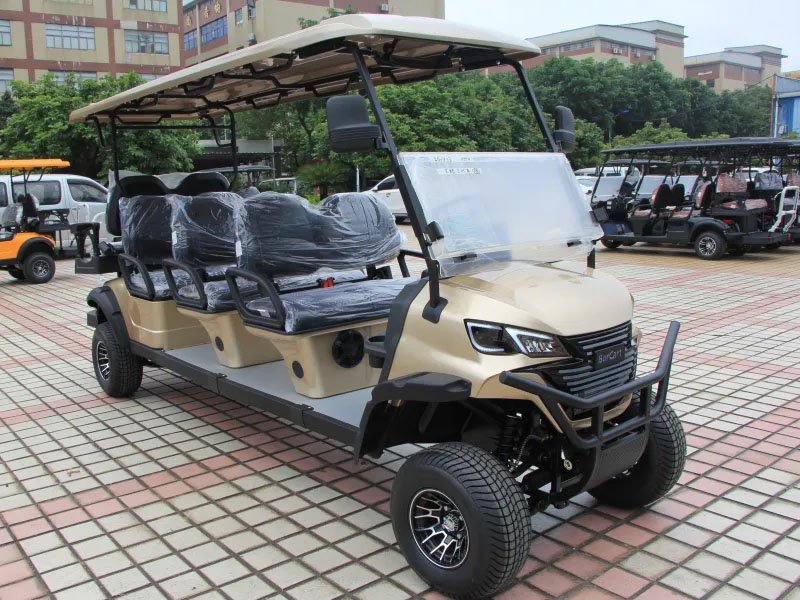
| Category | Golf Cart | Low-Speed Vehicle (LSV) | Neighborhood Electric Vehicle (NEV) |
|---|---|---|---|
| Main purpose | Golf courses, private property, resorts, campuses | Short public-road trips and local mobility | Electric short-distance neighborhood mobility |
| Typical power source | Electric or gasoline | Electric or gasoline, depending on product design and market | Electric only in common industry use |
| Typical speed | Often around 12–20 mph | More than 20 mph and no more than 25 mph in the U.S. LSV category | Usually 20–25 mph when classified as an LSV |
| Road use | Usually limited to private land or designated local routes | May be permitted on certain public roads, subject to local rules | May be permitted on certain public roads, subject to local rules |
| Core equipment | Basic transport features vary by model | Required road-use equipment for the applicable vehicle category | Similar equipment when sold as an LSV-compliant product |
| Registration and insurance | Depends on local jurisdiction | Commonly required for public-road operation | Commonly required for public-road operation |
| Typical buyer | Golf clubs, resorts, estates, warehouses | Dealers, residential communities, municipalities, fleet operators | Eco-focused communities, campuses, hospitality and local mobility fleets |
Important: Product names alone do not determine legal status. A vehicle marketed as a "street legal golf cart" still needs to meet the rules that apply in its destination market.
A golf cart is a compact vehicle originally developed to carry golfers, passengers, and equipment around a golf course. Modern electric golf carts are now also used in resorts, gated communities, factories, airports, farms, warehouses, and large private properties.
Most golf carts prioritize simple operation, low operating noise, maneuverability, and practical cargo or passenger capacity. They are not automatically designed for unrestricted public-road use.
- Electric or gasoline power
- Two, four, six, or more passenger seating configurations
- Lower-speed operation for controlled environments
- Basic lighting or optional lighting packages
- Open, semi-enclosed, or fully enclosed body configurations
- Rear cargo beds, utility boxes, golf bag holders, and custom accessories
- Strong suitability for private-property transportation
A standard golf cart may not include every component required for road operation. For example, it may lack compliant seat belts, a certified windshield, mirrors, turn signals, reflectors, a parking brake, or a vehicle identification system required in a target market.
For this reason, brands should avoid assuming that adding a few accessories automatically converts a golf cart into a compliant road vehicle. Compliance must be engineered into the complete vehicle specification, not treated as an after-sales cosmetic upgrade.
A low-speed vehicle, commonly called an LSV, is a defined vehicle category in the United States. Under the federal definition, an LSV is a four-wheeled motor vehicle with a top attainable speed of more than 20 mph but no more than 25 mph on a paved, level surface. It must also meet specific safety-equipment requirements.
For manufacturers and private-label brands, this category is especially important because it creates a clearer framework for vehicle design, validation, documentation, and distribution.
An LSV intended for the U.S. market must generally include equipment such as:
- Headlamps, tail lamps, stop lamps, and reflectors
- Front and rear turn-signal lamps
- Exterior mirrors
- A windshield meeting applicable glazing requirements
- A windshield wiper where required by the applicable design configuration
- A parking brake
- Seat belts at designated seating positions
- A vehicle identification number
- A certification label confirming conformity with the relevant vehicle requirements
The LSV category is not simply about speed. It is a product compliance category with defined manufacturing and equipment expectations.
Federal rules define the vehicle category, but state and local authorities determine many operating conditions. In many locations, LSVs may be used on roads with speed limits of 35 mph or lower. However, local rules can differ substantially.
Before launching an LSV program, brands and distributors should verify:
1. Registration and titling requirements
2. Insurance requirements
3. Driver's license requirements
4. Local road-speed restrictions
5. Rules for crossing larger roads
6. Whether the city, county, or community allows LSV operation
7. Any import, labeling, or documentation requirements
Never position an LSV as legal everywhere. A more accurate commercial message is: "Designed for low-speed road use where permitted by applicable local laws."
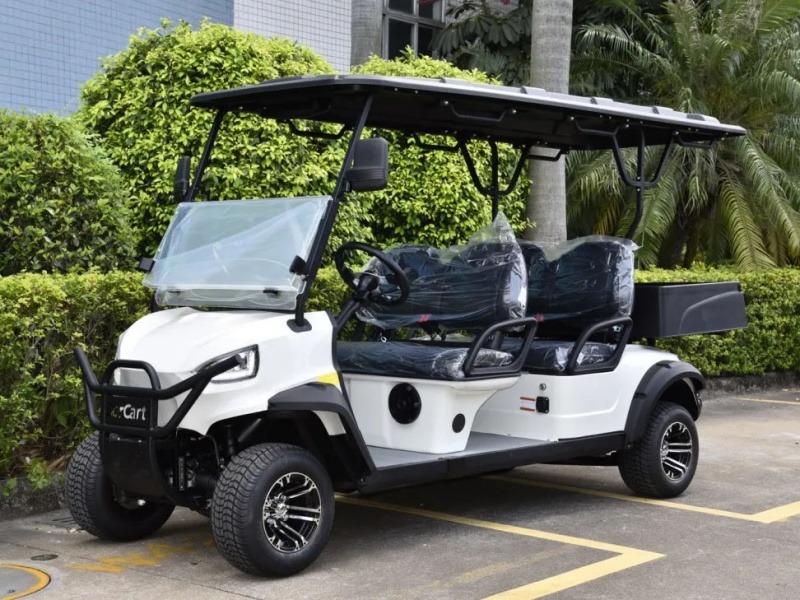
A neighborhood electric vehicle, or NEV, is a term often used for an electric vehicle designed for short trips in local communities. In practical market language, NEV is frequently used interchangeably with an electric LSV.
However, the terminology can create confusion.
In the United States, the formal federal category is generally low-speed vehicle. "NEV" is widely used by manufacturers, dealers, and consumers to describe electric vehicles that serve neighborhood, resort, campus, and community transportation needs.
NEVs are attractive because they offer a compact, quiet, and lower-energy alternative for trips that do not require a full-size passenger vehicle. Common applications include:
- Gated residential communities
- Resort and hotel properties
- University and corporate campuses
- Retirement communities
- Municipal parks and recreation facilities
- Large warehouses and industrial sites
- Marina, airport, and event transportation
- Tourism and sightseeing operations
For many fleets, the appeal is operational rather than promotional: lower daily energy use, easier parking, simplified movement in controlled areas, and reduced noise.
The distinctions between golf carts, LSVs, and NEVs can be understood through four practical factors: intended use, speed, safety equipment, and legal access.
A golf cart is usually the right choice for a controlled environment. Golf courses, private villas, warehouses, factories, and resorts may not need a public-road vehicle category.
An LSV is more suitable when the product will be used for short-distance travel on permitted local roads. It is designed for markets where buyers expect more road-oriented equipment and registration capability.
An NEV is typically the electric-focused version of this local-mobility concept. It is often selected by communities and hospitality operators that want clean, quiet transport for predictable daily routes.
Speed is a major classification issue.
A conventional golf cart may operate below the threshold that defines an LSV. By contrast, an LSV must be capable of traveling at more than 20 mph but not more than 25 mph under the relevant federal definition.
This creates a key engineering consideration: speed calibration must match the target category. A vehicle that exceeds the allowable LSV speed range may fall into a different regulatory category and face substantially different requirements.
A golf cart can be highly customized, but it may still be intended only for private-property use.
An LSV requires a more complete road-use equipment package. This affects the vehicle's electrical architecture, wiring harness, lighting system, windshield design, restraint system, labeling, and quality-control process.
For OEM projects, this means product development should begin with a detailed compliance matrix rather than a generic accessory list.
The legal category matters more than the appearance of the vehicle.
Two vehicles may have the same number of seats, similar batteries, and nearly identical body panels. Yet one may be suitable only for a private resort, while the other may be eligible for use on certain public roads after registration.
For distributors, this distinction directly affects:
- Target customer profile
- Dealer training
- Product liability planning
- Import documentation
- Insurance conversations
- Pricing strategy
- Warranty scope
- Sales claims and marketing language
For an OEM brand program, the best vehicle is the one that matches the customer's real operating conditions. A feature-rich product is not always the best product if it adds unnecessary cost, complexity, or approval risk.
- The vehicle will stay on private land
- The primary use is golf, hospitality, tourism, industrial transport, or estate mobility
- The buyer prioritizes affordability and simple maintenance
- Road registration is not required
- The fleet needs cargo capacity, passenger capacity, or custom bodywork
- The target market requires a defined road-capable low-speed category
- The vehicle will operate on permitted public roads
- The brand needs a higher-specification safety package
- Registration, VIN documentation, and product labeling are part of the sales process
- The dealer network serves residential communities and local-mobility customers
- Quiet operation is a priority
- Daily travel distances are predictable
- Charging can be managed at homes, resorts, campuses, or fleet depots
- Buyers prefer electric mobility for community transportation
- The project requires an electric-only market position
A successful private-label program starts before tooling, branding, and color selection. The manufacturer, importer, and brand owner should align on the required vehicle category from the beginning.
Confirm the destination country, state, region, and intended operating setting. A vehicle for a Caribbean resort, a U.S. residential community, and a European industrial park may need very different specifications.
Decide whether the project is a private-property golf cart, a utility vehicle, an LSV, or another locally defined electric vehicle category.
Create a clear technical checklist covering:
- Maximum speed
- Seating positions
- Seat belt configuration
- Lighting and signaling
- Mirror layout
- Windshield and glazing
- Brake system
- Parking brake
- Tire specification
- VIN format and vehicle labels
- Battery system and charging configuration
- Required testing and documentation
Fleet buyers care about downtime. Select components with practical service access, stable replacement-part availability, standardized fasteners, diagnostic capability, and clear maintenance documentation.
Avoid broad claims such as "street legal everywhere." Instead, explain the vehicle's specification and remind customers to confirm local operating requirements before purchase.
This approach protects the brand, improves dealer confidence, and gives end users a more accurate buying experience.
From a manufacturing perspective, the difference between a golf cart and an LSV is not a small upgrade package. It influences the full development process, from frame design and wiring layout to final inspection, technical files, labels, and dealer communication.
A well-planned platform can support multiple market versions. For example, a manufacturer may develop:
- A basic golf-course model for private-property use
- A resort model with upgraded seating and weather protection
- A utility model with a cargo bed and reinforced suspension
- An LSV-oriented model with the applicable road-use equipment package
- A premium neighborhood model with lithium battery options, touchscreen controls, and customized body styling
This modular approach helps brands serve different price points while maintaining shared parts, more efficient production planning, and easier after-sales support.
Whether you need a practical golf cart for private-property transport, a premium electric community vehicle, or an LSV-oriented OEM platform for a regulated market, BorCart can support your project from vehicle configuration to branding, production, quality control, and spare-parts planning.
Share your target market, intended use, seating requirements, battery preference, and expected order volume. Our team can help you evaluate the right vehicle platform and develop a specification that fits your brand strategy.
No. A golf cart is generally intended for golf courses and private-property transport. An LSV is a defined low-speed vehicle category with specific speed limits and required safety equipment.
It depends on local law. Some jurisdictions permit certain golf carts on designated roads or within specific communities, while others restrict them to private property. Always verify the rules in the intended operating area.
No. The federal LSV definition is based on vehicle characteristics such as wheel count, speed capability, and weight rating, rather than power source alone. However, electric LSVs are widely used in the market.
In common commercial use, NEV often describes an electric LSV-style vehicle. However, terminology and legal treatment can vary by jurisdiction. Manufacturers and buyers should confirm the applicable local classification.
Typical LSV requirements include lights, turn signals, reflectors, mirrors, a compliant windshield, parking brake, seat belts, VIN, and certification labeling. Exact requirements should be confirmed for the destination market.
Usually, no. In many U.S. jurisdictions, LSV use is generally limited to lower-speed roads, often those posted at 35 mph or below. Local laws may impose additional restrictions.
The buyer should provide the target market, intended application, passenger or cargo requirements, target speed, battery preference, desired certification path, branding requirements, annual volume estimate, and preferred accessories.
2. [National Highway Traffic Safety Administration: Low-Speed Vehicle Windshield Clarification]
3. [Electronic Code of Federal Regulations: 49 CFR § 571.500, Standard No. 500—Low-Speed Vehicles]
4. [U.S. Government Publishing Office: Federal Motor Vehicle Safety Standards for Low-Speed Vehicles]
5. [Wisconsin Department of Transportation: Low-Speed Vehicles and Neighborhood Electric Vehicles]
6. [Connecticut General Assembly: Neighborhood Electric Vehicles]


