


Views: 220 Author: BorCart Publish Time: 2026-09-08 Origin: Site


Content Menu
● Quick Comparison: Flatbed Utility Cart vs Cargo Box
● What Is a Flatbed Utility Cart?
>> Common flatbed utility cart applications
● What Is a Cargo Box Utility Cart?
>> Common cargo box utility cart applications
● Flatbed Utility Cart Advantages for Landscaping
>> 1. Easier handling of oversized loads
>> 2. Faster loading from multiple directions
>> 3. Better platform for attachments
>> 4. Faster cleaning after outdoor work
● Cargo Box Advantages for Secure Tool Transport
>> 1. Better containment of small items
>> 2. Stronger tool organization
>> 3. Improved protection from weather and contamination
>> 4. Better control during routine driving
● Which Utility Cart Is Better for Landscaping?
● Which Utility Cart Is Better for Tool Transport?
● Load Security: The Deciding Factor Many Buyers Miss
>> Practical load-security checklist
● OEM Design Considerations for Brands and Wholesalers
>> Questions to ask before selecting the body
>> A practical OEM product strategy
● Expert Recommendation: Choose by Load Profile, Not by Preference
● Build Your Custom Electric Utility Cart with BorCart
● FAQ
>> 1. Is a flatbed utility cart better than a cargo box for landscaping?
>> 2. Can a cargo box utility cart carry landscaping materials?
>> 3. How can I secure tools on a flatbed utility cart?
>> 4. What should I consider when choosing an electric utility cart cargo box?
>> 5. Can an OEM manufacturer customize a flatbed utility cart?
>> 6. Is a lockable cargo box enough to prevent tool theft?
>> 7. What is the safest way to transport loose materials on a utility cart?
Choosing between a flatbed utility cart and a cargo box utility cart is not simply a question of appearance. It determines how efficiently a landscaping crew moves bulk materials, how safely maintenance teams carry tools, and how easily a fleet can adapt to different jobs over time.
For landscaping contractors, resorts, campuses, warehouses, farms, factories, and municipal operations, the right utility cart body can reduce handling time and protect valuable equipment. A flatbed utility cart offers an open, adaptable platform for oversized and irregular loads. A cargo box, by contrast, creates a contained space for more secure tool transport, loose materials, and daily maintenance supplies.
As an OEM manufacturer of electric utility carts and automotive components, BorCart works with overseas brands, wholesalers, and equipment manufacturers that need cart configurations matched to actual work conditions—not generic, one-size-fits-all vehicle designs. This guide compares flatbed utility carts vs cargo boxes from the perspective of fleet usability, loading efficiency, cargo security, operator safety, customization potential, and long-term commercial value.
| Comparison Factor | Flatbed Utility Cart | Cargo Box Utility Cart |
|---|---|---|
| Best for | Landscaping, groundskeeping, large materials, oversized equipment | Tool transport, maintenance rounds, enclosed small items, loose supplies |
| Loading access | Excellent access from the rear and both sides | Usually rear-focused access, depending on box design |
| Oversized cargo | Excellent for long, wide, or irregular loads | Limited by cargo box dimensions and sidewall height |
| Loose-material containment | Requires side panels, tarps, or accessories | Better natural containment for soil, gravel, parts, and supplies |
| Tool organization | Requires separate tool racks, boxes, or mounting systems | Easier to organize with partitions, lids, drawers, and compartments |
| Theft deterrence | Lower unless fitted with lockable storage | Higher when equipped with a lockable lid or enclosed toolbox |
| Cleaning | Fast and simple, especially after landscaping work | May require more detailed cleaning inside corners and compartments |
| Customization potential | Highly flexible platform for racks, cages, tanks, and specialty bodies | Strong potential for lockable, weather-resistant, and segmented storage |
| Typical user | Landscaping crews, farms, golf courses, construction support teams | Facility maintenance teams, industrial plants, resorts, service departments |
The most important takeaway is straightforward: choose a flatbed utility cart when load shape and loading flexibility matter most; choose a cargo box when containment, organization, and protection matter most.
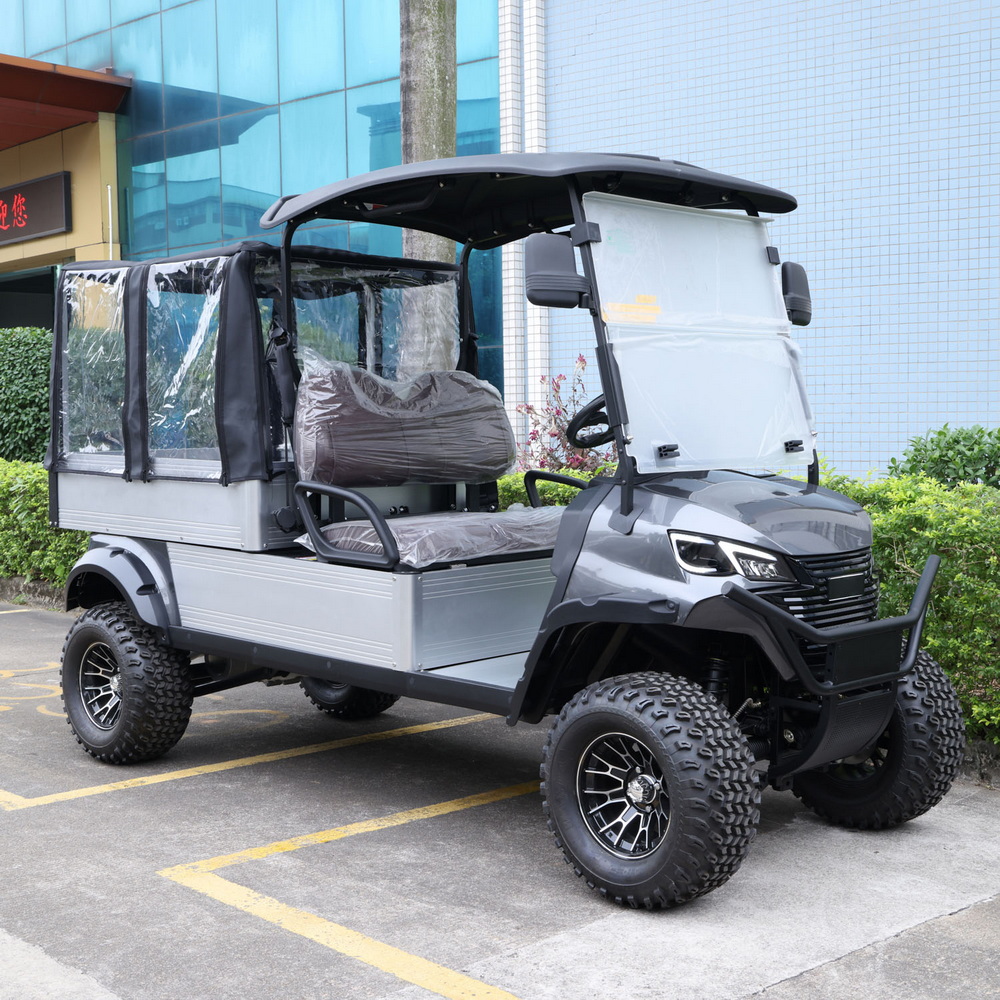
A flatbed utility cart is an electric work vehicle with an open rear platform rather than a deep enclosed cargo bed. It is designed to carry loads that may be too long, wide, tall, or irregular for a conventional cargo box.
The defining advantage is access. Operators can load materials from the rear, either side, or above using manual handling, forklifts, pallet equipment, or small loaders. That flexibility matters in landscaping and groundskeeping, where the cargo mix can change several times in one day.
A landscaping crew may carry mulch in the morning, shrubs at midday, irrigation pipe in the afternoon, and a mower or compact equipment attachment before the shift ends. An enclosed cargo box can become restrictive under those conditions. A flatbed utility cart can be fitted with removable sides, stake racks, mesh cages, tool racks, ladder supports, or a custom dump body.
- Transporting sod, mulch bags, soil, stones, and plants
- Carrying irrigation pipe, PVC fittings, fencing materials, and lumber
- Moving wheelbarrows, hand tools, compact landscaping equipment, and bins
- Supporting golf course maintenance and resort groundskeeping
- Delivering components around factories, warehouses, ports, and construction sites
- Carrying oversized cartons, panels, metal profiles, and fabricated parts
- Serving as a mobile platform for tanks, sprayers, generators, or waste containers
An open platform is particularly valuable where load dimensions vary. A long-handled tool, tree stakes, edging materials, or rolled turf may extend beyond the footprint of a normal cargo box. With appropriate restraints, a flatbed can accommodate these items without forcing operators to make multiple trips.
A cargo box utility cart uses a contained rear bed with raised sidewalls. Depending on the application, the cargo box may be open-top, fold-down, dump-capable, plastic-lined, steel-built, aluminum-built, or combined with lockable compartments.
Its greatest advantage is containment. Small equipment, hardware, loose parts, cleaning supplies, tools, bags of materials, and maintenance consumables are less likely to roll, slide, or fall from the vehicle during normal operation.
A cargo box can also improve the daily workflow of maintenance technicians. Instead of transporting tools in several loose containers, a fleet operator can create designated compartments for power tools, hand tools, spare parts, electrical supplies, fasteners, safety equipment, and personal protective equipment.
For operations that work across large sites—such as airports, universities, hospitals, industrial parks, hotels, theme parks, logistics centers, or manufacturing facilities—a cargo box utility cart can function as a compact mobile service station.
- Routine building and facility maintenance
- Electrical, plumbing, HVAC, and mechanical service rounds
- Tool transport across industrial plants
- Housekeeping and hospitality maintenance operations
- Campus operations and municipal service work
- Warehouse spare-parts movement
- Security, event support, and mobile repair teams
- Transporting loose materials that need containment
A properly designed cargo box reduces the chance that smaller items will become scattered during travel. However, a box alone does not eliminate the need for load management. Heavy tools and equipment still need to be positioned carefully, and loose cargo should not exceed the box height or payload limit.
Landscaping work rarely involves uniform loads. One job may require transporting plants and soil. Another may involve moving fence panels, irrigation equipment, tree stakes, pavers, or bags of fertilizer. That is why the flatbed utility cart for landscaping remains one of the most adaptable configurations for outdoor operations.
Landscaping materials often have awkward dimensions. Long-handled tools, rolled turf, timber, ladders, pipes, and shrubs do not fit neatly inside a cargo box.
A flatbed utility cart gives the operator more usable loading area. With optional stake sides or removable rails, the cart can support oversized materials while maintaining fast loading and unloading.
This is especially useful for contractors that serve multiple job sites and cannot dedicate one vehicle to only one type of material.
In landscaping, crews may work in uneven terrain, narrow access areas, storage yards, greenhouses, or maintenance depots. Being able to load from either side can save time.
A flatbed utility cart allows workers to place items directly onto the platform without lifting them over high cargo box walls. This can reduce repetitive handling effort when moving bags, trays, equipment, or bulky materials.
For operations handling pallets or large containers, side access can also make mechanical loading more practical.
A flatbed is not limited to carrying loose cargo. It can become the foundation for a specialized work vehicle.
Possible OEM configurations include:
- Removable stake sides for mulch, branches, or bagged materials
- Mesh cages for green waste and light bulky cargo
- Ladder racks for groundskeeping and maintenance teams
- Lockable toolboxes mounted below or behind the platform
- Water tanks and hose reels for irrigation or cleaning work
- Sprayer systems for turf and landscape management
- Custom racks for trimmers, blowers, shovels, and rakes
- Refrigerated, insulated, or enclosed modules for specialized fleet use
For brands building private-label work vehicles, this modularity is commercially important. One chassis platform can support multiple product variants, helping distributors serve diverse customer segments without developing an entirely new vehicle for every application.
Landscaping creates debris. Soil, leaves, grass clippings, bark, mulch, and gravel can accumulate quickly. An open flatbed is generally easier to sweep, rinse, and inspect after use.
Cargo boxes can also be cleaned, but seams, corners, enclosed areas, and storage compartments may retain debris or moisture. For muddy or high-debris environments, simple flatbed construction can reduce cleaning time.
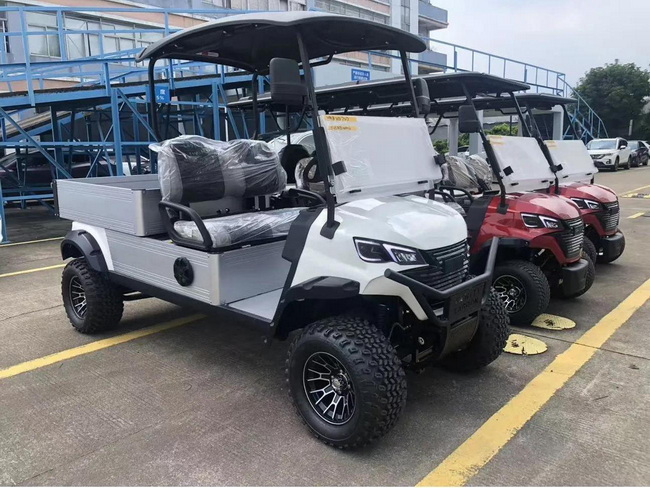
While flatbeds lead in flexibility, cargo boxes lead in organization. If a fleet's daily work revolves around tools, parts, and smaller items, a cargo box utility cart for secure tool transport can provide a more controlled and professional operating environment.
A cargo box prevents common worksite problems: loose fittings rolling away, tool cases sliding off the platform, bags tipping during turns, or supplies being exposed to the wind.
This is particularly helpful for maintenance teams carrying:
- Electrical connectors and cable accessories
- Plumbing fittings and repair materials
- Fasteners, screws, bolts, and hand tools
- Cleaning supplies and replacement parts
- Paint, sealants, adhesives, and maintenance consumables
- Small power tools and battery packs
- Safety cones, gloves, first-aid items, and protective equipment
For these loads, an open flatbed may require extra bins, straps, nets, or mounted storage boxes. A cargo box begins with an enclosed boundary, making everyday transport simpler.
A cargo box can be built around the technician's workflow. Instead of asking workers to search through mixed equipment, the box can be divided into zones.
For example:
| Storage Zone | Recommended Contents |
|---|---|
| Front section | Heavy tool cases, battery chargers, spare components |
| Side compartments | Hand tools, measuring devices, gloves, small parts |
| Rear-access area | Frequently used items and emergency supplies |
| Lockable upper compartment | High-value tools, electronics, or controlled inventory |
| Lower box area | Consumables, cleaning materials, cable reels, and repair kits |
This organization can reduce downtime. In commercial fleets, the value of a cargo box is not only that it holds equipment. The real value is that technicians can find the right equipment quickly and return it to the correct location after use.
An open cargo box does not fully protect equipment from rain, dust, or unauthorized access. However, a cargo box fitted with a lid, lockable cover, or integrated tool cabinet can provide a higher level of protection.
This matters for electronics, diagnostic equipment, cordless tools, battery packs, calibrated instruments, documents, and sensitive service parts.
For coastal, rainy, dusty, or industrial environments, fleet buyers should consider:
- Corrosion-resistant materials
- Drainage design
- Weather seals
- Powder-coated steel or aluminum construction
- Lockable lids and tamper-resistant latches
- Replaceable liners
- Water-resistant electrical connections near the cargo area
A contained load is easier to manage than a loose load. However, containment should never be confused with complete securement.
Cargo should be positioned with the heaviest items low and close to the vehicle's centerline. Loads should be balanced from left to right, and operators should avoid overloading the cart or stacking items above a safe level.
Public safety guidance consistently emphasizes that loads should be tied down, covered when necessary, and checked before travel. The National Highway Traffic Safety Administration advises drivers to secure cargo with straps, rope, or netting; attach large objects directly to the vehicle or trailer; avoid excessive loads; and double-check the load before driving.
For most landscaping businesses, a flatbed utility cart is the better primary choice because landscaping loads are diverse, irregular, and often oversized.
A flatbed is particularly suitable when the fleet frequently transports:
- Plants, trees, shrubs, and sod
- Bulk bags of soil or mulch
- Long materials such as timber, pipe, edging, or fencing
- Landscaping machinery and wheeled equipment
- Green waste containers and branches
- Irrigation tanks, sprayers, and hose reels
However, the best answer is often not "flatbed or cargo box." It may be a flatbed utility cart with secure storage accessories.
For example, a landscaping contractor can specify a flatbed with removable stake sides, a mesh cage, an under-bed lockable toolbox, tie-down points, and a trimmer rack. That configuration retains open-platform versatility while providing secure storage for expensive handheld equipment.
Landscape professionals also emphasize the importance of balanced loads, tarps for landscape materials, and appropriate chains or straps for equipment. In practical terms, a flatbed should be treated as a flexible platform—not as an excuse to carry unsecured loads.
For maintenance, repair, and facility-service work, a cargo box utility cart is usually the stronger choice.
It is especially effective when technicians carry similar tool sets every day and need to protect, organize, and account for those items. The cargo box supports repeatable workflows: tools have assigned locations, commonly used parts remain accessible, and the service vehicle can be restocked at the end of each shift.
Choose a cargo box when your operation prioritizes:
- Tool inventory control
- Mobile maintenance work
- Protection of small parts and equipment
- Reduced risk of loose items falling from the vehicle
- Cleaner, more professional fleet presentation
- Better weather resistance with optional covers or lockable enclosures
- Easier standardization across multiple technicians or locations
For high-value tools, choose a configuration with a locking lid, lockable side compartments, or a separate enclosed service body. The cargo box should also include internal tie-down points or partition systems. A lockable box helps deter casual access, but it cannot replace correct storage design and secure mounting.
The body type matters, but load securement matters more.
A flatbed utility cart can safely carry a wide range of materials when the load is balanced and properly restrained. A cargo box utility cart can become unsafe if heavy tools are stacked loosely, weight is unevenly distributed, or the payload capacity is exceeded.
The Federal Motor Carrier Safety Administration notes that tiedowns must be attached and secured so they do not become loose, unfasten, open, or release during transport. Although a compact electric utility cart used on private property may not be subject to every commercial highway rule, these principles remain sound operating practice.
Before operating a flatbed utility cart or cargo box utility cart, the driver should complete these checks:
1. Confirm the payload limit. Include tools, materials, accessories, passengers, and any installed equipment in the total operating weight.
2. Place heavy loads low. Keep the center of gravity low to improve stability during turns, braking, and travel on uneven surfaces.
3. Balance the load. Avoid placing all weight on one side, at the rear edge, or high above the platform or box wall.
4. Use rated restraints. Use suitable straps, nets, rails, partitions, or tie-down points based on the type of cargo.
5. Check for movement. Push or lightly test the load before moving the vehicle. If it shifts while parked, it can shift more severely during operation.
6. Cover loose materials. Use tarps, mesh covers, or enclosed containers for materials that could blow away, spill, or create debris.
7. Inspect after the first movement. Stop and recheck the load after traveling a short distance, especially when carrying equipment over rough ground.
For buyers developing an own-brand electric utility cart line, the choice between flatbed and cargo box should begin with customer workflow, not with a catalog image.
At BorCart, the most effective OEM projects generally start by defining the customer's primary load type, operating terrain, load frequency, storage needs, and local compliance requirements. A cart used on a golf course has different needs from one used in a warehouse, hotel, industrial park, farm, or landscaping business.
- What is the maximum intended payload?
- Are loads usually oversized, loose, fragile, or high-value?
- Will the vehicle operate indoors, outdoors, or across mixed terrain?
- Does the customer need a dump function?
- Are operators carrying hand tools, power tools, or mobile service inventory?
- Is weather protection required?
- Does the fleet need lockable storage?
- Are removable accessories more valuable than a fixed body?
- Will the cart be sold as a standard model or customized for specific vertical markets?
- Does the buyer need branded colors, logos, seats, wheels, lights, batteries, or body accessories?
A scalable product range can include both body types on the same electric vehicle platform:
- Entry model: Open flatbed utility cart for general material movement
- Landscaping model: Flatbed with stake sides, tool rack, mesh cage, and optional dump function
- Maintenance model: Cargo box utility cart with lockable tool storage and internal dividers
- Industrial model: Reinforced cargo bed with side rails, tie-down points, and high-durability finishes
- Resort or campus model: Quiet electric cart with enclosed storage, custom colors, and fleet branding
This approach allows distributors and brands to address different customer needs while simplifying parts sourcing, technical training, and after-sales support.
The strongest buying decision comes from analyzing what the utility cart carries during its busiest week—not what it carries on an ideal day.
Choose a flatbed utility cart if your team needs maximum loading flexibility, frequent side access, accommodation for oversized materials, and support for landscaping or outdoor operations.
Choose a cargo box utility cart if your team primarily carries tools, spare parts, small equipment, maintenance supplies, or materials that need containment and organization.
Choose a hybrid configuration if you need both. A flatbed with removable sides, under-bed lockable storage, tie-down points, and modular racks can give landscaping teams a highly flexible solution. A cargo box with removable dividers, a lockable lid, and external mounting rails can provide a more secure service vehicle without sacrificing usability.
The best utility cart is not the one with the largest platform or deepest cargo box. It is the one that reduces unnecessary handling, protects equipment, supports safe operation, and fits the real workflow of the people using it every day.
BorCart supports overseas brands, wholesalers, and vehicle manufacturers with OEM electric utility cart solutions designed around specific commercial applications. Whether your market requires a flatbed utility cart for landscaping, a cargo box utility cart for secure tool transport, or a specialized hybrid design, the right body configuration can help differentiate your product range.
Contact BorCart to discuss your target market, payload requirement, preferred body material, storage layout, branding needs, and optional accessories. Our team can help turn a standard electric utility vehicle platform into a purpose-built product for landscaping, industrial maintenance, hospitality, campus operations, agriculture, and more.
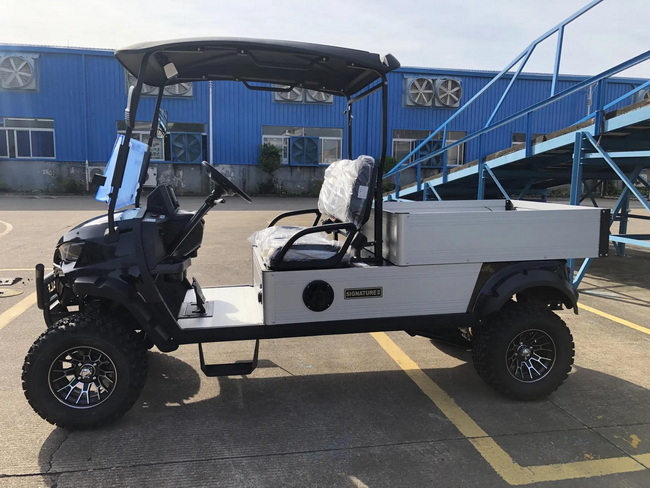
In most landscaping applications, yes. A flatbed utility cart is usually better for transporting oversized, irregular, and changing loads such as plants, sod, bags of mulch, long tools, pipes, fencing materials, and equipment. Add removable sides, tie-down points, and a lockable toolbox for a more complete landscaping configuration.
Yes, especially smaller loads such as bagged fertilizer, hand tools, irrigation fittings, plants, small quantities of soil, and maintenance supplies. However, a standard cargo box may be less practical for long, bulky, or unusually shaped landscaping materials.
Use lockable toolboxes, mounted storage cabinets, tool racks, ratchet straps, cargo nets, and rated tie-down points. Heavy equipment should be positioned low and secured so it cannot shift during braking, turns, or travel on uneven surfaces.
Consider payload capacity, box volume, sidewall height, dump function, weather protection, drainage, corrosion resistance, lockable storage, internal dividers, tie-down points, and ease of cleaning. Also ensure the cargo box matches the actual tools and supplies your operators carry every day.
Yes. OEM customization can include platform dimensions, stake sides, mesh cages, dump systems, under-bed storage, ladder racks, sprayer mounts, tool holders, body materials, colors, branding, lighting, seating, wheels, batteries, and other application-specific accessories.
A lockable cargo box improves security, but it should be combined with robust latches, secure mounting, concealed storage where possible, and appropriate fleet procedures. High-value tools should also be inventoried and stored in purpose-designed compartments rather than left loose inside the box.
Keep the load below the rated payload capacity, distribute weight evenly, use a cargo box or side panels where appropriate, cover loose materials with a tarp or net, and secure heavy items with suitable restraints. Recheck the load before and shortly after beginning travel.
1. [Federal Motor Carrier Safety Administration — Cargo Securement Rules]
2. [National Highway Traffic Safety Administration — Drive Safe: Secure Your Load]
3. [National Association of Landscape Professionals — Safely Transporting Equipment and Materials]
4. [U.S. Fish & Wildlife Service — Towing, Carrying Cargo, and Load Securement]
5. [Global Industrial — Platform Trucks vs. Utility Carts: Key Differences]
6. [Ohio State University — Tie Down and Cargo Securement Training]


