


Views: 222 Author: BorCart Publish Time: 2026-05-17 Origin: Site


Choosing between electric golf carts and gas-powered golf carts is no longer a simple "quiet vs powerful" debate. As an OEM manufacturer that has been building electric vehicles since 2000, BorCart sees firsthand how total cost of ownership, regulations, and user expectations are reshaping this decision for global brands, wholesalers, and fleet operators. [clubcarev]
In this expert guide, I will walk you through performance, costs, maintenance, sustainability, and real-world use cases from both a personal evaluator's and an industry insider's perspective, so you can specify the right powertrain for your next OEM project or private-label golf cart line. [electriccarsalesandservice]

Before diving into the details, here is a high-level comparison based on what B2B buyers ask us most often. [morgolfmn]
| Factor | Electric Golf Carts | Gas Golf Carts |
|---|---|---|
| Power source | Battery + electric motor smithpower.co | Gasoline engine smithpower.co |
| Noise level | Very quiet, low vibration electriccarsalesandservice | Noticeably louder engine noise smithpower.co |
| Operating cost | Lower energy cost per mile smithpower.co | Higher ongoing fuel expense smithpower.co |
| Maintenance | Fewer moving parts, less routine service smithpower.co | Regular oil, filters, belts, and engine service smithpower.co |
| Environmental impact | Zero tailpipe emissions, no fuel spills smithpower.co | CO₂ and pollutant emissions, fuel handling smithpower.co |
| Range & refuel | Limited by battery; requires charging time electriccarsalesandservice | Longer range; fast refueling at the pump electriccarsalesandservice |
| Terrain & towing | Ideal for flat to moderate terrain, light hauling smithpower.co | Better for steep hills, heavy loads, and rough terrain smithpower.co |
| Upfront cost | Higher with lithium packs electriccarsalesandservice | Often lower initial price electriccarsalesandservice |
| Typical best fit | Resorts, communities, golf courses, eco projects smithpower.co | Utility fleets, farms, large estates, work sites smithpower.co |
From a driver's seat perspective, performance feels very different between electric and gas carts. [morgolfmn]
- Electric carts deliver instant torque from standstill, which creates a smooth, responsive feel even at low speeds. [smithpower.co]
- Gas carts usually provide higher peak torque and sustained power, making them more capable on long, steep hills and when towing or hauling cargo. [morgolfmn]
- For flat courses and residential communities, electric power is usually more than enough; for rugged sites, gas still has an edge. [morgolfmn]
As an OEM, BorCart often recommends electric powertrains for 2–4 seat course and community models, while heavier utility variants or hunting vehicles may still use higher-torque configurations optimized for demanding terrain. [borcartev]
- Electric carts operate extremely quietly, enhancing premium user experience in resorts, gated communities, and golf courses where noise complaints matter. [electriccarsalesandservice]
- Gas carts generate engine vibration and exhaust noise that some users find acceptable for work environments but less ideal for hospitality and residential use. [smithpower.co]
- Many high-end brands now position electric carts as a "luxury ride" because of their smooth, quiet feel and clean interior design options. [electriccarsalesandservice]
B2B buyers rarely look only at sticker price; they focus on total cost of ownership (TCO) over several years. [morgolfmn]
- Gas carts often have a slightly lower upfront price, mainly due to cheaper powertrain components. [electriccarsalesandservice]
- Electric carts equipped with lead-acid batteries can narrow the price gap, while lithium battery packs raise initial cost but extend lifespan and reduce daily maintenance. [morgolfmn]
- For fleet owners, the investment decision is usually spread over 3–7 years, so amortized cost per year matters more than the invoice number. [electriccarsalesandservice]
From an operational perspective:
1. Energy cost
- Charging an electric cart typically costs less per operating hour than fueling a gas engine, especially in regions with favorable electricity rates. [smithpower.co]
- Gasoline prices fluctuate and tend to increase over time, adding uncertainty to long-term budgeting. [smithpower.co]
2. Maintenance cost
- Electric carts have fewer moving parts, no oil changes, and fewer wear components, which lowers routine maintenance costs. [morgolfmn]
- Gas carts require engine servicing, oil and filter changes, and more frequent inspections of belts and exhaust systems. [smithpower.co]
3. Battery replacement planning
- Lead-acid packs may require replacement after several years, which should be planned as a scheduled capital expense. [electriccarsalesandservice]
- Lithium batteries typically last longer, further reducing lifecycle cost and downtime. [morgolfmn]
In OEM projects, BorCart often builds business cases with distributors showing that electric fleets can deliver lower cost per kilometer when energy and maintenance savings are accounted for across the vehicle's service life. [borcart]
Reliability impacts not only repair bills but also guest satisfaction and operational capacity. [smithpower.co]
- Fewer mechanical parts mean fewer unexpected breakdowns when carts are properly charged and stored. [morgolfmn]
- Routine checks focus on battery health, connections, tires, and brakes rather than combustion systems. [smithpower.co]
- With high-quality controllers, motors, and chargers from global suppliers, electric systems can run for years with minimal interventions. [clubcarev]
BorCart, for example, integrates components from proven international brands like KDS motors and Curtis controllers to support predictable, low-maintenance performance for B2B partners. [borcartev]
- Gas engines require regular servicing similar to small vehicles: oil and filter changes, spark plugs, belts, and fuel system checks. [morgolfmn]
- Poorly maintained engines can cause noise, smoke, or performance issues, which are highly visible to end users. [smithpower.co]
- In remote or industrial environments with existing fuel infrastructure, gas carts can still be a robust choice as service routines are well-understood by local mechanics. [morgolfmn]
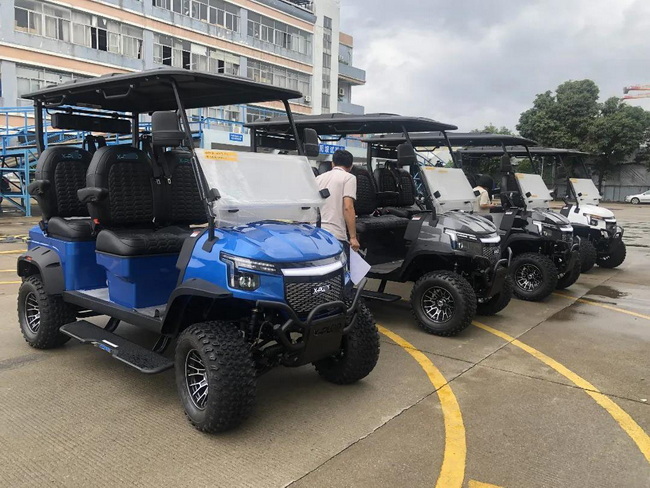
Sustainability is no longer just a marketing slogan; it directly influences procurement decisions and local regulations. [electriccarsalesandservice]
- Electric carts produce zero tailpipe emissions and help operators meet low-emission or indoor-use requirements in certain facilities. [electriccarsalesandservice]
- Gas carts emit CO₂ and other pollutants and may be restricted in sensitive areas such as indoor venues, certain resorts, or eco-certified golf courses. [electriccarsalesandservice]
- Many communities and developments now prefer or mandate electric carts to reduce both emissions and noise pollution. [morgolfmn]
From an industry vantage point, the trend is clear:
- New residential and resort projects are increasingly specified as all-electric fleets, especially in regions promoting low-carbon mobility. [electriccarsalesandservice]
- Electric carts support ESG (Environmental, Social, Governance) reporting and can be integrated into broader renewable energy strategies such as solar charging. [morgolfmn]
- OEMs like BorCart are investing heavily in electric platforms and battery technology to align with these long-term trends. [borcart]
Even the best cart fails if it cannot cover the daily duty cycle of your customers. [electriccarsalesandservice]
- Typical electric carts comfortably cover 18–36 holes or a full shift in a community when properly specified and maintained. [smithpower.co]
- Lithium systems extend usable range and allow faster charging, which is attractive for high-utilization fleets. [morgolfmn]
- Overnight charging on standard infrastructure can be enough for most fleets, while opportunity charging during breaks can support heavier use. [electriccarsalesandservice]
For B2B buyers, BorCart often designs charging strategies around fleet size, turnover rate, and grid capacity to ensure charging never becomes a bottleneck. [clubcarev]
- Gas carts can be refueled in just a few minutes, which is ideal where carts must run almost continuously. [morgolfmn]
- On farms, construction sites, or hunting grounds where electrical infrastructure is limited, gas carts remain practical and familiar. [morgolfmn]
- However, storing fuel safely and complying with local regulations remain ongoing responsibilities for operators. [smithpower.co]
Different end customers have very different expectations from their carts. [morgolfmn]
Electric carts typically win in these scenarios: [smithpower.co]
- Golf courses emphasizing quiet, premium experiences
- Resorts, hotels, and theme parks prioritizing comfort and emissions
- Residential communities and gated neighborhoods with noise rules
- Corporate campuses and universities wanting clean, low-maintenance fleets
- Municipal projects or tourism operators seeking visible green mobility solutions
For these applications, BorCart's OEM partners often request custom body styling, branding, and seating configurations on an electric base platform to match specific customer experiences and branding guidelines. [borcartev]
Gas carts can be the right choice where: [morgolfmn]
- Terrain is very hilly or unpaved and loads are heavy
- Duty cycles are long and continuous with little downtime
- Fuel is readily available but electrical capacity is limited
- Operators are used to maintaining small gas engines
BorCart works with such customers to either optimize electric powertrains for tougher conditions or to provide gas-compatible solutions where regulations and practical realities still favor combustion power. [borcart]
From an OEM standpoint, the question is not just "electric or gas?" but "what combination of powertrain, configuration, and branding best fits your market?". [clubcarev]
When international brands and wholesalers work with BorCart, we typically: [borcartev]
1. Define core use cases
- Course, resort, community, industrial, or mixed use.
2. Map regulatory and infrastructure constraints
- Emission rules, noise limits, grid capacity, fuel access.
3. Model total cost of ownership
- Comparing electric vs gas over the vehicle's planned lifespan for that specific market.
4. Customize the platform
- Seating, cargo beds, body styling, dashboards, accessories, and telematics tailored to the brand.
This OEM-first approach ensures your private-label golf cart line is not just attractive on paper, but optimized for real-world customer expectations and profitability. [borcart]
To simplify your decision, use this short checklist when specifying your next fleet. [morgolfmn]
1. What percentage of usage is on flat vs hilly terrain?
2. How many hours per day will carts operate, and with how much downtime?
3. Are there local restrictions on emissions or noise?
4. Is reliable charging or fuel infrastructure already available?
5. How long do you plan to operate each cart before replacement?
6. Is "green mobility" a core part of your brand story?
7. Do your technicians have more experience with electric systems or gas engines?
If most answers point toward quiet, regulated, and brand-sensitive environments, electric is likely your best direction. If extreme range, heavy hauling, and remote locations dominate, gas may still be the practical choice. [morgolfmn]
From both a user and an OEM expert's perspective, electric golf carts are the default recommendation for future-proof fleets in hospitality, residential, and light commercial use, thanks to their low operating cost, quiet ride, and alignment with global sustainability trends. [morgolfmn]
Gas-powered golf carts still have a clear place in very demanding environments where heavy loads, steep terrain, or minimal downtime make fast refueling and high torque critical. [morgolfmn]
If you are planning a new product line or private-label program, partnering with an established electric vehicle manufacturer like BorCart gives you the flexibility to offer both options, tuned to your market's requirements and branded as your own. [clubcarev]
Whether you are a golf cart brand owner, importer, or fleet operator, BorCart can help you evaluate electric vs gas configurations and engineer a solution that fits your customers and your P&L. With more than two decades of electric vehicle manufacturing, global component sourcing, and strong OEM/ODM capability, we turn your concept into a reliable, market-ready product line. [borcartev]
Next step: Share your target market, use case, and expected annual volume with the BorCart team so we can propose a tailored electric or gas golf cart OEM solution—including performance specs, body design options, and projected total cost of ownership for your business. [borcart]
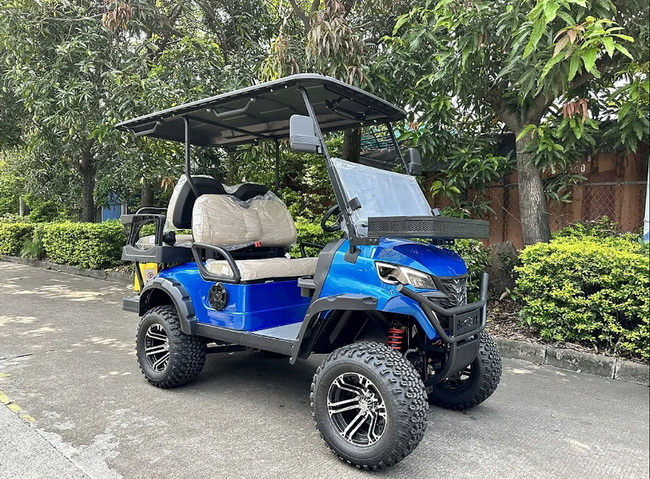
1. Are electric golf carts powerful enough for hilly courses?
Electric carts provide strong initial torque and perform well on moderate hills, especially with modern controllers and lithium batteries, but very steep, long climbs may still favor high-torque gas setups. [morgolfmn]
2. How long do golf cart batteries usually last?
Lead-acid batteries often last several years with proper care, while lithium packs typically deliver a longer service life and more charge cycles, reducing replacement frequency. [electriccarsalesandservice]
3. Do electric golf carts really save money over time?
Yes, in many fleets lower energy costs and reduced maintenance help offset higher upfront prices, especially when utilization is high and charging infrastructure is available. [smithpower.co]
4. Can I mix electric and gas carts in the same fleet?
Many operators do, using quiet electric units for guests and communities, while reserving gas carts for heavy-duty, all-day work on farms, industrial sites, or maintenance teams. [morgolfmn]
5. What support does BorCart provide for OEM partners?
BorCart offers full OEM/ODM support, including powertrain selection, body design, customization, quality control, and integration of branded components so you can launch differentiated electric or gas golf carts under your own name. [clubcarev]
- Smith Power: "Gas vs Electric Golf Carts – Comparing Performance and Efficiency" – overview of operating cost, efficiency, and environmental impact of gas vs electric golf carts. [Link] [smithpower.co]
- BorCart EV company profile – background on BorCart's history, production capacity, and electric vehicle expertise. [Link] [clubcarev]
- Electric Car Sales and Service: "Electric or Gas Golf Cart? A Complete Guide to Making the Right Choice" – discussion of eco-friendliness, cost, and suitability for different use cases. [Link] [electriccarsalesandservice]
- Mor Golf: "Electric vs. Gas Golf Carts: A Comprehensive Guide" – insights on performance, environmental impact, and cost comparisons between electric and gas golf carts. [Link] [morgolfmn]
- BorCart EV official site and product information – OEM services, electric vehicle product range, and customization capabilities. [Link] [borcartev]
- BorCart product and OEM pages – examples of global B2B positioning and customized golf cart solutions. [Link] [borcart]


