


Views: 258 Author: BorCart Publish Time: 2026-10-08 Origin: Site


Content Menu
● Electric Cargo Van vs. Electric Utility Cart: Quick Comparison
● Cargo Capacity: Compare Weight, Volume, and Usable Space
>> Payload Capacity Is Not the Same as Cargo-Bed Capacity
>> Enclosed Cargo Volume and Open-Bed Area Measure Different Things
>> Larger Cargo Bodies Can Mean Lower Payload
● Electric Cargo Van Uses: Deliveries and Protected Cargo
>> Multi-Stop Distribution Between Locations
>> Weather Protection and Cargo Organization
● Electric Utility Cart Uses: Short, Repeated Site Movements
>> Maintenance, Hospitality, and Facility Logistics
>> Loading Convenience and Restricted Access
● Road Legality: Vehicle Names Do Not Establish Approval
● Battery Range and Charging: Evaluate the Loaded Work Cycle
● Three Procurement Checks That Reveal the Better Vehicle
>> 1. Calculate the Remaining Cargo Allowance
>> 2. Run a Physical Cargo-Fit Trial
>> 3. Compare Trips and Labor, Not Purchase Price Alone
● OEM Specification Checklist for Overseas Buyers
● Which Vehicle Should You Choose?
● Discuss Your OEM Vehicle Requirements with BorCart
>> Can an electric utility cart replace an electric cargo van?
>> Which vehicle carries more cargo?
>> Can an electric utility cart carry a pallet?
>> Are electric utility carts street legal?
>> Does a larger battery guarantee better productivity?
>> What should an OEM buyer send BorCart first?
An electric cargo van and an electric utility cart can both transport goods, but they solve different operational problems. An electric cargo van generally suits enclosed deliveries between locations, while an electric utility cart often suits frequent, short-distance movements within a facility. The right choice depends on payload, cargo dimensions, route conditions, and the approvals required for your destination market—not simply vehicle size or battery capacity.
For overseas brands, wholesalers, and manufacturers sourcing vehicles through BorCart's OEM services, this comparison starts with one practical question: what must the vehicle carry, where must it travel, and how often must it repeat that task?

For this article, "electric cargo van" means an enclosed commercial goods vehicle. "Electric utility cart" means a compact work vehicle, usually with a cargo bed. Neither product name alone establishes road legality or a particular load rating.
| Comparison point | Electric cargo van | Electric utility cart |
|---|---|---|
| Typical cargo layout | Enclosed compartment | Open bed; enclosure options vary |
| Main operational role | Deliveries between locations | Repeated movements around a site |
| Capacity measurement | Payload weight and enclosed volume | Bed load, bed dimensions, and total vehicle capacity |
| Loading access | Rear and, depending on design, side doors | Tailgate and accessible bed sides |
| Cargo protection | Enclosed body supports weather protection and security | May require covers, lockable boxes, or an enclosure |
| Route suitability | Depends on vehicle approval and road classification | Often site-focused; public-road access requires verification |
| Procurement priority | Route capability and usable enclosed space | Access, loading convenience, and work-cycle productivity |
These are purchasing distinctions, not universal specifications. Compare the exact configurations offered, including installed equipment and battery options.
One of the most important purchasing checks is identifying what a published capacity actually includes.
Vehicle payload describes the permitted carried weight under the manufacturer's stated conditions. Cargo-bed capacity describes the load permitted in the bed. Total vehicle capacity can include occupants and cargo, depending on the manufacturer's definition.
Club Car's Carryall 700 illustrates this distinction: its product page lists 1,500 lb of total vehicle capacity and a separate 1,000 lb cargo-bed capacity. Those figures are not interchangeable, and buyers should confirm the selected electric configuration before ordering.
Ask every supplier:
- Does the rating include occupants?
- Is it specific to the selected battery and body?
- How much allowance remains after accessories are installed?
- Are there separate axle, tire, and cargo-bed limits?
A vehicle can remain within its overall weight allowance while exceeding a component or axle limit. Ford's technical specifications, for example, publish separate front and rear axle limits alongside payload figures.
A van's cargo volume helps buyers assess cartons, shelving, and other goods carried inside an enclosed body. A cart's bed area helps buyers assess footprints, such as toolboxes or containers.
However, neither measurement proves that a particular load will fit.
The 2025 U.S. Ford E-Transit technical specifications list cargo volume behind the first row from 277.7 to 487.3 cubic feet across four configurations. Club Car lists more than 14.5 square feet of bed space for the Carryall 500. These measurements describe different spaces and should not be compared as equivalent capacity figures.
For useful fit checks, request:
- Clear internal length, width, and height.
- Door or tailgate opening dimensions.
- Width between wheel housings.
- Floor height and loading access.
- Tie-down locations.
- Permitted load distribution.
A carton fitting inside the body does not guarantee that it will pass through the door.
Within one vehicle family, maximum volume and maximum payload may belong to different configurations.
Ford's 2025 E-Transit specifications demonstrate this trade-off:
| U.S. configuration | Cargo volume behind first row | Published maximum payload |
|---|---|---|
| Long, low roof | 277.7 cu ft | 3,249 lb |
| Long, medium roof | 357.1 cu ft | 3,100 lb |
| Long, high roof | 404.3 cu ft | 3,004 lb |
| Extended, high roof | 487.3 cu ft | 2,799 lb |
These are configuration-specific manufacturer figures, not category-wide benchmarks or BorCart specifications. Ford states that accessories and vehicle configuration affect payload and directs buyers to the vehicle's doorjamb label for its carrying capacity.
My purchasing approach would therefore be to request matched specifications for one complete build, rather than combine the largest advertised cargo volume with the highest advertised payload.
An enclosed electric cargo van is a logical candidate when the task involves carrying goods between depots, shops, customers, or service locations.
During procurement, I would evaluate the complete route rather than distance alone:
- Required road speeds.
- Delivery access and parking.
- Number of stops.
- Longest interval between charging opportunities.
- Cargo remaining after each stop.
- Time spent loading and unloading.
The correct vehicle must support the route's operating conditions and hold the required goods without exceeding its rated limits.
An enclosed compartment provides a physical barrier around the goods. That makes it worth evaluating for parcels, packaged components, tools, and other loads requiring protection from exposure.
However, "enclosed" does not mean temperature-controlled, waterproof under every condition, or secure against every threat. Door seals, locks, drainage, ventilation, and internal fittings need their own acceptance criteria.
For temperature-sensitive goods, specify the required conditions and request evidence that the complete vehicle system can maintain them. Do not treat an ordinary cargo body as a refrigerated solution.
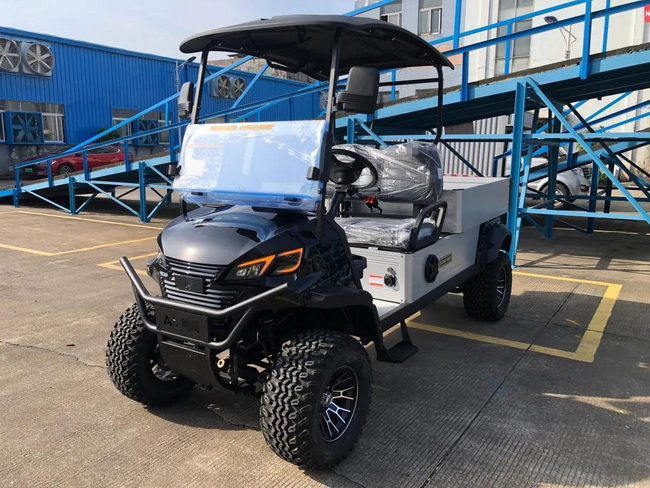
A compact electric utility cart is a strong candidate for moving tools, consumables, maintenance equipment, and containers around a defined site.
Potential applications include:
- Hotel and resort housekeeping.
- Campus maintenance.
- Factory spare-parts distribution.
- Groundskeeping.
- Warehouse-yard movements.
Club Car describes its Carryall vehicles as serving industrial and commercial work, with cargo-bed options and application-specific accessories. That supports the utility-cart category's role as configurable work transport, rather than merely passenger transport.
An accessible bed may suit tasks requiring repeated retrieval of tools or materials. Yet convenience should be tested with the actual load, not assumed from photographs.
During a demonstration, check whether operators can:
- Reach frequently used items without climbing.
- Secure containers against movement.
- Open the tailgate in the intended parking position.
- Navigate the narrowest passage.
- Reverse safely around pedestrians.
A smaller vehicle is valuable only when its access advantage improves the real workflow.
Road access can decide the comparison before cargo capacity does.
A utility cart is not automatically a street-legal low-speed vehicle. In the United States, NHTSA describes low-speed vehicles as a distinct classification with limited safety requirements. Its interpretation explains that qualifying vehicles have a maximum speed capability no higher than 25 mph and a gross vehicle weight rating below 3,000 lb; vehicles outside the definition may fall into other classifications with more extensive requirements.
Operating permissions are also jurisdiction-specific. Wisconsin, for example, permits compliant low-speed vehicles on certain roads while prohibiting them on expressways and other controlled-access highways. Its guidance explicitly distinguishes golf carts and utility terrain vehicles from low-speed vehicles.
For an OEM export project, establish the destination country, vehicle classification, intended roads, and required documentation before finalizing the design. Lights, mirrors, or a speed limiter alone do not establish full compliance.
Battery capacity is only one part of operational suitability.
Ford notes that actual E-Transit driving range varies with conditions including vehicle use, external environment, modifications, maintenance, and battery condition. Its published charging times also depend on charging equipment and operating conditions.
I would therefore ask for a loaded route trial that records:
1. Starting battery state of charge.
2. Cargo and occupant weight.
3. Distance, gradients, and operating speeds.
4. Accessory use and ambient conditions.
5. Ending charge level and recharge time.
For a cart, repeated short trips may be more relevant than maximum-distance driving. For a van, completing a delivery route with a practical reserve may matter more than achieving a headline range figure.
Build the charging plan around available downtime and site electrical capacity—not around the assumption that every vehicle can recharge during any short break.
Consider a hypothetical vehicle with a 1,000 kg payload allowance that includes occupants and added equipment.
If occupants weigh 160 kg, shelving weighs 90 kg, and tools weigh 50 kg, the remaining allowance is:
1,000 − 160 − 90 − 50 = 700 kg.
This is an illustrative calculation, not a BorCart specification. Confirm the manufacturer's rating method before applying it, and verify all other relevant limits.
Create a representative load using actual cartons, containers, or tools.
Then test:
- Whether it passes through every opening.
- Whether the required quantity fits.
- Whether goods can be restrained.
- Whether unloading follows the intended sequence.
- Whether access remains safe.
This trial can reveal a practical capacity constraint that published volume misses.
Suppose a site moves 2,400 kg daily. A hypothetical cart carrying 400 kg per trip needs at least six loaded trips. A hypothetical van carrying 800 kg needs at least three.
That does not automatically make the van more economical. A slower loading process, longer access route, or unsuitable unloading position could offset its carrying advantage.
Use a cost-per-completed-task model that includes labor, charging, maintenance, insurance, downtime, and acquisition or lease costs. Keep route assumptions identical so the comparison remains meaningful.
For brands, wholesalers, and manufacturers working with BorCart, the most useful starting point is a written application brief.
| Specification area | Information to provide |
|---|---|
| Cargo | Maximum weight, dimensions, and packaging |
| Route | Daily distance, speeds, gradients, and surfaces |
| Access | Narrowest passage and loading clearances |
| Body | Open bed, enclosed compartment, or special fittings |
| Charging | Power supply and available charging windows |
| Market | Destination and intended vehicle classification |
| Support | Spare-parts needs and service arrangements |
Ask the supplier to separate confirmed specifications, optional configurations, and development requests.
Also request a sample acceptance plan covering cargo fit, loaded operation, braking, charging, documentation, and workmanship. Avoid treating a customization discussion as proof that every requested feature is already available or validated.
Choose an electric cargo van when the application requires an enclosed goods compartment and approved operation across the intended delivery network.
Choose an electric utility cart when the application prioritizes repeated site movements, accessible cargo handling, and operation within defined access constraints.
A mixed fleet may also deserve evaluation. Different vehicles can handle distribution and internal movement without forcing one platform to perform incompatible tasks.
The purchasing objective is not the largest vehicle. It is the most suitable vehicle for the complete job.
Send BorCart your application brief before requesting a final quotation. Ask for a proposed configuration, clearly defined capacity ratings, destination-market documentation requirements, and a sample validation plan.
That turns a broad vehicle inquiry into an actionable manufacturing discussion.
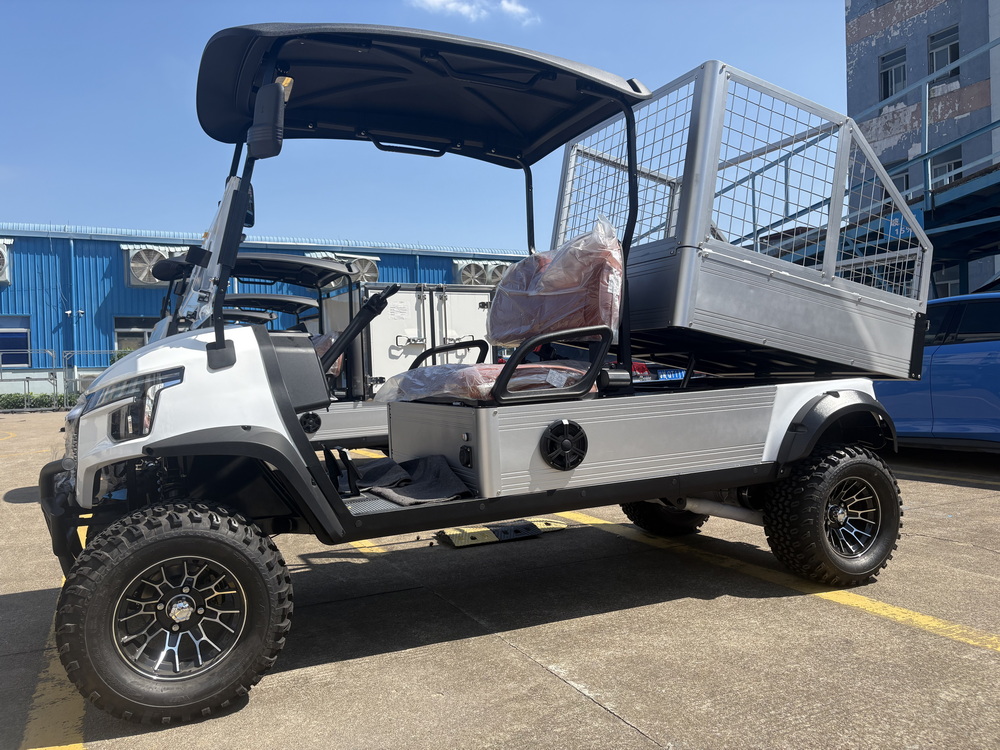
For some site-based tasks, yes. It is not a direct substitute when cargo protection, route speeds, road approval, or load requirements differ. Evaluate the specific configuration and application.
There is no universal answer. Compare permitted cargo weight and usable dimensions for the exact builds. Also distinguish bed capacity from total vehicle capacity.
Some models can accommodate a pallet footprint. Club Car describes the Carryall 500 bed as capable of transporting a full-size pallet, but the combined pallet and goods must still meet applicable load limits.
Not automatically. Vehicle classification, equipment, certification, and local operating rules determine eligibility. A utility-cart label does not establish low-speed-vehicle compliance.
No. Evaluate loaded route completion, charging availability, and the complete vehicle specification. Battery condition, operating conditions, and vehicle use can affect actual range.
Send the destination market, cargo dimensions and weight, route profile, charging conditions, required body layout, and expected order quantity. These details provide a concrete basis for discussing a suitable OEM configuration.
1. Ford Motor Company. *2025 Ford E-Transit Technical Specifications.* Vehicle configurations, cargo volume, payload limits, battery specifications, and charging information.
2. Club Car. *Carryall 500 Utility Vehicle.* Cargo-bed dimensions, bed capacity, loading features, and commercial applications.
[https://www.clubcar.com/en-us/commercial/utility-4x2/carryall-500]
3. Club Car. *Carryall 700 Utility Vehicle.* Total vehicle capacity, cargo-bed capacity, and utility-vehicle configurations.
[https://www.clubcar.com/en-us/commercial/utility-4x2/carryall-700]
4. National Highway Traffic Safety Administration. *Interpretation ID: 07-005545as.* U.S. low-speed vehicle classification, maximum speed, weight thresholds, and applicable federal safety requirements.
[https://www.nhtsa.gov/interpretations/07-005545as]
5. Wisconsin Department of Transportation. *Low-Speed Vehicle (LSV).* Wisconsin-specific registration requirements, permitted road use, and distinctions between low-speed vehicles, golf carts, and utility terrain vehicles.
[https://wisconsindot.gov/Pages/dmv/vehicles/title-plates/nev.aspx]


