


Views: 253 Author: BorCart Publish Time: 2026-09-02 Origin: Site


Content Menu
● Why Custom Golf Carts Make High-Impact Holiday Gifts
>> What Makes a Custom Cart Gift Different
● From Concept to Finished Custom Golf Cart
>> Step 1: Define the Operating Scenario
>> Step 2: Build a Brand-Appropriate Visual System
>> Step 3: Select the Right Electric Platform
● Responsible Customization and Trademark Protection
● Quality Controls That Protect Brand Reputation
>> Pre-Shipment Inspection Checklist
● Safety, Daily Use, and Ownership Support
● Why Work With BorCart for OEM Custom Golf Carts
>> An OEM Partnership Is More Than a Logo
● Start Your Custom Golf Cart Project
>> 1. Can BorCart manufacture golf carts with my brand logo?
>> 2. What is the minimum order quantity for custom golf carts?
>> 3. Can custom golf carts be used on public roads?
>> 4. What information should I send for an OEM quotation?
>> 5. Are lithium batteries suitable for custom golf carts?
>> 6. How can I make a sports-themed golf cart without creating trademark problems?
>> 7. What inspections should be completed before shipment?
A custom golf cart can turn a standard electric vehicle into a memorable brand asset, a premium holiday gift, or a high-visibility promotional vehicle. For sports organizations, lifestyle brands, distributors, and hospitality operators, the strongest projects combine distinctive design, responsible trademark management, reliable engineering, and a clearly defined delivery plan.
The custom Philadelphia football-themed golf cart story shows why personalized electric carts have become more than recreational vehicles. A professionally built cart can recognize employee contribution, strengthen community identity, support event operations, and create content people genuinely want to share. For overseas brands and wholesale buyers, the opportunity lies in converting that emotional value into a repeatable, scalable OEM product program.
> Important note: Team names, logos, player names, uniform designs, and related visual identifiers may be protected intellectual property. A manufacturer should only reproduce them when the buyer has obtained the relevant authorization or licensing rights.
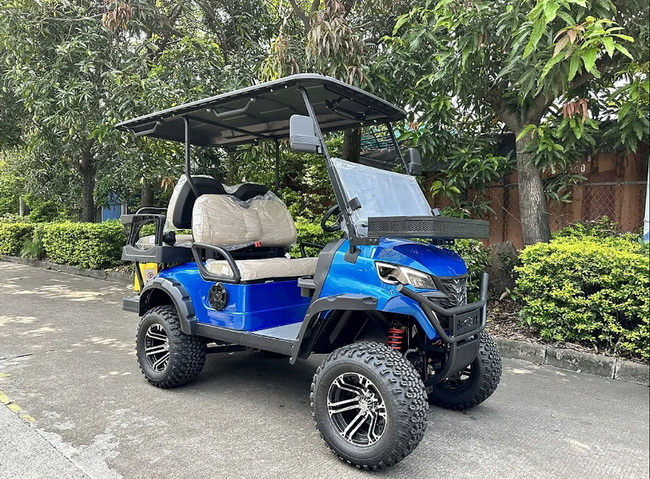
Holiday gifting is often difficult at the premium end of the market. Conventional corporate gifts can be expensive without being useful, personal, or memorable. A custom electric golf cart changes that equation because it is both a substantial product and an everyday experience.
For a sports-themed project, the recipient does not simply receive transportation. They receive a vehicle designed around a team connection, personal identity, neighborhood lifestyle, golf course use, resort mobility, or event participation.
A black electric cart finished with custom colors, names, player numbers, contrast stitching, wheel upgrades, and coordinated accessories can become a long-term reminder of the people and story behind the gift.
A well-executed custom cart program can deliver value across several areas:
- Practical mobility for private properties, resorts, campuses, gated communities, and golf facilities
- Personal recognition through names, numbers, initials, messages, and individualized trim details
- Brand exposure when the vehicle is used at events, in communities, or on social media
- Longer product life than typical holiday gifts because carts can be used frequently
- High perceived value through visible craftsmanship, personalization, and functional upgrades
- Content potential for launch videos, gift-reveal campaigns, dealer promotions, and customer testimonials
For a distributor or private-label brand, custom golf carts also create an opportunity to build a product line around a recognizable market position. Instead of competing only on basic vehicle price, the brand can sell a complete ownership experience: design, accessories, delivery, maintenance support, and personalization.
At BorCart, we approach custom golf cart development as an OEM program rather than a one-time decorative project. The best outcome begins with a clear understanding of how the cart will be used, who will operate it, where it will be delivered, and which visual elements are essential to the buyer's brand.
A sports-inspired cart may appear straightforward from a distance, but its commercial success depends on coordinated decisions across design, chassis configuration, electrical systems, seating, body finish, packaging, documentation, and quality inspection.
Before selecting colors or accessories, identify the operating environment. A cart used inside a golf club has different requirements from one intended for a beach resort, a university campus, a private community, an event venue, or a local delivery route.
Key planning questions include:
1. How many passengers must the cart carry?
2. Will it mainly operate on golf paths, paved roads, mixed surfaces, or light off-road routes?
3. Is the vehicle for private property use, commercial fleet use, or road-permitted use where local law allows?
4. What weather conditions, slopes, payloads, and daily operating hours should it handle?
5. Does the buyer need a one-off showcase vehicle or a repeatable wholesale model?
6. Which accessories are essential: rear seat, cargo box, roof enclosure, cooler, sound system, touchscreen, camera, or utility rack?
A clear brief reduces redesign cycles and helps the manufacturer match the battery, motor, tire, suspension, seating, and lighting package to the actual application.
The exterior should look intentional, not overloaded. Strong custom golf cart design normally uses a hierarchy: a dominant color, one or two supporting tones, carefully selected graphics, and accents that repeat across the seat upholstery, wheels, dashboard, roof, and body trim.
For an officially authorized sports project, the buyer may provide approved logo files, color specifications, placement rules, and artwork standards. For an unlicensed fan-inspired project, it is safer to use general color themes or custom owner graphics that do not copy protected logos, player identities, or official marks.
| Design Element | Practical Customization Options | Buyer Consideration |
|---|---|---|
| Body finish | Solid color, metallic paint, matte finish, vinyl graphics, two-tone combinations | Choose finishes that suit the climate and cleaning routine |
| Seating | Custom embroidery, contrast piping, diamond stitching, marine-grade upholstery | Confirm UV resistance, waterproofing, and colorfastness |
| Wheels and tires | Aluminum wheels, all-terrain tires, low-profile road tires, wheel covers | Match tire selection to pavement, turf, sand, or uneven surfaces |
| Lighting | LED headlights, taillights, turn signals, roof lights, underbody lighting | Consider visibility needs and local operating rules |
| Interior | Custom steering wheel, dashboard accents, storage, cup holders, audio systems | Prioritize driver controls and long-term serviceability |
| Identification | Individual names, fleet numbers, QR labels, dealer decals | Use only authorized logos and names |
Design consistency matters more than decoration volume. A cart with a coherent palette and durable details often looks more premium than one covered with too many unrelated graphics.
The underlying vehicle determines whether the finished cart delivers a positive ownership experience. Custom paint cannot compensate for an unsuitable powertrain, limited battery range, poor suspension tuning, or inadequate payload capacity.
For many premium applications, buyers are increasingly interested in lithium battery systems because they can offer lower maintenance requirements, strong cycle performance, and more consistent voltage delivery when properly specified. However, the best battery choice depends on operating distance, charging conditions, temperatures, budget, service access, and local transportation requirements.
When sourcing an OEM electric golf cart, request clear specifications for:
- Battery chemistry, voltage, capacity, and battery management system
- Motor type, rated output, controller configuration, and maximum speed
- Charging input, charger type, estimated charging time, and charging guidance
- Vehicle payload, passenger capacity, curb weight, and gross vehicle weight rating
- Brake type, parking brake arrangement, steering system, and suspension layout
- Tire size, ground clearance, climbing capability, and turning radius
- Lighting, mirrors, horn, windshield, reflectors, seat belts, and other equipment
- Spare-parts availability, warranty terms, technical documentation, and after-sales procedures
For road-permitted low-speed applications, the specification process should be especially careful. SAE J2358 describes safety and performance requirements for certain low-speed vehicles, including four-wheeled vehicles operating above 20 mph and up to 25 mph on level ground, within its defined gross-weight range. Actual road-use eligibility still depends on the destination market and local regulations.
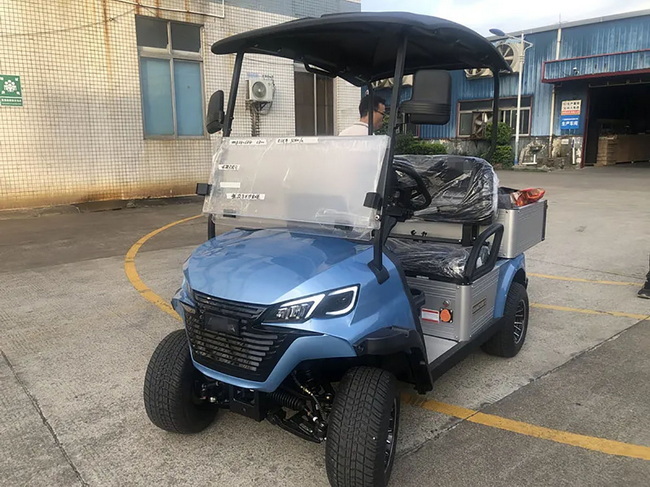
Sports-themed golf carts can generate strong emotional engagement, but they require disciplined intellectual-property management. A buyer should not assume that a team color combination, logo, slogan, athlete name, jersey number, or mascot can be reproduced commercially without permission.
The Philadelphia Eagles' published terms state that the organization owns rights in its product names, company names, trade names, logos, product packaging, and designs, and that use or misuse of trademarks is prohibited unless expressly authorized. This makes authorization a central part of any official team-branded cart program.
For brands, dealers, and event organizers, the following workflow can help reduce risk:
1. Confirm ownership of artwork. Identify whether the design includes trademarks, copyrighted artwork, athlete identity rights, or licensed campaign elements.
2. Secure written authorization. Obtain permission from the trademark owner, licensing agency, or rights holder before production begins.
3. Provide approved files. Send production-ready artwork, color references, dimensions, and placement guidelines to the manufacturer.
4. Approve digital renderings. Review 2D mockups and, where necessary, 3D design visuals before ordering custom materials.
5. Approve a pre-production sample. For larger orders, inspect the first unit or key components before mass production.
6. Maintain documentation. Keep authorization records, final artwork approvals, purchase orders, and inspection photos.
This process also protects the OEM manufacturer. BorCart can manufacture custom body colors, seat patterns, trim packages, and buyer-owned branding elements, but customers should provide confirmation that their requested artwork is authorized for commercial use.
For distributors and brand owners, the quality of a custom electric golf cart is judged long after the delivery photo. Buyers will remember whether the paint remains attractive, whether seat materials resist cracking, whether wiring is properly protected, whether the vehicle charges reliably, and whether replacement parts can be sourced quickly.
A custom cart must be engineered as a vehicle first and styled as a brand asset second.
A thorough OEM inspection plan should include the following areas:
- Verify vehicle identification, order configuration, body color, accessories, and approved branding placement
- Check body panels, paint finish, seat stitching, roof fitment, wheel alignment, and fastener security
- Test acceleration, braking, reverse operation, steering response, parking brake, and directional controls
- Confirm headlights, brake lights, turn signals, horn, dashboard indicators, USB ports, cameras, and audio equipment where fitted
- Inspect battery connections, cable routing, charger compatibility, fuses, controller settings, and water-resistant protection
- Verify tire pressure, wheel nuts, suspension components, and visible undercarriage damage
- Conduct charging verification and record battery-related checks according to the agreed inspection standard
- Take order-specific photographs and videos before container loading or final dispatch
For repeat orders, a buyer should establish an approved "golden sample" specification. This reference unit becomes the benchmark for colors, trim, performance configuration, packaging, and inspection acceptance.
A premium custom cart should encourage responsible operation. Safety guidance commonly stresses avoiding sudden turns, reducing speed on poor surfaces or slopes, yielding to pedestrians, checking behind before reversing, and never allowing passengers to stand in a moving cart. Operators should also avoid distracted driving and follow all applicable local rules.
For commercial fleets, resorts, dealers, and community operators, practical owner support can include:
- A vehicle handover checklist
- Battery charging instructions
- A daily walk-around inspection sheet
- Basic cleaning and upholstery-care guidance
- Recommended tire and brake inspection intervals
- Driver orientation for staff or customers
- A parts list with product codes for faster replacement ordering
- Clear warranty contact channels and troubleshooting procedures
This support is particularly important for export customers. A reliable vehicle program includes not only manufacturing but also packaging, parts planning, technical communication, and post-delivery service coordination.
BorCart is a China-based manufacturer focused on electric golf carts, low-speed electric vehicles, and automotive parts. We support overseas brands, wholesalers, distributors, and equipment manufacturers that need flexible OEM customization, stable product development communication, and export-oriented production support.
Our role is to help customers turn a vehicle concept into an organized, manufacturable program. Depending on the project, customization may include body colors, seat designs, wheel packages, battery configurations, dashboard layouts, lighting, cargo solutions, packaging, private-label graphics, and selected accessories.
The most successful private-label golf cart programs are built around five commitments:
- Clear product positioning for the buyer's local market
- Documented specifications before production begins
- Controlled customization that can be reproduced consistently
- Quality inspections aligned with the buyer's expectations
- Responsive after-sales planning for parts, technical questions, and future orders
Whether you are launching a sports-inspired promotional cart, building a resort fleet, supplying a neighborhood mobility brand, or developing a premium holiday gifting program, BorCart can help you evaluate the correct electric golf cart platform and customization path.
A custom golf cart can give your brand a practical vehicle, a distinctive retail product, and a memorable customer experience at the same time. The key is to begin with the end user, define the operating conditions, protect brand rights, and select an OEM partner that can manage both vehicle quality and customization consistency.
Contact BorCart today to discuss your OEM golf cart requirements. Send your target market, passenger capacity, expected order quantity, desired battery system, planned use scenario, and artwork requirements. Our team can help prepare a suitable configuration proposal, customization plan, and production discussion for your brand or distribution business.
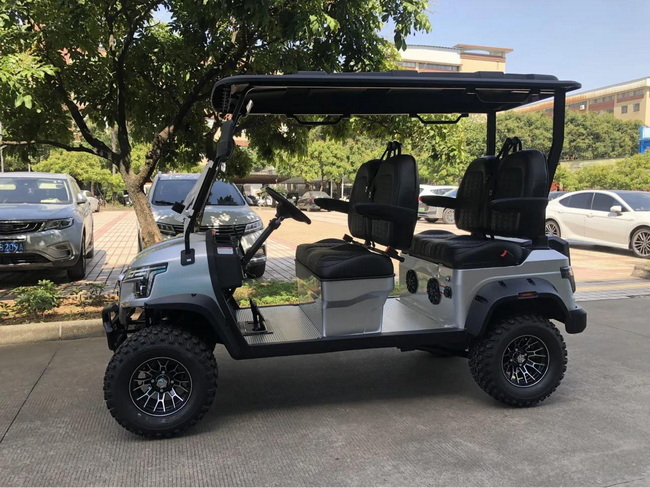
Yes. BorCart can support private-label body graphics, decals, badges, seat embroidery, packaging, and other brand-oriented details. You should provide high-resolution artwork and confirm that you own or are authorized to use all logos, names, and visual assets submitted for production.
Minimum order quantity depends on the vehicle model, level of customization, material selection, and whether new tooling or specially sourced components are required. Standard color and accessory changes may be more flexible than a completely new body design or custom mold.
It depends on the vehicle specification and the laws in the destination country, state, city, or local community. Some low-speed electric vehicles may be permitted on designated roads if they meet applicable requirements, but buyers must verify registration, insurance, driver licensing, equipment, and route restrictions before use.
Provide your preferred model, passenger capacity, battery preference, intended use, target country, expected order quantity, required accessories, logo files, body color references, and desired delivery time. The more complete the brief, the more accurate the proposed configuration and quotation can be.
Lithium batteries can be suitable for many golf cart applications because they may offer lower maintenance needs and consistent performance. However, battery selection should be based on daily range, payload, charging conditions, climate, budget, shipping requirements, and available service support.
Use only artwork, logos, names, slogans, and design elements that you own or are authorized to use. If formal licensing is unavailable, consider a broader color-inspired theme, an original event identity, or the customer's own company branding rather than copying official team assets.
At minimum, inspect the correct configuration, cosmetics, seating, tires, braking, steering, lighting, electrical accessories, battery connections, charging function, packaging, and loading condition. For larger orders, consider third-party inspection or buyer-approved final inspection criteria.
- [TIGON Golf Carts: Custom Philadelphia Eagles Golf Carts for Holiday Gift Exchange]
- [Philadelphia Eagles Terms and Conditions]
- [SAE J2358: Low-Speed Vehicles Technical Standard]
- [Florida Atlantic University: Golf Car Ejection and Vehicle Standards Overview]
- [State Farm: Golf Cart Safety Tips]
- [World Insurance: A Golf Cart Owner's Guide to Safety and Security]


