


Views: 258 Author: BorCart Publish Time: 2026-10-01 Origin: Site


Content Menu
● Electric vs. diesel cargo vans
>> Test the worst day, not the average
>> Compare capacity on paper and in person
● Plan charging before ordering
>> Match charging to dwell time
>> A useful charging calculation
● Compare total ownership cost
● Inspect the battery and warranty
>> Define the destination specification
>> Request a configuration-specific dossier
● Use a final buying checklist
>> How much range does an electric cargo van need?
>> Are electric cargo vans cheaper to run than diesel vans?
>> Can an electric cargo van carry as much as a diesel van?
>> Is overnight charging enough for a delivery fleet?
>> What should an overseas buyer ask an OEM manufacturer?
>> Should I buy a fleet without a pilot?
Buying an electric cargo van is not simply a choice between an electric vehicle and a diesel one. It is a decision about routes, payload, charging time, operating costs, and the support your business will need after delivery. For fleet buyers, wholesalers, and private-label brands, the best van is the one that can complete a working day reliably—not the one with the most impressive headline range.
From a vehicle-sourcing perspective, I would start with two questions: What must the van carry, and how far must it travel under the hardest conditions it will face? The answers determine whether a candidate vehicle deserves a closer look. This guide compares electric and conventional cargo vans, then sets out the checks that matter when buying or sourcing an electric model.

An electric van can be a strong fit for predictable, return-to-depot delivery routes. A diesel van may be easier to deploy where routes vary widely or dependable charging is unavailable. Neither is automatically the cheaper or more practical choice.
| Buying factor | Electric cargo van | Diesel cargo van | What to check |
|---|---|---|---|
| Daily operation | Can recharge while parked; performs well in stop-and-go use | Can refuel quickly during long or changing routes | Actual route length and overnight parking time |
| Upfront investment | Includes vehicle cost and potentially depot electrical work | Usually requires no charging installation | Complete delivered and deployment cost |
| Energy cost | Depends on electricity tariffs, charging efficiency, and peak-demand charges | Depends on fuel consumption and diesel prices | Cost per completed route, not just energy price |
| Maintenance | Fewer conventional powertrain service items, but battery and high-voltage repairs need specialist support | Established service networks, with more engine-related maintenance | Local repair capacity and parts availability |
| Range flexibility | Affected by load, speed, weather, and charging access | Generally easier to extend during a shift | Worst-day performance with a full working load |
| Local emissions | No tailpipe emissions | Produces tailpipe emissions | Customer, site, and local operating requirements |
The practical question is not "Which powertrain wins?" It is which one completes your routes at an acceptable total cost, with manageable downtime. Electric vehicles are often well suited to stop-and-go fleet work, while heavier loads, high speeds, heating, and cooling can make range planning more demanding.
A published range figure is useful for shortlisting, but it is not a delivery promise. Test conditions may differ from a van carrying parcels, making frequent stops, climbing hills, or running cabin heat for an entire shift.
Before requesting quotations, collect operating data from representative vehicles. Ideally, include both an ordinary day and your busiest day.
- Distance: Daily mileage, longest recurring route, and unexpected detours.
- Schedule: Departure time, return time, shift changes, and parking duration.
- Driving pattern: Urban stops, highway speeds, gradients, and traffic delays.
- Environment: Cold mornings, hot afternoons, and seasonal changes.
- Auxiliary loads: Lighting, refrigeration, tools, or other equipment drawing vehicle power.
- Charging access: Reliable depot charging and any realistic mid-shift alternatives.
In my view, the most useful range question for a supplier is: "What distance can this configuration cover on our longest route, at our normal payload, in our least favorable season?" Ask for the assumptions behind the answer. Range is affected by temperature, terrain, driving speed, acceleration, and heavy loads; the combination matters more than any one factor alone.
Do not size the fleet around a perfectly timed, mild-weather route. Build a reserve for detours, traffic, battery aging, and a charger that is temporarily unavailable. The appropriate reserve is an operational decision, not a universal percentage.
Cold-weather performance deserves particular attention. A U.S. Department of Energy analysis found an average 41% range reduction in tested battery-electric passenger vehicles at 20°F compared with its 72°F reference conditions. That figure is not a cargo-van forecast: vehicle design, heating equipment, route, and load differ. It does show why buyers should request model-specific cold-weather evidence rather than assume a published range will hold year-round.
A van can have sufficient driving range and still fail the job because its cargo area or usable payload is wrong. Buyers should compare the finished vehicle, including the battery, installed equipment, and any body conversion—not an unmodified base specification.
Request the vehicle's rated gross weight, curb weight, permitted payload, cargo volume, loading height, door openings, and dimensions between wheel arches. Then check them against your actual shipment mix.
| Requirement | Why the specification alone may mislead | Practical verification |
|---|---|---|
| Payload | Shelving, refrigeration, and other additions use part of it | Weigh a configured vehicle and typical load |
| Cargo volume | Irregular packaging may not fit the stated volume | Load representative cartons or pallets |
| Door access | A wide interior is of little use if items cannot pass the opening | Measure the narrowest loading point |
| Load distribution | Total weight can be acceptable while an axle is overloaded | Check front and rear axle weights |
| Driver access | Repeated stops magnify small ergonomic problems | Run a realistic delivery shift |
For a parcel operator, easy access to frequently used packages may be more valuable than maximum theoretical volume. For a wholesaler carrying dense goods, payload and axle limits may decide the purchase. Match the van to the cargo you actually move, not merely the product category you serve.
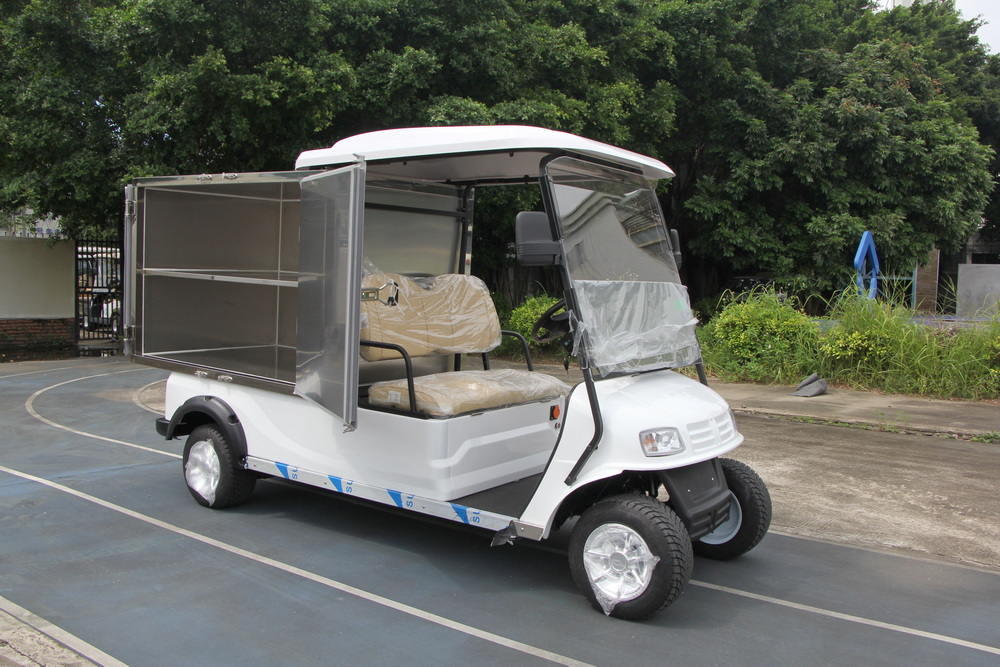
Charging is a vehicle-and-site decision. A suitable van paired with an unsuitable depot can become an expensive idle asset.
Ask how much energy the van must replace each day, then compare that need with the time it is parked. Overnight AC charging may suit a vehicle that returns to base with a long idle period. A two-shift operation may need faster charging, vehicle rotation, or both. Charger output alone does not determine charging speed; the van's onboard AC charger or DC charging capability can limit the power it accepts.
Confirm the connector type, supported charging power, battery charging behavior, and compatibility with the equipment intended for the destination market. Test the proposed vehicle and charger together where possible. Fleet guidance also recommends checking charger compatibility with both the vehicle provider and charging provider before purchase.
Depot planning should begin early. Ask an electrical contractor and the local utility to assess available capacity, installation work, permits, future expansion, and electricity tariffs. If several vans charge together, peak-demand charges can change the economics. Charging-equipment downtime can also become vehicle downtime, so define a backup plan.
Consider an illustrative, not model-specific, route that uses 48 kWh of battery energy each day. If charging losses mean the depot must supply 54 kWh, replacing that energy over a nine-hour parking window requires an average delivery of 6 kW. That simple estimate is only a starting point. Actual charging power may vary, other vans may share site capacity, and charging may slow near a full battery.
The lesson is straightforward: calculate energy per shift before choosing chargers. Buying the fastest charger is not necessarily the most cost-effective answer; buying a charger that cannot replenish the fleet before departure is worse.
Sticker prices tell only part of the story. An electric cargo van purchase can involve charging installation, electrical upgrades, training, software, spare parts, and financing. A conventional van brings its own fuel, servicing, and downtime costs.
Compare both options over the same ownership period and annual mileage:
Total ownership cost = vehicle acquisition + infrastructure + energy or fuel + maintenance + insurance + financing + downtime − resale value − applicable incentives.
For the electric option, separate vehicle cost from depot cost. Allocate shared chargers and site upgrades across the number of vans expected to use them, and state that assumption clearly. Model electricity tariffs rather than using a single headline price. If incentives are relevant, verify that the exact vehicle and buyer qualify before including them.
Official fleet guidance recommends assessing vehicle availability, warranties, maintenance support, charging requirements, and delivery timelines alongside cost. Its published light-duty electric-vehicle operation-and-maintenance average is a useful point of context, but it should not be treated as a guaranteed cost for a particular cargo van or country. Build the business case from your own routes and supplier terms.
One missed route can outweigh a small energy saving. Ask who diagnoses a fault, who pays for transport to a repair facility, how quickly critical parts can arrive, and whether a replacement vehicle is available. A lower purchase quote may not be the lower-cost choice if service responsibilities remain vague.
Battery capacity matters, but the warranty tells you how risk is shared. Ask whether the quoted capacity is gross or usable, how the battery is cooled or heated, and what information the vehicle provides about state of charge and battery health.
Read warranty terms for duration, mileage, exclusions, minimum retained capacity, diagnostic requirements, and the remedy if a claim succeeds. Check whether battery coverage differs from vehicle coverage and whether alterations by a body builder affect either one. Battery life varies with climate, driving, charging patterns, cell chemistry, and thermal management; replacement outside warranty may be costly.
A buyer should also request a documented service pathway. Can local technicians safely work on the high-voltage system? Are diagnostic tools and replacement components available? A warranty has limited practical value if the van cannot be repaired promptly where it operates.
For an overseas brand or importer, regulatory fit must be settled before production is committed. A vehicle offered for one market should not be assumed suitable for another, even if the exterior and drivetrain look identical.
Put the intended country, road-use classification, steering position, lighting, charging interface, labeling, and required documentation into the purchase specification. Ask the supplier to identify who is responsible for testing, certification, registration support, and the final compliance documents. Have a qualified local compliance specialist review those documents for the intended vehicle configuration.
For example, the U.S. National Highway Traffic Safety Administration explains that vehicles sold or imported for U.S. road use must meet applicable federal motor vehicle safety standards. It also states that the original manufacturer certifies compliance through a permanently affixed label; the agency does not simply "approve" a vehicle because a seller claims it is compliant. Do not treat a generic certificate or a similar model's paperwork as proof for your ordered vehicle.
A private-label van program has two products: the vehicle and the supplier relationship. The first must perform on the road; the second must keep production, quality, and after-sales support predictable.
As a Chinese manufacturer focused on electric vehicles, cargo vans, and automotive parts, BorCart serves overseas brands, wholesalers, and manufacturers seeking OEM production. When assessing any OEM partner—including BorCart—I would ask for evidence tied to the exact configuration under discussion, rather than assume that a general product description proves its performance.
- A controlled specification sheet showing battery, motor, payload, dimensions, charging, and options.
- Test conditions and results for range, loaded operation, braking, and charging.
- A bill of materials and a process for approving component substitutions.
- Applicable destination-market compliance documents for the ordered configuration.
- Warranty terms, spare-parts lists, diagnostic access, and service procedures.
- Prototype, inspection, production, and shipping milestones.
- Clear ownership of branding, manuals, labeling, and design changes.
Pay special attention to change control. If a supplier changes a battery pack, charging component, tire, or body structure after a sample is approved, performance or compliance may change too. Require written approval for changes that affect the agreed specification.
I would put a small number of vans through representative routes before placing a fleet-wide order. Load them as they will be loaded in service. Charge them with the intended equipment. Record energy use, completed routes, charging time, driver comments, and faults.
A pilot is not about finding a perfect day for the van. It is about discovering the conditions under which the vehicle becomes difficult to operate. Use the findings to revise the specification, charging plan, driver training, or fleet mix before volume production.
Before signing a purchase agreement, make sure the following questions have written answers:
1. Duty: Can the van complete the longest required route with a representative load and a sensible operating reserve?
2. Cargo: Do finished-vehicle payload, axle ratings, access, and dimensions suit the goods?
3. Charging: Can the intended depot restore the required energy before the next departure?
4. Cost: Does the comparison include site works, electricity tariffs, maintenance, downtime, and resale assumptions?
5. Support: Who handles diagnostics, warranty claims, parts, training, and repairs locally?
6. Compliance: Does documentation match the destination market and exact vehicle configuration?
7. Production: What happens if a component, specification, or delivery date changes?
8. Validation: Has a pilot confirmed the claims under real operating conditions?
The strongest purchasing decision is the one you can explain with route records, a tested configuration, a charging plan, and clear supplier obligations.
Ready to evaluate an OEM electric cargo van for your market? Send BorCart your target country, route profile, required payload, cargo dimensions, charging setup, and expected order volume. Request a configuration-specific specification and validation plan before comparing quotations.
Enough to complete its most demanding recurring route with the expected load and an operating reserve. Start with route records, then test the proposed van in relevant weather and traffic. Do not choose a battery solely because its published range exceeds average daily mileage.
They can be, particularly where charging costs are favorable and routes are predictable. But the result depends on vehicle price, electricity tariffs, infrastructure, maintenance, mileage, and downtime. Compare the cost of completing the same work over the same ownership period.
That depends on the specific vehicles and their final configurations. Compare permitted payload and axle ratings after batteries, shelving, and other equipment are included. Also check whether the cargo fits through the doors and can be loaded safely.
Often, but not always. It depends on energy used per shift, parking time, the van's accepted charging power, and the depot's electrical capacity. Multi-shift fleets or vehicles with short dwell periods may need a different plan.
Ask for a configuration-specific specification, relevant test evidence, destination-market compliance documents, production controls, warranty terms, and a local service plan. Confirm which party owns each responsibility before ordering.
A pilot is strongly advisable when the route, climate, charging setup, or vehicle configuration has not already been proven in your operation. It offers a practical chance to identify costly mismatches before a larger order.
- U.S. Department of Energy, Alternative Fuels Data Center, ["Electric Vehicles for Fleets"]. Fleet suitability, operating costs, charging, warranties, and supplier support. [afdc.energy]
- U.S. Department of Energy, Alternative Fuels Data Center, ["All-Electric Vehicles"]. Effects of temperature, speed, terrain, and load on range. [afdc.energy]
- U.S. Department of Energy, ["Impact of Cold Ambient Temperature and Extreme Conditions on Electric Vehicles"], 2024. Cold-weather test findings and their limitations. [energy]
- U.S. Department of Energy, Alternative Fuels Data Center, ["Procurement and Installation for Electric Vehicle Charging Infrastructure"]. Site planning, installation, and charging costs. [afdc.energy]
- U.S. Department of Energy, Alternative Fuels Data Center, ["Electric Vehicle Benefits and Considerations"]. Battery-life factors and warranty considerations. [afdc.energy]
- U.S. National Highway Traffic Safety Administration, ["Importation and Certification FAQs"]. U.S. vehicle certification and import requirements. [nhtsa]


