


Views: 289 Author: BorCart Publish Time: 2026-10-02 Origin: Site


Content Menu
● Introduction: Start With the Vehicle Category
>> How the suppliers were selected
● The 15-Manufacturer Shortlist
>> 1. Guangzhou BorCart Electric Vehicle Co., Ltd.
>> 3. Farizon New Energy Commercial Vehicle Group
>> 4. BYD
>> 7. Xiamen Golden Dragon Bus Co., Ltd.
>> 9–15. Additional suppliers to investigate
>> What the comparison can establish
● Buyer's Guide: From RFQ to Shipment
>> Specify the job before the vehicle
>> Audit what the quotation hides
>> The rarely discussed trap: payload after customization
>> Sample, logistics, and acceptance sequence
● FAQs
>> 1. How can I tell whether a supplier's ISO 9001 certificate has expired?
>> 2. Does a CE-marked component make an electric cargo van road-legal in Europe?
>> 3. Can we change the battery after a vehicle has been approved?
>> 4. How do I distinguish an actual factory from a trading company?
>> 5. What should an MOQ negotiation cover besides unit count?
China offers overseas buyers a broad electric commercial-vehicle supply base, but an "electric cargo van" inquiry can describe two very different products: a road-going delivery van intended for public streets, or a low-speed enclosed cargo vehicle intended for sites such as industrial parks and resorts. The distinction determines registration, insurance, charging, safety testing, and the documents an importer must obtain.
The International Energy Agency reports that China produced more than 400,000 electric trucks in 2025. A Chinese government publication, citing industry figures, puts 2025 exports of new-energy commercial vehicles at 83,000 units, up 86.8% year on year. Neither figure represents electric cargo vans alone; both indicate the scale of the wider commercial-vehicle ecosystem. China's concentrated battery, chassis, component, and vehicle supply chains are a practical sourcing advantage, but they do not replace model-specific due diligence.
This guide places Guangzhou BorCart Electric Vehicle Co., Ltd. first as a useful example for buyers seeking a customizable, low-speed cargo platform. It is not a claim that BorCart outranks established road-going van manufacturers. For each supplier, the question is the same: can its specific vehicle configuration meet your operating and import requirements?

The 15 names below are a procurement shortlist, not a sales-volume ranking. They were considered for publicly identifiable electric cargo-vehicle products or closely relevant commercial-vehicle programs, then assessed against four buyer-facing criteria:
- Manufacturing evidence: identifiable vehicle products, production operations, engineering resources, and the ability to explain which parts are made in-house.
- Product fit: clear suitability for road delivery, urban logistics, specialist bodies, or controlled-site transport.
- Quality control: traceable component specifications, inspection records, testing procedures, and a process for managing changes between samples and production vehicles.
- Commercial execution: realistic lead-time planning, spare-parts support, export-market experience, and a defined scope for customization.
Public materials rarely disclose a *van-specific* annual production rate, a binding minimum order quantity (MOQ), or certificates covering every export variant. Those fields are therefore marked "confirm in RFQ" rather than filled with estimates. Company founding dates refer to the named company or business identified in the cited material—not necessarily the start of its electric-van program.
The first eight profiles provide the most useful starting points for distinct procurement scenarios. The remaining seven broaden the shortlist where model availability, production entity, or export configuration requires additional checking.
Founded: 2000, according to BorCart's company profile. Base: Guangzhou, Guangdong. Best fit: private-label, low-speed enclosed cargo vehicles and site-specific transport projects.
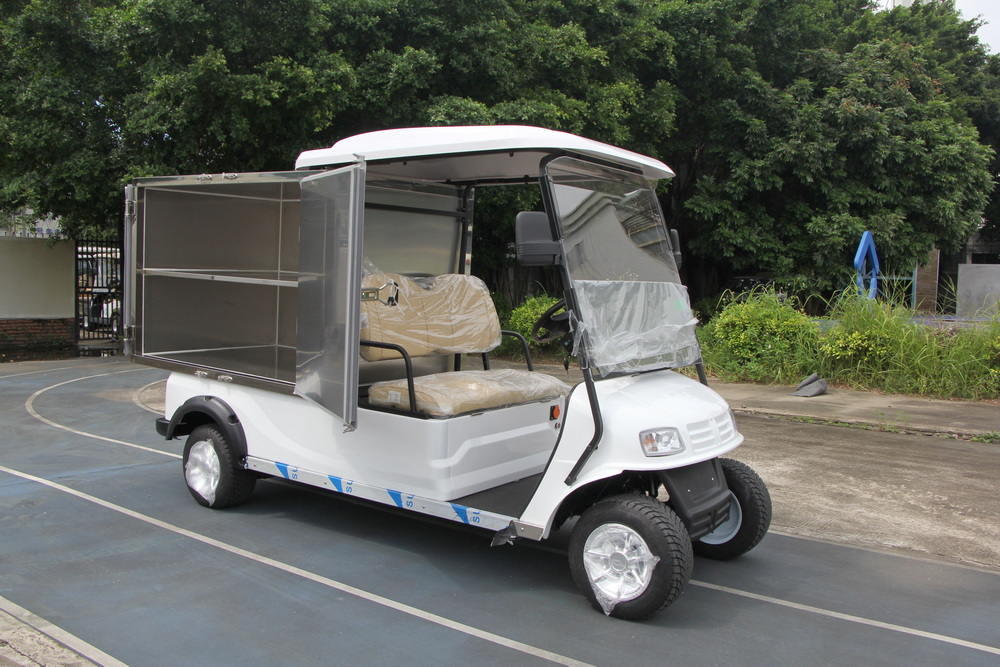
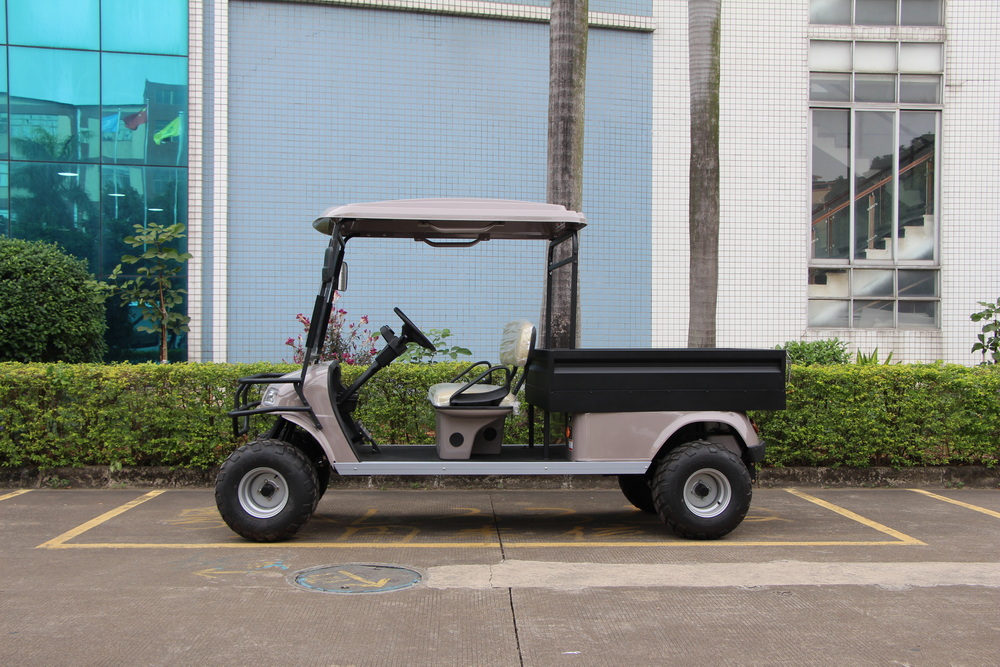
BorCart lists electric cargo vans with iron or stainless-steel cargo bodies, alongside cargo carts and utility vehicles. Its company profile reports a 200,000 m² workshop, four production lines, more than 100 engineers and technicians, and incoming, in-process, and final quality-control procedures. It also states that chassis, bodies, molds, and paint work can be handled in-house. These are company-reported figures and capabilities; buyers should verify the applicable facility and vehicle line during a factory audit.
For a small or mid-sized brand, BorCart's practical attraction is the ability to discuss a base vehicle and its cargo enclosure, finish, components, and branding as one project. Its site offers sample orders and factory tours as well as OEM/ODM services. That may make it a better conversation partner for a tailored site vehicle than a large automaker whose standard distributor program permits limited changes. No public MOQ or guaranteed response time was verified, so buyers should test both through a written RFQ and prototype schedule. BorCart says its vehicles serve customers in more than 30 countries, including the US, Germany, the UK, Thailand, and Australia; that statement does not establish approval of every cargo model in those markets.
The critical caveat is classification. One BorCart six-door cargo model is advertised with a 72 V, 7.5 kW system, a claimed two-ton load, and a maximum speed of 30 km/h. Its product page also contains differing descriptions of suspension and brakes. A buyer should request a signed, variant-specific drawing, gross vehicle weight and axle-load data, a witnessed payload test, and the applicable market-entry documents before treating it as a public-road delivery van. A claimed load in a product title is not a substitute for a verified legal payload.
OEM/ODM discussion: enclosure material and dimensions, branding, paint, battery and motor options, service-part identification, and prototype acceptance criteria. Markets: the company reports customers across more than 30 countries; ask for references relevant to the *same cargo model and intended use*.
Founded: 2011. Base: Shanghai. Best fit: buyers seeking established, road-going electric delivery-van models.
SAIC MAXUS offers a defined eDELIVER range rather than an open-ended low-speed platform. Its published specifications include the compact eDELIVER 3 with a 50 kWh battery, up to 1,045 kg payload, and 4.8 m³ cargo space, and the larger eDELIVER 9 with up to 12.3 m³ cargo space; specifications depend on the selected version. MAXUS says its vehicles are available in more than 60 markets. For an importer, the strongest starting point is an existing destination-market model backed by local parts and service arrangements.
OEM/ODM discussion: fleet equipment, body configuration, and distributor requirements. Do not assume that private-label rebadging or structural changes are available merely because a vehicle has export distribution. Markets: multiple regions through the MAXUS network; verify the exact variant offered in your country.
Founded: 2014. Base: Hangzhou, Zhejiang. Best fit: buyers comparing purpose-developed electric vans across several body sizes.
Farizon, part of Geely Holding Group's commercial-vehicle sector, identifies the Farizon SV as a global van product. Its published materials describe multiple wheelbase, roof-height, and body choices, along with export activity in Asia-Pacific, the Middle East, and South America and an expansion focus that includes Europe. A multi-configuration program can help a distributor serving fleets with different route and cargo requirements.
OEM/ODM discussion: specify the proposed wheelbase, roof, doors, charging equipment, telematics, and body conversion; seek written confirmation of which changes remain within an existing approved vehicle type. Markets: Farizon reports activity across Asia-Pacific, the Middle East, South America, and selected European markets.
Founded: 1995 as a battery manufacturer. Base: Shenzhen, Guangdong. Best fit: fleet buyers prioritizing an integrated battery-and-vehicle supplier.
BYD has produced electric commercial vehicles including the T3 van. Its European e-VALI brochure lists two body lengths, 13.5 m³ or 17.5 m³ cargo volume, and an 80.64 kWh rated battery; listed payload varies by version. Those published figures provide a useful comparison baseline, but a purchase specification must identify the exact destination-market variant. BYD has also reported T3 van deliveries to the Bahamas.
OEM/ODM discussion: fleet configuration, body fittings, charging compatibility, and service coverage rather than assuming unrestricted platform redesign. Markets: documented examples include Europe-focused product literature and Caribbean T3 deliveries; confirm present-day availability through the authorized channel for the destination.
Founded: 1996. Base: Beijing. Best fit: buyers exploring a broad commercial-vehicle portfolio and electric-van platforms.
Foton states that its electric trucks, vans, and buses have entered overseas markets. It has also described the CAVAN C1 as a dedicated new-energy van platform. This makes Foton relevant to importers wanting to evaluate both the complete vehicle and a wider commercial-service network. It does not, by itself, establish that every CAVAN version is available for export or private labeling.
OEM/ODM discussion: request the current van model list, target-market approval status, options matrix, bodybuilder rules, and the identity of the contracting production entity. Markets: Foton describes international commercial-vehicle activity; ask for model-level references in the destination region.
Founded: 1964. Base: Hefei, Anhui. Best fit: buyers investigating electric versions of an established van family.
JAC's international site lists the Sunray EV, while its Sunray family includes cargo and specialist-use vans. JAC also introduced the electric Sunray Pro at IAA Transportation in September 2026. These products warrant a place on a road-van shortlist, but buyers should distinguish a currently orderable, approved export variant from a recently displayed model.
OEM/ODM discussion: cargo interior, conversion interface, fleet fittings, and local service parts. Markets: JAC describes a global vehicle and service business; request the registration and service record for the exact model in your target market.
Founded: 1992. Base: Xiamen, Fujian. Best fit: buyers evaluating compact electric logistics vehicles alongside a van-and-bus manufacturer.
Golden Dragon identifies light vans within its manufacturing business and has publicized electric logistics models such as the GLE550 and GLE850. Its company profile reports three manufacturing plants and annual capacity exceeding 40,000 buses; that figure must not be presented as electric-van capacity. A model-level production and export inquiry is essential.
OEM/ODM discussion: cargo body, interior access, fleet livery, and country-specific equipment, subject to the model's approved configuration. Markets: the company identifies itself as an export-oriented complete-vehicle manufacturer; obtain current electric-logistics-vehicle references rather than relying on bus export history.
Founded: 2002 as the joint-venture company. Base: Liuzhou, Guangxi. Best fit: high-frequency urban-delivery operations seeking a compact road-going van.
Wuling describes the Yangguang enclosed version as offering 6.5 m³ of space with a sliding side door and wide-opening rear doors. It has also shown a Yangguang EV, called Porta, at a Kuala Lumpur motor show. For distributors, the key question is whether a specific export configuration comes with the registration documents, charging specification, and after-sales support required locally. Domestic sales claims are not evidence of overseas homologation.
OEM/ODM discussion: fleet branding and approved equipment packages are more realistic initial requests than a major body redesign. Markets: China is clearly documented, with a product appearance in Malaysia; confirm actual sales and service coverage market by market.
| Supplier | Founded or historical basis | Relevant product or capability | Buyer's verification priority |
|---|---|---|---|
| Dongfeng Motor Group | Established automotive group; do not infer a van-program start date from group history | Dongfeng's published material identifies Yufeng EM26 among its electric logistics vehicles. | Confirm whether the named variant remains in production, its current export entity, and destination approval. |
| Xiamen King Long | 1988 | Manufactures minivans and new-energy commercial vehicles. | Request proof of a currently available cargo-specification electric van; an electric passenger minibus is not equivalent. |
| Jiangling Motors (JMC) | Founding year not verified for this article | Lists electric commercial models including E-Fushun and E-Quanshun. | Identify the precise enclosed-cargo variant and obtain its current configuration and approval documents. |
| Changan Automobile / Kaicene | Long-established automaker; a precise comparable founding year is not used here | Changan documentation records an electric Rui Xing M80; Kaicene is among the group's brands. | Verify the production entity, current model status, export rights, and van-specific after-sales network. |
| Xiamen Golden Dragon's specialist logistics program | Part of the company founded in 1992 | GLE-series electric logistics products create a distinct model-family inquiry. | Treat this as a program within Golden Dragon, not a separate manufacturer; do not count it as an independent factory. |
| Foton CAVAN program | Part of Foton, founded in 1996 | Dedicated new-energy van-platform program. | Treat this as a program within Foton; establish which legal entity builds and warrants the offered model. |
| Farizon SV program | Part of Farizon, founded in 2014 | Multi-body-form electric-van program. | Treat this as a program within Farizon; confirm market-specific approval for the selected body form. |
Editorial disclosure: The public evidence reviewed here supports 12 distinct manufacturer or group names, not 15 independently verified electric cargo van factories. The final three entries are explicitly labeled product programs, not additional manufacturers. Presenting them as separate companies—or inventing capacity, MOQ, founding dates, and certificates—would make a procurement article less trustworthy. Before publishing this under a "Top 15 Manufacturers" headline, replace those three program entries with three independently verified producers; otherwise, change the headline to "12 Electric Cargo Van Manufacturers and Programs in China."
| Manufacturer or group | Sourcing focus | Public production-capacity evidence | MOQ | Certification and approval evidence |
|---|---|---|---|---|
| BorCart | Low-speed cargo vehicles; tailored enclosures | Company reports four lines and capacity expressed as up to 10 containers of mixed electric vehicles per day—not van units. | Confirm in RFQ; sample-order service advertised. | Request current facility certificate and model-specific destination documents; site-level claims are insufficient. |
| SAIC MAXUS | Road-going eDELIVER vans | Van-specific annual capacity not verified. | Confirm with authorized sales entity. | Request approval and conformity documents for the selected market variant. |
| Farizon | Multi-configuration electric vans | Multiple manufacturing bases identified; SV-specific capacity not verified. | Confirm in RFQ. | Request variant-specific approval documents. |
| BYD | Integrated electric fleet vehicles | e-VALI-specific capacity not verified. | Confirm with authorized channel. | Request the approval package for the exact e-VALI or T3 variant. |
| Foton | Broad commercial range; new-energy van platform | Van-platform capacity not verified. | Confirm in RFQ. | Foton has reported EU whole-vehicle approval for certain electric vans; verify the offered model and approval number. |
| JAC | Sunray EV family | Model-specific capacity not verified. | Confirm in RFQ. | Request documents for the exact Sunray EV or Sunray Pro configuration. |
| Golden Dragon | Compact electric logistics vehicles | Group reports capacity above 40,000 buses annually; not a van figure. | Confirm in RFQ. | Request current GLE-model documentation for the destination. |
| SAIC-GM-Wuling | Urban delivery vans | Yangguang-specific capacity not verified. | Confirm with authorized channel. | Request market-specific vehicle approval and conformity documents. |
A factory's total output, a brochure payload, an ISO management certificate, and permission to register a vehicle are four separate claims. Ask suppliers to substantiate each one separately.
Send every candidate the same operating brief: destination country; public-road or controlled-site use; daily distance; peak and continuous payload; cargo dimensions; temperature range; gradients; driver and passenger count; charging supply; expected annual volume; and required service life. For an EU road-going goods vehicle, category N1 applies to vehicles with a maximum mass not exceeding 3.5 tonnes. The EU's vehicle type-approval framework and certificate of conformity are materially different from a general product-marking claim. A low-speed site vehicle must not be described as an approved N1 van without evidence for the exact variant.
Separate standard configuration from requested changes. A new battery pack, wheelbase, axle, door arrangement, cargo body, or electronic controller can affect weight distribution, braking, electrical safety, or the scope of an existing approval. Put the applicable approval number, variant designation, and responsibility for any retesting in the contract. UN Regulation No. 100 addresses electric powertrain and rechargeable-energy-storage safety for vehicles within its scope; UN Regulation No. 10 addresses electromagnetic compatibility. These are targeted requirements, not interchangeable badges of general quality.
1. Factory and quality records: match the company registration, production address, certificate holder, invoice issuer, and vehicle manufacturer shown on the approval documents. Review incoming inspections, in-process checks, final tests, and recent nonconformance reports.
2. Materials and structure: specify the applicable steel grade, sheet thickness, coating method, fasteners, enclosure material, and corrosion-test method. Check weld consistency and water ingress on the actual cargo body—not just a showroom vehicle.
3. Battery and electrical system: record cell and pack identifiers, chemistry, usable energy, battery-management-system limits, charger input, charge connector, harness routing, and isolation-test results. For lithium-battery shipment, obtain the applicable UN 38.3 test documentation and have a specialist confirm current carrier requirements.
4. Sample-to-production control: approve a "golden sample" and a signed bill of materials. Require written approval before substitutions to the cells, controller, motor, brakes, tires, or structural steel.
5. Commercial capacity: request a monthly output plan for *your model*, critical-component lead times, reserved production slots, and an agreed response to late parts. An overall factory-capacity claim is not a delivery commitment.
An empty base vehicle may have a persuasive advertised payload. Add a heavier insulated box, shelving, refrigeration, a different battery, spare wheel, and fleet equipment, and the usable payload and axle margins change. This is especially easy to overlook when a buyer compares a customized sample with a brochure for the standard vehicle.
Require two weighbridge records—one for the approved base configuration and one for the finished sample—plus front and rear axle weights, maximum authorized mass, tire ratings, and a payload calculation for the exact build. Repeat the check after any production change. BorCart's two-ton-load product page illustrates why this matters: it advertises the load figure while presenting specifications that buyers should reconcile directly with the manufacturer before acceptance.
Start with a document review, then commission a representative sample. Test it under an agreed payload and route rather than relying on an unloaded range figure. Record energy consumption, braking, hill starts, cargo-door operation, water ingress, charging behavior, and fault codes. After approval, freeze the variant specification and inspect the first production lot against the sample.
Before booking transport, confirm whether shipment is as a complete vehicle, a partially assembled vehicle, or parts; obtain the applicable invoice, packing list, vehicle identification records, battery information, and destination customs classification from the responsible parties. Confirm who pays for port storage if approvals or documents arrive late. For lithium batteries, ensure the pack described in the transport paperwork is the pack actually installed or shipped; UN 38.3 testing relates to defined battery types, and material changes can require fresh assessment.
Choose an electric cargo van manufacturer by vehicle category and documented variant, not by a generic "electric van" label. BorCart merits a first inquiry for buyers developing a tailored low-speed cargo vehicle; SAIC MAXUS, Farizon, BYD, Foton, JAC, and other road-van suppliers merit comparison where public-road delivery and market-specific registration are central. Send a common specification and document checklist to the appropriate shortlist, then compare signed responses—not brochure claims.
For a BorCart project, request a cargo-model drawing, sample proposal, confirmed MOQ and lead time, facility documentation, and a written statement of intended-use and destination-market approval status through its.
Ask for the certificate number, legal entity, covered address and activities, issuing certification body, and current validity dates. Check the record through the relevant accredited-certification database or contact the issuing body directly. ISO states that it does not issue certificates itself; even a valid factory certificate does not prove approval of a particular van.
No. A component claim is not evidence that a complete goods vehicle has the required vehicle approval. Ask for the approval covering the exact vehicle type and the certificate of conformity for each vehicle where the EU framework applies. First determine whether the offered product is a road-going N1 van or a different class of low-speed vehicle.
Do not assume so. A pack change can alter mass, mounting, electrical protection, range, and the approved configuration; it may also affect battery-transport testing. Ask the manufacturer and the responsible approval authority or technical service to confirm the required extension or retesting before placing the order.
Match the proposed production site and legal manufacturer to the business documents, vehicle identification information, type-approval holder, test reports, and warranty provider. During a live or in-person audit, trace one vehicle from incoming parts through assembly, end-of-line testing, and its production record. A trading company may still be a useful export partner, but the contract must make production and warranty responsibilities explicit.
Ask whether the quoted minimum applies per model, battery option, body size, color, or shipment. Separate one-time tooling and prototype charges from the unit price; specify ownership of paid-for molds and drawings. For a new brand, a paid sample followed by a defined pilot lot is more informative than negotiating a low headline MOQ while leaving substitutions, spare parts, and acceptance standards unresolved.
- [International Energy Agency — *Global EV Outlook 2026: Manufacturing and Trade*]: 2025 production and trade context; its truck and car categories should not be relabeled as cargo-van-only data. [iea]
- [Shanghai government publication on commercial vehicles]: reports 2025 Chinese new-energy commercial-vehicle exports of 83,000 units. [segg.sh.gov]
- [European Commission — Vehicle categories] and [EUR-Lex — Regulation (EU) 2018/858]: category definitions, type approval, and certificates of conformity. [alternative-fuels-observatory.ec.europa]
- [UNECE — UN Regulation No. 100], [UN Regulation No. 10], and [UN Manual of Tests and Criteria, Section 38.3]: electric-powertrain safety, electromagnetic compatibility, and lithium-battery transport testing respectively. [unece]
- [ISO — How to verify an accredited certification]: verification route for management-system certificates. [iso]


