


Views: 243 Author: BorCart Publish Time: 2026-08-26 Origin: Site


Content Menu
● Why Electric Golf Carts Are Becoming Multi-Purpose Vehicles
● TEKO EV's Product Philosophy: More Than a Course Cart
● Lithium Power: What Buyers Should Actually Evaluate
>> Key Questions for Lithium Golf Cart Battery Selection
● From Design Concept to OEM-Ready Vehicle Platform
>> High-Value OEM Customization Options
● Choosing the Right Electric Golf Cart Configuration
● Street-Legal and LSV Planning Requires Local Review
>> Before Ordering a Road-Use Configuration
● What Separates a Strong Manufacturing Partner
● A Practical OEM Buying Checklist
● Build a Distinctive Electric Mobility Line With BorCart
>> 1. What is the difference between an electric golf cart and an LSV?
>> 2. Is a lithium battery better than a lead-acid battery for golf carts?
>> 3. Can BorCart add our company logo and custom colors?
>> 4. How far can an electric golf cart travel on one charge?
>> 5. What should a distributor order as spare parts?
>> 6. Can an electric golf cart be customized for resorts or hotels?
>> 7. What should I ask before choosing an OEM golf cart manufacturer?
The electric golf cart market is no longer defined only by quiet rides between tees. Today, premium electric golf carts, neighborhood vehicles, resort shuttles, and low-speed vehicle platforms are expected to combine reliable power, comfortable seating, modern styling, practical range, and serviceable components.
TEKO EV entered this space with a clear product idea: bring a more automotive-inspired ownership experience to compact electric mobility. For dealers, resort operators, wholesalers, and private-label buyers, the opportunity is not simply to source another golf cart. It is to offer a configurable electric vehicle platform that can serve multiple short-distance mobility needs.
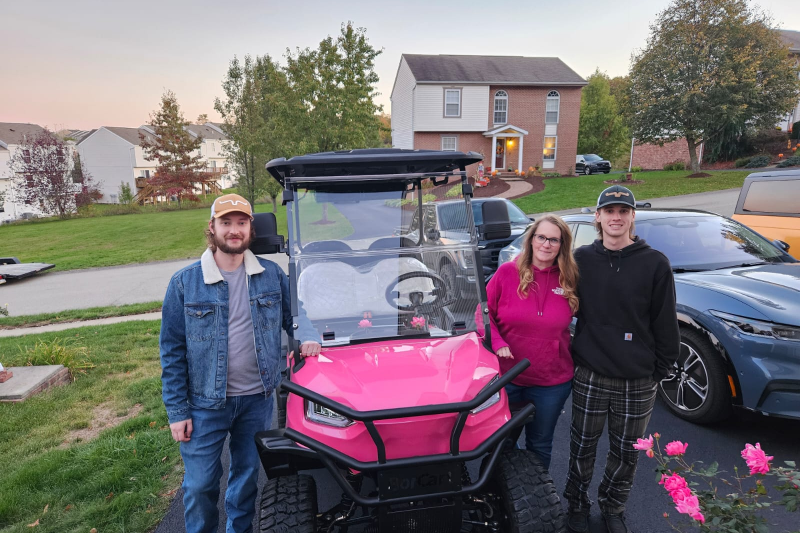
Traditional golf carts were designed primarily for golf-course transportation. Their job was straightforward: carry players, bags, and basic equipment quietly over relatively predictable terrain.
That market remains important. But customer expectations have expanded.
Buyers now use electric carts in:
- Gated communities and residential developments
- Resorts, hotels, and vacation properties
- Campuses and large industrial sites
- Warehouses, factories, and logistics facilities
- Marinas, estates, and private clubs
- Event venues and tourist destinations
- Short-distance neighborhood transportation, where permitted
This shift is changing how brands and distributors assess vehicles. They increasingly compare battery technology, seating configuration, ride comfort, body design, suspension, cargo options, service access, and compliance configuration—not just price.
TEKO EV's positioning reflects this broader use case. Rather than treating the vehicle as a basic course cart, the concept emphasizes an electric mobility product that can be adapted to lifestyle, hospitality, utility, and community applications.
A modern electric golf cart must balance several priorities that often compete with each other:
| Buyer Priority | What It Means in Practice |
|---|---|
| Performance | Smooth torque delivery, hill-climbing ability, stable handling |
| Range | Sufficient usable range for the intended route and passenger load |
| Comfort | Ergonomic seating, suspension tuning, legroom, easy entry and exit |
| Appearance | A distinctive exterior that supports retail appeal and brand identity |
| Durability | Corrosion resistance, robust chassis design, dependable electronics |
| Serviceability | Accessible replacement parts, diagnostics, and practical maintenance |
| Configurability | Seating, wheels, colors, roof, lighting, accessories, and branding |
The strongest product programs are built around the whole ownership cycle. A visually attractive cart may generate showroom interest, but long-term customer satisfaction depends on stable electrical systems, appropriate battery selection, responsive after-sales support, and components that can be maintained efficiently.
For an OEM buyer, this distinction is essential. A vehicle should be selected not only for its appearance at launch, but for how well it can support a dealer network, replacement-parts program, and repeat orders over time.
Lithium battery systems are now central to the premium electric golf cart category. Compared with conventional flooded lead-acid batteries, lithium systems can reduce routine battery maintenance requirements and provide a more compact, efficient energy-storage solution.
However, buyers should look beyond a headline voltage or claimed range.
1. What is the usable battery capacity?
Voltage alone does not explain real-world energy availability. Buyers should review capacity, discharge performance, and operating conditions.
2. How is battery protection managed?
A battery management system should monitor key operating conditions such as voltage, temperature, charging, and current flow.
3. What charging equipment is included?
Confirm charger compatibility, charging time, input requirements, connector type, and the availability of replacement chargers.
4. How does range change under load?
Passenger count, terrain, tire selection, driving style, temperature, and accessories all affect practical range.
5. What is the warranty structure?
Ask whether coverage applies to the complete battery pack, individual components, labor, freight, capacity retention, or only manufacturing defects.
6. Can local service teams diagnose the system?
Dealer-level diagnostics, clear fault codes, and replacement-part availability matter just as much as battery specifications.
Electric vehicles generally have fewer moving parts and fewer fluids requiring routine replacement than internal-combustion vehicles. That can reduce maintenance needs, but it does not eliminate the need for inspection schedules, charging procedures, tire care, brake checks, and battery safety practices.
For brands sourcing from China, the value of an OEM electric golf cart program lies in controlled differentiation.
A well-structured project can allow a buyer to create a product that looks and feels distinct in its local market without developing a complete vehicle from the ground up. The most useful customization options are those that improve brand consistency, customer relevance, or commercial performance.
- Custom body colors and color matching
- Brand logo placement and molded badges
- Seat colors, embroidery, and upholstery patterns
- Wheel designs and tire configurations
- Roof, windshield, mirror, and lighting options
- Lift kits and suspension packages
- Rear-facing seat kits or utility cargo beds
- Digital displays and selected electronics
- Packaging, manuals, labels, and market-specific documentation
- Spare-parts kits for distributors and service partners
Customization should be purposeful. Too many options can create purchasing complexity, slow service response, and increase inventory risk. A better approach is to define a core platform, then establish a limited number of high-demand option packages.
For example, a resort-oriented four-seat model may prioritize quiet operation, premium upholstery, enclosed storage, durable seating surfaces, and a polished visual presentation. A community-use model may focus more on lighting, mirrors, restraints, charging convenience, and locally required equipment.
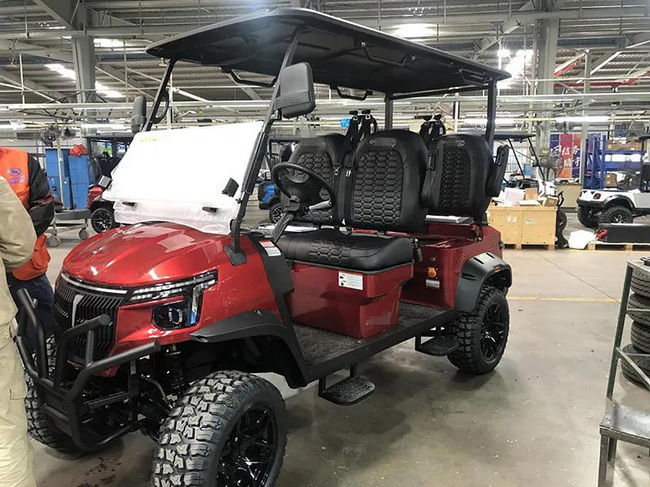
The right configuration depends on where the vehicle will operate, who will use it, and how it will be sold.
| Application | Recommended Focus | Typical Features |
|---|---|---|
| Golf course | Passenger comfort and turf-friendly operation | Four-seat layout, smooth suspension, bag storage |
| Resort or hotel | Appearance, comfort, and fleet uptime | Premium seats, durable trim, easy charging, fleet colors |
| Residential community | Everyday usability and safety equipment | Lighting, mirrors, turn signals, rear seating options |
| Industrial facility | Practicality and durability | Cargo bed, utility tires, reinforced storage, simple cleaning |
| Private estate | Style and personalization | Custom color, premium wheels, upgraded audio, luxury seats |
| Dealer retail | Broad consumer appeal | Four-seat or 4+2 configuration, attractive accessories, clear trim packages |
A supplier should be able to guide this configuration process with real product knowledge. That includes explaining trade-offs—not simply agreeing to every request.
For instance, larger wheels, aggressive tires, lift kits, additional passengers, sound systems, refrigerator boxes, and lighting packages can change power consumption, handling, range, payload, shipping volume, and cost. Responsible product planning requires these effects to be discussed before production.
One of the most common mistakes in electric cart sourcing is assuming that a cart can be used on public roads because it has lights, mirrors, and seat belts.
A golf cart, a neighborhood electric vehicle, and a low-speed vehicle may be treated differently under local rules. Requirements vary by country, state, province, municipality, road type, maximum speed, vehicle certification, registration rules, and permitted operating areas.
In the United States, low-speed vehicles are federally defined as four-wheeled vehicles with an attainable speed above 20 mph and not more than 25 mph. They are subject to specific safety requirements, while their permitted use on public roads is governed by state and local rules.
- Confirm the destination market and intended roads
- Check applicable speed limitations
- Verify required lighting, mirrors, reflectors, braking, windshield, and restraint equipment
- Determine VIN, labeling, documentation, and registration needs
- Review local import, customs, and vehicle-approval requirements
- Confirm whether the vehicle will be sold as a golf cart, off-road utility cart, NEV, or LSV
- Obtain market-specific legal advice before making sales claims
Never market a vehicle as street legal without confirming the final configuration and local requirements. This protects the buyer, dealer, end user, and brand reputation.
For international buyers, product quality is only one part of the decision. The manufacturer must also support repeatable production and clear communication.
A capable OEM partner should provide:
- Detailed product specifications and configuration sheets
- Transparent lead-time expectations
- Pre-production confirmation for colors, logos, and accessories
- Defined quality-control checkpoints
- Export-oriented packaging plans
- Parts lists and service documentation
- Warranty terms that are clear and realistic
- Professional communication during design, production, loading, and after-sales support
At BorCart, the goal should be to help customers build a vehicle program that fits their market—not simply ship a generic cart. That means matching the configuration to actual use, identifying technical risks early, and planning the spare-parts strategy before the first container leaves the factory.
This approach is particularly valuable for distributors building long-term dealer networks. A vehicle program becomes more scalable when common wear items, electrical components, body parts, and service documentation are planned from the beginning.
Before finalizing an electric golf cart order, use this checklist:
1. Define the target customer and operating environment.
2. Select the seating layout, payload requirement, and cargo needs.
3. Confirm battery chemistry, capacity, charger specification, and expected operating range.
4. Review motor, controller, braking, suspension, tire, and hill-climbing requirements.
5. Choose only commercially useful customization options.
6. Verify destination-market compliance requirements.
7. Request product drawings, configuration photos, and a complete quotation.
8. Agree on inspection standards before mass production.
9. Prepare spare-parts packages and warranty procedures.
10. Confirm packaging, container loading, shipping documents, and delivery timeline.
The market for electric golf carts is moving toward better design, smarter battery systems, stronger customization, and broader everyday use. Buyers that approach sourcing strategically can create a more competitive product line for resorts, communities, dealers, fleets, and private users.
BorCart supports OEM projects for electric golf carts, low-speed electric vehicles, and automotive components. Whether you need a branded retail model, a customized resort fleet, or a practical utility-focused configuration, our team can help you evaluate the right platform, features, and production plan.
Contact BorCart to discuss your OEM electric golf cart project, preferred configuration, target market, and branding requirements.
An electric golf cart is typically intended for golf courses, private property, and permitted low-speed areas. An LSV is a defined vehicle category that must meet relevant equipment and speed requirements. Whether a vehicle may operate on public roads depends on the final vehicle specification and local regulations.
Lithium batteries can offer lower routine maintenance needs, lighter weight, and strong charging efficiency. However, the best choice depends on budget, usage pattern, charging access, service capability, and the quality of the complete battery system.
Yes. OEM projects can include branded logos, body colors, seat embroidery, wheel choices, packaging, manuals, labels, and selected accessories. The available options and minimum order requirements should be confirmed for each project.
Actual range depends on battery capacity, passenger load, terrain, temperature, tire selection, driving behavior, accessories, and battery condition. Buyers should evaluate range based on their real operating conditions rather than a single advertised figure.
A practical initial package often includes key electrical components, chargers, controller-related parts, switches, lights, brake parts, suspension wear items, tires, body components, and service consumables. The right list depends on the selected model and expected fleet size.
Yes. Resort configurations can include fleet colors, premium seating, branded panels, storage solutions, upgraded roofs, lighting, durable interior materials, and passenger-friendly layouts.
Ask about production capacity, quality-control procedures, component specifications, battery warranty, lead time, customization limits, export experience, spare-parts support, documentation, and how the supplier handles after-sales issues.
1. [TIGON Golf Carts — The Origin of TEKO EV: How a New Brand Is Changing Electric Mobility Forever]
2. [Alternative Fuels Data Center — Maintenance and Safety of Electric Vehicles]
4. [U.S. Department of Transportation — Expanding Affordable E-Mobility Options: Low-Speed Vehicles]
5. [PennDOT — Neighborhood Electric Vehicles Fact Sheet]
6. [U.S. Department of Energy — Battery Health Sentry: Enhancing Lithium-Ion Battery Safety]


