


Views: 277 Author: BorCart Publish Time: 2026-08-23 Origin: Site


Content Menu
● Harley-Davidson Golf Cart History at a Glance
● The Beginning: 1963 Harley-Davidson Golf Carts
>> Why the Three-Wheel Design Became Iconic
● The Shift to Electric Harley Golf Carts
● The AMF Era and the Four-Wheel Transition
● Columbia ParCar and the End of the Harley Badge
>> A Practical Identification Rule
● How to Identify a Vintage Harley-Davidson Golf Cart
>> 2. Inspect the Frame and Body
>> 4. Review Provenance Before Purchase
● Restoration Priorities for Collectors and Dealers
>> Preservation-Focused Restoration
>> Utility-Focused Restoration
● What Determines Harley-Davidson Golf Cart Value?
● Modern Lessons from a Vintage Golf Cart Legacy
● FAQ
>> 1. When did Harley-Davidson start making golf carts?
>> 2. Did Harley-Davidson make electric golf carts?
>> 3. Are all Columbia ParCar carts Harley-Davidson golf carts?
>> 4. How can I verify a Harley-Davidson golf cart?
>> 5. Why are vintage Harley-Davidson golf carts collectible?
>> 6. Can a vintage Harley golf cart be used commercially today?
>> 7. What is the difference between a restored cart and a restomod?
Harley-Davidson golf carts occupy a distinctive place in American small-vehicle history. Built first as practical course transportation and later embraced as collectible machines, vintage Harley-Davidson golf carts combine mechanical simplicity, recognizable styling, and a direct connection to one of the world's most recognizable motorcycle names.
For collectors, dealers, restoration workshops, and golf cart brands, their appeal goes beyond nostalgia. These vehicles show how durable chassis design, serviceable powertrains, and memorable product identity can create value long after original production ends. Harley-Davidson entered the golf cart market in 1963, initially with three-wheel gasoline models, before electric versions, four-wheel configurations, and later ownership transitions reshaped the product line.
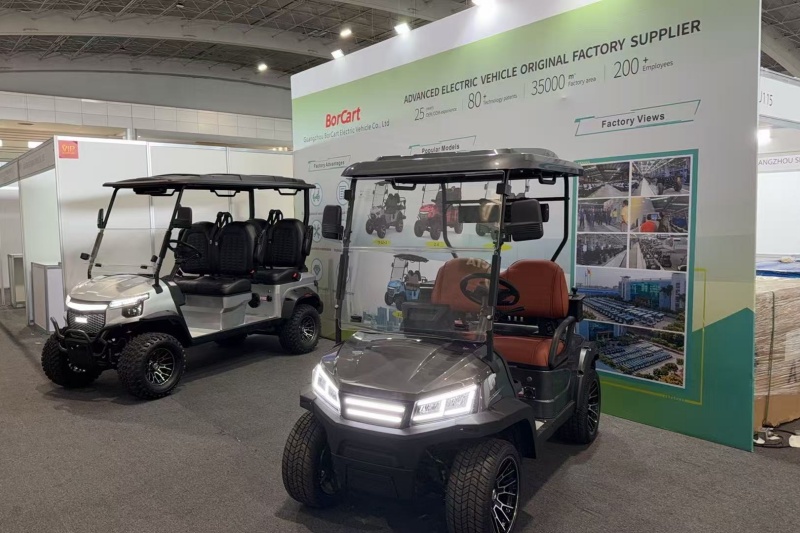
The Harley-Davidson golf cart story is best understood as three connected chapters: original Harley-Davidson production, the AMF period, and the Columbia ParCar transition.
| Period | Key Development | Why It Matters Today |
|---|---|---|
| 1963–1969 | Harley-Davidson introduced three-wheel gasoline golf carts | Early models are closely associated with the original Harley-Davidson name |
| 1969–1981/82 | AMF acquired Harley-Davidson and continued cart production | AMF-branded and Harley-badged carts became part of the collector market |
| From 1982 | Columbia ParCar acquired the golf cart division | The mechanical platform continued, but the Harley-Davidson identity gradually disappeared |
| 1970s onward | Four-wheel configurations gained popularity | Improved stability made the platform more practical for broader applications |
Harley-Davidson's York facility produced more than motorcycles during the AMF years; historical material from the company notes that the plant also manufactured leisure products including golf carts.
In 1963, Harley-Davidson introduced a compact three-wheel golf cart that looked and operated differently from many conventional course vehicles of its era. Early gasoline versions are commonly associated with a 245 cc, single-cylinder, air-cooled two-cycle engine. The engine used a fuel-and-oil mixture, a familiar format for small utility vehicles of that period.
The earliest carts stood out for several practical design decisions:
- Tiller steering rather than a standard steering wheel
- Three-wheel layout for compact maneuverability
- Rear lift-up body section for direct engine access
- Simple mechanical construction that made routine servicing relatively straightforward
- Compact footprint suited to golf courses, resorts, warehouses, and large private properties
From a product-design perspective, the lift-back body was especially effective. It made the engine bay accessible without extensive disassembly. For today's restoration specialists, this serviceability remains one reason these carts are attractive projects.
The three-wheel Harley golf cart was not designed as a high-speed vehicle. It was a lightweight people-and-equipment carrier built for controlled environments. Its visual identity came from its compact body, open stance, and unusual steering arrangement.
Today, collectors often value original features more highly than heavily altered components. A cart with its original body shell, period-correct steering system, identifiable engine, and readable serial plate may be more desirable than a vehicle that has been extensively modified.
Harley-Davidson also explored electric golf carts during the late 1960s. Electric power offered quieter operation and eliminated tailpipe exhaust at the point of use, making it appropriate for golf courses, resorts, and residential environments.
Early electric Harley-Davidson golf carts are commonly recognized by features such as:
- A conventional steering wheel rather than a tiller
- Battery storage and electrical components beneath or behind the seat area
- A quieter driving experience than two-cycle gasoline models
- Distinct serial-number conventions that may help with preliminary identification
Electric carts are historically important because they show that low-noise, battery-powered mobility was already a serious product category decades before modern electric utility vehicles became widely adopted.
However, buyers should avoid treating one serial-number prefix as complete proof of year, model, or originality. Serial plates can be missing, replaced, damaged, or mismatched during a restoration. A proper assessment should combine the serial information with the frame, body style, powertrain, electrical layout, and available ownership records.
In 1969, American Machine and Foundry, usually known as AMF, acquired Harley-Davidson. AMF continued the golf cart business, and carts later carried AMF branding. Historical parts specialists report that cart branding began to reflect AMF in the early 1970s, while four-wheel versions were introduced during that decade.
The AMF period matters because it expanded the product line beyond the earliest three-wheel format. Four-wheel golf carts offered a more stable platform, particularly for passengers, cargo, uneven terrain, and commercial use.
| Feature | Earlier Three-Wheel Models | Later Four-Wheel Models |
|---|---|---|
| Steering | Commonly tiller-operated | Often conventional steering wheel |
| Stability | Best for controlled, level surfaces | Better suited to varied workloads |
| Collector appeal | Strong historical identity | Broader practicality and usability |
| Typical restoration focus | Originality and visual authenticity | Ride quality, braking, steering, and utility upgrades |
For business owners, this transition also illustrates a lasting product lesson: a vehicle platform must evolve with its use cases. Golf carts were no longer limited to moving golfers and clubs. They became practical transport for resorts, factories, events, campuses, and private communities.
AMF sold the golf cart division to Columbia ParCar in late 1981 or 1982, depending on how the transaction and model-year changeover are described. Columbia continued developing related cart platforms under its own identity.
This distinction is important for sellers and buyers. Not every cart that resembles a vintage Harley-Davidson golf cart is a Harley-Davidson-branded vehicle. Some are later Columbia ParCar models that share platform characteristics, body concepts, or mechanical ancestry.
Later developments included continued use of two-cycle gasoline engines before a transition to a four-cycle Briggs & Stratton Vanguard engine in the mid-1990s, according to industry parts and retail references.
Use the following wording carefully when listing or sourcing a cart:
- "Harley-Davidson golf cart" when the vehicle has verified Harley-Davidson-era identity.
- "AMF Harley-Davidson golf cart" when branding and production period support that classification.
- "Columbia ParCar classic-style cart" when the vehicle is a later successor platform rather than a confirmed Harley-branded unit.
- "Harley-style custom golf cart" only when the cart uses visual inspiration rather than original Harley-Davidson manufacturing.
Accurate naming protects buyers, supports transparent distribution, and reduces confusion in international resale markets.
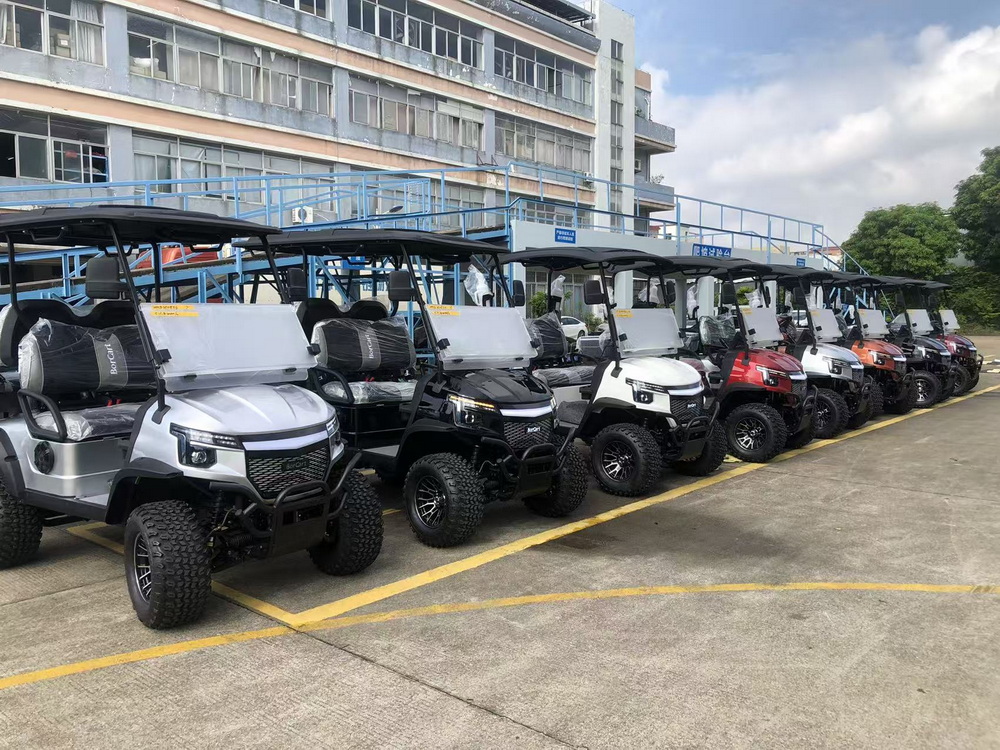
A reliable identification process should never rely on paint, decals, or a seller's verbal description alone. Start with the chassis and documentation.
Serial plates may be positioned near the rear wheel area on early carts or close to the battery compartment on later electric models. Condition varies significantly after decades of use, repainting, corrosion, and replacement parts.
Photograph the entire plate before cleaning it. Abrasive cleaning can permanently remove numbers that a specialist may need to inspect.
Look for evidence of the original configuration:
- Three-wheel or four-wheel layout
- Tiller handle or steering wheel
- Lift-back rear body design
- Original mounting points for the engine or battery system
- Signs of cut, welded, or replaced frame sections
A custom body kit may improve appearance, but it can make historical verification more difficult.
Many early gasoline carts used a two-cycle engine. Check whether the engine block, carburetor arrangement, exhaust routing, and drivetrain match the vehicle's claimed era.
If the engine has been replaced, that does not automatically make the cart undesirable. It simply changes how it should be described: restomod, repowered, or custom-built, rather than fully original.
Ask the seller for:
- Clear serial-plate photographs
- Previous registration or ownership documents where applicable
- Restoration invoices
- Engine and drivetrain information
- Photos taken before restoration
- A list of non-original components
This is particularly important for international wholesale buyers, collectors, and retailers sourcing vehicles for refurbishment.
Restoring a Harley-Davidson golf cart is different from preparing a modern fleet vehicle. The goal should be established before parts are ordered.
Choose this approach when historical value is the priority.
- Retain original body panels where practical
- Repair instead of replace unique castings and brackets
- Use period-appropriate colors and trim
- Document every modification
- Preserve the serial plate and identification evidence
Choose this approach when the cart will be used regularly at a resort, event venue, neighborhood, or commercial site.
- Upgrade braking and steering components as needed
- Replace worn tires, cables, and bushings
- Improve lighting and visibility
- Add durable seating materials
- Evaluate battery, motor, and charging-system safety on electric models
This option suits promotional fleets, rental businesses, and brand events.
- Use a reinforced frame and reliable drive system
- Apply a distinctive color scheme or branded graphics
- Add custom seats, wheels, lighting, and roof options
- Clearly state that it is a custom vehicle, not a factory-original collector cart
For a modern manufacturer, the best opportunity is often not copying a historic machine. It is translating the emotional appeal of vintage design into a safer, more dependable, serviceable electric or gasoline vehicle platform.
There is no universal price for a vintage Harley golf cart. Condition, originality, market location, transport cost, and buyer interest all affect the final transaction value.
| Value Driver | Effect on Market Appeal |
|---|---|
| Readable original serial plate | Supports identification and buyer confidence |
| Complete original body | Often improves collector interest |
| Correct engine or period-consistent powertrain | Can strengthen authenticity |
| Working drivetrain and brakes | Reduces restoration uncertainty |
| High-quality documentation | Makes dealer resale easier |
| Rare trim or unusual configuration | May attract specialized collectors |
| Heavy modifications | Can increase lifestyle appeal but reduce originality value |
A low purchase price can be misleading. Shipping, missing body parts, drivetrain repair, battery replacement, upholstery, tires, paintwork, and labor can quickly exceed the original acquisition cost. Buyers should calculate the total restoration budget, not only the cart's asking price.
The legacy of Harley-Davidson golf carts remains relevant because customer expectations have changed, but the core needs have not. Buyers still want vehicles that are recognizable, reliable, easy to maintain, and suitable for specific operating environments.
For golf cart brands, distributors, and vehicle manufacturers, several lessons stand out:
- Design identity creates long-term recognition. A functional vehicle becomes more memorable when it has a distinctive silhouette and coherent visual language.
- Service access matters. Maintenance-friendly layouts can reduce downtime and make fleet ownership more practical.
- Platform flexibility expands markets. A vehicle initially developed for golf can serve resorts, communities, industrial facilities, campuses, events, and tourism sites.
- Clear product labeling builds trust. Vintage-inspired styling should not be confused with historical factory authenticity.
- Customization supports commercial differentiation. Colors, seating, cargo layouts, roofs, lighting, and branding options help dealers serve multiple buyer segments.
For companies seeking a vintage-inspired golf cart with modern manufacturing consistency, BorCart can support OEM projects across electric vehicles and automotive components. From body styling and seating layouts to color matching, accessory integration, and market-oriented configurations, an experienced manufacturing partner can help turn a product concept into a differentiated vehicle line.
Contact BorCart to discuss your OEM golf cart project, custom electric vehicle requirements, or component sourcing plan.
Harley-Davidson began producing golf carts in 1963. The earliest models were three-wheel gasoline carts with a 245 cc two-cycle, single-cylinder engine.
Yes. Harley-Davidson introduced electric golf cart models during the late 1960s. These carts offered quieter operation and were designed for environments where lower noise was beneficial.
No. Columbia ParCar acquired the golf cart division after the AMF period and continued related vehicle production. A Columbia ParCar cart may share design or mechanical heritage, but it should not automatically be represented as a Harley-Davidson golf cart.
Check the serial plate, frame layout, steering type, engine or electrical system, body design, and documentation. A professional inspection is recommended when a cart is being purchased as a collectible or high-value restoration project.
They combine a recognizable brand association, unusual three-wheel designs, mechanical simplicity, limited surviving examples, and a strong restoration community. Originality, condition, and documentation have a major effect on collector interest.
It may be possible, but suitability depends on local laws, safety condition, insurance requirements, speed restrictions, and the intended operating environment. Before commercial use, inspect brakes, steering, tires, lighting, electrical systems, and structural condition.
A restored cart aims to return the vehicle close to its historical configuration. A restomod combines vintage styling with modern components, such as upgraded brakes, batteries, electric drive systems, lighting, seating, or suspension.
1. [Harley-Davidson Archives: York Factory Story]
2. [Golf Cart Garage: Harley Davidson Golf Carts – A Quick History]
3. [Vintage Golf Cart Parts: Harley-Davidson and Columbia Par Car History]
4. [The Rock Harley-Davidson: Harley-Davidson's Forgotten Golf Cart Legacy]
5. [Harley-Davidson: H-D History Guides]
6. [Original Article: The Legacy of Harley Davidson Golf Carts]


