


Views: 282 Author: BorCart Publish Time: 2026-08-15 Origin: Site


Content Menu
● What Is the Difference Between a Solar-Integrated Roof and a Standard Battery?
● Solar Roof vs Standard Battery for Remote Resort Fleets
● How Much Range Can a Solar Roof Add?
● When Solar-Integrated Roofs Create the Most Value
>> Guest Transportation on Open Resort Roads
>> Security and Patrol Operations
>> Housekeeping and Light Maintenance Routes
● When a Standard Battery System Is the Better Choice
● Battery Chemistry Matters More Than Many Buyers Expect
● A Practical Sizing Method for Resort Buyers
● Expert Design Considerations for OEM Buyers
>> Roof Structure and Vehicle Stability
>> Charge Controller Selection
>> Water Resistance and Corrosion Protection
>> Serviceability and Replacement Parts
● Recommended Fleet Strategy: Hybrid, Not One-Size-Fits-All
● Build a More Reliable Off-Grid Utility Cart Fleet
● FAQ
>> Can a solar-integrated roof fully charge an electric utility cart?
>> How much extra range can a solar roof provide?
>> Are solar roof utility carts suitable for cloudy or tropical areas?
>> Is lithium battery better than lead-acid for solar utility carts?
>> What type of resort benefits most from solar-assisted utility carts?
>> Should a resort choose solar roofs or a solar charging station?
For remote resorts, islands, eco-lodges, large parks, and private destination properties, selecting the right electric utility cart power solution is not only about published driving range. It is about whether the vehicle can complete daily guest transport, maintenance, housekeeping, security, and luggage tasks when charging access is limited. A solar-integrated roof can provide useful daytime energy recovery, while a standard battery system delivers predictable stored energy and simpler fleet planning.
As an OEM manufacturer of electric utility carts and automotive components, BorCart works with overseas brands, wholesalers, and vehicle manufacturers that need configurable solutions for demanding operating environments. This guide compares solar roof electric utility carts with standard battery-powered utility carts, helping buyers specify a more practical vehicle for off-grid resort operations.
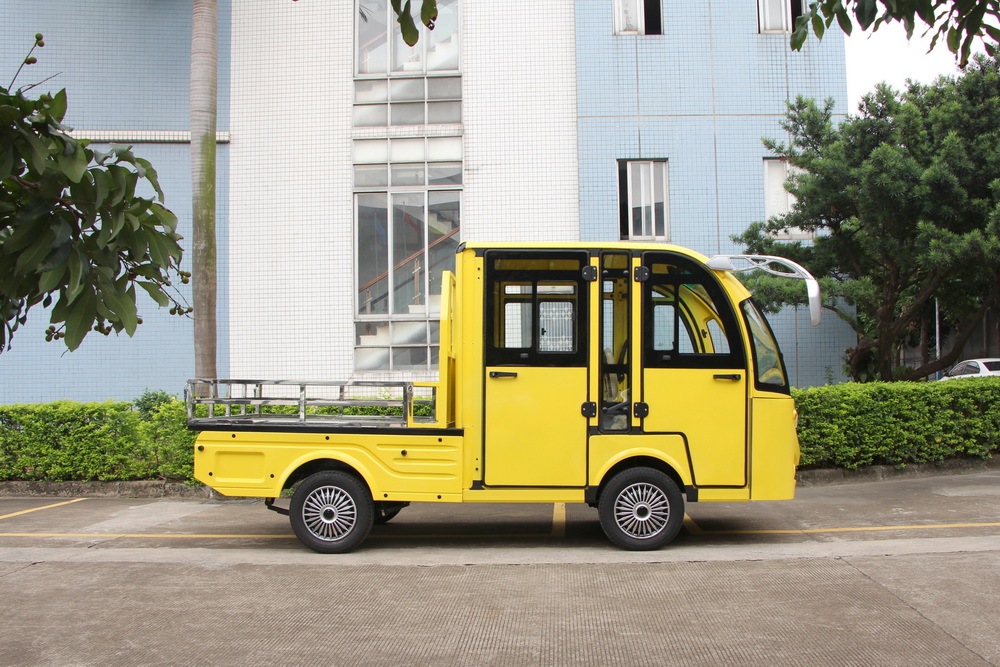
A standard electric utility cart relies on a battery pack charged from an external power source. Depending on the configuration, that source may be the local electrical grid, a generator, a solar charging station, or an energy-storage system.
A solar-integrated roof adds photovoltaic panels to the vehicle canopy. The panels send captured solar energy through a charge controller—ideally an MPPT controller—to support the vehicle battery while the cart is parked or operating in sunlight.
The key distinction is simple:
- A standard battery stores the energy needed for driving.
- A solar-integrated roof harvests additional energy during daylight.
- A solar roof does not eliminate the need for a correctly sized battery pack.
- For high-utilization fleets, a solar roof should usually be treated as a range extender, not a replacement for scheduled charging.
In practical resort applications, roof-mounted solar works best when the cart spends substantial time outdoors, daily routes are moderate, and sun exposure is relatively consistent. Standard battery systems remain the stronger choice when predictable long shifts, heavy payloads, steep grades, indoor storage, or shaded routes dominate the duty cycle.
| Evaluation Factor | Solar-Integrated Roof Utility Cart | Standard Battery Utility Cart |
|---|---|---|
| Primary energy source | Battery pack plus daytime solar harvesting | Battery pack charged from an external source |
| Daily operating range | Can recover part of consumed energy in strong sunlight | Fixed by usable battery capacity and route conditions |
| Charging dependency | Lower dependence on plug-in charging for light-duty use | Higher dependence on charging infrastructure |
| Best use case | Outdoor patrol, guest shuttles, sightseeing, light resort transport | Heavy-duty maintenance, repeated hauling, all-day scheduled service |
| Weather sensitivity | High; output falls with cloud cover, shade, dirt, and low sun angle | Low during operation; charging strategy is the main variable |
| Upfront vehicle cost | Higher due to panels, controller, wiring, and reinforced roof design | Lower and simpler specification |
| Maintenance needs | Requires panel cleaning and electrical inspection | Primarily battery and charger maintenance |
| Range predictability | Moderate; depends on local solar conditions | High when battery health and charging are managed well |
| Off-grid suitability | Excellent as a supplemental energy source | Excellent when paired with a solar charging hub or generator backup |
A well-designed solar roof may produce roughly 1–3 kWh of energy per day under favorable conditions, depending on panel capacity, sunlight, temperature, shading, and system losses. Typical vehicle roofs may accommodate approximately 200–600 W of solar capacity, but usable output is always site-specific. That energy is meaningful for a low-speed cart, yet it is rarely sufficient to replace a full overnight charge for a heavily used vehicle.
The most important question from fleet buyers is not whether solar charging works. It is whether it makes a measurable operational difference.
The answer depends on three variables:
Recovered daily energy=Solar panel power×Peak sun hours×System efficiency
For example, consider a resort utility cart with a 400 W solar roof:
- Solar roof capacity: 400 W
- Average peak sunlight: 5 hours
- Real-world system efficiency: 75%
- Estimated daily recovered energy: 1.5 kWh
If the vehicle consumes 60–110 Wh per mile on relatively flat, low-speed routes, that 1.5 kWh could theoretically recover approximately 14–25 miles of driving range. Terrain, payload, passenger count, tire pressure, speed, stop-start frequency, and battery condition can reduce that result significantly.
For resort operators, this recovered energy can make the difference between:
- Completing an afternoon guest-transfer loop without returning to base.
- Maintaining reserve capacity for security rounds after sunset.
- Reducing midday charging interruptions.
- Lowering the frequency of plug-in charging for lightly used vehicles.
- Keeping batteries at a healthier state of charge during outdoor parking.
However, a solar roof should not be marketed as an unlimited-energy solution. If a cart is fully loaded, repeatedly climbing slopes, pulling equipment, or operating under tree cover, the solar contribution may be modest.
Solar-integrated utility carts are particularly suitable for resorts where vehicles remain outside for much of the day. The strongest applications combine long daylight exposure with moderate daily energy consumption.
Golf-style passenger carts, sightseeing carts, and compact shuttle vehicles frequently wait outside lobbies, villas, beaches, and activity zones. During those waiting periods, a solar roof can continue sending energy to the battery.
This works especially well when routes are:
- Flat or gently sloped.
- Short and repetitive.
- Exposed to direct daylight.
- Used at low driving speeds.
- Scheduled with natural waiting time between trips.
For this type of fleet, solar energy helps offset the energy consumed during guest transfers without changing the driver's workflow.
Remote resorts often require evening patrols, perimeter checks, and emergency-response readiness. A solar roof can support daytime battery recovery while security carts remain positioned at outdoor checkpoints.
The operational benefit is not simply more daytime mileage. It is greater battery reserve after sunset, when solar generation ends but vehicle availability becomes more important.
Housekeeping teams may make repeated trips between storage areas, villas, restaurants, and recreation facilities. Light-duty maintenance crews may carry tools, cleaning supplies, towels, landscaping materials, or replacement parts.
For these applications, solar-assisted carts can reduce energy draw over a shift. But fleet managers should match the solution to the payload. A solar roof is most valuable for lighter loads; it cannot compensate for an undersized battery in a cargo-intensive operation.
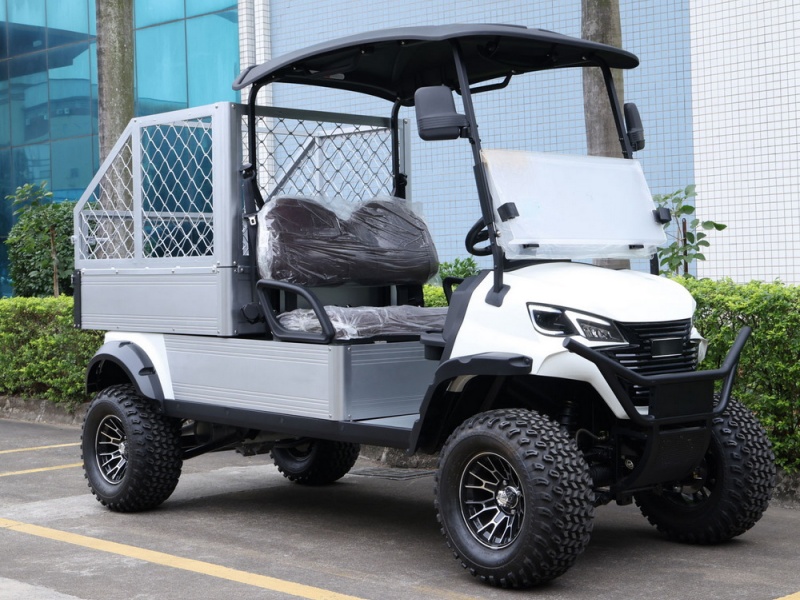
A standard battery configuration is often the more reliable decision when the priority is consistent output rather than daytime energy recovery.
Choose a standard battery-focused specification when the vehicle must handle:
- Heavy cargo loads, including maintenance tools, laundry, food service supplies, or waste collection.
- Steep terrain, where hill climbing raises energy consumption sharply.
- Long operating hours with limited outdoor idle time.
- Indoor or shaded parking, where roof panels receive little useful sunlight.
- Night operations, when solar energy is unavailable.
- High fleet utilization, where carts rotate continuously and require fast, scheduled charging.
For a remote site, the most resilient approach may be a larger lithium battery pack combined with an off-grid solar charging station. Unlike a vehicle-mounted panel, a fixed solar array can be sized according to total fleet demand and positioned at an optimal angle. It can also work with stationary energy storage, allowing carts to charge after daylight hours.
A roof-mounted solar system is best viewed as vehicle-level support. A solar carport or charging hub is the stronger choice for fleet-level energy independence.
The solar roof decision should be made together with the battery decision. Battery chemistry affects usable capacity, charging efficiency, maintenance requirements, weight, cycle life, and voltage stability.
| Battery Option | Advantages | Limitations | Recommended Resort Use |
|---|---|---|---|
| Lead-acid battery | Lower acquisition cost; established technology | Heavy; requires more maintenance; reduced usable capacity and performance sensitivity | Low-budget, lower-utilization fleets with available maintenance staff |
| Lithium-ion battery | Lower weight; deeper usable discharge; fast charging potential; low maintenance | Higher initial cost; requires a quality battery management system | Premium resorts, high-use fleets, remote operations, OEM private-label projects |
| Lithium battery plus solar roof | Better energy acceptance and efficient daytime top-up | Higher system cost; solar output remains weather-dependent | Outdoor routes with limited charging access and moderate payloads |
For most export-focused resort projects, lithium batteries paired with a properly controlled solar roof offer the most balanced technical solution. Lithium systems generally accept charging energy efficiently and reduce vehicle weight compared with lead-acid alternatives, which can improve handling and help preserve usable range.
The battery management system must be matched to the battery pack, controller, charger, solar input, and vehicle voltage. An incorrectly integrated system can cause charging faults, shortened battery life, or safety risks.
Before selecting solar roof utility carts, calculate the actual duty cycle. Avoid choosing a vehicle based only on an advertised maximum range figure.
Use this five-step specification process:
1. Map each route. Record distance, elevation changes, road surface, stops, average speed, and passenger or cargo load.
2. Measure daily utilization. Identify how many kilometers or miles each cart travels during peak and off-peak periods.
3. Identify daylight exposure. Estimate how many hours the cart is outdoors in direct sun, not simply the local daylight duration.
4. Set a reserve margin. Keep enough battery capacity for unexpected guest requests, emergency response, route detours, and battery aging.
5. Plan charging around operations. Determine whether overnight charging, opportunity charging, battery swapping, solar carports, or generator backup is available.
A useful planning principle is to avoid operating a resort fleet at the edge of its published range. If a vehicle is expected to drive 40 miles daily under real payload conditions, specify sufficient usable battery capacity for more than 40 miles. The solar roof should increase operational flexibility, not serve as the only reserve.
A successful solar utility cart is not simply a standard vehicle with a panel attached to the roof. It requires integrated mechanical and electrical engineering.
BorCart-style OEM projects should evaluate the following specification points before production:
Solar panels add weight above the vehicle's center of gravity. The roof frame, supports, fasteners, and canopy design must withstand vibration, wind loads, uneven roads, and long-term outdoor exposure.
A lightweight panel may look attractive, but durability and mounting security matter more in commercial fleets. Poor mounting can create noise, roof damage, water ingress, or safety concerns.
An MPPT controller can improve energy harvesting compared with basic regulation, especially when sunlight levels and panel temperatures change throughout the day. The controller must be compatible with the system voltage and battery charging profile.
It should also include protection against:
- Reverse polarity.
- Overvoltage.
- Overcurrent.
- Short circuits.
- Over-temperature conditions.
- Improper battery charging behavior.
Remote coastal resorts, island destinations, and tropical properties expose vehicles to salt air, humidity, rain, dust, and ultraviolet radiation. Connectors, cable routing, seals, brackets, and fasteners should be selected for the local environment.
For marine-adjacent locations, corrosion protection is not an optional upgrade. It is a fleet reliability requirement.
Brand owners should request clear documentation for panel wiring, controller parameters, fuses, connectors, and replacement procedures. A solar roof system should be easy for local technicians to inspect and repair without dismantling major vehicle components.
This is particularly important for distributors serving geographically dispersed customers.
The strongest remote resort fleet strategy is often a mixed configuration.
Use solar-integrated roof carts for outdoor, moderate-duty tasks such as guest transportation, security patrols, concierge transport, and scenic route operations. Use larger-battery standard utility carts for demanding maintenance, hauling, delivery, and long-shift service.
For example, a 60-room island resort may use:
- Solar-roof passenger carts for villa transfers and daytime guest circulation.
- Standard lithium cargo carts for landscaping, housekeeping, kitchen supply, and waste collection.
- A solar carport with stationary storage for overnight fleet charging.
- Generator backup for prolonged cloudy periods or peak-season demand.
This structure gives the operator better energy resilience without forcing every vehicle into the same specification.
A solar-integrated roof can extend daily range, reduce charging dependence, and improve flexibility for outdoor resort transport. Yet it works best as part of a complete energy strategy built around the correct battery capacity, real route data, dependable charging infrastructure, and local weather conditions.
For remote resorts with light-to-moderate daytime usage, solar roof electric utility carts can be a valuable upgrade. For demanding commercial work, larger standard lithium battery systems—or a centralized solar charging solution—remain essential.
Contact BorCart to discuss an OEM electric utility cart program tailored to your resort routes, passenger capacity, cargo needs, battery voltage, solar roof requirements, branding, and destination climate.
Usually, no. A vehicle-mounted solar roof is typically a supplemental charging source. It can recover energy during daylight and extend daily operating range, but a heavily used cart generally still needs plug-in charging or a larger off-grid solar charging system.
Under favorable sunlight, a 300–600 W roof-mounted solar system may provide meaningful energy recovery. Actual added range depends on solar exposure, panel capacity, controller efficiency, terrain, payload, and vehicle energy consumption. A 400 W system under five peak sun hours could recover about 1.5 kWh per day in a realistic example.
They can still provide some energy, but output is lower in cloud cover, shade, rain, and high-humidity conditions. Buyers should size the battery for the vehicle's full operational requirement without relying on solar generation.
In many commercial applications, lithium is a better fit because it is lighter, generally offers deeper usable capacity, and requires less routine maintenance. However, the right choice depends on vehicle cost targets, route demands, charging equipment, and local service capability.
Open, sunny properties with outdoor vehicle parking and moderate daily routes benefit most. Typical examples include beach resorts, golf resorts, safari lodges, island properties, eco-resorts, large parks, and private communities.
For individual carts with moderate outdoor use, solar roofs add useful range support. For a high-utilization fleet, a fixed solar charging station or solar carport is usually more powerful and scalable because it can use a larger panel area and stationary battery storage.
1. National Renewable Energy Laboratory. "Photovoltaic Research." [https://www.nlr.gov/pv/]
2. U.S. Department of Energy. "Batteries, Charging, and Electric Vehicles." [https://www.energy.gov/cmei/vehicles/batteries-charging-and-electric-vehicles]
3. Hawke EV. "Charging a Golf Cart with Solar Panels." [https://www.hawkeev.com/us/guides/can-you-charge-a-golf-buggy-with-solar-panels]
4. SunnyWell Energy. "Solar Powered Golf Cart." [https://sunnywellenergy.com/solar-powered-golf-cart/]
5. Nature Scientific Reports. "Optimizing Efficiency and Sustainability: ANN-Controlled Bi-Directional EV Battery Charger With Solar PV Integration." [https://www.nature.com/articles/s41598-026-46047-2]
6. 100UP. "Off-Grid Solar EV Charging Setup Under Carport." [https://100up.com.au/projects/scalable-off-grid-ev-charging/]


