


Views: 222 Author: BorCart Publish Time: 2026-05-07 Origin: Site


As a Chinese golf cart manufacturer serving the North American market for over a decade, I've witnessed firsthand how street legal golf carts have transformed from niche recreational vehicles into practical urban transportation solutions. New Jersey's unique regulatory landscape presents both challenges and opportunities for golf cart enthusiasts seeking to drive legally on public roads. [nativerank]
The key to making your golf cart street legal in New Jersey lies in understanding Low-Speed Vehicle (LSV) classification requirements, which mandate speeds between 20-25 mph, comprehensive safety equipment, and proper registration through either New Jersey's LSV system or out-of-state registration reciprocity. [golfcartsearch]
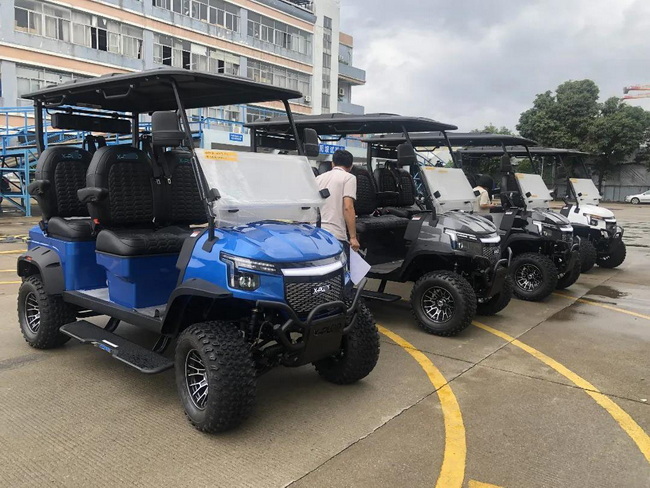
New Jersey categorizes street legal golf carts as Low-Speed Vehicles (LSVs), a distinct classification under state motor vehicle law. Unlike traditional golf carts designed solely for course use, LSVs must meet federal safety standards outlined in Federal Motor Vehicle Safety Standard (FMVSS) 500. [nj]
An LSV in New Jersey is defined as a four-wheeled electric vehicle capable of speeds exceeding 20 mph but not surpassing 25 mph. This classification is critical because standard golf carts—those maxing out at 15-20 mph—cannot legally operate on New Jersey public roads, even with safety modifications. [golfcartsearch]
Direct New Jersey LSV Registration
For golf carts that meet LSV specifications, New Jersey offers direct registration through the Motor Vehicle Commission (MVC). The process requires: [nj]
- Title documentation: Manufacturer's Certificate of Origin or previous owner's Certificate of Title [1dollarmontana]
- Proof of insurance: LSVs must carry liability insurance identical to standard motor vehicles [nj]
- Safety compliance certification: Documentation proving the vehicle meets federal LSV safety standards [hartvillegolfcarts]
- Registration fees: Standard MVC registration costs apply, typically ranging from $50-$85 annually based on 2026 rates [nativerank]
New Jersey LSVs receive a distinct license plate designating them as low-speed vehicles and are exempt from regular vehicle safety inspections. [nj]
Out-of-State Registration Alternative
Many golf cart owners pursue out-of-state registration to circumvent New Jersey's strict LSV requirements. States with more lenient regulations—particularly Montana, South Dakota, Pennsylvania, and Delaware—allow standard golf carts to be registered as street legal vehicles. [tigongolfcarts]
This approach leverages interstate reciprocity agreements, which recognize valid out-of-state vehicle registrations. Once registered elsewhere, these golf carts can legally operate on New Jersey roads provided they comply with the registering state's equipment requirements and observe New Jersey traffic laws. [nativerank]
The out-of-state registration process typically involves:
1. State selection: Choose a registration-friendly state (Montana and South Dakota are most popular) [nativerank]
2. Documentation gathering: Compile bill of sale, title (if applicable), and proof of insurance [nativerank]
3. Application submission: Complete the chosen state's registration forms, which can often be done remotely through specialized services [1dollarmontana]
4. Fee payment: Registration costs vary by state but typically range from $150-$300 for initial setup [1dollarmontana]
Street legal golf carts operating in New Jersey must incorporate comprehensive safety equipment regardless of registration pathway. These requirements ensure roadworthiness and protect both occupants and other road users. [cartguysinc]
Lighting Systems
- Headlights: Front-facing white lights visible from 500 feet, required for operation between sunset and sunrise [hartvillegolfcarts]
- Taillights: Rear-facing red lights visible from 500 feet [tigongolfcarts]
- Brake lights: Red stop lights activated by brake pedal application [tigongolfcarts]
- Turn signals: Front and rear directional indicators with amber front signals and red or amber rear signals [cartguysinc]
- Reflectors: Red rear reflectors and amber side reflectors for enhanced visibility [cartguysinc]
Occupant Protection
- Seat belts: Federal standards require lap belts at minimum for each designated seating position; three-point harnesses are recommended for enhanced safety [hartvillegolfcarts]
- Windshield: A compliant automotive-grade windshield or mandatory eye protection for all occupants [nativerank]
- Mirrors: Minimum of one rearview mirror; side mirrors strongly recommended for comprehensive visibility [cartguysinc]
Operational Equipment
- Horn: Audible warning device capable of being heard from 200 feet [nativerank]
- Parking brake: Mechanical brake system capable of holding the vehicle on a 20% grade [cartguysinc]
- Speedometer: Required to monitor compliance with 25 mph maximum speed [cartguysinc]
- VIN plate: Permanent Vehicle Identification Number for registration and law enforcement purposes [1dollarmontana]
New Jersey municipalities retain authority to establish additional restrictions or allowances for LSV operation. Coastal communities like Surf City and Stafford Township have embraced LSV use for local transportation, explicitly permitting properly registered vehicles on streets with speed limits at or below 25 mph. [surfcitypdnj]
Conversely, some densely populated areas restrict LSV access to specific neighborhoods or time periods. Before operating your street legal golf cart, research local ordinances through your municipal clerk's office or police department. [golfcartsearch]
New Jersey law restricts LSV operation to roads with posted speed limits of 25 mph or lower. This limitation stems from the 25 mph maximum speed capacity of Low-Speed Vehicles, ensuring they don't impede faster-moving traffic or create hazardous situations. [golfcarts]
Permitted Roadways:
- Residential neighborhood streets (typically 25 mph zones)
- Municipal roads designated for LSV use by local ordinance
- Public roads adjacent to agricultural properties (with proper permits)
- Shore community roads in LSV-friendly municipalities
Prohibited Roadways:
- Limited-access highways and interstate routes
- State highways with speed limits exceeding 25 mph
- Roads specifically restricted by municipal ordinance
- Sidewalks and pedestrian-only pathways
New Jersey's home rule authority allows municipalities to customize LSV regulations within state law parameters. This creates a patchwork of local rules that can significantly impact where and when you can drive. [golfcartsearch]
LSV-Friendly Shore Communities:
Coastal towns have led New Jersey's embrace of golf cart transportation. Surf City, for example, requires LSV registration, insurance, and compliance with all state safety equipment standards but welcomes their use on designated local streets. These communities recognize LSVs as practical transportation for beachgoers and seasonal residents, reducing automotive congestion during peak summer months. [surfcitypdnj]
Urban Restrictions:
Densely populated municipalities may restrict or prohibit LSV operation entirely, citing safety concerns related to higher traffic volumes and pedestrian density. Always verify local regulations before operating your golf cart in a new municipality. [golfcartsearch]
New Jersey's LSV regulations establish clear age-based requirements for legal operation: [golfcartsearch]
Drivers 17 and Older:
Operators aged 17 or above must possess a valid New Jersey driver's license to operate an LSV on public roads. This requirement treats LSVs identically to standard motor vehicles, ensuring operators understand traffic laws, road signs, and safe driving practices. [golfcartsearch]
Drivers Under 17:
Minors under 17 are generally prohibited from operating LSVs on public roads. However, specific exemptions exist: [golfcartsearch]
- Agricultural operations: Youth operating golf carts on public lands adjacent to farms under direct adult supervision [nativerank]
- Licensed special events: Permitted events where minors may operate golf carts under controlled conditions [nativerank]
- Private property: No age restrictions apply to golf cart operation on private land [golfcartsearch]
While New Jersey doesn't mandate a separate golf cart operator's license, the state strongly encourages safety education. Operators under 18 who qualify for exemptions must complete an approved safety education course covering: [nativerank]
- Golf cart mechanical operation and maintenance
- Traffic law compliance and right-of-way rules
- Hazard recognition and defensive driving techniques
- Emergency procedures and accident response
- Local ordinance awareness
Many municipalities and golf cart dealerships offer free or low-cost safety courses. Even experienced drivers benefit from these programs, which often include hands-on training and local regulation updates. [tigongolfcarts]
New Jersey law requires all LSVs operating on public roads to carry motor vehicle liability insurance. This insurance must meet minimum coverage standards identical to those for passenger vehicles: [surfcitypdnj]
- Bodily injury liability: $15,000 per person / $30,000 per accident minimum
- Property damage liability: $5,000 minimum
- Personal injury protection (PIP): New Jersey's no-fault coverage requirement
- Uninsured/underinsured motorist coverage: Recommended but not always mandatory
Insurance costs for LSVs typically run 30-50% lower than standard automobile policies due to limited speed capabilities and restricted operating areas. Shop among multiple carriers, as some specialize in golf cart and LSV coverage with competitive rates. [tigongolfcarts]
Beyond mandatory insurance, prudent LSV owners implement additional risk management strategies:
1. Comprehensive coverage: Protects against theft, vandalism, and weather damage
2. Umbrella policies: Provide excess liability coverage beyond base policy limits
3. Regular maintenance documentation: Establishes diligent upkeep in potential liability claims
4. Operator agreements: Written rules for family members and guests using your LSV
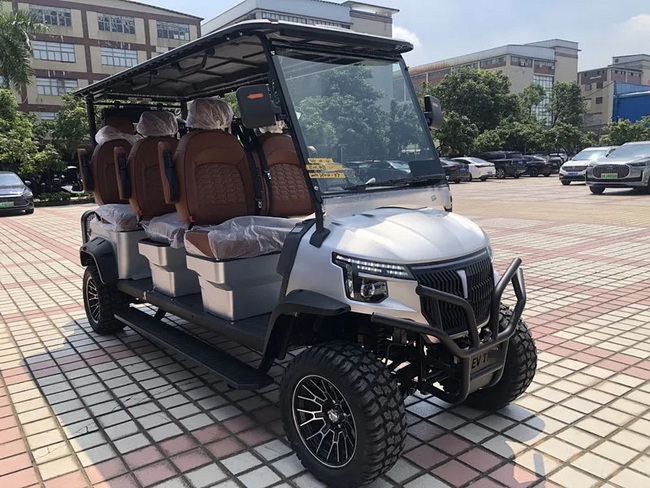
Standard golf carts typically achieve maximum speeds of 12-15 mph, falling short of the 20+ mph minimum for LSV classification. Upgrading to LSV standards requires either: [cartguysinc]
Motor and Controller Upgrades:
- High-performance electric motors (typically 5-7 HP)
- Advanced speed controllers capable of managing higher amperage
- Enhanced battery systems (48V or 72V configurations)
- Upgraded drivetrain components to handle increased speeds
Professional Conversion Services:
Many golf cart dealerships and specialty shops offer LSV conversion packages. Professional installations ensure compliance with federal safety standards and typically include certification documentation required for registration. [1dollarmontana]
Cost Considerations:
Complete LSV conversions range from $2,500 to $6,000 depending on the base cart's condition and required modifications. For many owners, purchasing a factory-built LSV represents better value than extensive retrofitting. [hartvillegolfcarts]
Equipping your golf cart with required safety features demands attention to quality and compliance. Substandard components may fail registration inspection or compromise occupant safety. [cartguysinc]
Lighting System Installation:
DOT-compliant automotive lighting ensures visibility and legal compliance. Wiring should follow National Electrical Code standards with proper fusing and weatherproof connections. Many owners install LED lighting systems for superior brightness and energy efficiency. [tigongolfcarts]
Structural Modifications:
Adding windshields, mirrors, and seat belts may require frame reinforcement to maintain structural integrity. Professional installation ensures these components mount securely and function as intended during normal operation and potential collisions. [hartvillegolfcarts]
Street legal golf carts offer compelling advantages for short-distance transportation: [aronsonads]
Environmental Impact:
- Zero direct emissions: Electric LSVs produce no tailpipe emissions, improving local air quality
- Reduced carbon footprint: Even accounting for electricity generation, LSVs emit 60-70% less CO2 than comparable gas vehicles over their lifecycle
- Noise reduction: Quiet electric motors minimize noise pollution in residential areas
Economic Savings:
- Operating costs: Electricity costs approximately $0.02-$0.04 per mile versus $0.12-$0.18 for gasoline vehicles
- Maintenance: Simplified electric drivetrains require minimal maintenance compared to internal combustion engines
- Insurance: LSV policies typically cost 30-50% less than standard auto insurance
- Parking: Many municipalities offer free or reduced-rate parking for LSVs in designated areas
Beyond environmental and financial benefits, street legal golf carts enhance daily life: [fasthippomedia]
- Neighborhood errands: Ideal for trips to local shops, restaurants, and community facilities
- Beach community transportation: Perfect for coastal living where parking is limited and distances are short
- Campus and retirement community use: Efficient transportation in planned developments
- Business applications: Local delivery services, property maintenance, and security patrol operations
Many New Jersey residents encounter obstacles during LSV registration: [nativerank]
Challenge: New Jersey's strict vehicle categorization makes direct golf cart registration difficult for vehicles not factory-built as LSVs.
Solution: Utilize out-of-state registration through Montana, South Dakota, or Delaware, which recognize modified golf carts as street legal vehicles. Specialized registration services streamline this process, handling paperwork remotely for flat fees typically under $300. [golfcartsearch]
Challenge: Varying local ordinances create confusion about where LSVs can legally operate. [golfcartsearch]
Solution: Before operating in a new municipality, contact the local police department or municipal clerk to verify LSV regulations. Many communities post this information on official websites or provide printed guides at municipal buildings.
Challenge: Identifying truly compliant safety equipment among numerous aftermarket options. [cartguysinc]
Solution: Purchase components certified to Federal Motor Vehicle Safety Standards (FMVSS). Reputable golf cart dealerships and LSV conversion specialists stock compliant equipment and provide installation documentation required for registration. [hartvillegolfcarts]
Based on industry experience serving the North American market, I offer these insights for those considering street legal golf carts: [wgcontent]
Distance and Terrain:
Evaluate typical trip distances and terrain. LSVs excel for trips under 5 miles on relatively flat terrain. Hilly areas may require more powerful motors and extended-range battery systems.
Passenger Capacity:
Four-seat LSVs accommodate most family transportation needs, while six-seat models suit larger families or group transportation applications. Remember that passenger capacity directly impacts range and performance.
Climate Considerations:
New Jersey's seasonal weather demands enclosed LSVs with heating systems for year-round usability. Open-air carts work well for seasonal shore community use but limit cold-weather operation.
Not all golf carts are created equal. When selecting an LSV or conversion candidate, prioritize: [fasthippomedia]
- Established manufacturers: Companies with proven track records and comprehensive warranty programs
- Factory LSV models: Purpose-built LSVs offer superior integration of safety equipment and performance
- Service network: Local dealership support ensures maintenance and repair accessibility
- Parts availability: Common components reduce long-term ownership costs
Initial purchase price represents just one component of LSV ownership. Factor in: [waypostmarketing]
- Registration and title fees ($150-$400 initially, $50-$100 annually)
- Insurance premiums ($300-$800 annually)
- Electricity costs ($50-$150 annually for typical use)
- Battery replacement ($800-$2,000 every 4-6 years)
- Maintenance and repairs ($100-$300 annually)
- Storage and accessories ($200-$1,000 initially)
New Jersey municipalities increasingly recognize LSVs as legitimate transportation alternatives. This trend, driven by environmental concerns and changing mobility preferences, suggests broader LSV access in coming years. [golfcartsearch]
Several factors support this expansion:
Infrastructure Development:
Communities are designating LSV-specific parking areas and charging stations, facilitating easier integration into existing transportation networks. [blog.se]
Regulatory Refinement:
State legislators periodically review LSV regulations to balance safety concerns with growing demand for alternative transportation options. Future revisions may expand permissible roadways or streamline registration processes. [golfcartsearch]
Technology Advancement:
Modern LSVs incorporate advanced safety features including collision avoidance systems, enhanced lighting, and improved structural protection. These innovations may persuade cautious municipalities to reconsider restrictive policies. [blog.se]
As New Jersey pursues aggressive electric vehicle adoption targets, LSVs fit naturally into broader electrification strategies. State incentive programs may eventually include LSVs, reducing purchase costs and accelerating adoption. [blog.se]
Successfully navigating New Jersey's street legal golf cart landscape requires understanding LSV classification requirements, selecting the appropriate registration pathway, ensuring comprehensive safety equipment compliance, and respecting local ordinances. Whether you pursue direct New Jersey LSV registration or leverage out-of-state reciprocity agreements, proper preparation ensures legal, safe, and enjoyable golf cart operation on Garden State roads. [nj]
As manufacturers and suppliers serving this market, we're committed to providing both the vehicles and knowledge necessary for successful LSV ownership. The investment in proper equipment, registration, and safety training pays dividends through years of economical, environmentally friendly transportation perfectly suited to New Jersey's diverse communities. [nativerank]
For those ready to embrace this practical transportation alternative, start by assessing your specific needs, researching local regulations, and connecting with reputable dealers who can guide you through the conversion or purchase process. The freedom to navigate your community in a street legal golf cart awaits—with proper preparation, you'll be cruising New Jersey streets safely and legally.
Q1: Can I drive a regular golf cart on New Jersey streets without modifications?
No, standard golf carts designed for course use cannot legally operate on New Jersey public roads. You must either upgrade your cart to Low-Speed Vehicle (LSV) standards—including speed capability of 20-25 mph and comprehensive safety equipment—or register the vehicle in another state that permits standard golf carts as street legal. [tigongolfcarts]
Q2: How much does it cost to make a golf cart street legal in New Jersey?
Total costs vary significantly based on your approach. Direct LSV conversion of an existing golf cart typically costs $2,500-$6,000 for necessary modifications, plus $150-$400 for registration and insurance setup. Out-of-state registration through Montana or South Dakota runs $150-$300 for registration services, plus ongoing annual renewal fees of $50-$100. Purchasing a factory-built LSV ranges from $8,000-$20,000 depending on features and manufacturer. [tigongolfcarts]
Q3: Do I need a special license to drive a street legal golf cart in New Jersey?
Operators aged 17 and older must possess a valid New Jersey driver's license to operate an LSV on public roads—no special endorsement or separate golf cart license is required. Drivers under 17 are generally prohibited from operating LSVs on public roads except in specific circumstances such as agricultural operations or licensed special events, and must complete safety education courses. [nativerank]
Q4: What roads can I drive my street legal golf cart on in New Jersey?
LSVs are restricted to roads with posted speed limits of 25 mph or lower. This typically includes residential neighborhood streets and municipal roads specifically designated for LSV use. You cannot operate LSVs on limited-access highways, state routes with speed limits exceeding 25 mph, or roads prohibited by local ordinance. Always verify municipal regulations, as some communities restrict or prohibit LSV operation entirely. [golfcarts]
Q5: Is insurance required for street legal golf carts in New Jersey?
Yes, New Jersey requires all LSVs operating on public roads to carry motor vehicle liability insurance meeting the same minimum standards as passenger vehicles. This includes bodily injury liability ($15,000/$30,000 minimum), property damage liability ($5,000 minimum), and personal injury protection (PIP) coverage. LSV insurance policies typically cost 30-50% less than standard automobile insurance due to limited speed capabilities and restricted operating areas. [surfcitypdnj]
1. Tigo Golf Carts. "Conquering the Streets: Our Favorite New Jersey Street Legal Golf Carts." https://tigongolfcarts.com/conquering-the-streets-our-favorite-new-jersey-street-legal-golf-carts/
2. Golf Cart Search. "New Jersey Golf Cart Laws (2026): Street Legal Rules." https://golfcartsearch.com/golf-cart-laws/new-jersey
3. New Jersey Motor Vehicle Commission. "Low Speed Vehicles (LSV)." https://www.nj.gov/mvc/vehicletopics/lowspeed.htm
4. Tigo Golf Carts. "New Jersey Street Legal Golf Cart / LSV Recommendations." https://tigongolfcarts.com/new-jersey-street-legal-golf-cart-lsv-recommendations/
5. Surf City Police Department. "Low Speed Vehicles (LSV) Regulations." https://surfcitypdnj.org/lsv/
6. 1 Dollar Montana. "Complete Guide: How to Make Your Golf Cart Street Legal - Safety, Regulations, and Tips." https://1dollarmontana.com/complete-guide-how-to-make-your-golf-cart-street-legal-safety-regulations-and-tips/
7. Cart Guys Inc. "Street-Legal Golf Carts: Rules, Requirements, and Benefits." https://www.cartguysinc.com/street-legal-golf-carts-rules-requirements-and-benefits
8. Golf Cart Search. "South Dakota Golf Cart Laws (2026): Street Legal Rules." https://golfcartsearch.com/golf-cart-laws/south-dakota
9. Hartville Golf Carts. "What Makes a Golf Cart Street Legal." https://hartvillegolfcarts.com/what-makes-a-golf-cart-street-legal/
10. WG Content. "E-E-A-T for Content Quality in SEO and GEO." https://wgcontent.com/blog/eeat-content-quality-seo-geo/
11. Schneider Electric. "Top EV Trends That Every Manufacturer Should Know." https://blog.se.com/innovation/2025/07/04/ev-trends-strategies/
12. Aronson Advertising. "Writing for the Revolution: Marketing Content for Electric Vehicles." https://www.aronsonads.com/blog/marketing-content-for-electric-vehicles/


