


Views: 282 Author: BorCart Publish Time: 2026-08-22 Origin: Site


Content Menu
● 48V vs 72V Golf Cart Systems at a Glance
● Why 72V Improves Acceleration
>> More Available Power at Comparable Current
>> Lower Current Stress for Similar Output
>> Better Acceleration at Higher Vehicle Speed
● Hill-Climbing: Where the Difference Becomes Clear
>> Gradeability Is Not a Single Number
>> Typical Operating Scenarios
● How Payload Changes Hill Performance
● Battery Chemistry and BMS Settings Matter
● Designing a Complete 72V Performance Package
● Choosing Between 48V and 72V
● Work With BorCart on Your Voltage Strategy
● FAQs
>> Is a 72V golf cart always faster than a 48V golf cart?
>> Does higher voltage automatically mean more torque?
>> Is 48V enough for hilly golf courses?
>> Can a 48V golf cart be converted to 72V?
>> Does a 72V golf cart have better range?
>> Which system is better for a six-seat resort shuttle cart?
For electric golf carts, 72V vs 48V performance is not simply a question of top speed. The real difference appears when a cart must launch with passengers aboard, climb a sustained incline, carry equipment, or repeat stop-and-go routes throughout a working day.
From an OEM manufacturing perspective, a correctly engineered 72V golf cart system gives brands more electrical headroom for strong acceleration and sustained hill-climbing. A well-matched 48V golf cart system, however, remains a practical and cost-conscious solution for flat golf courses, gated communities, resorts, and light-duty utility applications. The right choice depends on terrain, payload, intended speed, controller calibration, battery discharge capability, and thermal management—not voltage alone.
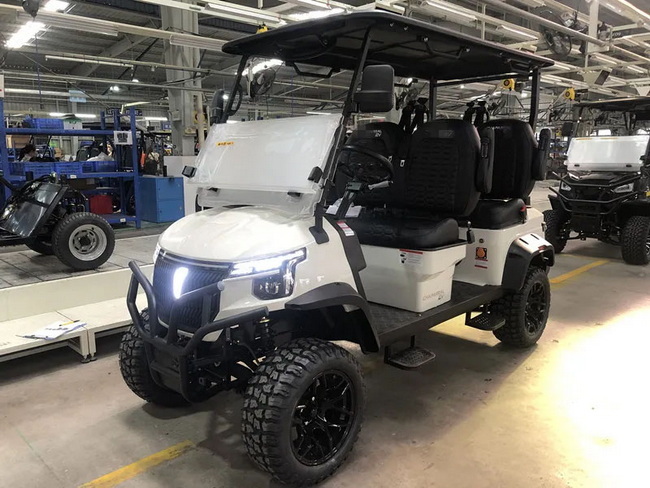
A 48V or 72V label describes the nominal voltage of the complete traction system: battery pack, motor, controller, charger, DC-DC converter, contactors, wiring, and protection devices must all be designed to operate together.
At the same current, a higher-voltage system can deliver more electrical power:
Power=Voltage×Current
For example, at 200A:
- A 48V system can theoretically supply 9.6 kW.
- A 72V system can theoretically supply 14.4 kW.
Real-world output is lower after accounting for voltage sag, controller limits, battery management settings, motor efficiency, and temperature. Still, the example explains why a 72V platform can provide more sustained pulling power without demanding the same extreme current from its components.
| Performance Factor | Standard 48V System | High-Voltage 72V System |
|---|---|---|
| Typical application | Golf courses, flat communities, light resort transport | Hilly resorts, lifted carts, utility fleets, passenger transport |
| Initial acceleration | Smooth and adequate for normal use | Faster, more confident acceleration under load |
| Hill-climbing performance | Suitable for moderate grades with correct specification | Better speed retention on sustained or steep grades |
| Current demand for equal power | Higher | Lower |
| Cable and connector heat | Can increase under repeated heavy loads | Often easier to manage for comparable power output |
| System cost and complexity | Lower and more familiar | Higher due to component ratings and calibration requirements |
| Upgrade compatibility | Broad aftermarket compatibility | Requires matched high-voltage components |
| Best OEM positioning | Mainstream, cost-effective fleet platform | Premium performance, heavy-duty, and terrain-focused platform |
Important: A 72V cart is not automatically more capable than every 48V cart. A high-quality 48V lithium system with a robust motor, high-current controller, correct gear ratio, and sufficient battery discharge capability can outperform an under-specified 72V vehicle. The complete vehicle architecture matters.
Acceleration begins at the battery pack, but it is delivered through the controller and motor. When a driver presses the accelerator, the controller converts battery energy into controlled motor current. That motor current creates torque.
In practical vehicle development, a 72V system offers three important advantages.
Higher voltage allows more power to move through the system at the same current level. This is valuable during launch conditions, especially when the cart is carrying four to eight passengers, luggage, tools, or cargo.
A 72V platform can therefore be calibrated to provide:
- Stronger launch response
- More stable acceleration with a full passenger load
- Better mid-speed pickup
- Less noticeable performance drop on moderate slopes
- Improved confidence when merging or crossing road intersections
For a brand selling premium personal transport vehicles or resort shuttle carts, this sharper response can become a meaningful product differentiator.
To produce the same electrical power, a lower-voltage system needs more current. Higher current increases losses in cables, connectors, busbars, contactors, and controller electronics. Those losses are often expressed as:
Heat Loss=I2R
Because current is squared, a modest reduction in current can materially reduce heat generation. This is especially relevant for golf carts that repeatedly accelerate from rest, operate in hot climates, or run fully loaded throughout the day.
A 72V system does not eliminate heat. Motor temperature, controller temperature, battery temperature, terrain, payload, and driving behavior still matter. But the additional voltage headroom can help an OEM design a more durable performance package.
At low speed, motor torque is primarily determined by controller output and motor current. As speed rises, the motor generates back electromotive force, which opposes the battery voltage. This is where a 72V system usually shows a clearer advantage.
With higher available voltage, the controller has more headroom to continue driving current through the motor as vehicle speed increases. The result is often better acceleration beyond the initial launch phase.
For buyers, this means the difference may feel less like "a faster golf cart" and more like a cart that does not run out of breath when loaded or climbing.
Hill-climbing is one of the most demanding operating conditions for an electric golf cart. The motor must overcome vehicle weight, passengers, cargo, rolling resistance, drivetrain losses, and gravity—all while operating at low speed, where cooling airflow may be limited.
A 48V golf cart can handle moderate slopes effectively when it uses an appropriate motor, controller, rear axle ratio, tire size, and lithium battery pack. But on longer grades or under full load, its speed can decline more quickly because the system reaches current, thermal, or voltage-sag limits sooner.
A 72V golf cart can better maintain power on a climb because it can support higher system power while managing current more effectively.
Many product catalogs list a maximum climbing grade, such as 20%, 25%, or 30%. That number is useful, but it is incomplete without test conditions.
A reliable gradeability statement should define:
1. Total vehicle mass, including passengers and cargo
2. Slope gradient and surface condition
3. Battery state of charge
4. Ambient temperature
5. Tire size and inflation pressure
6. Distance climbed and target speed
7. Whether the result is a one-time launch or sustained operation
A cart may technically start on a steep slope with a lightly loaded battery at full charge. That does not prove it can climb the same grade repeatedly with six passengers, luggage, a partially discharged battery, and a hot controller.
For OEM buyers, asking these questions is more valuable than comparing one advertised climbing percentage with another.
| Use Scenario | 48V Recommendation | 72V Recommendation |
|---|---|---|
| Flat golf course paths | Excellent fit | Usually unnecessary unless premium performance is required |
| Residential community roads | Suitable for normal loads and moderate grades | Ideal where routes include long hills or higher operating speeds |
| Beach resort or hotel shuttle | Suitable for flat sites | Preferred for loaded passenger transport and frequent stop-start routes |
| Mountain resort | May require careful specification and derating | Stronger choice for sustained grades and passenger loads |
| Lifted recreational cart | Performance can be reduced by larger tires | Better foundation for larger tires, added weight, and upgraded suspension |
| Utility or cargo vehicle | Suitable for light-duty hauling | Better for demanding loads, ramps, and repeated climbs |
Industry comparison guides commonly report that 48V carts are generally appropriate for moderate slopes, while 72V systems better retain speed on steeper grades and under heavier load. However, the exact results vary substantially by powertrain specification and test conditions.
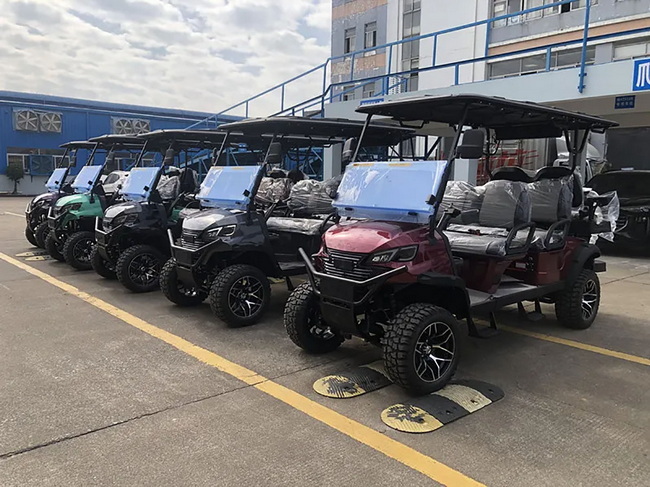
A common purchasing mistake is evaluating a golf cart with one driver on level ground, then expecting identical behavior after adding passengers or cargo.
Every additional kilogram increases the force required to accelerate and climb. On an incline, the gravitational component rises with vehicle mass and slope angle. In simple terms, a six-seat shuttle cart climbing a resort road requires a very different powertrain strategy than a two-seat golf cart moving across a flat fairway.
For a heavy-duty application, assess these factors together:
- Gross vehicle weight rating
- Passenger count and typical occupant weight
- Cargo weight and distribution
- Largest expected slope
- Required speed while climbing
- Daily route distance and charging windows
- Ambient heat and operating hours
A 72V platform is particularly valuable when buyers require both high payload capacity and consistent hill performance. Rather than selecting a higher-voltage system only for speed, brands can use it to create a smoother and more predictable loaded-driving experience.
Voltage is only one part of the battery decision. Battery chemistry, capacity, continuous discharge current, peak discharge current, internal resistance, and battery management system settings strongly affect real-world acceleration and hill-climbing.
Lithium battery packs generally provide more stable voltage under load than traditional lead-acid batteries, depending on cell type and pack design. For golf cart manufacturers and fleet operators, a properly configured lithium pack can offer:
- Reduced voltage sag during acceleration
- More consistent hill-climbing near mid-charge
- Lower maintenance requirements
- Potential weight savings
- Integrated protection and diagnostic functions
However, a lithium pack must be correctly matched to the controller's current demand. A battery with insufficient continuous discharge capability may trigger protection limits or reduce power on a hill, even if its nominal voltage is 72V.
Lead-acid battery systems remain common in value-focused golf cart applications. They can be suitable for lower-duty use, but their voltage often drops more under heavy current draw. This can make acceleration and climbing performance feel weaker as the battery discharges.
For brands targeting entry-level fleet vehicles, a 48V lead-acid configuration may remain commercially attractive. For premium passenger transport, steep terrain, or frequent daily operation, lithium-based 48V or 72V systems often provide a more consistent user experience.
Converting only the battery from 48V to 72V is not a safe or effective upgrade path. Every high-voltage component must be rated, calibrated, and validated as part of the complete vehicle.
A proper 72V golf cart package should include:
1. A 72V-rated traction motor matched to the target torque and speed range
2. A 72V-rated motor controller with appropriate continuous and peak current limits
3. A compatible lithium battery pack with sufficient discharge capability
4. A matched charger with correct charging curve and communication protocol where required
5. High-voltage contactors, fuses, cables, connectors, and DC-DC converter
6. A suitable axle ratio and tire size for the intended load and terrain
7. Thermal validation under repeated hill-climbing and hot-weather conditions
8. Controlled acceleration calibration to protect tires, driveline components, and passengers
This full-system approach is particularly important for private-label brands. A vehicle that feels powerful during a short showroom test but limits output after several hill climbs can damage customer confidence and increase warranty exposure.
The best voltage choice begins with the actual use case, not a specification sheet.
Choose a 48V golf cart system when your target customer needs a dependable, accessible platform for relatively flat terrain, moderate speeds, normal passenger loads, and cost-sensitive fleet deployment. It is a strong option for standard golf courses, retirement communities, campuses, and low-intensity resort routes.
Choose a 72V golf cart system when the vehicle must handle steep or sustained inclines, heavier payloads, larger tires, repeated stop-start operation, stronger acceleration expectations, or premium positioning. It is especially suited to mountain resorts, hilly residential communities, high-capacity shuttle applications, utility transport, and performance-oriented recreational vehicles.
The most effective OEM product line often includes both options:
- A 48V mainstream series for broad market compatibility and value.
- A 72V premium series for heavy-duty routes, high-load use, and terrain-driven performance.
This allows distributors and brand owners to address different price points without forcing every customer into one powertrain configuration.
At BorCart, we support overseas brands, wholesalers, and vehicle manufacturers with OEM electric vehicle and auto-parts solutions. Whether your market needs a cost-efficient 48V golf cart platform or a high-performance 72V configuration for hill-climbing and rapid acceleration, the best result comes from matching the powertrain to real operating conditions.
Share your target passenger capacity, terrain profile, required climbing grade, tire size, speed target, and daily route distance. Our engineering team can help develop an electric golf cart configuration that supports your brand position, operational requirements, and customer expectations.
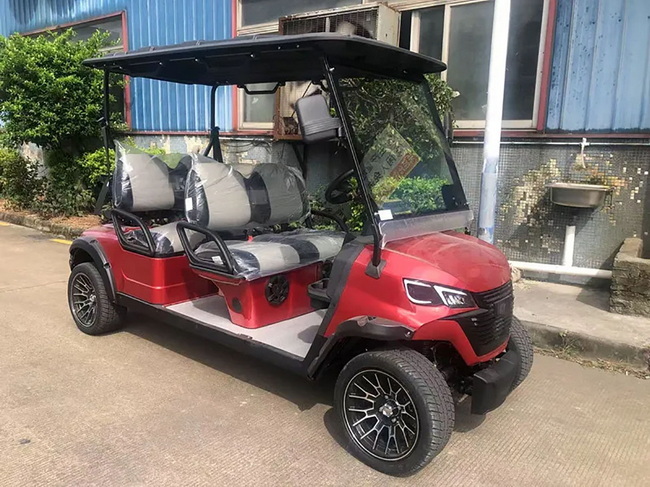
Usually, a properly engineered 72V system has greater potential for higher speed and stronger acceleration. But final speed depends on controller programming, motor RPM, gear ratio, tire diameter, vehicle weight, and local operating requirements.
Not automatically. Motor torque is closely linked to motor current. However, a 72V system can provide more power headroom and can maintain useful torque more effectively as vehicle speed rises or load increases.
Yes, for many moderate hills. The correct answer depends on grade length, passenger load, battery type, controller current rating, and whether the cart must climb repeatedly throughout the day. For sustained steep terrain, 72V is often the more robust choice.
It can only be done safely by replacing or confirming compatibility of the battery, motor, controller, charger, DC-DC converter, contactors, fuse, wiring, instrumentation, and other electrical components. A battery-only conversion can damage components and create safety risks.
Not necessarily. Range is determined primarily by total battery energy in kilowatt-hours, vehicle weight, driving speed, terrain, tire selection, payload, and driving pattern. A 72V battery with insufficient amp-hour capacity may offer less usable energy than a larger 48V pack.
For flat, low-speed resort routes, a properly specified 48V system may be sufficient. For hilly properties, frequent passenger loading, luggage transport, and all-day stop-start duty, a 72V system usually provides stronger performance reserve.
2. [NASA Technical Reports Server: Advanced DC Motor Controller for Battery-Powered Electric Vehicles]
3. [GTM LSV: 48V vs 72V Electric Golf Cart for Hilly Courses]
4. [GTM LSV: 36V vs 48V vs 72V Golf Carts—Voltage Comparison Guide]
5. [WIS-TEK: Choosing Between 72V and 48V Golf Carts]
6. [Global Sources: New Model Electric Golf Carts Product Document]


