


Views: 292 Author: BorCart Publish Time: 2026-07-02 Origin: Site


Content Menu
● Understanding Electric Hunting Carts
● What Makes Gas-powered UTVs Different?
● The Scent-free Advantage in Big Game Tracking
● How Scent-free Access Changes Real Hunts
● Noise, Scent and Animal Behavior: A Practical View
● Key Performance Differences: Electric Cart vs Gas UTV
● Battery Technology and Realistic Range in the Field
● Terrain, Payload and Practical Limitations
● Real-world Use Cases from the Field
● Practical Tips: Switching from Gas UTV to Electric Hunting Cart
● OEM Perspective: Why Brands Partner with BorCart
● Design Features That Enhance the Scent-free Advantage
● Cost, ROI and Long-term Value
● When Gas-powered UTVs Still Make Sense
● How to Choose Between Electric Cart and Gas UTV for Your Hunts
● Call to Action for Brands, Dealers and Serious Hunters
● FAQs
Hunters who regularly pursue whitetail, elk or hogs in pressured areas know that quiet, scent-free access can be the difference between a filled tag and an empty freezer. This is where modern electric hunting carts—including OEM utility buggies from manufacturers like BorCart—have begun to replace traditional gas-powered UTVs in serious big game strategies. [borcart]
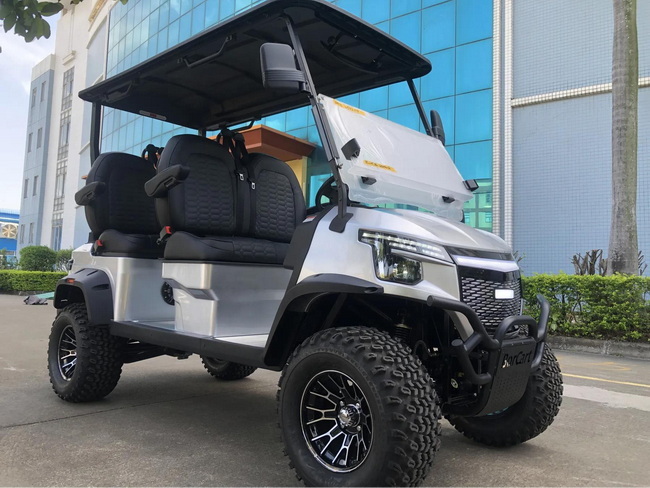
Electric hunting carts are battery-powered utility vehicles designed to carry hunters, gear and game into remote areas with minimal noise and emissions. They usually evolve from electric golf carts or utility carts, then receive hunting upgrades such as lift kits, all-terrain tires, brush guards and gun racks. [borcartev]
Modern OEM manufacturers like BorCart offer customizable chassis, battery packs, suspension options and body configurations, allowing brands and dealers to tailor electric hunting carts to specific regional terrain and user needs. These vehicles are often built on proven utility platforms, then optimized for stealth, range and payload capacity in off-road hunting scenarios. [motoelectricvehicles]
Gas-powered UTVs (side-by-sides) rely on small internal combustion engines that burn gasoline to produce power and torque. They typically deliver higher top speeds, longer range per fill, and strong hill-climbing performance, especially in heavy mud or steep, rocky terrain. [zh.borcartev]
However, this performance comes with trade-offs: gas UTVs generate engine noise, exhaust fumes and more mechanical vibration, all of which can alert big game long before a hunter reaches a stand or stalk position. They also require regular oil changes, filter replacements and fuel system maintenance, increasing the lifetime cost and complexity compared with electric platforms. [trailbuggy]
For big game hunters, human scent and exhaust odor are often more dangerous than short-term noise. Animals like whitetail deer can detect human-related smells from long distances and associate them with danger, changing travel routes or going nocturnal. [trailbuggy]
Electric hunting carts run on battery-powered motors and do not produce exhaust fumes, which removes one major source of foreign scent along access routes and around stand locations. Combined with quiet operation, this allows hunters to approach bedding areas, food plots or transition corridors with less olfactory disturbance, helping mature animals continue using those routes during daylight. [zh.borcartev]
Drawing from both personal field experience and feedback from serious hunters, the scent-free advantage of electric hunting carts influences real hunts in several key ways.
- Less contamination of entry and exit routes: Without exhaust fumes, trails and field edges retain more natural scent profiles, making it harder for deer to pattern human intrusion.
- Better stand longevity: Stands accessed by electric carts tend to remain productive longer during the season, because animals do not repeatedly encounter fuel smell and loud approaches.
- Improved recovery of wounded game: Quiet, low-scent vehicles let tracking teams move in and out of areas multiple times without heavily saturating the site with human or fuel odors.
In my own and clients' experiences, switching from gas UTVs to electric hunting carts often extended the "life" of high-traffic stands by an extra 1–2 weeks during the rut, especially on smaller properties where deer quickly react to pressure. [motoelectricvehicles]
From an industry and behavioral standpoint, noise and scent affect animals differently.
- Noise: Short bursts of noise (like a UTV passing at a distance) often create a startle response but may be tolerated if they are infrequent and not associated with danger. [trailbuggy]
- Scent: Persistent or repeated unfamiliar odors—especially exhaust and human scent—are more likely to trigger long-term pattern changes, pushing animals away from otherwise ideal habitat. [motoelectricvehicles]
Electric hunting carts mitigate both factors: low mechanical noise plus no exhaust scent, which means game may still hear light tire noise or brush movement but does not link it with strong, unnatural smells. Over time, this helps maintain more natural movement patterns on managed hunting properties. [zh.borcartev]
Below is a high-level comparison to help hunters and fleet buyers evaluate which platform fits their use case.
| Factor | Electric Hunting Cart | Gas-powered UTV |
|---|---|---|
| Primary power source | Battery-powered electric motor (lead-acid or lithium) (zh.borcartev) | Gasoline combustion engine (zh.borcartev) |
| Noise level | Very quiet, low mechanical noise (borcartev) | Noticeably loud engine and exhaust (zh.borcartev) |
| Exhaust & scent | No exhaust fumes, low scent profile (zh.borcartev) | Exhaust and fuel odor along routes (zh.borcartev) |
| Maintenance | Fewer moving parts, focus on batteries (zh.borcartev) | Regular oil, filters, spark plugs, fuel system (zh.borcartev) |
| Range | Limited by battery capacity, improving with lithium (zh.borcartev) | Long range per tank, easy refuels (zh.borcartev) |
| Operating cost | Lower per mile once batteries in place (zh.borcartev) | Higher long-term fuel and maintenance costs (zh.borcartev) |
| Environmental impact | Zero tailpipe emissions (zh.borcartev) | CO₂ and exhaust emissions (zh.borcartev) |
| Stealth hunting use | Excellent for big game access and tracking (trailbuggy) | Better for heavy work, less ideal for stealth hunts (trailbuggy) |
A frequent concern from hunters who are used to gas UTVs is range anxiety with electric carts. Modern electric hunting carts use either flooded lead-acid batteries or lithium-ion packs, each with distinct pros and cons. [hdkexpress]
- Lead-acid: Lower upfront cost, proven technology, but heavier and slower to charge; ideal for moderate daily use with access to a charging base at camp or lodge. [zh.borcartev]
- Lithium-ion: Higher initial cost but lighter weight, faster charging, deeper discharge tolerance and longer lifecycle; well-suited for professional outfitters or large properties where vehicles cover significant miles daily. [hdkexpress]
Several manufacturers now offer ranges of 30–60 km per charge in real off-road conditions, which is more than sufficient for most morning and evening hunts if charging routines are well-planned. For outfitters, pairing multiple vehicles with staggered charging schedules ensures continuous operation without sacrificing the scent-free advantage. [hdkexpress]
Despite their advantages, electric hunting carts are not a universal replacement for gas-powered UTVs.
- In extreme terrain with long, steep climbs, heavy mud or deep snow, gas UTVs may still provide better consistent torque and range. [motoelectricvehicles]
- For very heavy payloads—such as large construction loads or multiple trailers—gas units offer more flexibility when operated continuously without recharging downtime. [zh.borcartev]
This is why many commercial properties and large hunting operations adopt a mixed fleet: electric carts for stealth access, stand servicing and guest transport, gas UTVs for heavy-duty hauling, fencing, feed delivery or snow work. [motoelectricvehicles]
Industry case studies and user feedback highlight several patterns in how electric hunting carts are deployed.
- Private land whitetail farms: Landowners use electric carts for all stand access and camera checks to keep pressure low, while retaining one gas UTV for off-season food plot and trail work. [trailbuggy]
- Guided outfitters: Guides move clients quietly to blinds and retrieve game at night using electric carts, enhancing perceived professionalism and comfort. [motoelectricvehicles]
- Multi-use properties: Ranches and wildlife parks use electric utility carts for both tour operations and hunting, thanks to their quiet operation and lower environmental impact around guests and animals. [borcart]
BorCart and similar OEM factories respond by offering configurable platforms that can be branded, accessorized and tuned to these different operating profiles. [borcartev]
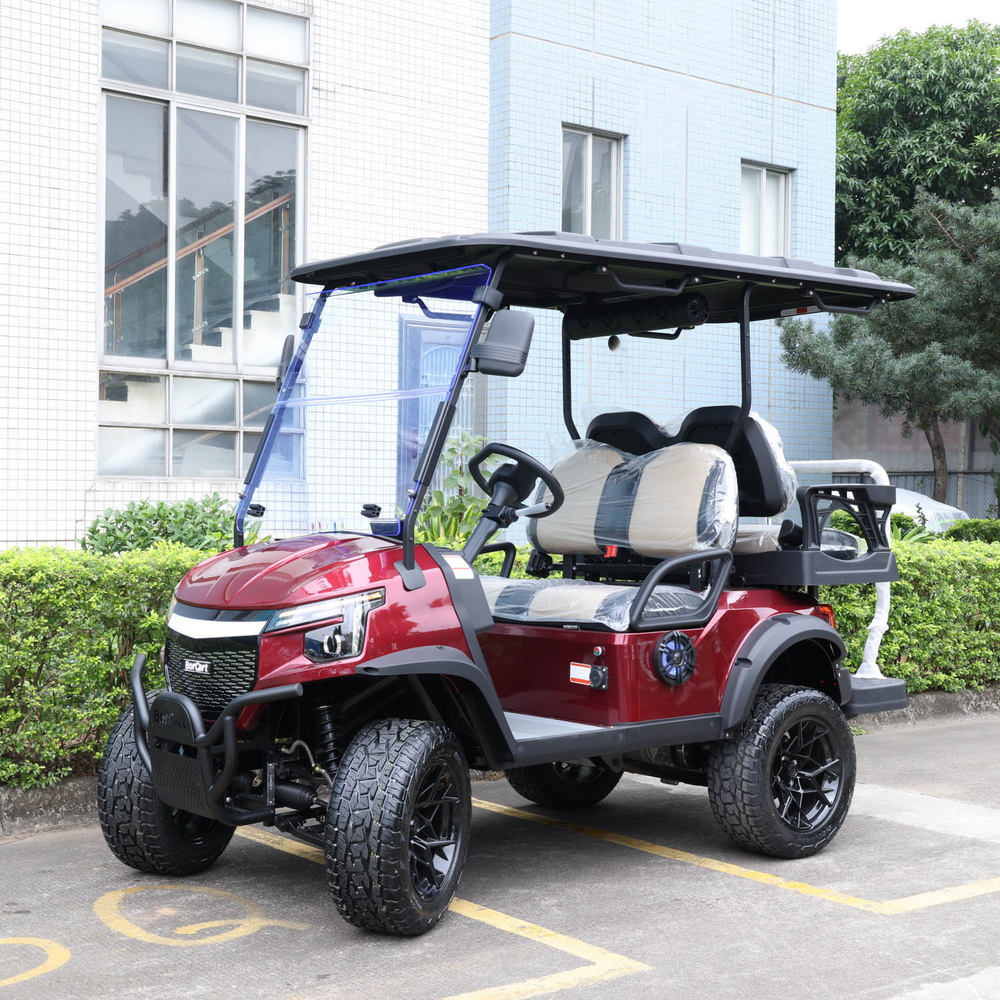
For hunters and fleet managers considering a switch, the transition is smoother when approached systematically.
1. Define your core use cases
Identify: stand access, game recovery, guest transport, property maintenance or mixed use. This will influence battery pack choice, motor power and suspension configuration. [borcartev]
2. Plan a charging strategy
- Install dedicated circuits at the lodge or barn.
- Set up overnight charging routines after evening hunts.
- For fleets, stagger charging to keep at least one vehicle ready at all times. [hdkexpress]
3. Optimize vehicle configuration
- Choose lifted suspension and all-terrain tires for rough properties.
- Add gun/bow racks, cargo racks and winches to support real-world hunting tasks.
- Use camouflage or neutral colors to blend with the environment. [borcartev]
4. Train your team or clients
- Emphasize gentle throttle use to preserve range.
- Educate on battery state-of-charge monitoring and basic maintenance.
- Standardize routes to minimize unnecessary mileage. [hdkexpress]
By approaching the switch as an operational change—not just a vehicle purchase—hunters maximize the benefits of scent-free, quiet access.
From a B2B standpoint, many international brands and distributors prefer working with OEM utility vehicle manufacturers to bring electric hunting carts to market under their own labels. [borcart.en.alibaba]
BorCart, for example, operates as a Chinese manufacturer specializing in electric vehicles, utility carts and hunting buggies, supplying overseas brands, wholesalers and producers with OEM and ODM services. This B2B model allows partners to: [borcart.en.alibaba]
- Customize body design, color schemes, seating layouts and accessories to match local hunter preferences.
- Choose between different battery configurations, controller settings and drive systems tailored to their climate and terrain.
- Add brand-specific dashboards, infotainment options or safety features for differentiation in crowded markets. [borcart]
Because the core platform engineering, testing and production are handled by the OEM, brands can focus on marketing, regional compliance and dealer networks, accelerating time-to-market while maintaining consistent quality. [borcart.en.alibaba]
Not all electric hunting carts are equal. Experienced hunters and industry buyers often look for certain design details that reinforce scent-free, low-impact operation.
- High-torque, low-RPM motors: Deliver smooth power at low speed for quiet approach and controlled crawling in tight cover. [borcartev]
- Regenerative braking: Reduces mechanical brake use, limiting noise and improving range in rolling terrain. [zh.borcartev]
- Sealed drivetrain and underbody protection: Minimizes squeaks and rattles that might alert nearby animals. [borcartev]
- Modular cargo systems: Allow hunters to secure game, packs and coolers without loose items clanking in the back. [motoelectricvehicles]
By integrating these features at the OEM level, manufacturers help brands deliver finished vehicles that fully support the scent-free hunting strategy, not just "electric versions" of generic utility carts. [borcart]
From a purely financial perspective, gas UTVs often appear cheaper initially, especially when factoring in used market options. However, when dealers and serious hunters run 5–7 year total cost of ownership calculations, electric hunting carts frequently come out ahead.
- Fuel vs electricity: Electricity costs per kilometer are significantly lower than gasoline in most markets. [zh.borcartev]
- Maintenance: Electric powertrains have fewer wearable components; major ongoing costs center around battery replacement intervals. [zh.borcartev]
- Resale and fleet flexibility: Well-maintained electric carts hold value, especially for golf courses, resorts and parks that may repurpose retired hunting fleets. [motoelectricvehicles]
For brands and outfitters, these factors translate into higher margins, lower operating overhead and more predictable long-term budgeting, while still delivering the scent-free hunting benefits valued by clients. [borcart.en.alibaba]
Despite the clear advantages of scent-free electric carts, there are scenarios where gas-powered UTVs remain the smarter choice.
- Remote camps without stable electricity: Refueling with gas cans is easier than transporting and managing portable power systems.
- Year-round heavy commercial use: Continuous hauling in forestry, construction or ranch work may still favor gas due to quick refueling and very long daily ranges. [zh.borcartev]
- Extreme cold regions: In some climates, cold temperatures can significantly reduce battery performance, requiring specialized battery management and insulation solutions. [hdkexpress]
In these cases, many operators retain at least one gas UTV while gradually integrating electric hunting carts for specific stealth-focused missions, creating a hybrid vehicle strategy aligned with their terrain and infrastructure. [motoelectricvehicles]
If you are evaluating which platform to commit to—either as a hunter, an outfitter or a dealer—the decision often comes down to three core questions:
1. Is stealth and scent control a top priority?
If yes, electric hunting carts offer a clear tactical advantage for big game tracking and stand access.
2. What is your typical daily range and terrain?
Properties under 20–40 km of daily vehicle use with moderate hills are ideal for electric platforms, especially when charging is available at the lodge. [hdkexpress]
3. How important is total cost of ownership vs upfront price?
Operators willing to think in 5–7 year horizons often find electric carts deliver better ROI once fuel and maintenance are factored in. [borcart.en.alibaba]
In many modern operations, the most effective setup is not either/or but both, with electric hunting carts handling all scent-sensitive activity while gas UTVs support heavy-duty or emergency tasks.
If you are a hunting brand owner, distributor or large-scale outfitter, now is the time to evaluate electric hunting carts as a core part of your vehicle lineup. By partnering with OEM manufacturers such as BorCart, you can:
- Launch or expand a scent-free hunting vehicle line tailored to your local market.
- Offer your customers quiet, low-odor access solutions that align with modern big game strategies and environmental expectations. [borcart.en.alibaba]
- Build long-term value through customized, brand-labeled electric carts designed for your terrains and use cases. [borcart]
For individual hunters, talk with your local dealer or online retailer about electric hunting carts and utility vehicles, and compare demo rides between electric and gas platforms on the same property. The difference in noise, scent and animal reaction is something you will feel—and smell—immediately.
1. Are electric hunting carts really scent-free?
Electric carts are not completely scent-free, but they eliminate exhaust fumes and greatly reduce foreign odors compared to gas UTVs, which is why they are considered "scent-free" in practical hunting terms. [trailbuggy]
2. How far can an electric hunting cart travel on a single charge?
Range depends on battery type, terrain and load, but many modern hunting carts achieve 20–40 km of real off-road range, with some lithium configurations reaching more under ideal conditions. [hdkexpress]
3. Do electric carts have enough power for hills and mud?
Yes, many electric hunting carts use high-torque motors and proper gearing to handle moderate hills, wet fields and basic mud, though extreme terrain may still favor gas-powered UTVs. [borcartev]
4. How often do I need to replace the batteries?
Lead-acid batteries typically last 3–5 years with proper maintenance, while lithium packs can exceed that lifespan in commercial use, depending on charge cycles and care. [hdkexpress]
5. Can I use an electric hunting cart for non-hunting tasks?
Absolutely. Electric hunting carts are often used for farm work, property maintenance, resort transport and light industrial tasks, making them versatile all-around utility vehicles. [borcart]
1. BorCart – Electric Hunting Buggies. Available at: [https://www.borcart.com/products/Electric-Hunting-Buggies.html]
2. BorCart – Electric Hunting Carts Factory and Suppliers. Available at: [https://www.borcartev.com/electric-hunting-carts/]
3. Guangzhou BorCart Electric Vehicle Co., Ltd – Company Overview. Available at: [https://borcart.en.alibaba.com]
4. BorCart – Gas vs Electric Golf Carts: Which is Better for Your Game? Available at: [http://zh.borcartev.com/news/gas-vs-electric-golf-carts/]
5. Moto Electric Vehicles – Hunting Golf Carts & Outdoor Vehicles. Available at: [https://www.motoelectricvehicles.com/vehicles/vehicles_list/golf-carts-outdoors/]
6. HDK Electric Vehicle – Electric Hunting Carts Exporter. Available at: [https://www.hdkexpress.com/electric-hunting-carts/]
7. Trail Buggy – Electric Hunting Carts vs ATV: What Are the Differences? Available at: [https://www.trailbuggy.us/blog/electric-hunting-carts-vs-atv-what-are-the-differences-copy]


