


Content Menu
● Understanding the Term “Golf Buggy”
● Core Functions of a Golf Buggy
● Standard Features of Modern Golf Buggy Designs
● Advanced Comfort and Technology Features
● Golf Buggy Usage On and Off the Course
● Global Terminology and Market Trends
● Why Golf Courses Depend on Golf Buggy Fleets
● BorCart and OEM Golf Buggy Manufacturing
● OEM Customization Options for Golf Buggy
● Typical Application Scenarios for BorCart Golf Buggy
● How to Choose the Right Golf Buggy
● Best Practices for Operating a Golf Buggy Safely
● Environmental Benefits of Electric Golf Buggy Fleets
● FAQ
>> 1. What exactly is a golf buggy?
>> 2. Is there any difference between a golf buggy and a golf cart?
>> 3. Why are electric golf buggy models becoming more popular?
>> 4. What types of golf buggy does BorCart specialize in?
>> 5. How should a course or business choose the right golf buggy?
A golf buggy is a compact electric or gas-powered vehicle designed to transport golfers and their equipment around a course quickly and comfortably. In many regions, the term golf buggy is used interchangeably with golf cart, and both describe the same kind of small, low‑speed vehicle.[1][2]
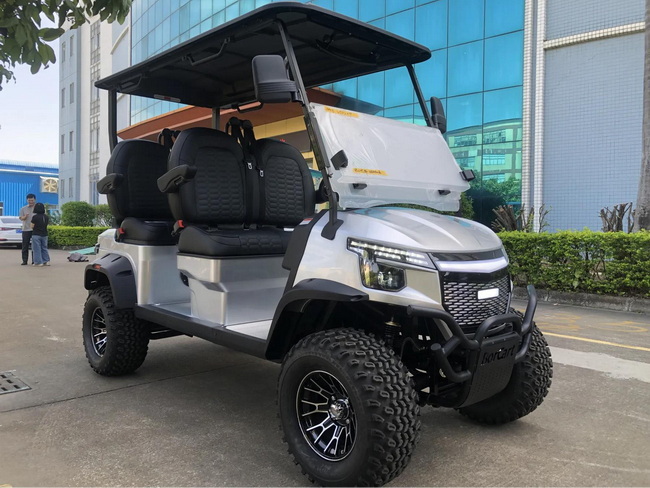
A golf buggy was originally designed to carry two golfers and their bags around a golf course, reducing the physical effort required to walk long distances between shots. Over time, golf buggy designs have expanded to include models with higher passenger capacities, improved comfort, and specialized features for different environments.[3][1]
In British and Commonwealth usage, golf buggy is the standard term, while in North America and some other regions “golf cart” or “golf car” is more common. Regardless of the name, the concept remains a compact, low‑speed vehicle dedicated to transporting people and equipment over short distances, particularly on golf courses.[2][4]
The primary role of a golf buggy is to make a round of golf more efficient and less tiring by cutting down walking distances. By shortening travel time between tees, fairways, and greens, a golf buggy helps maintain pace of play and enables courses to handle more rounds per day.[5][6]
Another core function of the golf buggy is safely carrying golf bags, clubs, and accessories using bag wells, retaining straps, and storage spaces designed for course conditions. Many modern golf buggy models also integrate holders for scorecards, tees, and drinks so that players can focus on their game instead of logistics.[1][3]
Most golf buggy models use either an electric drive system powered by deep‑cycle batteries or a small gasoline engine. Electric golf buggy designs are especially valued for quiet operation, minimal local emissions, and relatively low running costs for course operators.[3][1]
The typical golf buggy uses a steering wheel, accelerator pedal, and brake pedal, making it familiar to anyone with basic driving experience. Speed is usually limited to lower ranges appropriate for turf protection and safety, and many courses set additional restrictions on where a golf buggy can be driven.[1][3]
There is no single standard golf buggy; instead, a broad family of models caters to different users, terrains, and commercial needs. While the classic two‑seat golf buggy remains the most recognizable, many other variants have become important in modern operations.[7][3]
Common types include:
- Standard two‑seat golf buggy for everyday golf course play.[1]
- Four‑seat and six‑seat golf buggy used in resorts, clubs, and large estates.[8]
- Luxury golf buggy with upgraded seats, premium trims, and advanced features.[3]
- Off‑road golf buggy designed with higher ground clearance and tougher tires.[3]
- Street‑legal low‑speed golf buggy certified for certain public roads.[1]
A key choice when selecting a golf buggy is whether to opt for an electric drive system or a gas‑powered system. Each has distinct advantages in terms of noise, maintenance, range, and environmental impact.[5][3]
Electric golf buggy models use battery‑powered motors to deliver quiet and smooth performance, making them ideal for courses that value low noise and cleaner operation. Gas golf buggy models use internal combustion engines that can offer strong performance and long operating times, especially on demanding terrain or in heavy commercial use.[9][5]
Electric golf buggy benefits include easy charging infrastructure, fewer moving parts, and lower day‑to‑day maintenance. Gas golf buggy benefits include rapid refueling and robust pulling power, which can be useful on steep slopes or in utility environments.[7][3]
Most contemporary golf buggy designs share a set of core features that make them safe and convenient for players and operators. These standard characteristics are tailored to typical course conditions and short‑distance transport scenarios.[3][1]
Typical equipment on a golf buggy includes:
- Two or more seats with durable, weather‑resistant upholstery.[1]
- Rear bag wells and straps to secure golf bags and trolleys.[10]
- Simple steering wheel, accelerator, and brake controls.[1]
- Battery or fuel level indicators on a compact dashboard.[3]
- Headlights, taillights, and often turn signals on many newer models.[8]
Premium golf buggy configurations go beyond basic transport by offering enhanced comfort and digital tools that enrich the user experience. These higher‑spec models are popular at upscale courses, resorts, and private communities.[8][3]
Advanced features that may be found on a modern golf buggy include:
- GPS‑enabled displays with digital scorekeeping and live hole mapping.[7]
- Upgraded suspension and better seats for a smoother ride on uneven ground.[3]
- Weather enclosures, clear windshields, and additional fans or heaters.[8]
- Integrated Bluetooth audio systems and USB charging points.[3]
- Custom bodywork, color schemes, and branding for clubs or corporate fleets.[3]
Although the golf buggy is closely associated with fairways and greens, it now appears in many non‑golf environments. Resorts, hotels, airports, campuses, and gated communities all deploy golf buggy fleets to move guests and staff comfortably over short distances.[6][8]
Utility‑focused golf buggy models can carry tools, supplies, and equipment for maintenance teams, landscapers, and event organizers. By combining a compact footprint with practical cargo capacity, a utility golf buggy becomes a versatile workhorse for day‑to‑day operations.[6][3]
The term golf buggy is particularly common in the United Kingdom and other Commonwealth countries, while “golf cart” or “golf car” is dominant in the United States. Some regions also refer to similar vehicles by broader terms such as low‑speed vehicles or neighborhood electric vehicles.[4][2]
Across markets, demand for the golf buggy continues to grow as leisure activities, resort developments, and sustainable mobility solutions expand. Electric golf buggy fleets are especially attractive to operators seeking quieter, cleaner transport solutions for guests and residents.[9][3]
Modern golf courses increasingly rely on a dependable golf buggy fleet to maintain consistent pace of play and enhance the player experience. Faster movement between holes allows more tee times to be scheduled, which can significantly improve daily revenue.[6][8]
A well‑managed golf buggy fleet also improves accessibility for older players, beginners, and those with limited mobility. In addition, carefully branded golf buggy units act as moving showcases for the course's image and can be customized to reflect club colors and logos.[6][8]
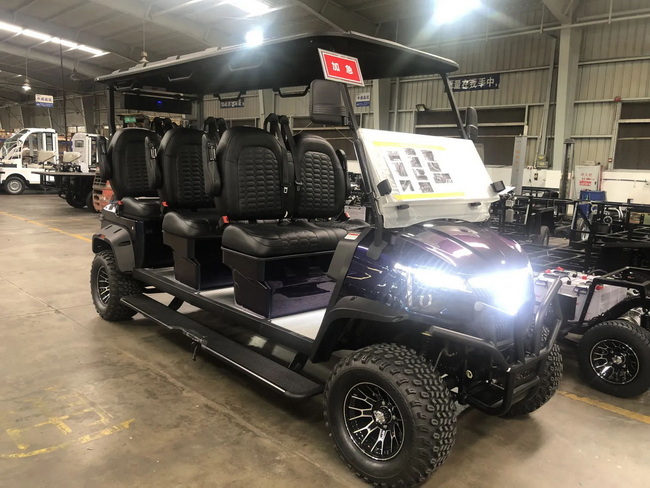
BorCart is a professional Chinese manufacturer specializing in electric vehicles, including golf buggy models, sightseeing buses, low‑speed vehicles, hunting vehicles, and multipurpose vehicles. The company focuses strongly on producing golf buggy solutions for overseas brands, wholesalers, and other manufacturers through OEM cooperation.[11][12]
BorCart's electric golf buggy and related models are designed to meet industry certification requirements for international markets. This allows global partners to introduce customized golf buggy products under their own brands while relying on BorCart's engineering and production capabilities.[11][9]
For overseas partners, OEM services make it possible to tailor a golf buggy to match specific business strategies, regulations, and customer preferences. Customization ranges from visual design to technical configuration and can turn a standard platform into a unique product line.[8][3]
Typical OEM options for a golf buggy project can include:
- Exterior color schemes, decals, and logo placement for brand recognition.[11]
- Seat materials, layouts, and stitching patterns tailored to target markets.[12]
- Battery capacity, motor ratings, and controller settings for desired performance.[9]
- Optional equipment such as enclosures, audio systems, and upgraded lighting.[3]
- Packaging, documentation, and user manuals branded for the partner company.[11]
BorCart's OEM approach for golf buggy manufacturing prioritizes communication with overseas teams regarding regulatory requirements, safety standards, and user expectations in each destination market. This ensures that every customized golf buggy model can be positioned competitively while maintaining quality and compliance.[12][11]
Golf buggy vehicles produced by BorCart can be used well beyond standard club operations. Their adaptability makes them suitable for multiple commercial and institutional environments where safe, low‑speed mobility is needed.[13][11]
Typical applications include:
- Golf courses that require reliable golf buggy fleets for member and visitor rentals.[6]
- Resorts and hotels that use golf buggy solutions for guest transport, luggage handling, and housekeeping support.[8]
- Tourist attractions and sightseeing venues that operate low‑speed vehicles for guided tours.[11]
- Industrial parks and campuses that use golf buggy fleets as quiet internal shuttle vehicles.[6]
- Hunting grounds and rural estates that employ off‑road golf buggy models for rough terrain access.[3]
Selecting the right golf buggy for a course, business, or property starts with evaluating terrain, usage intensity, and passenger requirements. Operators should also carefully consider energy type, available service support, and long‑term operating costs.[7][3]
Key questions to ask when choosing a golf buggy include:
- What terrain will the golf buggy regularly encounter: flat fairways, hills, or mixed off‑road conditions?[3]
- How many passengers typically need to be transported at once: two, four, or six people?[8]
- Is quiet, low‑emission operation more important than maximum power and range, favoring an electric golf buggy?[9]
- What level of comfort and features does the target user base expect from the golf buggy?[3]
- What OEM or after‑sales support is available for maintenance, spare parts, and upgrades over time?[11]
Safe operation of a golf buggy protects players, pedestrians, and course infrastructure. Responsible driving also reduces maintenance costs and extends the life of each vehicle.[1][3]
Recommended practices for safe golf buggy use include:
- Following posted speed limits and course‑specific rules for golf buggy routes.[6]
- Avoiding sudden acceleration or sharp turns that could damage turf or destabilize passengers.[1]
- Keeping to designated paths where required, especially in wet or environmentally sensitive areas.[6]
- Ensuring that only authorized drivers operate the golf buggy and that passenger capacity is not exceeded.[1]
- Performing basic pre‑use checks such as brakes, steering, lights, and battery or fuel level.[3]
As sustainability becomes a higher priority in tourism and sports, many facilities are switching to electric golf buggy fleets. Electric units contribute to a quieter, cleaner environment for players and guests.[9][3]
The environmental benefits of an electric golf buggy include zero local exhaust emissions during operation and reduced noise pollution around sensitive natural areas. When charged with greener electricity sources, the overall carbon footprint of an electric golf buggy can also be significantly lower than that of a comparable gas vehicle.[9][3]
A golf buggy is a compact, low‑speed vehicle that plays a central role in modern golf, tourism, and short‑distance transport. From basic two‑seat models to luxury and off‑road variants, the golf buggy combines convenience, comfort, and efficiency for players, guests, and workers alike.[1][3]
As electric technology advances and sustainability expectations rise, more operators are embracing the electric golf buggy as a quiet, environmentally conscious transport option. Professional OEM manufacturers such as BorCart enable overseas brands, wholesalers, and producers to access customized golf buggy solutions that align with local regulations and market preferences.[9][11]
By carefully selecting the right configuration, maintaining strong safety practices, and partnering with experienced suppliers, any facility can build a dependable golf buggy fleet that enhances user experience and operational performance. Whether on a championship course, a luxury resort, or an industrial campus, the modern golf buggy is now an essential part of everyday mobility.[8][6]
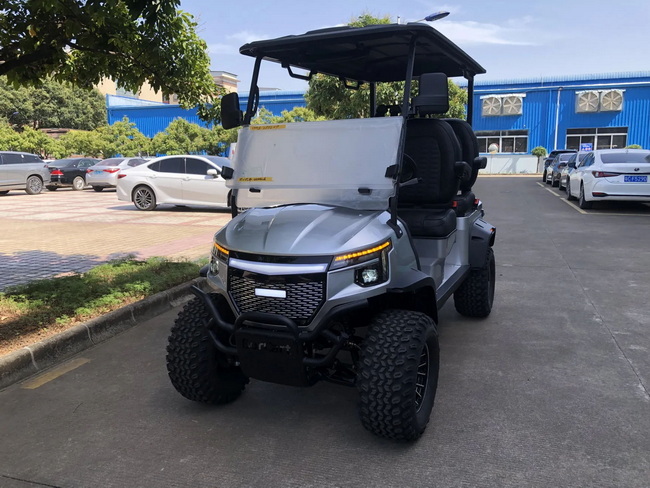
A golf buggy is a small motorized vehicle designed to carry golfers and their equipment around a golf course at low speeds. It can also be used in resorts, campuses, and other venues that require short‑distance passenger transport.[6][1]
In practice, golf buggy and golf cart usually refer to the same type of vehicle, with the difference largely due to regional language usage. British English prefers golf buggy, while American English more commonly uses golf cart or golf car.[2][4]
Electric golf buggy models are popular because they operate quietly, produce no local exhaust emissions, and can reduce fuel and maintenance costs for operators. They are particularly attractive to courses and resorts that prioritize sustainability and guest comfort.[9][3]
BorCart focuses on electric vehicles and manufactures various golf buggy models, including standard, multi‑seat, and specialized low‑speed vehicles. The company provides OEM services that allow overseas partners to customize golf buggy specifications and branding for their own markets.[12][11]
A course or business should evaluate terrain, passenger capacity, and expected usage intensity before selecting a golf buggy. It should also consider whether electric or gas power is more appropriate and verify that OEM or after‑sales support is available from the supplier.[7][3]
[1](https://en.wikipedia.org/wiki/Golf_cart)
[2](https://www.redwaypower.com/what-is-another-name-for-a-golf-cart-exploring-terminology-and-usage/)
[3](https://www.taragolfcart.com/news/golf-buggy-guide-choosing-the-right-one-for-performance-comfort-and-terrain/)
[4](https://www.hnxunhu.com/what-are-golf-carts-called-around-the-world/)
[5](https://www.nikoec.com/golf-cart-or-golf-buggy/)
[6](https://turftech.jjsea.com/blog/role-of-buggy-cars-in-modern-golf-courses/)
[7](https://carts-and-parts.com/types-of-golf-carts/)
[8](https://www.powercruisegolf.co.uk/golf-buggies-for-your-course/)
[9](https://www.borcart.com/products/Electric-Golf-Buggy.html)
[10](https://www.powerhousegolf.co.uk/acatalog/Golf-Buggies.html)
[11](https://www.borcart.com)
[12](https://www.borcart.com/products/Golf-Buggy.html)
[13](https://www.borcart.com/golf-carts.html)


