


Views: 268 Author: BorCart Publish Time: 2026-09-04 Origin: Site


Content Menu
● Why an Orange Golf Cart Is More Than a Color Choice
● 1. Orange Golf Carts Are Easier to Identify
● 2. Bright Orange Can Support Better Visual Awareness
>> Important Note for Road Use
● 3. Orange Creates a Stronger Brand Presence
● 4. It Gives Buyers More Customization Freedom
● 5. Orange Is Ideal for Rentals, Events, and Hospitality
>> Operational Benefits for Fleet Managers
● 6. A Quality Finish Helps Protect Long-Term Appearance
>> Maintenance Practices That Matter
● 7. Orange Supports a More Memorable Customer Experience
● 8. It Can Differentiate Your Product Line
● 9. Electric Power Makes the Cart Better for Many Sites
>> Battery Questions to Ask Before Ordering
● 10. Orange Is a Smart Option for OEM Golf Cart Programs
● How to Specify an Orange Golf Cart for Your Market
>> Step 1: Define the Application
>> Step 2: Confirm Passenger and Cargo Needs
>> Step 3: Select the Operating Environment
>> Step 4: Choose the Visual Program
>> Step 5: Review Safety and Market Requirements
>> Step 6: Request Samples and Documentation
● Choose a Cart That People Can See and Remember
>> Is an orange golf cart safer than a white or black golf cart?
>> Can I customize an orange golf cart with my own logo?
>> Does orange paint fade faster on a golf cart?
>> Is an orange electric golf cart suitable for a resort fleet?
>> Can an orange golf cart be used on public roads?
>> Should I choose lithium or lead-acid batteries for an orange golf cart?
>> What details should I send when requesting an OEM quotation?
An orange golf cart does more than make a visual statement. For golf resorts, rental operators, residential communities, event venues, distributors, and private owners, a well-configured orange electric golf cart can improve vehicle identification, strengthen branding, support safer operation in mixed-use environments, and create a more memorable customer experience.
At BorCart, we work with overseas brands, wholesalers, and vehicle businesses seeking OEM electric golf carts and automotive components. From that manufacturing perspective, color should never be treated as an isolated decorative choice. The best orange golf cart program combines a distinctive body finish with the right seating capacity, battery platform, lighting package, roof, wheels, cargo solution, and market-specific compliance configuration.
> Buyer insight: Orange is especially effective when a fleet needs to be quickly recognized by guests, staff, drivers, or pedestrians. However, body color is not a substitute for headlights, tail lamps, reflectors, mirrors, safe driving practices, or legally required equipment.

Golf carts have expanded far beyond golf courses. They now serve resorts, vacation communities, campuses, warehouses, factories, parks, tourism sites, agricultural properties, gated neighborhoods, airports, sports venues, and rental businesses.
In these applications, the vehicle must do several jobs at once:
- Transport people comfortably.
- Remain easy to identify in a busy fleet.
- Fit the operator's brand image.
- Handle local weather and daily use.
- Support practical accessories and passenger needs.
- Deliver a dependable ownership experience.
An orange electric golf cart can address several of these needs. Orange is naturally energetic, easy to recognize, and strongly associated with outdoor activity, sport, mobility, construction, safety equipment, and adventure. When used carefully, it gives a golf cart a clear visual identity without requiring a complicated custom wrap or expensive fleet redesign.
For commercial buyers, that identity can become operationally useful. A resort may assign orange carts to guest shuttles. A property-management company may use orange utility carts for maintenance teams. A rental company may use orange as a signature fleet color. A dealer can also offer orange as a high-impact option for customers who want something more expressive than black, white, silver, or beige.
One of the most practical reasons to choose an orange golf cart is fast recognition.
In a parking area filled with similar carts, a distinctive body color helps drivers and passengers find the correct vehicle faster. This can reduce confusion after a golf round, at a resort entrance, near a campground, or during a large outdoor event.
For fleet operators, visual differentiation can also simplify vehicle allocation. For example:
- Orange carts can be designated for guided tours.
- White carts can be used for standard guest transportation.
- Green carts can serve golf-course operations.
- Orange utility carts can be assigned to maintenance or event-support teams.
This system is simple, affordable, and easy for guests or seasonal staff to understand.
Imagine a beach resort operating 40 electric carts across guest villas, restaurants, a marina, and recreational areas. If every cart is white, guests may struggle to locate the assigned vehicle. By using a small orange fleet for premium tours or family transport, the operator creates an instant visual category.
The result is not merely decorative. It can improve guest orientation, reduce staff questions, and make the transportation service feel more organized.
A bright vehicle is generally easier to notice against many outdoor backgrounds than a vehicle finished in muted tones. Research comparing safety and fluorescent colors found that fluorescent orange ranked among the highest colors for perceived hazard and perceived importance. This helps explain why orange is widely used in workwear, roadside equipment, warning products, and outdoor safety applications.
That said, an orange body should be viewed as an added visibility feature—not a complete safety solution.
A well-equipped golf cart should still include the appropriate safety equipment for its intended use, such as:
- Headlights and tail lamps.
- Brake lights and turn signals where required.
- Rearview and side mirrors.
- Reflectors.
- Seat belts when specified for the vehicle type or local application.
- Horns, windshields, parking brakes, and speed-control systems where applicable.
For operations at dawn, dusk, in shaded resorts, near warehouses, or around pedestrians, the most effective approach is a high-visibility body color plus a complete lighting and safety package.
A standard golf cart and a low-speed vehicle are not always the same thing. Rules vary by country, state, city, and road type. In the United States, a low-speed vehicle intended for eligible public-road operation may need equipment such as headlamps, stop lamps, turn signals, mirrors, a windshield, seat belts, reflectors, and a vehicle identification number, depending on the applicable requirements.
Before importing, selling, or operating a golf cart on public roads, confirm the requirements in the target market. A manufacturer should configure the vehicle for the intended application rather than assuming that a standard golf cart is automatically road legal.
For businesses, an orange golf cart can become a moving brand asset.
A bright orange vehicle is more likely to be noticed in guest photos, resort videos, social-media posts, event footage, and daily on-site operations. It can help a brand look confident, active, and approachable—especially in tourism, recreation, sports, outdoor rentals, beach destinations, amusement venues, and lifestyle communities.
An OEM orange golf cart can be customized with:
- A molded or painted orange body.
- A custom paint code matched to brand guidelines.
- Company logos on the front cowl, side panels, roof, or seat backs.
- Contrasting black, gray, white, or tan upholstery.
- Branded steering wheels, wheels, floor mats, and dashboard details.
- QR-code panels for rentals, guest information, or service requests.
- Fleet numbers, department labels, and safety markings.
For an overseas brand owner, the objective is not simply to sell "an orange cart." The objective is to create a recognizable product line that buyers remember.
Orange works particularly well with contrasting materials and accessory packages. It can support a sporty look, an industrial work-cart appearance, a premium resort style, or a playful family-oriented design.
The same orange golf cart body can be transformed through specification choices.
| Desired Positioning | Recommended Configuration | Visual Effect |
|---|---|---|
| Resort shuttle | Premium seats, clear windshield, rear-facing seat, canopy roof | Comfortable and guest-friendly |
| Sports club cart | Alloy wheels, black seats, upgraded suspension, LED lights | Energetic and performance-focused |
| Rental fleet | Durable seats, fleet numbering, cup holders, USB ports, GPS-ready wiring | Practical and easy to manage |
| Utility vehicle | Cargo bed, heavy-duty tires, tool holders, work lights | Functional and professional |
| Neighborhood vehicle | Rear seat kit, mirrors, lighting package, storage compartment | Family-oriented and versatile |
A skilled manufacturer should support more than cosmetic changes. The OEM process should allow buyers to choose the power system, controller, seating arrangement, roof style, suspension, wheels, cargo accessories, lighting, battery chemistry, charging solution, and packaging method.
Rental and hospitality businesses need vehicles that are simple for customers to recognize and easy for employees to manage. An orange fleet can make operations feel intentional rather than generic.
This is valuable in locations where many vehicles are parked together:
- Golf courses.
- Resort properties.
- Holiday parks.
- Campgrounds.
- Festivals.
- Theme parks.
- Marinas.
- Sports complexes.
- Wedding venues.
- Sightseeing destinations.
For example, a tour operator may use orange six-passenger electric golf carts for guided excursions. Guests immediately know where to gather and which vehicle belongs to their group. Staff can identify the assigned carts from a distance. The visual consistency also creates stronger photographs for brochures and online booking pages.
A clearly color-coded fleet can support:
1. Faster dispatching during busy periods.
2. Easier vehicle tracking for guests and staff.
3. Simpler training for seasonal employees.
4. More consistent brand presentation across properties.
5. Clearer department allocation when different colors serve different roles.
Color coding does not replace a proper fleet-management system, but it can make daily operations easier before software, GPS, or asset tags are even involved.
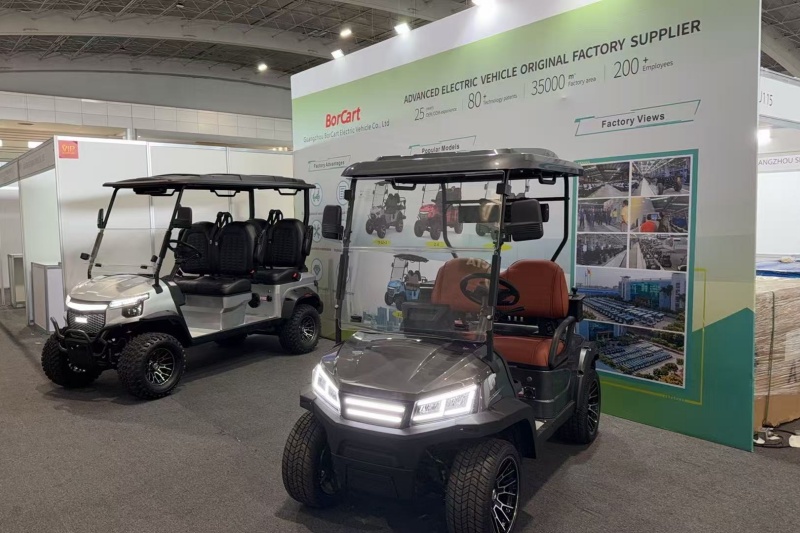
The value of an orange golf cart depends heavily on the quality of its body material, paint process, and finish protection. A bright color can show fading, scratches, and poor molding quality more visibly than a neutral color. That makes manufacturing discipline especially important.
When evaluating an OEM supplier, ask about:
- Body material, such as injection-molded plastic or fiberglass.
- UV-resistance measures.
- Paint and coating process.
- Color-consistency controls between production batches.
- Scratch resistance and repair options.
- Salt-spray or corrosion-resistance testing for coastal markets.
- Quality checks before final assembly and export packing.
For markets with strong sunlight, coastal humidity, rain, dust, or high daily utilization, the cart should be configured for the real operating environment. A low initial price is not a genuine saving if the body color fades quickly or the finish requires frequent repair.
To keep an orange golf cart looking professional:
- Wash dust, mud, salt, and chemical residue promptly.
- Use mild vehicle-cleaning products instead of aggressive solvents.
- Avoid abrasive pads that can dull the surface.
- Park under cover or in shade when practical.
- Inspect body panels and fasteners during routine service.
- Repair deep scratches before moisture or dirt reaches underlying materials.
For commercial fleets, documenting these steps in a simple weekly inspection checklist can preserve appearance and protect resale value.
A golf cart is part of the experience, especially in leisure-oriented settings. Guests may not remember the technical specification of a 48V system or the exact tire size. They often remember whether the vehicle looked clean, distinctive, comfortable, and enjoyable.
Orange can help create that emotional connection. It suggests energy, movement, warmth, and outdoor fun. In a family resort, it can feel friendly. At a golf club, it can look modern and sporty. At an adventure park, it can reinforce an active brand identity.
This does not mean every market needs orange. Luxury residential projects may prefer understated colors. Industrial sites may prioritize function over visual impact. But for brands that want a cart to be noticed, orange is a commercially effective option.
Many distributors compete with nearly identical white, black, and beige golf carts. An orange model can give a catalog, showroom, or dealer website an immediate focal point.
For a private-label buyer, differentiation can be built around:
- A signature orange exterior.
- A named color program exclusive to the brand.
- Matching branded accessories.
- A specific seating configuration.
- A premium wheel-and-seat package.
- A lithium battery option.
- A market-specific lighting and safety package.
- Customized packaging and product documentation.
This approach helps transform a common vehicle category into a more defensible product offering. Rather than competing only on price, the distributor can offer a recognizable solution with a clear story.
Orange and electric power are a natural combination for modern recreational and commercial fleets. An orange electric golf cart can offer quiet operation and zero tailpipe emissions at the point of use, making it suitable for many enclosed or guest-facing environments.
Electric carts are often well suited for:
- Resorts and hotels.
- Indoor-outdoor campuses.
- Residential communities.
- Golf courses.
- Warehouses.
- Theme parks.
- Tourist attractions.
- Hospitals and large facilities.
The right battery system should be selected based on daily route distance, passenger load, terrain, charging time, climate, and service capability.
Lithium battery systems can reduce maintenance needs compared with conventional flooded lead-acid batteries because they do not require watering. However, they still require correct charging equipment, appropriate storage conditions, and periodic inspection.
- What is the required real-world range with passengers and accessories?
- Is the route flat, hilly, paved, or mixed terrain?
- How many charging hours are available each day?
- Will the vehicle operate in very hot or cold conditions?
- Does the buyer need a removable battery, onboard charger, or offboard charger?
- Is local service support available for the chosen battery system?
- What warranty terms apply to the battery, controller, motor, and charger?
A reliable OEM supplier should help buyers match the battery configuration to actual use instead of promoting a single battery option for every project.
For brand owners, wholesalers, and vehicle businesses, an orange golf cart can become part of a broader OEM strategy. The color itself is only the starting point. The real value comes from building a product that fits a defined customer segment and is supported by consistent manufacturing.
At BorCart, an OEM project can be developed around the requirements of your market, including:
- Two-, four-, six-, or more-passenger configurations.
- Rear-facing seats or cargo-bed options.
- Electric powertrains and battery preferences.
- Standard or upgraded suspension.
- LED lighting packages.
- Custom colors and logo placement.
- Roof, windshield, mirror, and seat-belt options.
- Export packaging and container-loading plans.
- Private-label manuals, decals, cartons, and after-sales parts support.
The strongest procurement decision is not "Which color looks best?" It is "Which configuration will perform well, represent our brand clearly, and remain practical for our customers over time?"
Before requesting a quotation, prepare a short product brief. This gives the factory a clearer basis for recommending the right model and reduces the risk of specification gaps.
State whether the cart will be used for golf, resorts, rentals, residential transport, tours, industrial transport, campus mobility, or utility work.
Choose the seating capacity, rear seat direction, cargo-bed size, roof style, and required storage features.
Share road surface, slope, climate, average daily distance, maximum payload, and operating hours.
Provide your preferred orange reference, logo files, seat color, wheel style, decals, and fleet-numbering requirements.
Confirm whether the vehicle will remain on private property or needs equipment suitable for local low-speed-vehicle requirements.
Ask for product drawings, configuration sheets, warranty terms, quality-control information, packaging details, spare-parts lists, and sample approval procedures.
An orange golf cart is a practical choice for operators who want stronger fleet recognition, more distinctive branding, and an energetic product appearance. When paired with a suitable electric platform, durable finish, correct safety equipment, and market-specific configuration, it can serve far more than a decorative role.
If you are building a private-label golf cart range, sourcing electric carts for wholesale distribution, or developing a fleet for resorts, rentals, communities, or commercial sites, BorCart can help you create an orange golf cart program tailored to your market.
Contact BorCart with your target market, passenger capacity, battery preference, annual purchasing plan, and customization requirements to receive an OEM configuration proposal.
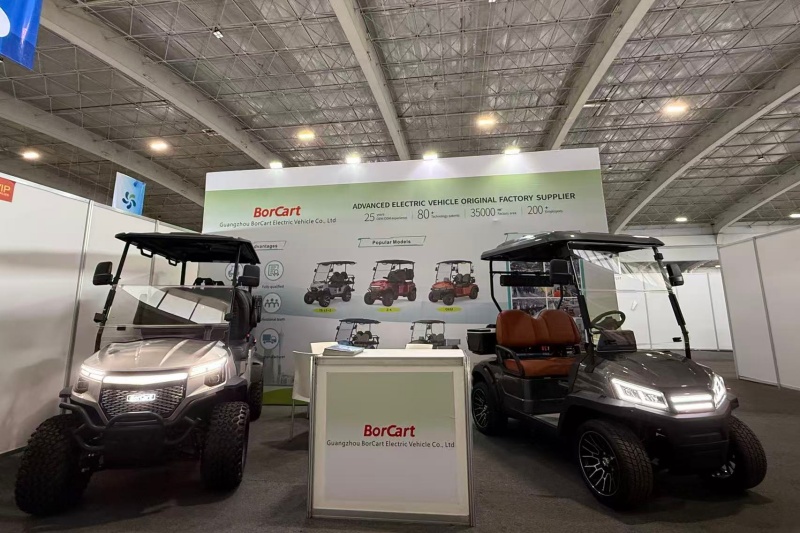
An orange golf cart may be easier to notice in many outdoor settings because it has stronger visual contrast than some neutral colors. However, body color alone does not make a vehicle safe. Proper lighting, mirrors, reflectors, braking performance, driver behavior, maintenance, and compliance with local requirements remain essential.
Yes. OEM golf cart programs can often include custom logo placement, body-color matching, decals, seat embroidery, branded floor mats, wheel designs, fleet numbers, manuals, and packaging. The available options may depend on order quantity, artwork format, and the selected vehicle platform.
A poor-quality orange finish can show fading more clearly than darker or neutral colors, especially under strong UV exposure. A durable body material, UV-resistant coating or pigment, consistent manufacturing process, regular cleaning, and covered storage can help preserve the appearance.
Yes. Orange can work particularly well for resorts, holiday parks, tours, and rental fleets because it is easy to recognize and visually memorable. The vehicle should still be specified for the required route distance, number of passengers, terrain, charging schedule, weather, and local operating rules.
It depends on local laws and the vehicle's configuration. A standard golf cart may be limited to private property or specifically permitted local areas. A low-speed vehicle intended for road use may need required safety equipment and documentation. Confirm the regulations in the destination market before ordering.
The best battery depends on your operating requirements and budget. Lithium systems are often selected for lower routine maintenance, lighter weight, and efficient charging characteristics, while lead-acid systems may have a lower initial purchase cost. Compare lifecycle cost, route distance, charging availability, climate, service support, and warranty terms before making the decision.
Send the target country, intended application, expected order quantity, passenger capacity, cargo needs, terrain, daily mileage, desired battery type, preferred orange color, branding requirements, required accessories, and any local compliance specifications. This information allows the manufacturer to recommend a more accurate configuration and quotation.
1. [TIGON Golf Carts — Top 10 Reasons to Choose an Orange Golf Cart for Your Next Adventure]
2. [SAGE Journals — A Perceptual Analysis of Standard Safety, Fluorescent, and Neon Colors]
3. [Florida Highway Safety and Motor Vehicles — Low-Speed Vehicles]
4. [Federal Highway Administration — Human Factors Design Guidelines: Use of Color Coding]
5. [Mentor Golf Carts and Trailers — What Does LSV Mean on a Golf Cart?]
6. [GC Superstore — Golf Cart Battery Maintenance: Complete Care Guide]


