


Views: 222 Author: Leah Publish Time: 2025-12-24 Origin: Site


Content Menu
● What Is a “Standard” Electric Golf Cart Speed?
● Types of Electric Golf Carts and Their Speeds
● Electric vs Gas Golf Cart Speeds
● Street‑Legal Electric Golf Carts and Speed Limits
● Key Factors That Affect Electric Golf Cart Speed
● Battery Technology and Its Impact on Speed
● Typical Speed Ranges by Configuration
● Safety Considerations at Higher Speeds
● How to Make an Electric Golf Cart Faster (Responsibly)
● Range vs Speed: Finding the Right Balance
● Terrain, Load, and Real‑World Performance
● Why Many Businesses Choose Electric Golf Carts
● FAQs
>> 1. How fast does a standard electric golf cart go?
>> 2. Can an electric golf cart go 30 mph?
>> 3. What makes a street‑legal electric golf cart slower?
>> 4. Do lithium batteries make an electric golf cart faster?
>> 5. Is it safe to modify an electric golf cart for more speed?
Most standard electric golf cart models run between 12–20 mph in factory settings, while upgraded or performance‑tuned versions can reach 25–30 mph or slightly more in custom builds. For street‑legal low‑speed vehicle (LSV) applications, regulations in many regions typically cap an electric golf cart at about 25 mph for safety reasons.[1][2]
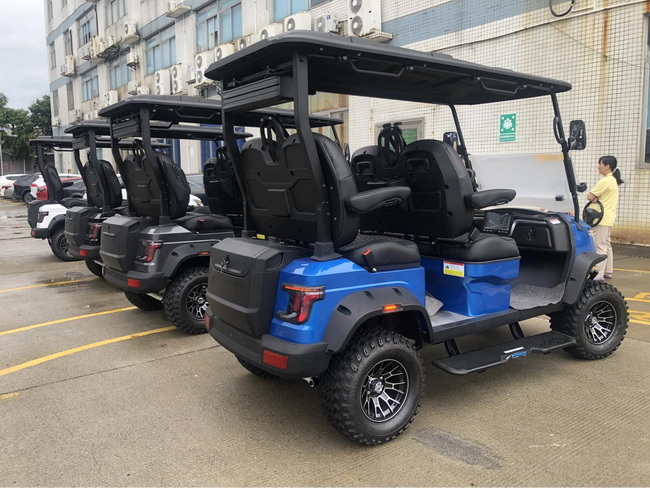
A standard electric golf cart used on golf courses or in resorts is usually programmed for moderate, predictable speeds. Operators prioritize safety, comfort, and turf protection over maximum performance.
- Typical fleet electric golf cart models are tuned for about 12–15 mph in stock form.[1]
- Many personal‑use electric golf cart versions extend that to roughly 15–19 mph, depending on controller settings, passenger load, and terrain.[1]
Course managers often restrict the controller on each electric golf cart to minimize accidents on slopes and narrow paths. The smoother, quieter behavior of an electric golf cart at these speeds also makes it ideal for residential communities, hotels, and campuses that value low noise levels.[1]
Not all electric golf cart configurations behave the same. Voltage level, controller programming, and the intended application create distinct speed bands for different models.
- Entry‑level fleet electric golf cart units with 36V systems usually run around 12–14 mph.[1]
- Mid‑range 48V electric golf cart setups often reach 15–19 mph with noticeably stronger acceleration and hill‑climbing power.[1]
Performance‑oriented electric golf cart platforms with higher‑output motors and advanced controllers can comfortably operate in the 20–25 mph range. Specialty custom electric golf cart builds—often for enthusiasts or private property use—can reach 30–35 mph, though these are no longer “typical” golf carts in the traditional sense.[3][4]
From a user's perspective, the speed difference between an electric golf cart and a gas cart is often smaller than expected. What changes more is driving feel and noise.
- Mainstream electric golf cart models generally average 12–14 mph, with higher‑spec versions reaching close to 20 mph.[3]
- Comparable gas carts typically run around 15–20 mph, sometimes slightly faster in performance trims.[3]
High‑performance electric golf cart products increasingly match or exceed gas counterparts thanks to efficient brushless motors, higher voltage systems, and better energy management. Because an electric golf cart offers instant torque, quiet operation, and low operating costs, many resorts and communities are replacing gas fleets even without a dramatic speed advantage.[5][6]
When an electric golf cart is upgraded for road use, legal definitions become crucial. In many markets, street‑legal units fall under a specific low‑speed vehicle category.
- In the U.S., low‑speed vehicles are typically defined as four‑wheel electric vehicles capable of at least 20 mph but not more than 25 mph on a paved surface.[2]
- To qualify as street‑legal, an electric golf cart‑based LSV must meet equipment requirements such as headlights, turn signals, mirrors, reflectors, stop lamps, and often a VIN and registration.[2]
Even if the hardware allows more speed, the controller in a street‑legal electric golf cart is usually programmed to keep maximum velocity at or below 25 mph. Local rules may also limit operation to roads posted at 35 mph or lower, making the electric golf cart ideal for gated communities, campuses, and short urban hops rather than highways.[7]
Several design and usage elements determine how fast an electric golf cart can go in real‑world conditions. Understanding these factors helps owners, dealers, and OEM buyers specify the right configuration.
- Battery voltage and capacity: 36V packs tend to support lower speeds, while 48V or 72V packs enable higher top speeds and stronger acceleration.[1]
- Motor power and controller: Higher‑wattage motors and advanced controllers provide more torque and allow an electric golf cart to maintain speed on hills and under heavy loads.[8][5]
Other influences include tire size and pressure, total vehicle weight, and the nature of the terrain. Soft grass, sand, or steep slopes can easily cut several mph from the top speed of an electric golf cart. Many manufacturers also lock their controllers using “speed codes,” which can be adjusted or unlocked by authorized technicians or OEM partners to match specific application needs.[9][3]
Battery choice is one of the most important decisions for electric golf cart performance. The move from traditional lead‑acid batteries to lithium technology dramatically changes how the cart behaves at speed.
- Conventional lead‑acid setups often limit an electric golf cart to around 20 mph in practical use, with noticeable slow‑down as the battery discharges and voltage sags.[10]
- Lithium packs are lighter and hold voltage more consistently, allowing an electric golf cart to sustain 20–30 mph with more stable acceleration over the entire discharge cycle.[11]
Reduced weight means a better power‑to‑weight ratio, so a lithium‑equipped electric golf cart climbs hills faster and feels more responsive. In addition, lithium batteries charge more efficiently and require less maintenance, which helps fleet operators keep high‑speed electric golf cart units in service longer with minimal downtime.[12][11]

The following ranges provide a practical overview of how fast different electric golf cart configurations usually go in everyday use.
- Fleet 36V electric golf cart: about 12–14 mph, optimized for reliability and safety on golf courses.[1]
- Personal 48V electric golf cart: usually 15–19 mph, providing a more dynamic driving experience for private owners.[1]
- Standard consumer electric golf cart (unmodified): generally 12–20 mph, depending on terrain, weight, and controller tuning.[3]
- Lithium‑powered electric golf cart: often 20–30 mph, combining lightweight packs with powerful motors and advanced control systems.[11]
- Street‑legal LSV electric golf cart: electronically limited to about 20–25 mph to comply with low‑speed vehicle rules.[7][2]
- Custom high‑performance electric golf cart: 30–35 mph or more, typically for private property or hobby use with significant drivetrain upgrades.[4]
These bands help importers, wholesalers, golf courses, resorts, and community operators choose an electric golf cart specification aligned with local rules and customer expectations.[13]
As electric golf cart speed increases, safety measures become more important. The open design that feels relaxed at 12 mph can become risky at 30 mph if not engineered carefully.
- Above 20–25 mph, operators increasingly add features such as seat belts, improved braking systems, and reinforced frames or roll‑over protection for the electric golf cart.[2]
- Suspension and tire upgrades become vital, because higher speeds amplify the effect of bumps, uneven pavement, and emergency steering inputs.[9]
Many regions specify that a road‑going electric golf cart must carry lights, mirrors, reflectors, and sometimes wipers to enhance visibility. For commercial buyers and brand owners, specifying the correct top speed and matching safety equipment is essential to reduce liability and maintain user confidence.[7]
Speed upgrades are popular among enthusiasts and some professional users, but they must be treated as a system rather than a single part change. Simply adding a stronger motor to an electric golf cart is rarely enough.
- Common performance upgrades include higher‑voltage battery packs, more powerful motors, higher‑capacity controllers, and sometimes different gear ratios designed for speed.[6][3]
- Supporting modifications such as better tires, upgraded brakes, and suspension tuning help the electric golf cart remain stable, predictable, and comfortable at its new speed.[14][9]
With OEM‑level engineering, it is possible to deliver an electric golf cart that feels fast yet remains calm and controllable, even with four or more passengers and cargo on board. However, owners must always check local regulations before increasing the speed of an electric golf cart, since some jurisdictions limit golf cart and LSV speeds regardless of what the hardware can handle.[15][9][2]
Top speed is only one part of the performance story. In real deployments, the relationship between speed and range matters just as much for an electric golf cart.
- At higher speeds, aerodynamic drag and rolling resistance increase, meaning the electric golf cart consumes more energy per mile and total range declines.[3]
- Fleet operators typically pick conservative speed settings to maximize daily runtime between charges, especially for rental or resort electric golf cart fleets that operate continuously.[1]
Lithium batteries can reduce the trade‑off by offering higher usable capacity and more efficient discharge curves, allowing an electric golf cart to maintain useful range even at elevated speeds. Still, choosing the right balance depends on whether the primary use is short shuttle trips, golf rounds, sightseeing tours, or low‑speed neighborhood commuting.[12][11]
Brochure numbers rarely tell the whole story. Once an electric golf cart leaves the spec sheet and enters daily service, terrain and load shape its effective top speed.
- On flat, paved paths, a well‑maintained electric golf cart usually comes close to its rated maximum speed.[1]
- On steep hills, soft grass, or loose surfaces, even a powerful electric golf cart may lose several mph as it struggles with traction and extra rolling resistance.[9]
Passenger count and cargo weight also matter. A fully loaded resort electric golf cart carrying four to eight passengers and luggage may accelerate more slowly and top out below its theoretical maximum speed. For OEM buyers and fleet managers, sizing motor power and battery configuration to the heaviest expected load ensures reliable real‑world performance in every season.[6]
Speed is often the starting point of the discussion, but many organizations adopt an electric golf cart platform for broader reasons that complement performance.
- An electric golf cart produces no tailpipe emissions at the point of use, helping resorts, campuses, and communities present a cleaner, greener image.[11]
- Lower operating noise creates a more comfortable environment for guests, residents, and players, especially early in the morning or late in the evening.[6]
Operating costs are another key advantage. Electricity is usually cheaper per mile than fuel, and modern lithium systems require less maintenance than carburetors, oil changes, and exhaust components in gas carts. When combined with adequate top speed and strong torque, these benefits make the electric golf cart a compelling choice for many professional and recreational applications.[12]
In everyday conditions, a typical electric golf cart operates between 12–20 mph, which provides a stable balance of comfort, safety, and battery efficiency for golf courses, resorts, campuses, and residential communities. With higher‑voltage systems, lithium batteries, and performance‑tuned drivetrains, modern electric golf cart platforms can reliably reach 25–30 mph while still delivering low noise and low operating costs. For street‑legal low‑speed vehicle applications, regulations in many markets cap an electric golf cart at about 25 mph, making legal compliance and safety‑oriented design just as important as the pursuit of maximum speed. By understanding how voltage, motor power, battery chemistry, terrain, and load affect performance, buyers and operators can specify an electric golf cart that fits their exact use case—whether that is quiet course transport, neighborhood mobility, or versatile commercial work.[2][6][7][11][1]
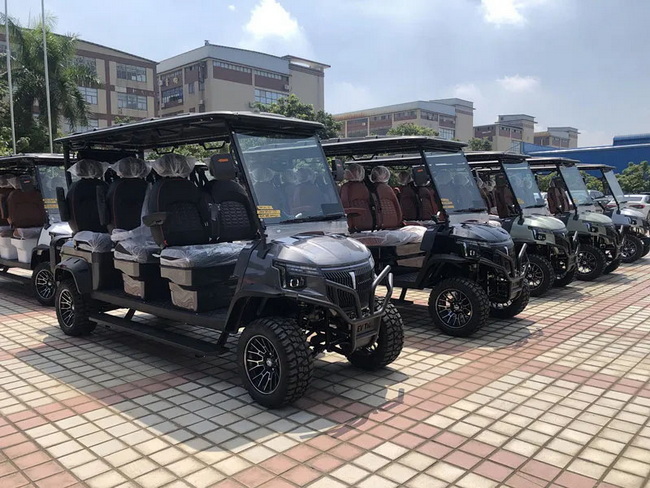
A factory‑stock electric golf cart designed for golf courses typically tops out at about 12–15 mph, giving players enough pace to move efficiently between holes without sacrificing safety. Personal‑use configurations of the same electric golf cart platform are often programmed closer to 15–19 mph for a slightly livelier driving experience around neighborhoods or resorts.[1]
Yes, with appropriate upgrades—such as higher‑voltage lithium batteries, more powerful motors, and performance controllers—an electric golf cart can reach 25–30 mph or even higher in custom builds. However, many road‑legal low‑speed vehicle versions of an electric golf cart are electronically limited to around 25 mph to comply with safety regulations, regardless of potential mechanical capability.[4][7][11][2]
Street‑legal categories typically define a low‑speed electric vehicle as one that can go at least 20 mph but not more than 25 mph, so manufacturers lock the controller to stay within that band. As a result, even if the motor and battery could push an electric golf cart above 25 mph, the software prevents it from exceeding the legal limit when configured for public roads.[7][2]
Lithium batteries are lighter and maintain voltage more consistently than lead‑acid packs, so a lithium‑equipped electric golf cart generally accelerates more strongly and holds a higher top speed for longer. This technology also supports faster charging and deeper usable capacity, helping a high‑speed electric golf cart maintain both performance and range across a full day of use.[10][11][12]
It can be safe to increase the speed of an electric golf cart when upgrades are engineered as a complete system, including stronger brakes, better tires, and appropriate suspension tuning. Unbalanced modifications that only add power without improving stopping distance, handling, or safety equipment may make the electric golf cart difficult to control and could violate local regulations or void manufacturer warranties.[14][9][2][7]
[1](https://hartvillegolfcarts.com/how-fast-do-golf-carts-go/)
[2](https://www.motoelectricvehicles.com/blog/what-makes-an-electric-golf-cart-street-legal/)
[3](https://ipowerqueen.com/blogs/blog/how-fast-do-golf-carts-go)
[4](https://vovexgolf.com/blogs/golf/what-is-the-fastest-golf-cart)
[5](https://evtitan.com/electric-golf-carts-understanding-motor-power-and-performance/)
[6](https://blog.buggiesunlimited.com/how-to-make-your-golf-cart-faster/)
[7](https://www.kandiamerica.com/what-is-a-street-legal-golf-cart/)
[8](https://guildgolfcarts.com/how-many-watts-is-a-golf-cart-motor/)
[9](https://evtitan.com/boosting-the-speed-and-performance-of-your-electric-golf-cart-what-you-should-know/)
[10](https://www.golfcartmax.com/post/the-best-golf-cart-batteries-lithium-ion-vs-lead-acid)
[11](https://boterocarts.com/lithium-vs-lead-acid-golf-cart-batteries-a-comprehensive-comparison/)
[12](https://temgobattery.com/blogs/lithium-battery-guide/golf-cart-battery-comparison-lithium-vs-lead-acid)
[13](https://www.gowithgarretts.com/how-fast-do-golf-carts-go-5-faqs-about-golf-carts-speed/)
[14](https://www.kandiamerica.com/electric-golf-cart-speed-tips/)
[15](https://golfcartsearch.com/golf-cart-laws/washington)


