


Views: 222 Author: Leah Publish Time: 2025-12-26 Origin: Site


Content Menu
● Are Golf Buggies Road Legal by Default?
● Typical Legal Framework Around the World
>> Other Jurisdictions and Resort Areas
● Key Factors That Decide Road Legality
>> Speed Capability and Vehicle Classification
>> Registration, Tax, and Insurance
>> Driver Age and Licensing Rules
● How to Make a Golf Buggy Street Legal
>> Technical Upgrades for a Street‑Legal Golf Buggy
>> Inspection, Testing, and Certification
>> Legal and Administrative Procedures
● Practical Safety Tips for Driving a Golf Buggy on the Road
>> Defensive Driving in a Golf Buggy
>> Passenger and Load Management
>> Weather and Road Conditions
● Commercial and OEM Opportunities for Road‑Ready Golf Buggies
>> Fleet Use in Resorts and Communities
>> Industrial and Utility Applications
● FAQ
>> 1. Do I need a license to drive a golf buggy on the road?
>> 2. What safety features are mandatory for a road‑legal golf buggy?
>> 3. Can I drive a golf buggy on highways or fast roads?
>> 4. Do I have to insure my golf buggy if I drive it on the road?
>> 5. Is it cheaper to convert a regular golf buggy or buy a factory‑built street‑legal model?
Driving a golf buggy on the road is sometimes possible, but it depends heavily on local laws, vehicle classification, and how the buggy is equipped for safety. In many countries and states, a standard golf buggy is not road legal unless it is upgraded and registered as a low‑speed vehicle or similar category.[1][2]
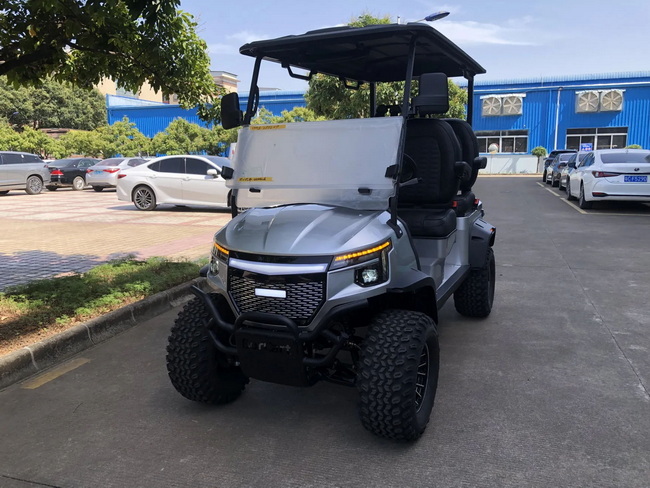
A golf buggy is a compact motor vehicle designed primarily for transporting golfers and equipment around a golf course at low speeds, usually below 20 mph. Most modern golf buggy designs are electric, making them quiet, efficient, and attractive for use in resorts, gated communities, campuses, and industrial sites.[3][4]
From a legal perspective, authorities often distinguish between a standard golf buggy (generally limited to 20 mph or less) and a low‑speed vehicle (LSV) or neighborhood electric vehicle (NEV), which can typically reach 20–25 mph and must meet more stringent safety regulations. This distinction is crucial when deciding if a given golf buggy can be used on public roads instead of private land only.[5][6]
In most jurisdictions, a golf buggy is not automatically permitted on public streets just because it is motorized. Standard course‑only golf buggy models are normally treated as off‑road vehicles unless they are upgraded with road‑legal equipment and successfully registered for on‑road use.[2][1]
Insurance and tax rules often treat a road‑going golf buggy similar to a small car or motorcycle, meaning it may need registration documents, license plates, and appropriate liability insurance. Using an unregistered golf buggy on public roads can lead to fines, impoundment, and serious legal problems if an accident occurs.[7][8]
Because laws differ widely, drivers must always check local regulations before taking a golf buggy onto the road. Still, some common patterns appear in many of the world's major markets.[1][7]
In the United States, most states allow some form of golf buggy or golf cart use on public roads, but usually with strict limits on where, when, and how. Many states restrict golf buggy operation to streets with speed limits of 25–35 mph or less and may allow use only in designated “golf cart communities” or specific municipal zones.[7][1]
If a golf buggy is modified to exceed 20 mph, federal rules and many state laws reclassify it as an LSV, which must comply with Federal Motor Vehicle Safety Standard 500, including requirements for lights, mirrors, and other safety systems. For this reason, many buyers choose LSV‑type golf buggy models that are factory‑equipped for road use and easier to title, register, and insure.[9][5]
In the United Kingdom, a typical golf buggy designed for course use is not normally permitted to drive on public highways. Some specialized single‑user vehicles may be treated as mobility products with limited rights to use pavements or certain low‑speed roads, but this does not apply to every golf buggy.[10]
To be fully road legal, a golf buggy must comply with construction and use regulations, be registered with the DVLA, taxed, insured, and fitted with appropriate safety equipment, much like any other small road vehicle. As a result, only specially built or heavily modified golf buggy models are realistically suitable for legal on‑road operation in the UK.[8][11]
In some regions, especially tourist destinations, island resorts, and retirement communities, authorities actively support controlled golf buggy use on public streets. Examples include parts of Florida, Arizona, and various resort towns where golf buggy or cart lanes and low‑speed zones are common.[12][1]
Even in these areas, golf buggy operation is usually restricted to roads with low speed limits, and drivers must follow all posted signs and local ordinances. Highways, major arterials, and high‑speed rural routes almost always exclude golf buggy traffic for safety reasons.[6][9]
Several recurring legal and technical elements determine whether a particular golf buggy can be driven on public roads. Understanding these factors helps owners make informed decisions about purchasing, upgrading, or operating a golf buggy.[1][7]
The top speed of a golf buggy is one of the main criteria used by regulators. Vehicles capped at 20 mph or below are typically treated as conventional golf carts or golf buggies. Once a golf buggy is capable of more than 20 mph (usually up to 25 mph), it is often assigned to the LSV category, which carries both more obligations and more road privileges.[3][5]
LSV‑class golf buggy models are generally allowed on a wider range of public roads but must pass additional safety and registration requirements. Owners and fleet managers therefore need to decide whether to keep a golf buggy in “course only” trim or configure it as a street‑capable LSV from the outset.[6][9]
Road‑legal golf buggy models need more comprehensive safety features than typical course‑only versions. Although specific rules vary, common requirements include:[2]
- Headlights suitable for night or low‑light driving
- Tail lights and brake lights so other drivers can see when a golf buggy is slowing
- Turn signals with visible indicators
- Rear‑view and often side mirrors
- A horn, reliable brakes, and appropriate reflectors
- Seat belts for all seating positions
In some regions, a fixed windshield made of safety glass or other approved material is mandatory for any golf buggy operated on the road. Many LSV‑style golf buggy designs are engineered so that all of these components are standard equipment from the factory, simplifying compliance.[4][13]
Permission to drive a golf buggy often depends on the type of road and its posted speed limit. Typical patterns include:[1]
- Allowing golf buggies only on streets with speed limits of 25–35 mph or less
- Restricting use to designated golf buggy zones or neighborhoods
- Prohibiting golf buggies on highways, freeways, and major arterial roads
Some states allow low‑speed vehicles, including street‑legal golf buggies, on roads posted at up to 35 mph, while regular golf buggies are confined to even lower‑speed streets. In addition, golf buggy operation may be limited to certain hours, such as daylight only, for visibility and safety reasons.[14][7]
If a golf buggy is recognized as a road vehicle, it usually must be formally registered and may require license plates and inspection. In many areas, owners must pay standard or reduced registration fees and may also be responsible for specific local taxes relating to vehicle ownership.[6][7]
Insurance is another critical element. A road‑legal golf buggy typically requires liability insurance at a minimum, and some jurisdictions demand proof of coverage before registration. Without insurance, a golf buggy owner can face substantial financial risk and penalties, especially when operating in traffic around pedestrians and conventional vehicles.[12][2]
Most regions require a valid driving license for anyone operating a golf buggy on public roads. Minimum ages often mirror standard driving laws—frequently 16 or older—although private communities or purely private roads may set their own internal rules.[14][1]
Once a golf buggy is on a public roadway, the driver must obey all traffic laws, including obeying speed limits, stopping at signals, and following drink‑driving regulations. Violations committed in a golf buggy can affect a driver's regular license and lead to fines or other sanctions.[2][7]
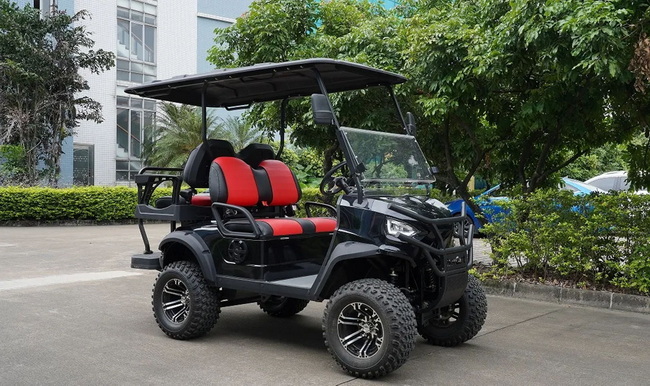
For international buyers, distributors, and OEM partners who wish to use golf buggies beyond golf courses, converting or purchasing street‑legal models is a major topic. Turning a standard golf buggy into a road‑ready vehicle usually involves both technical modifications and administrative work.[9]
To comply with common LSV or street‑legal standards, a golf buggy usually requires:
- Front headlights with high‑visibility output
- Tail lights, brake lights, and turn signals
- Rear‑view and side mirrors positioned for wide visibility
- A compliant windshield and wiper system if required locally
- Seat belts for all forward‑facing occupants
- Reflectors and a unique vehicle identification number
In some markets, additional items such as a parking brake, speedometer, and reverse warning signal may be required before a golf buggy can be certified. Many manufacturers design their golf buggy frames and wiring systems to support these components from day one, making it easier for brand owners and resellers to configure road‑ready versions.[4][5]
After fitting the necessary components, a golf buggy may need a formal inspection by an authorized body. Inspectors often check lighting performance, braking capability, electrical safety, and structural integrity before approving the golf buggy for use on public roads.[13][6]
Some jurisdictions also require laboratory or track testing for LSV‑type vehicles, especially when they are intended for broader commercial use such as resort fleets or urban mobility schemes. Choosing a golf buggy platform from a supplier with prior certification experience can significantly reduce the time and cost of bringing a road‑legal model to market.[3][4]
Once a golf buggy meets technical standards, the owner typically must complete several legal steps:
- Submitting registration applications and technical documents
- Paying any registration and plate fees
- Purchasing and documenting insurance coverage
- Ensuring the driver has the correct license category
In some regions, golf buggy owners must also schedule periodic inspections or renewals, just like conventional cars. Failing to maintain registration or insurance can cause a previously legal golf buggy to become illegal overnight, even if its equipment still complies.[7][2]
Even when fully legal, a golf buggy offers less physical protection than a standard car, so responsible driving habits are essential. Safe operation of a road‑going golf buggy benefits both the occupants and other road users.[15][1]
Because a golf buggy is light and relatively slow, drivers must anticipate the actions of faster vehicles around them. Practical strategies include:[15]
- Keeping to the far side of the lane when safe, without riding the curb
- Signaling early before turning or changing direction
- Allowing extra stopping distance in wet or downhill conditions
- Avoiding busy roads even if they are technically permitted
Defensive driving helps compensate for the lower crash protection of an open‑sided golf buggy body and reduces the risk of side impacts or rear‑end collisions.[4]
Passengers in a moving golf buggy should remain seated with arms and legs inside the vehicle at all times. Standing, hanging off the side, or riding on the rear can quickly destabilize a golf buggy and increase the chance of rollover or ejection during a sharp turn.[15][1]
Similarly, operators should respect the rated carrying capacity and never overload their golf buggy with excessive cargo or extra passengers beyond its design. Overloading can damage brakes and suspension and make the golf buggy harder to control in emergency situations.[2][6]
A golf buggy performs very differently in rain, wind, or on uneven terrain than on a smooth, dry golf course. Wet surfaces increase braking distances, and strong crosswinds can affect stability, especially for golf buggy models with tall windshields or canopies.[15][1]
Drivers should reduce speed in poor conditions, avoid deep puddles, and be cautious on steep slopes or loose gravel where traction is limited. In extreme weather, parking the golf buggy and using a more robust vehicle may be the safest choice.[4][2]
For professional manufacturers and OEM partners, the growing interest in road‑compatible golf buggies opens several business opportunities. Electric golf buggy fleets can serve resorts, residential communities, industrial campuses, airports, and tourist districts that seek low‑emission, low‑noise mobility solutions.[1][4]
Resorts and gated communities often adopt road‑legal golf buggy fleets to transport guests, staff, and maintenance teams over short distances. These environments typically feature low speed limits and carefully planned internal roads that are ideal for golf buggy operation.[12][1]
Road‑ready golf buggy models allow such sites to connect residential areas, clubhouses, beaches, and parking zones without relying exclusively on larger shuttle buses or private cars. When branded and customized, each golf buggy can also serve as a moving advertisement for the facility or a partner brand.[11][4]
Factories, logistics centers, campuses, and large warehouses often use electric golf buggy‑style vehicles for internal transport and light cargo tasks. When these sites span public streets or require crossing public roads, having road‑legal golf buggy models can reduce complexity and ensure compliance.[3][6]
Utility‑focused golf buggies with cargo beds, tool racks, and towing capability can be engineered on the same electric platform, giving operators a unified fleet. This versatility makes the golf buggy platform attractive for businesses that want both on‑site mobility and limited on‑road access for short trips.[4][1]
In many places, a standard golf buggy designed purely for the course cannot legally be driven on public roads without significant upgrades and formal approvals. However, once equipped with the right safety features, properly classified as a low‑speed or neighborhood vehicle, and correctly registered and insured, a golf buggy can become a practical solution for short‑distance transportation on suitable streets.[2][1]
Anyone interested in using a golf buggy on the road should study local laws, confirm speed and equipment requirements, and, where possible, work with experienced manufacturers and dealers that understand regional certification standards. Doing so helps ensure that every golf buggy in service is both compliant and safe, protecting drivers, passengers, and other road users while taking full advantage of quiet, efficient electric mobility.[7][12]
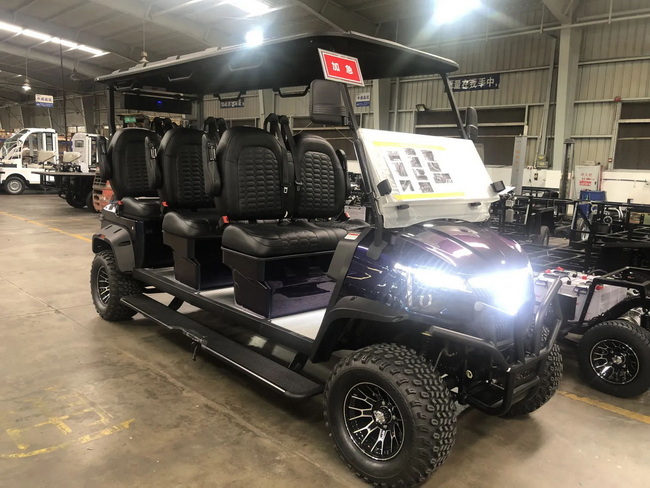
In most jurisdictions, a valid driver's license is required to operate a road‑legal golf buggy on public streets, particularly when it is classified as an LSV or similar motor vehicle. Some private resorts or gated communities may allow unlicensed use on internal roads, but this usually does not extend to public highways.[14][1]
Common rules demand headlights, tail lights, brake lights, turn signals, mirrors, reflectors, a horn, and seat belts for each seating position before a golf buggy can be used on public roads. In some regions, a windshield, VIN plate, and sometimes even a speedometer or parking brake are also required.[5][13]
Golf buggies and LSV‑type vehicles are almost always banned from highways, freeways, and other high‑speed roads due to safety concerns. Even when street legal, a golf buggy is normally confined to local streets with speed limits of around 25–35 mph or lower, often in designated areas only.[6][1]
Where a golf buggy is registered for on‑road use, liability insurance is usually mandatory, and some authorities require proof of insurance before issuing plates. Insurance protects both the golf buggy owner and third parties in the event of collisions or property damage.[7][2]
Converting a regular golf buggy can appear cheaper at first, but the cost of parts, labor, and inspections can quickly add up, especially if multiple items must be reworked to pass regulations. Many operators find that purchasing a factory‑engineered street‑legal or LSV‑type golf buggy, already designed to meet safety and compliance standards, offers better long‑term reliability and total cost of ownership.[9][4]
[1](https://evtitan.com/golf-cart-laws-regulations-state-by-state-guide/)
[2](https://www.progressive.com/answers/golf-cart-driving-requirements/)
[3](https://www.electriccartcompany.com/check-out-our--florida-lsv)
[4](https://www.clubcar.com/en-us/personal/street-legal-vehicles)
[5](https://golfcartresource.com/california-golf-cart-low-speed-vehicle-laws/)
[6](https://dmv.nv.gov/lowspeed.htm)
[7](https://1800lionlaw.com/laws-for-driving-golf-carts-on-roads-in-the-us/)
[8](https://www.pistonheads.com/gassing/topic.asp?h=0&f=10&t=1664978)
[9](https://solanaev.com/how-to-make-golf-cart-street-legal/)
[10](https://bugg-ease.com/drive-a-golf-buggy-on-the-road/)
[11](https://www.golfcaruk.com/frequently-asked-questions/)
[12](https://www.gloverlawfirm.com/floridas-golf-cart-laws/)
[13](https://trafficsafetyteam.org/wp-content/uploads/2023/05/FloridaLegislation-GolfCarts-LSV.pdf)
[14](https://golfcartsearch.com/golf-cart-laws/washington)
[15](https://www.i-5motorsports.com/blog/golf-carts--traffic-laws--66953)


