


Views: 222 Author: Leah Publish Time: 2026-02-05 Origin: Site


Content Menu
● Understanding Club Car Throttle Adjustment
● Safety First Before Adjusting Throttle
● Main Throttle Components on Club Car
● Step‑by‑Step Throttle Cable Adjustment (Club Car Gas)
>> Step 1 – Access the Throttle System
>> Step 2 – Put the Golf Car in Maintenance Mode
>> Step 3 – Set Idle and Switch Timing
>> Step 4 – Adjust Cable Tension in the Box
>> Step 5 – Verify Full Throttle and Butterfly Travel
● Governor Adjustment and Top Speed Considerations
● Electric Club Car Throttle Notes
● Useful Throttle‑Related Videos for Club Car Owners
● Extra Tips for Smooth Golf Car Operation
● FAQ – Throttle Adjustment on Club Car Golf Car
>> 1. How do I know if my Club Car golf car throttle cable needs adjustment?
>> 2. Can throttle adjustment make my Club Car golf car faster?
>> 3. Is the adjustment process different for electric Club Car golf cars?
>> 4. How often should I check the throttle on my Club Car golf car?
>> 5. What if my Club Car golf car still runs poorly after throttle adjustment?
Adjusting the throttle on a Club Car golf car is one of the simplest ways to improve response, drivability, and safe speed control on the course or in a community.

On a Club Car golf car, the throttle system links the accelerator pedal to the carburetor (gas) or controller (electric) through a cable and a small switch box. When correctly set, the microswitch clicks first to start the engine or enable the controller, then the throttle plate or controller input begins to open, giving smooth acceleration.
A misadjusted throttle cable can cause harsh take‑off, poor low‑speed control, no idle, or a golf car that never reaches full power. Many owners also combine throttle adjustments with governor and carburetor tweaks to fine‑tune top speed and idle quality on Club Car gasoline golf cars.
Always treat a Club Car golf car like any other motor vehicle during maintenance.
- Turn the key switch off and remove the key before working under the seat or around the engine compartment on a golf car.
- Place the golf car in neutral and, if available, maintenance or tow mode so the drive system cannot engage unexpectedly.
- Chock the front wheels and safely jack up the rear of the golf car so the driven wheels are off the ground when testing adjustments.
- Disconnect the battery negative cable on electric Club Car models and the battery ground on gas models whenever you work near live wiring or controls.
- Wear gloves and eye protection when working around throttle linkages, springs, and rotating parts at the rear axle or engine of the golf car.
This basic safety preparation lets you run and test the golf car with the rear wheels spinning freely instead of moving the vehicle.
Most Club Car gas golf cars (DS and Precedent) share a similar throttle layout that you should understand before turning any adjustment nuts.
- Accelerator pedal and pedal rod – The driver's pedal connects by a rod or linkage to the throttle box under the floor on the golf car.
- Throttle cable – A flexible cable runs from the box or pedal area back to the carburetor or throttle lever on the engine, carrying pedal movement to the throttle plate on the golf car engine.
- Throttle box and microswitch – A plastic or metal box houses the microswitch that starts the engine or controller; the cable passes through this box and has adjustment nuts on both sides.
- Carburetor throttle lever and butterfly – On gas Club Car golf cars, the cable attaches to a lever on the carburetor that opens and closes the butterfly plate to control airflow and engine speed.
- Governor linkage and spring – At the transaxle, a governor arm and spring limit maximum engine RPM; many “turn up” procedures for Club Car golf cars involve this component in addition to the throttle cable.
Knowing what each part does helps you avoid over‑tightening the cable and keeps the golf car safe and smooth to drive.
This section outlines a practical procedure many technicians use on Club Car DS and similar gas golf cars to set throttle cable tension and microswitch timing.
- Lift the seat and remove any covers over the engine compartment at the rear of the golf car.
- Locate the throttle cable where it connects to the carburetor and trace it forward to the throttle box under the seat or floor on the golf car.
- Identify the two adjustment nuts on either side of the plastic throttle box that clamp the cable in position.
At the same time, note the idle stop screw and throttle lever on the carburetor of the golf car, because you may need to verify full‑open and fully‑closed positions after cable adjustment.
Many Club Car golf cars allow you to safely run the engine with the rear wheels off the ground in a special service mode.
- Jack up the rear of the golf car securely and place jack stands under the frame.
- Put the shifter in neutral and engage maintenance mode by pulling back and rotating the spring‑loaded plastic piece behind the shifter until it drops into the maintenance notch.
- Confirm the rear wheels spin freely and the golf car cannot drive away during testing.
This setup lets you adjust the throttle and observe wheel speed without moving the golf car itself.
A key goal is for the engine to start and idle with the throttle plate barely open while the cable remains relaxed in the box on the golf car.
- Loosen the throttle cable adjustment at the pedal box or throttle box until the cable can slide freely in the housing.
- Push the accelerator pedal by hand so that the golf car starts and idles while the cable is still loose.
- Adjust the carburetor idle screw so the engine idles smoothly at low RPM with the golf car rear wheels off the ground.
- Make sure the cable is slack enough that it does not pull on the throttle lever during idle; only the idle screw should control the butterfly plate opening on the golf car engine.
At this stage, you should be able to start the Club Car golf car, have it idle, and see that the throttle plate is just slightly open for a stable idle.
Next, you bring the cable back into play so the throttle plate begins to move just after the microswitch click in the box on the golf car.
- Turn the key off and slide the throttle cable back into the throttle box housing on the golf car.
- Lightly tighten the front and rear adjustment nuts while watching when the throttle plate starts to move relative to the microswitch click.
- Set the cable tension so that you clearly hear the microswitch click first, then the throttle plate begins to open with only a little further pedal travel on the golf car.
- Avoid pulling the throttle lever open at rest; too much tension can prevent idle and make the golf car lurch.
Owners who want more aggressive response on a Club Car golf car may set the cable slightly tighter, but it must still allow true idle and smooth take‑off.
With basic tension set, confirm that full pedal on the golf car gives full throttle at the carburetor without binding or over‑pulling the plate.
- Have a helper slowly press the accelerator pedal to the floor while you observe the carburetor lever on the golf car engine.
- Check that the butterfly plate reaches fully open at or near full pedal travel and does not hit a hard stop in a way that strains the cable.
- If the plate does not open fully, increase cable tension slightly at the throttle box; if it binds, reduce tension or adjust linkage length on the golf car.
- Let the pedal return and confirm the butterfly closes completely when the golf car is at rest, which helps clean idle and shutoff.
This full‑travel check is essential for both performance and cable life on a Club Car golf car.
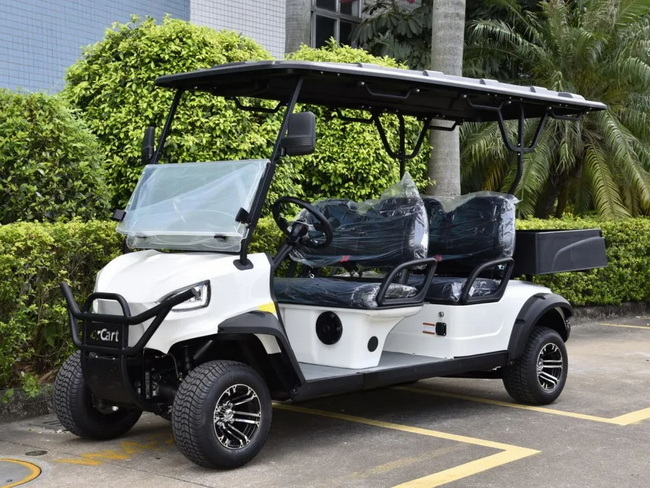
Many Club Car gas golf car owners also adjust the governor to affect top speed, but this must be done carefully to avoid engine damage and unsafe operation.
- The governor on a Club Car golf car is usually located on the transaxle, with an arm and a spring whose tension controls maximum RPM and speed.
- Tightening the governor spring generally increases top speed; loosening it lowers maximum speed so the golf car runs slower on flat ground.
- Club Car factory specifications for many DS golf cars target around 10–12 mph as the standard top speed on level surfaces.
- Excessive governor adjustment can cause the engine in a golf car to over‑rev, risking internal damage and increasing the chance of losing control at high speed.
Throttle and governor changes should be combined so that the Club Car golf car accelerates smoothly, idles correctly, and stays within safe speed limits for the course or community.
On electric Club Car golf cars, the basic idea of throttle adjustment is similar, but the cable may connect to a potentiometer or controller input instead of a carburetor.
- The throttle cable on many electric golf cars runs from the pedal box to a sensor or lever that sends a signal to the controller rather than opening a butterfly plate.
- You still want a small amount of free play so the microswitch or pedal switch in the box activates first, then the controller signal increases as you press the pedal further on the golf car.
- If the cable is too tight, the electric Club Car golf car may “jump” as soon as you touch the pedal, with no soft take‑off.
- If the cable is too loose, the golf car may hesitate or have dead travel before it starts moving, which feels unresponsive.
Although the hardware differs, the same careful approach to cable slack and switch timing applies on every Club Car golf car.
Many owners of Club Car golf cars like to watch practical walkthroughs before picking up tools.
You can easily find tutorials that show how to adjust the throttle cable and effectively de‑restrict the governor on a Club Car gas golf car, including on‑course testing after the change. There are also detailed clips for specific model years, such as a 2004 Club Car Precedent gas golf car with crank‑no‑start conditions, which demonstrate governor adjustment with small, careful movements. Other step‑by‑step videos focus on making a gas Club Car golf car faster, covering throttle cable, governor spring, and basic tune items to improve speed and response.
Watching these guides gives a clear visual of linkage motion, cable nuts, and safe jack‑stand testing on a Club Car golf car before you follow the written procedure.
Fine throttle adjustment is just one part of keeping a Club Car golf car responsive and comfortable to drive.
- Periodically lubricate the throttle cable and pedal linkage on the golf car to reduce friction and prevent sticking, especially on older vehicles.
- Inspect the microswitch and wiring inside the throttle box of the golf car; a failing switch can mimic throttle problems by cutting spark or controller power.
- Combine throttle adjustments with carburetor cleaning and mixture checks on gas Club Car golf cars to achieve a stable idle and crisp acceleration.
- If you adjust the golf car for higher speed, also evaluate brakes, steering, and tire condition to keep the vehicle safe at its new performance level.
- When in doubt, return the Club Car golf car to factory‑like settings and consult a professional technician, especially for commercial or fleet golf cars.
A properly tuned throttle system helps every Club Car golf car deliver predictable, quiet, and efficient operation across golf courses, resorts, and residential areas.
Adjusting the throttle on a Club Car golf car involves balancing cable tension, microswitch timing, and full‑travel movement at the carburetor or controller so the vehicle starts smoothly, idles cleanly, and accelerates progressively. By setting idle first, then dialing in throttle cable slack and checking governor limits, you keep the engine protected while tailoring response and top speed to your typical golf car use. With routine inspection, lubrication, and careful testing on jack stands, even older Club Car golf cars can regain factory‑like drivability or be tuned to match the needs of modern resorts, communities, and private owners.
Contact us to get more information!
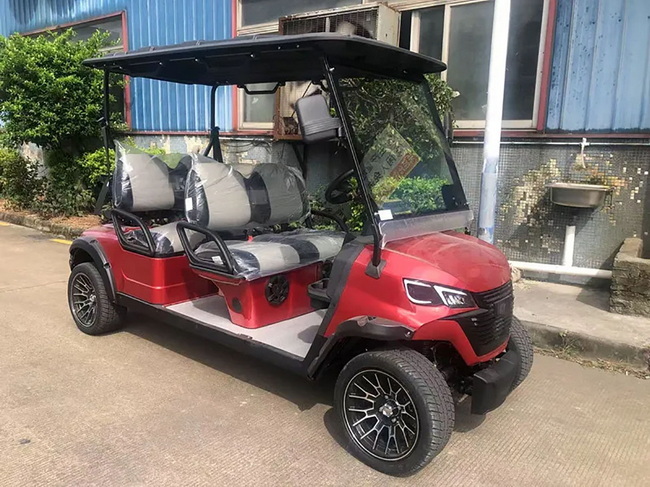
A Club Car golf car that jerks on take‑off, refuses to idle, or has a lot of dead pedal travel before moving often has a misadjusted or stretched cable. If the engine does not reach full power or the carburetor butterfly never fully opens at full pedal, that is another sign the throttle on the golf car needs attention.
Tightening the throttle cable and slightly increasing governor spring tension can raise the effective top speed of a Club Car gas golf car, as long as the engine still reaches safe RPM. However, most of the speed limitation comes from the governor system, so it is better to treat throttle cable adjustment as a way to get full factory performance and smooth response on the golf car, not as an extreme speed modification.
Electric Club Car golf cars typically use a throttle cable connected to a sensor or controller lever rather than a carburetor, but the fundamental goal—proper switch timing and slight free play—remains the same. You want the switch in the pedal or throttle box to engage first and then see a smooth increase in controller signal as the pedal is pressed on the golf car, without harsh jumps or long dead travel.
For frequently used fleet golf cars, a quick throttle and pedal check every few months or during scheduled service helps catch stretch, wear, or sticking early. Private Club Car golf cars that see lighter duty can often go a full season between inspections, but you should revisit the throttle whenever you notice changes in response or idle quality.
If a Club Car golf car continues to hesitate, surge, or stall after cable and idle adjustments, you may be dealing with fuel, ignition, or controller issues rather than pure throttle problems. In that case, inspect the carburetor, fuel supply, spark system, batteries, and controller connections, or have a professional technician evaluate the golf car to avoid misdiagnosis.
1. https://www.youtube.com/watch?v=Q_w-bQhV_2E
2. https://taraelectricvehicles.com/blog/2025/07/21/how-to-adjust-the-throttle-plate-on-a-golf-cart/
3. https://cartaholics.com/threads/how-to-turn-up-club-car-gas-to-go-faster.1539/
4. https://www.linkedin.com/pulse/club-car-throttle-cable-adjustment-why-adjust-steps-michael-niu-x5qqc
5. https://www.borcart.com/how-to-adjust-carburetor-on-club-car-golf-cart.html
6. https://apacheelectricvehicles.com/blog/how-to-adjust-the-throttle-cable-on-an-ezgo-golf-cart/
7. https://www.youtube.com/watch?v=Ll69BSLxQtE
8. https://www.facebook.com/groups/GolfCartsModified/posts/4065995873673437/
9. https://buggiesgonewild.com/showthread.php?t=142967
10. https://www.facebook.com/groups/GolfCartsModified/posts/2310131089259933/
11. https://www.youtube.com/watch?v=-ZxZbhLo8Jg
12. https://www.facebook.com/groups/204886479233957/posts/747481344974465/
13. https://cartaholics.com/threads/adjust-club-car-ds-governor-to-factory-specs.11459/
14. https://buggiesgonewild.com/showthread.php?t=141429
15. https://cartaholics.com/threads/throttle-adjustment-99-club-car-ds.21993/


