


Views: 222 Author: Leah Publish Time: 2025-12-26 Origin: Site


Content Menu
● What Is Golf Buggy Insurance?
● When Do You Legally Need Golf Buggy Insurance?
● Typical Coverage Options for a Golf Buggy
● Additional Protections for a Golf Buggy
● Are Golf Buggies Covered by Home or Auto Insurance?
● Why Golf Buggy Insurance Is Strongly Recommended
● Golf Buggy Use Scenarios and Insurance Needs
● Golf Buggies, Low-Speed Vehicles and Street-Legal Rules
● Cost Factors for Golf Buggy Insurance
● OEM Golf Buggies, Branding and Insurance Considerations
● Practical Risk-Management Tips for Golf Buggy Owners
● Pre-Purchase Checklist for Golf Buggy Insurance
● Claims and Liability Considerations for a Golf Buggy
● Safety Best Practices for Golf Buggy Operations
● Fleet Management for Golf Buggies in Resorts and Communities
● Technology and Telematics for a Golf Buggy
● Custom and High-End Golf Buggies: Insurance Implications
● Environmental and Regulatory Trends Affecting Golf Buggies
>> 1. Do I always need insurance for a golf buggy?
>> 2. Is a golf buggy covered by my homeowners insurance?
>> 3. What is the difference between a golf buggy and a low-speed vehicle for insurance?
>> 4. How much does golf buggy insurance usually cost?
>> 5. What information do insurers need to quote for a golf buggy?
Whether you legally need insurance for a golf buggy depends mainly on where you drive it and how your local regulations classify it, but in practice insurance is strongly recommended in almost all real-world scenarios. Owners who take a golf buggy beyond a strictly private course or home driveway face potential liability, property damage and theft risks that can be significant compared with the cost of coverage.
BorCart is a professional Chinese manufacturer of electric vehicles and automotive parts, focusing on OEM production of golf buggies, golf cars and other low-speed utility vehicles for overseas brands, wholesalers and manufacturers.
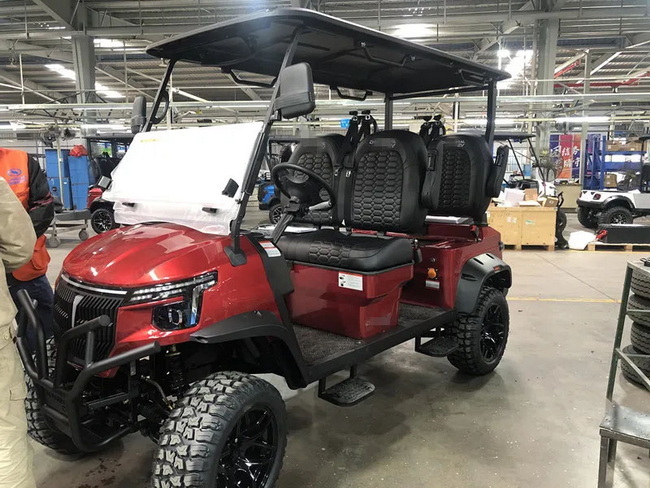
Golf buggy insurance is a specialist policy that protects you if your golf buggy is involved in an accident, causes injury or property damage, or is itself damaged or stolen. It fills protection gaps that ordinary home or car policies often leave when a golf buggy is used on courses, in communities, resorts or mixed-use environments.
This type of insurance can be written for individual private owners, golf clubs, hotels, resorts, campuses and rental operators running a fleet of golf buggies. Coverage is normally tailored to where the golf buggy operates, whether it is road legal and how frequently it is used.
Legal requirements for a golf buggy vary by country, state and even municipality, but there are clear patterns that many jurisdictions follow. In general, the more your golf buggy behaves like a road vehicle, the more likely you are to need at least liability insurance and possibly registration.
If you only drive a golf buggy on a private golf course or on private land with no public access, local law may not demand a separate policy, although the owner is still responsible for accident costs. Once a golf buggy is driven on public roads, crosses public streets, or is used in communities that follow low-speed vehicle rules, authorities and community associations often require minimum liability insurance similar to other vehicles.
Most golf buggy insurance products borrow the structure of auto and recreational vehicle policies while adjusting limits and terms to match lower speeds and different usage patterns. For a single owner, the basic elements are usually straightforward and can be combined into a package.
Liability coverage is the foundation, paying for bodily injury and property damage you cause to others while operating your golf buggy. Collision coverage helps repair or replace your golf buggy after an accident with another vehicle, a structure or an object, regardless of who is at fault.
Beyond liability and collision, many insurers offer optional protections that are particularly valuable for golf buggy fleets and high-value custom vehicles. Comprehensive coverage protects a golf buggy from non-collision events such as theft, fire, vandalism, falling objects and certain weather events.
Medical payments or personal injury protection can cover medical bills for you and your passengers after a golf buggy accident, even if there is a dispute over who caused it. Some policies also include or allow add-ons for accessories such as upgraded seats, enclosures, custom wheels, onboard electronics and cargo boxes installed on a golf buggy.
Many owners assume their home or car policy will automatically cover a golf buggy, but that assumption is often only partly correct. Homeowners insurance may provide limited coverage for a golf buggy kept and used only on the insured property, but it commonly excludes incidents once the buggy leaves the premises or is used in ways considered motor-vehicle-like.
Auto insurance usually focuses on vehicles that are licensed for road use, so a non-street-legal golf buggy is often excluded unless it has been converted and registered as a low-speed vehicle. For this reason, relying solely on a home or car policy for a golf buggy can leave serious gaps, especially when you cross roads, drive in neighbourhoods or transport passengers.
Even when not required by law, golf buggy insurance is a practical way to manage risk for individuals and businesses. A low-speed collision between a golf buggy and a car, wall or pedestrian can still produce substantial repair costs and medical expenses, and liability claims can quickly exceed what many people can pay out of pocket.
For commercial operators such as golf clubs, hotels, resorts and rental outfits, uninsured or underinsured golf buggy accidents can damage brand reputation, disrupt operations and lead to prolonged legal disputes. Adequate insurance allows these organisations to respond more effectively to incidents and resume normal service sooner.
The right insurance for a golf buggy depends heavily on how and where it is used on a daily basis. Owners should begin by mapping typical routes, traffic exposure and passenger loads rather than focusing only on vehicle specifications.
On-course use only often represents a lower risk than community or road use, but it still involves potential collisions with other buggies, golf equipment and pedestrians. Resort or gated community use in mixed traffic, especially when a golf buggy shares space with cars, delivery vehicles and cyclists, typically calls for higher liability limits and broader physical damage coverage.
In many regions, there is an important legal distinction between a simple golf buggy and a low-speed vehicle. A standard golf buggy is usually designed for the course, with limited speed and basic lighting, and may not be allowed on public roads at all.
A low-speed vehicle, by contrast, is often required to meet specific technical standards such as headlights, tail lights, turn indicators, mirrors, seat belts and sometimes windshields. Once a golf buggy platform is configured to meet these standards and is registered for street use, it is generally insured much more like a small car than a pure recreational buggy.
The cost of insuring a golf buggy is usually lower than insuring a full-size car, but premiums vary widely from one owner to another. Insurers look at the value of the golf buggy, its top speed, whether it is street-legal, typical mileage, storage conditions and local claim history.
Commercial use, such as rentals or shuttle operations, tends to attract higher premiums than private recreational use because more hours on the move usually translate into greater exposure. Owners can often adjust deductibles and coverage limits to balance premium costs with their tolerance for risk and their budget.
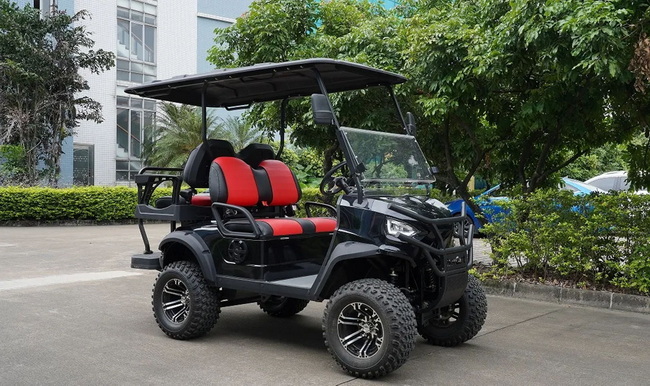
For overseas brands, wholesalers and producers working with an OEM manufacturer like BorCart, insurance planning begins long before the end customer drives the first golf buggy. Product positioning in the destination market—whether the unit is presented as a course-only buggy, a community shuttle or a low-speed vehicle—will influence classification, homologation and insurance expectations.
By providing detailed specifications, safety feature lists and recommended usage scenarios with each golf buggy, BorCart helps partners and distributors communicate clearly with local insurers and regulators. This enables each buyer to secure appropriate insurance for the golf buggy, reduces confusion at registration and supports smoother after-sales service.
A thoughtful risk-management approach goes hand in hand with golf buggy insurance and can help keep premiums under control. Owners and operators should implement simple daily routines to monitor the condition of each golf buggy and the behaviour of drivers.
Establish clear rules about who may drive a golf buggy, with particular attention to age, licensing status and alcohol policies. Regularly inspect brakes, steering, tires, lights and batteries so that mechanical issues do not contribute to accidents or injuries.
Before finalising a purchase or expanding a fleet, it is useful to prepare a basic insurance checklist. Clarifying key details in advance makes discussions with agents and brokers more efficient and reduces the chance of surprises later.
Document how many golf buggies will be owned, where they will be stored, their intended routes and whether they will carry passengers or cargo. Note any customisations that might increase value, such as high-capacity batteries, lifted suspensions, enclosures, or specialised seating for tours and hospitality.
Understanding how claims work for a golf buggy can help owners respond calmly and effectively if an incident occurs. When an accident happens, insurers generally expect prompt notification, accurate descriptions of events and supporting documentation such as photos, witness details and police reports if appropriate.
Liability disputes sometimes arise around whether the driver was authorised, whether the golf buggy was used in a permitted area and whether safety guidelines were followed. Well-written internal policies and clear signage at facilities that operate many golf buggies strengthen defence in these cases and support smoother claim settlements.
Good safety habits lower the risk of injury and support more favourable insurance outcomes over time. Operators should treat a golf buggy with the same respect as any motor vehicle, even if it travels at relatively low speeds.
Drivers should avoid overloading a golf buggy beyond its rated passenger or cargo capacity, especially on slopes or uneven terrain. Wearing seat belts where provided, slowing down on turns, reducing speed in wet conditions and never standing on moving golf buggies are simple rules that prevent many accidents.
Resorts, hotels, universities and residential communities often operate dozens or even hundreds of golf buggies. In these settings, the combination of insurance and disciplined fleet management is critical to controlling costs and ensuring guest safety.
Assigning each golf buggy an identification number, usage log and maintenance record helps track performance and pinpoint recurring issues. Training staff, tour drivers and maintenance teams together builds a shared understanding of both safety standards and insurance expectations for every golf buggy in the fleet.
Modern technology offers new ways to monitor and protect a golf buggy. Some operators now install GPS tracking or telematics modules to supervise routes, speed and driving behaviour.
These systems can discourage misuse of a golf buggy, assist in recovering stolen units and provide evidence after accidents. Over time, detailed data on golf buggy operation may support negotiations with insurers, particularly for large fleets that can demonstrate responsible management.
The market for custom and luxury golf buggies is expanding, with models featuring automotive-style styling, premium materials and advanced electronics. Such vehicles often have a higher replacement value than standard models, making tailored insurance especially important.
Owners should inform insurers about modifications, upgrades and custom accessories so that coverage reflects the true value of the golf buggy. Inadequate disclosure can result in partial settlements after a loss, especially when high-value additions were never documented.
As environmental policies tighten and cities explore low-emission mobility options, electric golf buggies and similar light vehicles are appearing in more settings. This expansion from golf courses to urban environments brings golf buggies into closer contact with mainstream road traffic.
Regulators may respond by refining rules on where a golf buggy may operate, how it must be equipped and what insurance is required. Owners and distributors should monitor these trends so that each golf buggy remains compliant over its full life cycle and properly insured.
In many places, you are required to carry at least liability insurance for a golf buggy when you operate it on public or community roads, and even when there is no strict legal obligation, carrying dedicated coverage is a sensible way to protect yourself from unexpected expenses. By looking honestly at how and where each golf buggy is used, choosing appropriate limits for liability and physical damage, and combining insurance with disciplined safety practices, owners and fleet operators can enjoy the convenience of electric mobility with greater peace of mind.
For brands, wholesalers and producers partnering with OEM manufacturers such as BorCart, aligning technical specifications, usage guidelines and documentation with the insurance framework in target markets ensures that every golf buggy reaches end users ready to be registered, insured and used safely.
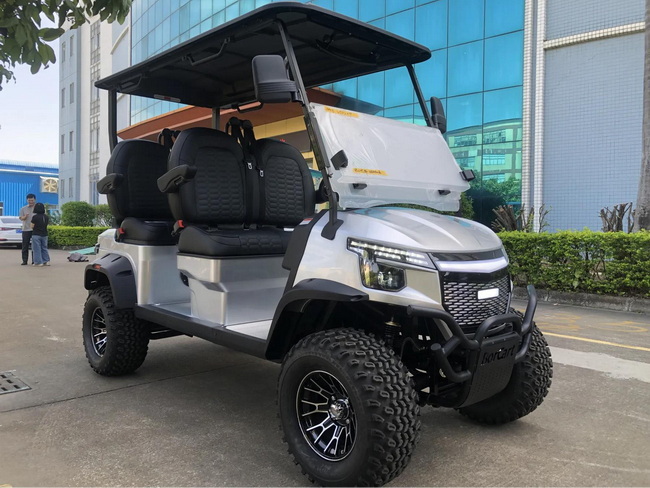
You do not always need a separate policy for a golf buggy in every jurisdiction, but you will often need insurance if you drive it on public streets or in regulated community areas. Even when law does not explicitly require it, dedicated golf buggy insurance is strongly recommended because homeowner and auto policies usually leave gaps, especially for off-premises use and liability claims.
Homeowners insurance may provide some protection for a golf buggy while it is stored in your garage or used only on your property. However, many policies stop covering incidents once the golf buggy leaves the premises or is driven in ways that resemble road-vehicle use, so owners who go beyond the driveway or local course should not rely on home coverage alone.
A typical golf buggy is designed primarily for golf courses and private environments and often has minimal lighting, limited speed and no registration. A low-speed vehicle, by contrast, usually meets defined safety standards, is registered for road use and must carry insurance similar to a small car, so insurers classify and price it differently from a purely recreational golf buggy.
Golf buggy insurance is usually less expensive than standard auto insurance because the vehicles are lighter, slower and often travel shorter distances. The actual price depends on the value of the golf buggy, whether it is street-legal, where it is operated, how often it is used, the coverage limits you select and the claims record for the owner or business.
Insurers commonly request the make, model and year of the golf buggy, its value, top speed, intended use and storage location. They may also ask whether the golf buggy is modified, whether it is street-legal, how many drivers will use it, estimated annual mileage and whether it will be part of a commercial fleet, so preparing these details in advance speeds up the quoting process.


