


Views: 222 Author: Leah Publish Time: 2025-12-26 Origin: Site


Content Menu
● Key Differences Between a Golf Buggy and a Mobility Scooter
>> Purpose
>> Regulation and Classification
● Legal Perspective: When Can a Golf Buggy Be a Mobility Device?
>> Classification and Local Law
>> “Other Power‑Driven Mobility Devices” (OPDMDs)
>> Private Land vs Public Roads
● Safety Considerations When Using a Golf Buggy for Mobility
>> Seating, Restraints, and Transfers
>> Environmental and Public Safety
● Practical Scenarios Where a Golf Buggy Works as a Mobility Aid
>> Golf Courses
>> Resorts, Retirement Communities, and Large Campuses
● Why a Dedicated Mobility Scooter Often Works Better
>> Legal Clarity and Peace of Mind
● Choosing Between a Golf Buggy and a Mobility Scooter
● FAQ
>> 1. Is it legal to drive a golf buggy on the road as a mobility scooter?
>> 2. Do I need a driving licence to operate a golf buggy for mobility purposes?
>> 3. Can a golf club refuse my golf buggy if I use it as a mobility aid?
>> 4. What modifications make a golf buggy safer as a mobility scooter substitute?
>> 5. Are there special golf buggies designed specifically for disabled users?
Using a golf buggy as a mobility scooter is sometimes feasible in controlled environments, but it is not a straightforward replacement for a medical mobility device in most countries. In many regions, a golf buggy is treated as a recreational or low‑speed vehicle, while a mobility scooter is treated as an assistive medical aid with very different regulatory and safety expectations.[1][2][3][4]
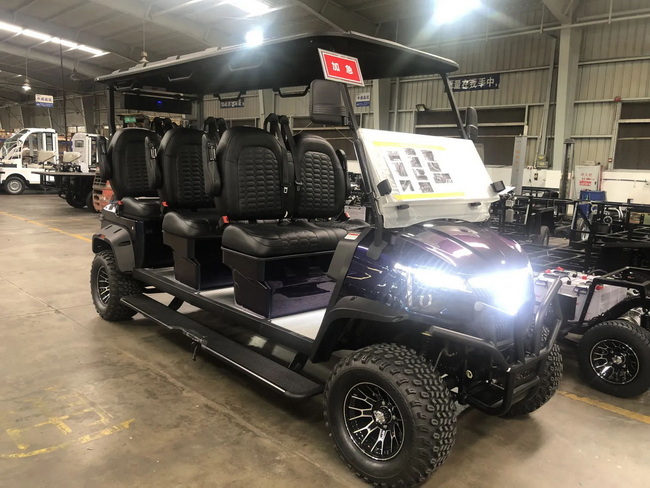
A golf buggy is a small, motorized vehicle designed to carry golfers and their equipment around a course at low speeds. It is usually built for comfort, simplicity, and ease of use on grass and light off‑road terrain rather than for tight indoor spaces or mixed pedestrian traffic.[5][6]
Typical characteristics include:[6][7][8]
- Two to four seats with basic seat cushions and handholds.
- A steering wheel, simple accelerator and brake pedals, and often no doors.
- Top speeds often in the 10–20 mph range, depending on the model and local restrictions.
- Operation mainly on golf courses, resort roads, gated communities, industrial sites, and other private properties.
Some modern electric golf buggies are optimized for quiet operation, zero tailpipe emissions, and low running costs, which makes them attractive for both recreational and light utility use.[7][6]
A mobility scooter is a powered assistive device specifically intended to help people with limited walking ability move independently in daily life. It is considered closer to a medical aid than a recreational vehicle and is typically used on pavements, in shops, and in public spaces.[2][3]
Common features include:[3][9][2][6]
- Single‑user seating with highly adjustable seats and armrests.
- Tiller steering (handlebar‑style controls), with simple forward/reverse levers and speed dials.
- Designed speeds roughly similar to brisk walking or cycling, typically around 3–8 mph.
- Compact footprint for use in lifts, shops, narrow corridors, and crowded pavements.
Because of their medical purpose, mobility scooters often have clearer legal recognition and exemptions from full vehicle regulations when operated within defined speed and use limits.[2][3]
Although a golf buggy and a mobility scooter may appear similar as low‑speed electric vehicles, they differ in purpose, design, and legal treatment.[9][1][3][6][2]
- Golf buggy: Primarily created for transporting golfers and equipment around a course or similar environment.
- Mobility scooter: Created as an assistive device for mobility‑impaired users to maintain independence in everyday life.
1. Golf buggy:
- Wider and heavier chassis, usually two or more seats side by side.
- Open or semi‑open body, often without doors or a fully enclosed cabin.
- Pedal controls and steering wheel similar to a small car.[8][6][7]
2. Mobility scooter:
- Single seat, narrower body, and high maneuverability.
- Tiller steering, often with fingertip controls and adjustable handlebars.
- Many models break down for transport or can be folded for easy storage.[6][9]
1. Golf buggy:
- Often treated as a low‑speed vehicle or recreational vehicle rather than a medical device.[10][11][1]
- May require registration, insurance, and a driving licence to use on public roads, depending on jurisdiction.[3][10]
2. Mobility scooter:
- Frequently recognized in law as a mobility aid, with specific categories and exemptions from full licensing in many regions when used in pedestrian areas.[2][3]
- Regulations often focus on maximum speed, use zones (pavement versus road), and safety equipment.
These distinctions explain why a golf buggy cannot automatically be treated as a mobility scooter, even when the driver has a genuine mobility impairment.[1][3][2]
Legal rules vary widely, but several core concepts appear repeatedly across many countries and regions.[4][12][13][10][3]
Authorities typically classify devices based on design, speed, and intended use rather than simply on who drives them.[11][10]
- If a golf buggy meets the definition of a low‑speed vehicle or recreational vehicle, it is subject to that category's requirements, even if used by a disabled person.
- A mobility scooter category may have specific technical limits such as maximum speed, maximum weight, and configuration that most full‑size golf buggies cannot meet.[3][2]
This means a golf buggy usually remains a golf buggy in legal terms, even when used for mobility purposes, unless specific local rules say otherwise.[10][1]
Modern disability regulations in some countries, such as the United States, recognize a broader category called “other power‑driven mobility devices.”[12][13][14]
- OPDMDs may include devices not traditionally designed as medical equipment, such as golf carts, Segways, and other powered vehicles, when used by individuals with mobility disabilities.[14][12]
- Public entities are expected to allow OPDMDs where they can be operated safely and without fundamentally altering the service or damaging infrastructure.[13][12]
In this framework, a golf buggy can sometimes qualify as an OPDMD in parks, campuses, and other settings, but usage is still subject to safety assessments, speed limits, and property rules.[15][12][13][14]
Where the golf buggy is driven matters as much as how it is classified.[7][8][10][3]
- Private land:
- Golf courses, resorts, factories, and gated communities often permit golf buggies with internal policies, training requirements, and risk assessments.[16][8][15]
- A disabled user may be allowed or even supported to operate a golf buggy there as a mobility aid, subject to those rules.[17][5][16]
- Public roads and pavements:
- Transport authorities usually apply stricter standards on lighting, brakes, signalling, crashworthiness, and licensing.[11][7][10]
- A golf buggy may not meet these requirements and therefore cannot legally mix with general traffic or be driven on public roads, even when used as a mobility device.[10][3]
Because of these complexities, anyone planning to use a golf buggy as a daily mobility solution should seek precise local guidance and, where possible, written confirmation from relevant authorities.[4][1][3][10]
Beyond legal issues, safety is critical when using a golf buggy to support a mobility‑impaired user.[18][8][16][7]
Golf buggies are designed mainly for fairways and relatively gentle slopes.[5][16]
- Steep gradients, wet grass, sand, curbs, and uneven surfaces can increase rollover or sliding risks.
- Disabled users may have reduced ability to brace, shift weight, or react quickly in situations where the buggy jolts or tilts.[16][5]
Many golf facilities therefore conduct specific risk assessments for disabled golf buggy users, particularly in poor weather or on challenging parts of the course.[5][16]
Typical golf buggy speeds are higher than those of most mobility scooters.[6][7][2]
- At higher speeds, stopping distance increases, and impact energy in a collision is greater.
- Mobility‑impaired drivers may need extra time and assistive controls to respond to hazards.
Speed limiting, clear route rules, and training are often recommended when golf buggies are used as mobility devices.[18][7][16]
Standard golf buggy seats were not originally designed for users with poor balance or strength.[9][17][16]
- Sliding on seats, difficulty transferring from wheelchairs, and lack of belts or side support can increase fall risk.
- Adaptive solutions include swivel seats, armrests, additional grab handles, non‑slip floors, and seat belts or harnesses to secure the user.[17][9][16]
Careful transfer procedures and assistance from staff or companions can further improve safety for disabled users.[16][17]
Where a golf buggy operates near pedestrians or other vehicles, there are broader public safety issues.[8][7][18]
- Safety guidance for low‑speed vehicles recommends obeying set routes, avoiding distractions, limiting passengers, and never allowing children to drive.[7][8][18]
- Clear signage, mirrors, lights, and audible warnings can reduce collision risk when a golf buggy is used in shared spaces.[8][7]
When used thoughtfully, a golf buggy can provide safe mobility support, but it demands more planning and risk management than a typical small mobility scooter.[18][7][16]
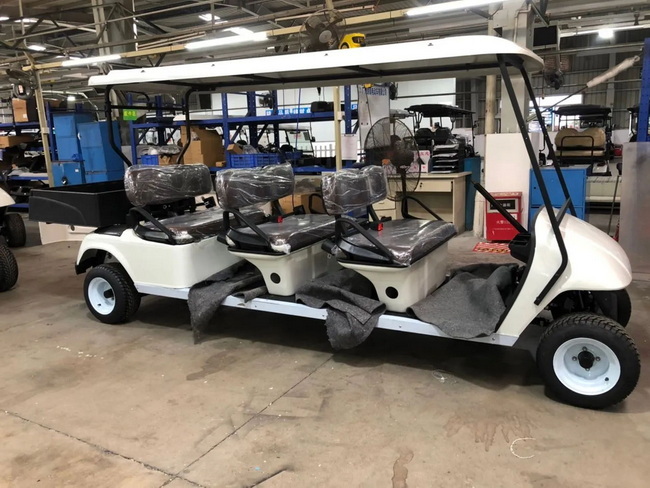
There are specific contexts where a golf buggy is a practical, and sometimes ideal, mobility solution.[12][15][4][17][5]
Golf courses are the most obvious setting, and many clubs now actively support disabled players.[15][17][5]
- Clubs may offer standard golf buggies or specialized single‑rider adaptive vehicles that allow golfers who cannot walk the course to play independently.[9][15][17][5]
- Course policies often define permitted buggy routes, weather‑related restrictions, maximum numbers of buggies, and any medical documentation needed.[15][5][16]
Here, using a golf buggy as a mobility scooter is not only accepted but frequently encouraged as part of inclusive golf practices.[17][5][15]
Many resorts, retirement complexes, universities, and industrial campuses rely on golf buggies or similar low‑speed vehicles to cover large distances.[4][8]
- Residents or visitors with mobility limitations can be transported comfortably in a golf buggy instead of walking long routes.
- Operators can implement local rules, driver training, and speed limits tailored to their site.[8]
In these private or semi‑private settings, a golf buggy can serve as a practical mobility solution as long as safety and accessibility are properly managed.[4][8]
In some jurisdictions, disabled persons may use a golf buggy as an “other power‑driven mobility device” in specific public spaces.[13][14][12]
- Parks, campuses, and recreation areas may permit golf buggies operated by people with disabilities if they can be driven safely on existing surfaces.
- Operating rules may limit speeds, restrict access to certain paths, or require users to follow staff instructions.[14][13][5][15]
In these scenarios, the golf buggy's status as a mobility device depends on the user's disability and the environment's safety assessment rather than on the vehicle's name alone.[12][13][14]
For everyday urban mobility—shopping, visiting friends, attending appointments—a dedicated mobility scooter usually fits better than a full‑size golf buggy.[2][3][6][9]
Mobility scooters are designed around common daily tasks.[6][9][2]
- Their compact footprint suits narrow pavements, lifts, shop aisles, and public transport spaces.
- Many include baskets or storage points for groceries, bags, or medical equipment like oxygen cylinders.[9][6]
A golf buggy, with its size and turning radius, can be awkward or even impossible to use in these everyday environments.[7][6][8]
Mobility scooters benefit from clearer categories and rules in many legal systems.[3][2]
- Users often do not need a driving licence when using low‑speed mobility scooters in pedestrian zones.
- Speed limits, areas of operation, and safety expectations are usually well documented and widely understood.[2][3]
Using a golf buggy as a substitute can expose the user to uncertainties about licences, insurance, and road legality.[1][10][3]
Many mobility scooter models are designed with transport and storage in mind.[6][9]
- Some can be disassembled into lighter pieces for loading into a car boot.
- Others fold to fit into small spaces in apartments or garages.
A full‑size golf buggy requires much more storage space and usually a trailer or dedicated vehicle transport solution.[7][6]
Because of these factors, many people choose to combine solutions: a golf buggy for leisure and longer private‑site journeys, plus a mobility scooter for everyday city mobility.[15][17][4][6]
Selecting the right device involves balancing lifestyle, environment, medical needs, and local regulations.[14][3][4][6]
Consider the following questions:
1. Where will you drive most often?
- Mostly on a golf course or private estate suggests a golf buggy or adaptive golfing vehicle.
- Mostly on pavements, in shops, and around town suggests a mobility scooter.[5][4][6]
2. How far and how fast do you need to travel?
- Longer distances on private roads may favor the comfort and capacity of a golf buggy.
- Shorter daily trips often favor the maneuverability of a scooter.[3][6]
3. What do local laws say?
- Check how your jurisdiction classifies golf buggies, low‑speed vehicles, and medical mobility devices.
- Identify any requirements for helmets, lights, insurance, and licences where you plan to drive.[10][2][3]
4. Do you have documented mobility impairment?
- Regulations that allow OPDMDs typically assume that the driver has a recognized disability and uses the device primarily for mobility, not recreation.[13][12][14]
- Using a golf buggy purely for convenience may not receive the same protections or exemptions.[1][4]
With these points in mind, many users find that a golf buggy is best treated as a powerful complement to a dedicated mobility scooter rather than as its direct replacement.
A golf buggy can sometimes function as a mobility scooter, particularly on golf courses, large private properties, and certain public spaces that recognize it as an “other power‑driven mobility device” for disabled users. However, legal classifications, safety considerations, and practical day‑to‑day usability all limit its suitability as a full substitute for a purpose‑built mobility scooter in most jurisdictions. For everyday urban mobility and clear legal status, a dedicated mobility scooter usually remains the better choice, while a golf buggy offers valuable additional support in leisure and controlled‑environment scenarios.[12][16][17][1][4][5][9][10][15][2][3][6]
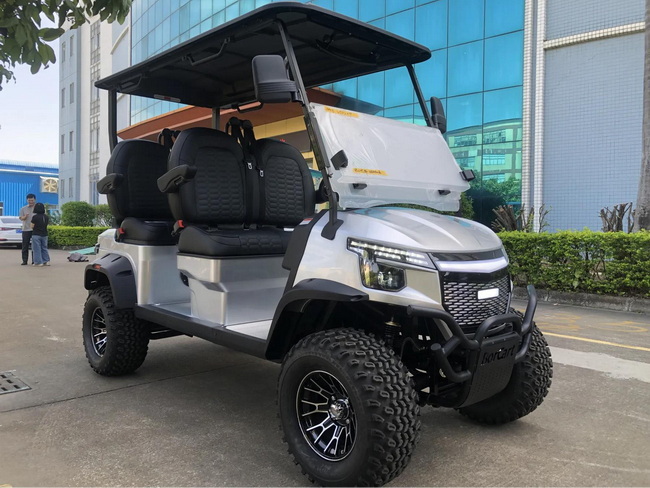
In many regions, a golf buggy is classified as a recreational or low‑speed vehicle, not as a medical mobility scooter, so it must meet road‑vehicle standards for registration, lighting, and insurance before it can be used on public roads. Disability‑related rules may allow a golf buggy in certain public spaces as a mobility aid, but this does not automatically confer full road‑use rights, so local transport and disability laws should always be checked in detail.[11][13][14][4][10][12][2][3]
Where a golf buggy falls under low‑speed vehicle or similar vehicle regulations, a standard driving licence may be required to operate it on public streets or in mixed‑traffic zones. By contrast, low‑speed mobility scooters are often exempt from licences when restricted to pavements and pedestrian areas, which is one reason they are frequently preferred for everyday mobility.[11][10][2][3]
Golf clubs must balance access for disabled golfers with safety and course‑maintenance needs, and they can restrict buggy use in dangerous conditions or sensitive areas. Many clubs have written policies that allow authorized disabled players to use golf buggies under certain routes and weather conditions, but they may temporarily suspend buggy use when ground conditions make operation unsafe for any driver.[16][17][5][15]
Recommended adaptations for a golf buggy used by disabled drivers include fitting seat belts or harnesses, adding grab rails, using non‑slip flooring, and installing speed‑limiting systems. Some specialized designs also add swivel seats, extra side support, and custom control layouts so users with reduced strength, balance, or reach can operate the buggy more safely and comfortably.[17][5][8][9][16][7]
Yes, there are adaptive golf buggies and single‑rider vehicles built specifically for disabled golfers, including models that support seated or semi‑standing swings and very stable three‑ or four‑wheel configurations. These vehicles are engineered to protect turf, meet course‑access guidelines, and provide enhanced seating, control, and safety for players who cannot walk a full round but still want to enjoy the game.[5][9][15][17]
[1](https://www.wmscooters.com/news/can-i-use-a-golf-buggy-as-a-mobility-scooter/)
[2](https://www.mobilityscootersdirect.com/forum/knowledge-base/need-license-operate-mobility-scooter/)
[3](https://www.metromobility.com/blogs/news/us-mobility-scooter-laws)
[4](https://www.cricketcartsdirect.com/golf-carts-and-ada-approval-opdmds-and-right-of-choice/)
[5](https://www.usga.org/content/dam/usga/pdf/imported/course-care/070301.pdf)
[6](https://www.electricwheelchairsusa.com/blogs/news/electric-golf-cart-vs-golf-scooter-which-is-right-for-you)
[7](https://www.tdi.texas.gov/pubs/videoresource/fsgolfcart.pdf)
[8](https://www.cedarville.edu/offices/campus-security/golf-utility-cart-operation-guidelines)
[9](https://solorider.com/dare-to-compare.html)
[10](https://app.leg.wa.gov/committeeschedules/Home/Document/42122)
[11](https://www.facebook.com/groups/253983878365288/posts/1821350008295326/)
[12](https://www.ada.gov/topics/mobility-devices/)
[13](https://www.ada.gov/resources/opdmds/)
[14](https://www.northeastada.org/askada/other-power-driven-mobility-devices)
[15](https://www.ngcoa.org/golf-business-magazine/2024/mayjune/golf-cart-accessibility)
[16](https://www.gcma.org.uk/wp-content/uploads/2020/01/Risk-Assesment-Disabled-Buggy-Use-RA-in-Poor-Weather-Conditions.pdf)
[17](https://adata.org/sites/backdoor.ccer.org/files/backdoor/completed_documents/Conrad%20Kuehn/Accessible%20Golf%20Cars.docx)
[18](https://www.jebailylaw.com/blog/golf-cart-safety-dos-and-donts/)


