


Views: 222 Author: Leah Publish Time: 2025-12-25 Origin: Site


Content Menu
● Understanding Stock Club Car Speed
● Safety, Legal Limits, and Risks
● Simple Adjustments Before Major Upgrades
● Upgrade 1: Larger or Better Tires
● Upgrade 2: Higher Voltage or Better Batteries
● Upgrade 3: Speed Controller Optimization
● Upgrade 4: Motor, Speed Magnet, and Sensor Mods
● Gas Club Car Golf Car Speed Tricks
● Weight Reduction and Aerodynamics
● Brakes, Steering, and Suspension Check
● Maintenance Habits for a Faster Golf Car
● Driving Tips for a Faster Club Car Golf Car
● FAQ
>> 1. How fast can a Club Car golf car safely go?
>> 2. Is it legal to drive a faster Club Car golf car on public roads?
>> 3. Will speed upgrades reduce the life of my Club Car golf car?
>> 4. What upgrade gives the biggest speed gain for the money?
>> 5. Do I need to upgrade brakes when I make my Club Car golf car faster?
Making a Club Car golf car faster is completely achievable with a mix of smart maintenance, targeted upgrades, and careful tuning. A well‑planned approach keeps the golf car fun and responsive while still safe, reliable, and compliant with local rules.[1][2]
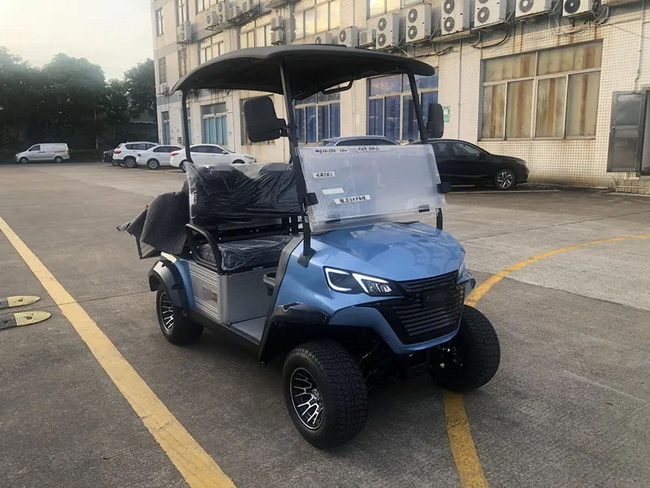
Most stock Club Car golf car models are engineered to run around 12–15 mph, depending on factors like motor type, controller, tire size, and overall weight. This factory setup focuses on stability, simplicity, and safety so the golf car works predictably for casual users on golf courses and resort paths.[2][3]
- A typical electric Club Car golf car uses a speed controller to meter current to the motor, which directly influences both top speed and torque.
- Manufacturers intentionally limit the top speed of a golf car to reduce the risk of rollovers and accidents on narrow or uneven surfaces.[3]
Before chasing higher speeds, every Club Car golf car owner needs to think about safety and the law. Raising top speed without preparing the chassis, brakes, and tires can make a golf car unstable and harder to control.[4][3]
- Higher speeds lengthen stopping distance and make quick evasive maneuvers more difficult in a golf car, especially on wet or gravel surfaces.[3]
- In many places, once a golf car exceeds roughly 20 mph, it can be classified as a low‑speed vehicle, triggering requirements for registration, lights, mirrors, and insurance.[5]
Before investing in high‑end components, a few basic checks and tweaks can make a Club Car golf car feel noticeably more energetic.[1]
- Remove unnecessary weight such as heavy storage boxes, rarely used accessories, or bulky add‑ons that slow acceleration in a golf car.
- Inspect wheel bearings, brake adjustment, and tire pressure to make sure the Club Car golf car is not fighting against avoidable rolling resistance.[6]
These “free speed” steps often reveal how much performance was being lost to poor maintenance or excess load on the golf car.
One of the simplest and most cost‑effective ways to raise top speed is by installing taller tires on the Club Car golf car. Taller tires roll farther with each revolution, effectively increasing the ground speed at a given motor rpm.[2][1]
- Many owners move from stock tires (around 18 inches) to 20–23‑inch tires and see a gain of several mph on their golf car, especially when combined with other upgrades.[1]
- Performance‑oriented tires with better tread designs can improve traction and stability, helping the faster Club Car golf car feel more planted when turning or braking.[2]
While taller tires boost speed, they also change gearing and can slightly reduce low‑speed torque, so each golf car owner should choose a size that fits both terrain and usage.
On electric Club Car golf car models, voltage and battery quality are crucial to both speed and range. Higher voltage allows the motor to spin faster, while strong batteries maintain voltage under load so the golf car does not bog down on hills.[3][2]
- Some Club Car golf car configurations can be upgraded from 36 volts to 48 volts using compatible batteries, wiring, and electronics, often bringing a noticeable increase in speed and hill‑climbing power.[6]
- Swapping lead‑acid batteries for lithium can reduce weight by hundreds of pounds, making the golf car quicker, more responsive, and less prone to voltage sag under heavy acceleration.[2]
Battery upgrades should always be planned as a complete system so that cables, connectors, fuses, and chargers match the new golf car setup.
The speed controller acts as the electronic brain of an electric Club Car golf car. By upgrading this component, owners can unlock higher current output and customize how the golf car delivers power.[7][8]
- Performance controllers for a Club Car golf car support higher amperage, giving stronger acceleration and better torque for hills and heavy loads.[8]
- Many modern controllers include programming features or smartphone apps, allowing users to fine‑tune throttle response, acceleration curves, and regenerative braking for their golf car.[7]
Controller upgrades should always match the capabilities of the motor and batteries so that no single component is overloaded in the golf car system.
If the Club Car golf car still feels too slow after basic improvements, the next step is often a motor or speed‑sensing upgrade.[1]
- High‑speed motors are designed to spin faster than standard motors, pushing a golf car into the mid‑20 mph range or higher when paired with the right controller and voltage.[2]
- On certain Club Car golf car models, replacing the factory speed magnet or sensor with a high‑speed version can safely raise the governed rpm and add several mph.[9]
Motor and sensor upgrades are more involved than tire or battery changes, but they deliver a very noticeable performance jump for a Club Car golf car.
Gas‑powered Club Car golf car models respond to different tuning methods than electric ones. These setups rely on engine rpm, gearing, and clutch behavior instead of voltage and controllers.[10][11]
- Adjusting the governor and linkages so the throttle opens fully can raise the top speed of a gas Club Car golf car, but aggressive changes must be made carefully to avoid over‑revving the engine.[10]
- Upgraded clutches and belts can keep the engine in its power band longer, helping the golf car maintain speed on inclines and with extra passengers.[12]
Owners should monitor engine temperature and listen for unusual noises, since a heavily modified gas golf car can suffer premature wear if pushed too far.
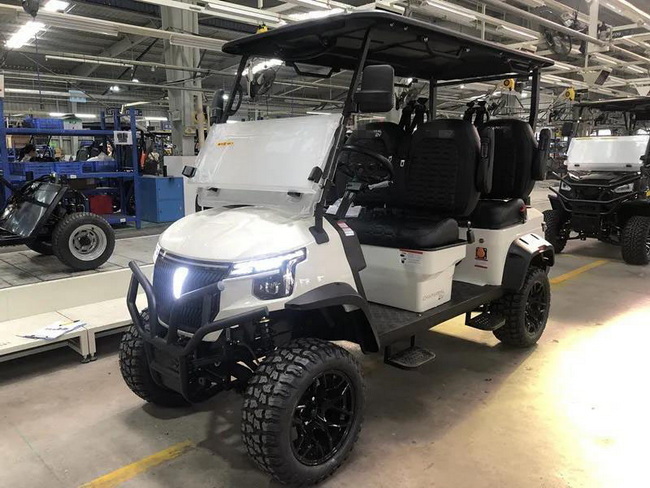
Every pound removed from a Club Car golf car makes it easier for the motor or engine to accelerate the vehicle. While a golf car will never be an aerodynamics champion, airflow and weight still matter at higher speeds.[3][1]
- Removing rarely used seats, storage systems, or metal accessories reduces weight and lets the Club Car golf car respond more quickly to throttle input.
- Ensuring that windshields, canopies, and body panels are secure and streamlined helps the golf car stay quieter and more stable as speed increases.[3]
These subtle changes support all the other power upgrades, giving the Club Car golf car a more efficient platform.
Any speed increase must be matched with solid control and stopping power on the Club Car golf car. Neglected brakes or worn steering components can turn a powerful golf car into a serious hazard.[5][3]
- Owners should regularly inspect brake pads, drums or discs, cables, and hydraulic components to ensure the golf car stops predictably and without pulling to one side.[3]
- Lift kits, larger tires, and added cargo all change how a Club Car golf car handles, so shocks, leaf springs, and steering linkages must be checked and upgraded where necessary.[6]
When the chassis is kept in good condition, a faster Club Car golf car feels composed rather than twitchy or unpredictable.
Some Club Car golf car owners enjoy performing every modification themselves, while others prefer professional help for complex upgrades. The more the speed and power increase, the more important correct installation becomes for the golf car.[4][6]
- High‑voltage electrical work, custom wiring, and controller programming on a Club Car golf car often benefit from experienced technicians who understand these systems deeply.[6]
- A knowledgeable shop can recommend balanced packages of motor, controller, and battery upgrades so that the golf car performs well without sacrificing durability.[3]
Even hands‑on owners may want professional inspection after major work, just to confirm that the modified Club Car golf car is safe.
There is a limit where adding still more speed to a Club Car golf car starts to reduce overall quality and safety. A platform originally designed for gentle course use may not behave well at highway‑like speeds.[13][5]
- Safety specialists caution that once a golf car moves beyond about 25 mph, the risk of rollovers, ejections, and serious injuries rises quickly.[3]
- At very high speeds, frames, steering systems, and suspensions on a Club Car golf car can experience stresses they were never engineered to handle.[5]
A sensible goal is to make the Club Car golf car fast enough to be enjoyable and practical, but not so extreme that comfort and safety are compromised.
After upgrading, daily and seasonal maintenance becomes even more important for a Club Car golf car. Extra speed exposes weak points more quickly, so small issues should be fixed early.[1]
- Check lug nuts, suspension bolts, and steering hardware regularly, since vibration can loosen components on a faster golf car.
- Keep electrical connections clean and tight, especially on battery cables and controller terminals, to prevent heat buildup and power loss in the Club Car golf car.[6]
Good habits keep the upgraded golf car performing like new and extend the life of expensive performance parts.
Driver behavior has a huge influence on safety and comfort in a faster Club Car golf car. Even a perfectly set up vehicle can be dangerous if driven without care.[3]
- Reduce speed before entering curves, off‑camber sections, or rough surfaces to keep all four wheels of the golf car in contact with the ground.[3]
- Avoid sudden, full‑throttle launches on wet grass or gravel, which can cause wheel spin, loss of control, or damage to the drivetrain of the Club Car golf car.[13]
Calm, predictable driving helps both passengers and surrounding traffic feel safe around a performance‑tuned golf car.
Making a Club Car golf car faster is a step‑by‑step process, starting with basic maintenance and moving toward more advanced upgrades like larger tires, better batteries, high‑amp controllers, and performance motors. When each change is planned as part of a complete system, the result is a responsive, enjoyable Club Car golf car that still feels safe and controlled for everyday use. Balancing speed with braking, handling, and legal requirements ensures the upgraded golf car delivers excitement without sacrificing reliability or peace of mind.[4][1][2]
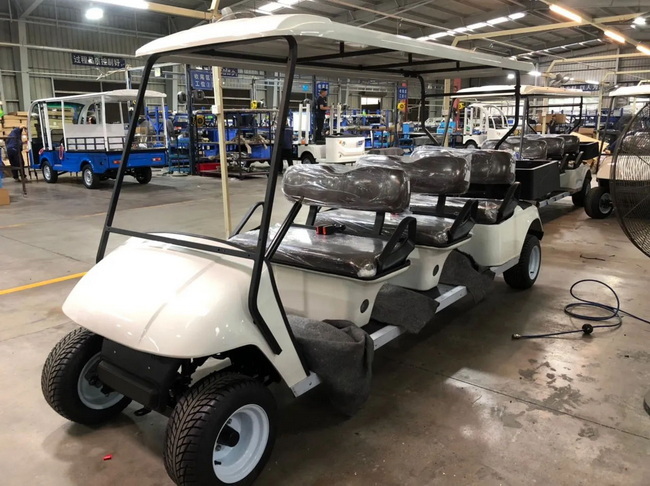
Many well‑set‑up Club Car golf car builds operate safely in the 20–25 mph range when paired with good brakes, quality tires, and sound suspension components. Pushing a golf car significantly beyond that speed can increase rollover risk and reduce stability on uneven or narrow paths.[2][3]
In many regions, a golf car that exceeds roughly 20 mph can be treated as a low‑speed vehicle with specific requirements such as registration, lighting, mirrors, and seat belts. Because rules vary by location, every Club Car golf car owner should confirm local regulations before using a modified vehicle on public roads.[4][5]
Higher rpm, more current, and extra load usually increase wear on motors, controllers, clutches, and batteries in a Club Car golf car. Choosing matched components, avoiding extreme settings, and maintaining the golf car regularly can still provide years of reliable service.[1][6]
For electric Club Car golf car models, controller and battery improvements usually offer the most noticeable mix of extra speed and stronger torque. On gas Club Car golf car setups, careful governor and clutch tuning often delivers the best cost‑effective performance boost.[8][10]
Whenever a Club Car golf car becomes significantly faster, the braking system and tires should be inspected and upgraded if necessary to handle the new speed. Strong, consistent braking is essential to keep a modified golf car safe on hills, curves, and crowded community roads.[5][3]
[1](https://www.golfcartgarage.com/blog/how-to-make-your-golf-cart-go-faster/)
[2](https://www.golfcarttiresupply.com/blog/how-to-make-a-club-car-faster/)
[3](https://taraelectricvehicles.com/blog/2025/05/26/understanding-golf-cart-top-speed-regulations-and-safety/)
[4](https://www.golfcartattorney.com/legal-implications-of-golf-cart-modifications/)
[5](https://www.ltrc.lsu.edu/pdf/2020/19-02TA-SA_printready.pdf)
[6](https://www.cartsunlimited.net/upgrade-suggestions.html)
[7](https://www.golfcartgarage.com/blog/understanding-your-club-car-speed-controller/)
[8](https://www.golfcarttiresupply.com/golf-cart-controller/)
[9](https://www.youtube.com/watch?v=AcRnlWYIPUQ)
[10](https://www.youtube.com/watch?v=-ZxZbhLo8Jg)
[11](https://www.youtube.com/watch?v=CTh6KplXBCo)
[12](https://cartaholics.com/threads/upgrade-on-motor-and-recommendations.23610/)
[13](https://carts-and-parts.com/how-to-remove-speed-limiter-on-electric-golf-cart/)


