


Views: 222 Author: Loretta Publish Time: 2025-12-21 Origin: Site


Content Menu
● What Is an Electric Golf Cart?
● Core Components of Electric Golf Carts
>> Battery Pack: The Energy Source
>> Electric Motor and Controller
>> Onboard Charger and Charging Port
>> Automatic Parking Brake and Braking System
● How Does an Electric Golf Cart Work Step by Step?
>> 1. Start-up and System Check
>> 3. Cruising
>> 4. Braking and Regeneration
● The Role of Golf Cart Manufacturers and OEM Partners
● Advantages of Electric Golf Carts
>> Environmental and Comfort Benefits
>> Operating Cost and Maintenance
● Lead-Acid vs Lithium Batteries in Golf Carts
● Practical Tips for Operating and Maintaining Electric Golf Carts
>> Daily Operation Best Practices
>> Routine Maintenance Checklist
● When to Choose an Electric Golf Cart vs Other EVs
● Customize Your Electric Golf Cart Fleet
● FAQs
>> 1. How long does an electric golf cart battery last on a single charge?
>> 2. How often should I replace the batteries in an electric golf cart?
>> 3. Can electric golf carts handle hills and uneven terrain?
>> 4. Is it safe to leave an electric golf cart on charge overnight?
>> 5. What is the difference between a golf cart and a general low-speed vehicle (LSV)?
Electric golf carts are no longer just a convenience on the course; they are a core part of modern golf operations, resorts, gated communities and industrial facilities, thanks to their quiet performance, low emissions and low operating cost. This guide explains how electric golf carts work, what components they use, and how to choose and maintain the right cart for your business or project.

An electric golf cart is a battery-powered low-speed vehicle (LSV) designed to carry people and light cargo over short to medium distances at relatively low speeds. Unlike gas carts, it uses an electric motor and rechargeable battery pack, producing zero local emissions and much lower noise during operation.
Typical use cases:
- Golf courses and driving ranges
- Resorts, hotels and theme parks
- Residential communities and campuses
- Warehouses, factories and industrial parks
For fleet owners and OEM buyers, electric golf carts offer predictable running costs, flexible body configurations and easier maintenance than comparable gas-powered units.
Understanding the key components makes it easier to select, maintain and troubleshoot an electric golf cart.
The battery pack stores electrical energy and powers the motor and onboard electrical systems.
1. Common battery types:
- Lead-acid batteries: Lower upfront cost; heavier; require regular maintenance and watering.
- Lithium-ion batteries: Higher initial cost; lighter; faster charging, deeper discharge, longer cycle life.
2. Key selection factors:
- Voltage system (often 36 V, 48 V or higher)
- Capacity (Ah) and expected range per charge
- Charge cycle life and warranty
- Weight and packaging space
For commercial fleets and intensive daily use, lithium-ion packs are increasingly preferred due to their longer life and shorter charging times.
The electric motor converts electrical energy from the batteries into mechanical power at the wheels. A motor controller regulates how much power is delivered based on accelerator input, speed and load.
1. Motor types:
- DC motors: Simple; cost-effective; widely used in traditional carts.
- AC motors: Higher efficiency, better hill-climbing and regenerative braking performance; increasingly common in premium and fleet applications.
2. Controller functions:
- Manages acceleration and deceleration
- Interfaces with regenerative braking systems
- Implements safety limits (speed, current, temperature)
A well-matched motor–controller system ensures smooth acceleration, consistent torque on slopes and efficient energy use.
The onboard charger converts AC power from the grid into the DC voltage required by the battery pack. Having the charger onboard simplifies daily operations, as external equipment can be reduced to a cable and plug.
Typical charging setup:
- Standard AC outlet or dedicated charging pedestal
- Integrated charging port on the vehicle body
- Charge indicators showing state of charge and estimated time remaining
For fleets, centralized charging areas, clear cable management and labelled charging stations improve safety and uptime.
Many modern electric golf carts are equipped with automatic electronic parking brakes that engage when the vehicle stops and disengage when the accelerator is pressed. This improves safety and simplifies operation compared with conventional handbrakes.
The main service braking system often uses regenerative braking, where the motor operates as a generator during deceleration.
Benefits of regenerative braking:
- Recovers a portion of kinetic energy back into the battery
- Reduces wear on mechanical brake components
- Improves control on downhill slopes
Mechanical disc or drum brakes are still present as a backup and for hard stops.
From pressing the accelerator to coming to a complete stop, the process is fully electronic and carefully controlled.
- The driver turns the key or uses a start switch.
- Controller and safety systems power on, checking battery voltage and basic system status.
- The driver presses the accelerator pedal.
- The controller interprets pedal position and sends controlled current from the battery pack to the motor.
- The motor produces torque, which is transmitted through the drivetrain to the wheels.
- At steady speed, the controller adjusts current to maintain speed with minimal power draw.
- Efficient controllers and modern motors help maximize driving range per charge.
- When the driver releases the accelerator or presses the brake, the controller reduces drive current and activates regenerative braking if available.
- The motor acts as a generator, feeding energy back to the battery and slowing the vehicle.
- When the cart stops, the automatic parking brake engages to prevent unintended movement.
- The operator turns the key off; major circuits are disabled, but the battery remains connected to the onboard charger when plugged in.
This fully electric chain of events explains why electric golf carts feel smooth, quiet and easy to handle for users of different ages and experience levels.
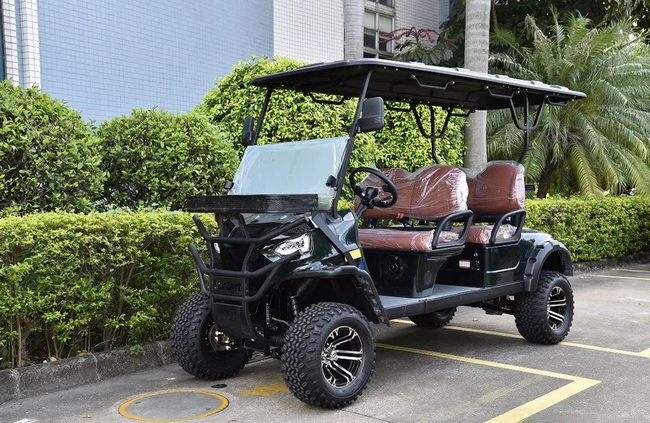
Electric golf cart manufacturers are responsible for integrating battery packs, motors, controllers, braking systems and body structures into a safe and reliable vehicle. Leading manufacturers engineer their vehicles for specific applications such as golf courses, resorts, industrial sites and multi-purpose use.
Typical manufacturer responsibilities:
- Electrical system architecture and safety design
- Frame and chassis strength calculation
- Ergonomic seating, steering and pedal layout
- Lighting, signalling and optional road-legal equipment
A popular example is the 4-seater electric buggy, designed for both golfers and non-golfers for daily transportation. These vehicles combine robust motors, efficient controllers and long-life batteries with standard safety features like headlights, taillights and turn signals.
For international brand owners, wholesalers and OEM buyers, partnering with a specialized electric golf cart and low-speed vehicle manufacturer enables customized body design, branding and component selection to suit local regulations and end-user expectations.
Electric golf carts offer several advantages over gas-powered units that matter to golf course operators, property managers and fleet owners.
- Zero local emissions: Electric carts do not emit exhaust gases at the point of use, which helps maintain cleaner air on golf courses and in residential communities.
- Quiet operation: The absence of an internal combustion engine significantly reduces noise, supporting a more comfortable playing and living environment.
This quiet, clean operation also makes electric golf carts suitable for indoor or semi-enclosed facilities, where ventilation and noise are concerns.
- Lower energy cost: The electricity required to recharge the battery pack typically costs less per kilometre than gasoline or diesel for comparable low-speed vehicles.
- Reduced maintenance needs: Electric systems have fewer moving parts; there is no engine oil, spark plugs or exhaust system to service.
Routine tasks focus on battery care, tire checks, brake inspection and basic electrical system checks, which simplifies fleet maintenance over time.
- Simple controls: Forward/neutral/reverse selectors and a single accelerator pedal make operation intuitive for new drivers.
- Integrated safety features: Automatic parking brakes, lighting, horns and clearly marked controls support safe daily use.
These features help operators train staff or renters quickly and reduce the risk of misuse in busy environments.
Choosing the right battery technology has a major impact on range, total cost of ownership and maintenance workload.
Feature | Lead-acid Battery Carts | Lithium-ion Battery Carts |
Upfront cost | Lower | Higher |
Weight | Heavier | Lighter |
Maintenance | Regular watering, cleaning | Low maintenance |
Charge time | Longer | Shorter |
Cycle life | Shorter | Longer |
Usable capacity | Typically shallower discharge | Deeper discharge allowed |
Best suited for | Light-duty, lower-budget fleets | Intensive use, premium fleets |
For fleets with high daily mileage or limited charging windows, lithium systems often deliver better lifetime value despite higher initial investment.
Thoughtful operation and maintenance practices extend the life of an electric golf cart and improve safety.
- Avoid repeated full-throttle acceleration when not required.
- Observe load limits for passengers and cargo to prevent excessive strain on the motor and frame.
- Encourage drivers to release the accelerator early and use regenerative braking rather than aggressive mechanical braking when possible.
These habits help optimize range and reduce wear on brakes and driveline components.
- Battery inspection: Check state of charge, connectors and cables; for lead-acid, monitor electrolyte levels and clean terminals as needed.
- Tires and suspension: Inspect pressure, tread and overall condition to ensure stable handling.
- Brakes: Check braking response and look for any unusual noise or reduced performance.
- Lighting and signals: Confirm that headlights, tail lights and indicators function correctly for safe operation.
Creating a simple scheduled maintenance plan based on hours of operation or days in service helps prevent unexpected downtime.
Electric golf carts sit in a broader category of low-speed vehicles (LSVs) and utility EVs, which includes golf carts, sightseeing buses, hunting vehicles and multi-purpose buggies.
An electric golf cart is ideal when:
- The typical speed requirement is low to moderate and falls within LSV regulations.
- The operating environment includes short routes with frequent stops, such as holes on a golf course or loops inside a resort.
- Operators prioritize quiet operation, low emissions and manageable maintenance.
For larger passenger capacity, heavier loads or extended routes, sightseeing buses and multi-purpose low-speed vehicles may be better suited while still using similar electric drive technologies.
Electric golf carts are a proven, efficient solution for golf courses, resorts, communities and industrial facilities seeking clean, quiet and cost-effective mobility. For brand owners, wholesalers and OEM partners, working with an experienced manufacturer enables tailor-made configurations, branding and technical specifications to match your market and regulatory needs.
If you are planning to upgrade an existing fleet, launch a new cart brand or integrate electric carts into a wider EV portfolio, now is the ideal time to discuss customized electric golf cart and multi-purpose vehicle solutions with a specialized manufacturer, chat now!
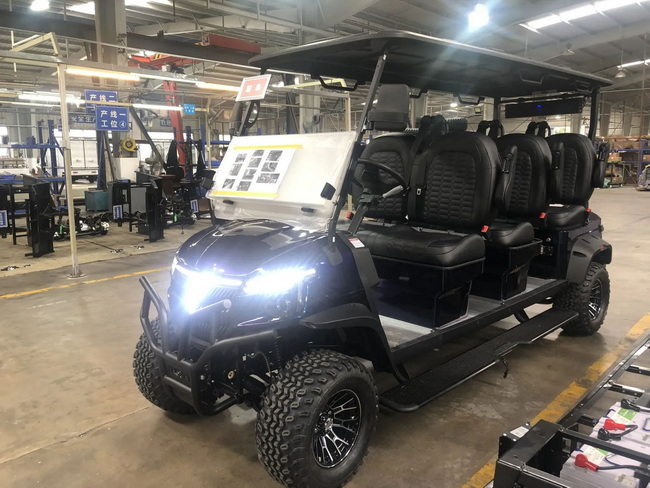
Typical ranges vary with battery type, load and terrain, but many carts can cover a full round of golf or a working day on a single charge under normal conditions.
Lead-acid batteries often need replacement after several years of regular use, while lithium-ion packs typically offer a significantly longer service life when properly managed.
Modern golf carts with well-matched motors and controllers can manage moderate gradients, especially when equipped with higher-torque motor options and appropriate tires.
Quality onboard chargers are designed to manage charging automatically, and many can remain connected overnight when used with suitable power outlets and basic safety practices.
Golf carts are optimized for course and campus use, while other LSVs, like sightseeing buses or utility vehicles, may offer higher capacity, different body designs and additional equipment while using similar electric drivetrains.


