


Views: 222 Author: Loretta Publish Time: 2025-12-21 Origin: Site


Content Menu
● Why Electric Buggies Are a Sustainable Game‑Changer
● Key Sustainable Use Cases for Electric Buggies
>> 1. Resorts, Hotels and Eco‑Tourism Destinations
>> 2. Smart Campuses and Educational Institutions
>> 3. Industrial Sites, Factories and Warehouses
>> 4. Parks, Gated Communities and Urban Micro‑Transit
>> 5. Golf Courses and Country Clubs (Beyond the Fairway)
>> 6. Tourism Attractions, Theme Parks and Zoos
>> 7. Healthcare Campuses and Airports
● New Sustainability Frontiers: Smart Cities, CSR and Renewable Charging
>> 8. Smart‑City Micro‑Mobility and Last‑Mile Logistics
>> 9. Corporate Social Responsibility (CSR) and ESG Projects
>> 10. Solar‑Powered and Renewable‑Integrated Buggy Fleets
● How Electric Buggies Improve Total Cost of Ownership
● Choosing the Right Sustainable Electric Buggy Configuration
● Practical Steps to Deploy a Sustainable Electric Buggy Fleet
>> 1. Define use cases and routes
>> 2. Determine technical requirements
>> 3. Plan charging infrastructure
>> 4. Integrate renewable energy where possible
>> 5. Develop safety and operations policies
>> 6. Monitor performance and sustainability metrics
>> 7. Communicate your sustainability story
● Why Partner With a Professional OEM Manufacturer Like BorCart
● Build Your Sustainable Electric Buggy Fleet With BorCart
● FAQs About Sustainable Uses of Electric Buggies
>> 1. How environmentally friendly are electric buggies compared with fuel carts?
>> 2. Can electric golf carts handle industrial or cargo applications?
>> 3. What kind of maintenance do electric buggies require?
>> 4. Are electric buggies suitable for hilly or long routes?
>> 5. How can resorts or campuses start electrifying their buggy fleet?
>> 6. What role do electric buggies play in smart‑city mobility plans?
Electric buggies—often called electric golf carts, resort buggies or low‑speed EVs—are now a core solution for sustainable, short‑distance transportation in campuses, resorts, factories, and communities worldwide. They combine zero tailpipe emissions, low noise, and flexible configurations, making them ideal for brands and operators who want both cost savings and a greener image.[1][2][3][4]
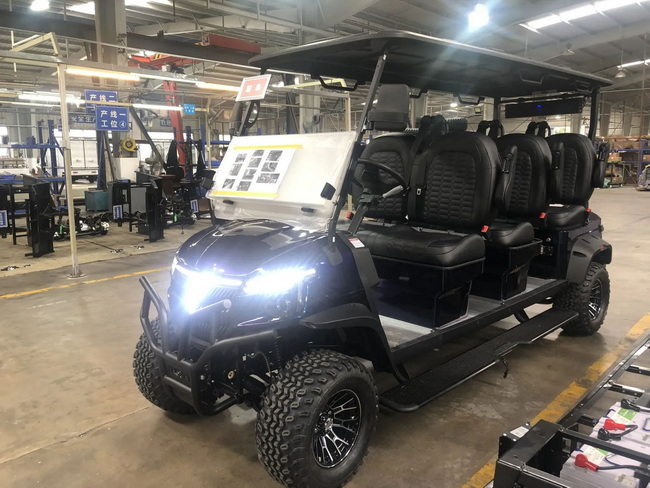
Electric buggies run on battery power and generate no tailpipe emissions, which directly reduces local air pollution and greenhouse gas output compared with petrol or diesel carts. Their low energy demand also makes them easy to pair with renewable energy such as solar charging, turning them into a near zero‑carbon transport option over their lifetime.[2][5][4][6]
- Zero exhaust fumes mean cleaner air in resorts, campuses, factories, and residential communities.[7][2]
- Low operating noise improves comfort for guests, workers, and residents, especially in noise‑sensitive areas.[8][3]
- Lower operating costs (no fuel, fewer moving parts) make them a financially sustainable choice for fleet owners.[9][2]
For international brands, wholesalers, and OEM partners, integrating electric buggies into operations is now a fast, visible way to demonstrate ESG and CSR commitments while cutting long‑term fleet costs.[10][2]
Electric buggies shine wherever short‑distance, high‑frequency trips are needed and where sustainability, comfort, and safety matter. Below are the most impactful, high‑value applications in 2025.
Modern resorts and eco‑lodges increasingly adopt electric golf carts and resort buggies to move guests, luggage, and staff quietly across large properties. This reduces reliance on vans and minibuses and supports sustainable tourism goals.[1][7]
- Guest shuttle between reception, rooms, restaurants, beaches, and spas.
- Silent night operations without disturbing sleeping guests or wildlife.
- On‑demand buggies for VIP or limited‑mobility guests.
Electric buggies help properties earn or maintain eco labels by cutting emissions and fuel usage, while enhancing the premium guest experience with smoother, quieter rides.[11][7]
Universities, schools, and large training campuses use electric buggies to enable efficient, low‑carbon mobility across their grounds. This is especially important where car access is restricted or where roads mix with heavy pedestrian traffic.[3][8]
- Campus shuttle for students, staff, and visitors between buildings, dorms, labs, and parking.
- Security and medical patrols with fast response but minimal noise.
- Logistics carts to move equipment, documents, and supplies.
Because electric buggies produce zero tailpipe emissions, they directly support campus sustainability targets and help universities demonstrate climate leadership to students, partners, and accreditation bodies.[12][8]
Large industrial facilities and logistics parks increasingly deploy cargo electric buggies and low‑speed vehicles for internal transport, replacing diesel pickups and small trucks for on‑site movement.[13][10]
Typical sustainable uses include:
- Material handling between production lines, storage areas, and loading docks.
- Maintenance patrols for technical and EHS teams across wide plants.
- In‑plant personnel transport to reduce travel time and fatigue.
These applications reduce fuel usage, lower carbon emissions, and improve indoor and semi‑indoor air quality, especially where forklifts and trucks used to dominate. For large manufacturing customers working with BorCart as an OEM partner, dedicated cargo configurations and customized load beds can be designed to match factory layouts and safety standards.[2][10]
Electric buggies are gaining traction as community shuttles and last‑mile transport options in residential compounds, senior living communities, and small towns.[14][3]
- Community circulator for residents, especially seniors or people with mobility challenges.
- “Park and ride” shuttles between parking lots and pedestrian‑only zones.
- Last‑mile connectors from public transport hubs to homes or offices.
Because they are compact, quiet and low‑speed, buggies can operate safely in mixed‑use pedestrian spaces and narrow streets where full‑size vehicles are impractical or unwelcome. They also encourage car‑free living by making short trips easy and comfortable.[3][14]
On golf courses, electric carts are already standard, but the sustainable use cases now go far beyond carrying players and clubs. Many clubs deploy fleets of electric buggies for operations and services such as:[11][1]
- Course maintenance support, carrying tools, fertilizers, and staff with less noise and zero fumes on greens.[5][15]
- Member shuttles between clubhouse, practice range, and parking.
- Event logistics during tournaments and corporate days.
By eliminating fuel leaks and exhaust fumes, electric carts help protect sensitive turf and water bodies, keeping courses greener and cleaner. Clubs that highlight their electric fleet can also position themselves as climate‑conscious and attract eco‑aware members.[15][5]
Large outdoor attractions use electric buggies as visitor transport and operations vehicles to keep the experience enjoyable and safe while handling high traffic volumes.[4][1]
- Shuttle services between gates, car parks, rides, and attractions.
- Back‑of‑house logistics for food, merchandise, and waste collection.
- Emergency and first‑aid response in crowded areas.
These operations demand high uptime and low emissions, making electric buggies ideal. They also help venues meet increasingly strict environmental regulations and CSR commitments.
Hospitals, medical campuses, and airports use electric buggies for people‑centric, low‑emission transport where comfort and reliability are critical.[10][3]
- Patient and visitor transport between departments or terminals.
- Elderly and PRM (Persons with Reduced Mobility) services in airports and large hospitals.
- Staff shuttle across extended facilities and parking areas.
Because electric buggies are compact and quiet, they reduce stress for vulnerable passengers and help healthcare and aviation operators meet sustainability and accessibility targets simultaneously.[3][10]
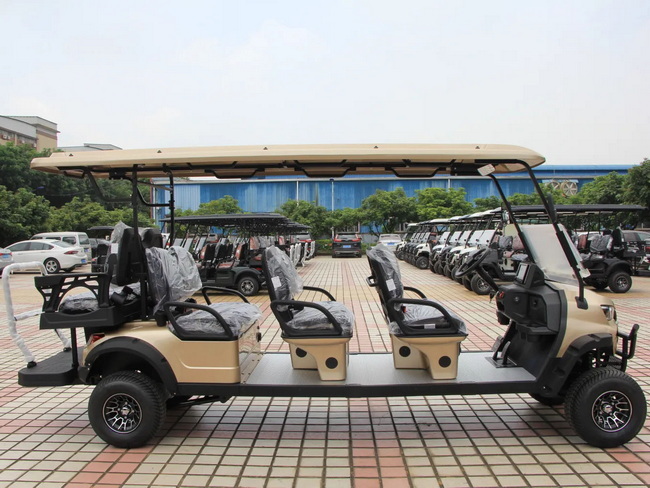
Beyond traditional uses, electric buggies are now central to broader sustainable mobility strategies, especially in smart cities and corporate sustainability programs.
Urban planners see low‑speed electric vehicles as part of the micro‑mobility layer that reduces congestion and emissions in dense city cores. Electric buggies can act as:[12][3]
- On‑demand shared shuttles for short trips in pedestrianized districts.
- Electric delivery vehicles for e‑commerce parcels in low‑speed zones.
- Feeder services to metro and BRT stations.
Studies of sustainable transport in 2025 highlight that small electric vehicles such as e‑bikes and buggies significantly cut emissions for urban trips under 5 km while improving traffic flow. As battery technology and charging infrastructure improve, buggies will play an even bigger role in smart‑city mobility networks.[16][12][3]
Many corporations now invest in electric buggies as visible CSR assets, integrating them into plant transport, visitor shuttles, and community outreach programs.[2][10]
- CSR fleets used to provide free or low‑cost transport for employees on campuses.
- Green visitor shuttle at corporate headquarters to showcase ESG commitment.
- Community mobility projects around factories, schools, and local attractions.
These initiatives reduce carbon emissions and improve employee welfare, while also generating positive PR and strengthening ESG reporting. For OEM partners, co‑branded electric buggies can become a powerful storytelling tool in sustainability campaigns.[10][2]
A rapidly growing trend is the integration of solar charging systems with electric buggies, especially in sunny regions and open campuses.[6][5]
- Solar carports in resorts, factories, or campuses charging entire buggy fleets.
- On‑vehicle solar panels that add range and reduce grid consumption in light‑duty use.
- Hybrid energy systems combining solar, grid, and battery storage for resilient operations.
Because electric buggies consume relatively little energy, even modest solar systems can cover a large share of charging needs, pushing operations toward true zero‑emission transport from “tank to wheel” and “well to wheel.”[6][11]
From a fleet‑management perspective, sustainability must be backed by solid economics. Electric buggies outperform many combustion alternatives on total cost of ownership (TCO) thanks to lower fuel and maintenance costs.[9][2]
Key cost advantages include:
- Energy savings: Electricity is typically cheaper and more stable in price than petrol or diesel per kilometer traveled.[5][2]
- Lower maintenance: Fewer moving parts, no oil changes, and fewer mechanical failures reduce downtime and service costs.[4][9]
- Longer asset life: With proper maintenance, quality electric golf carts can operate reliably for many years, especially in low‑speed environments.[15][4]
When evaluating investments, fleet owners can track ROI by comparing annual fuel, maintenance, and downtime savings against the initial purchase and charging infrastructure cost. This is often favorable within a few years, especially for high‑utilization resorts, factories, and campuses.[9][2]
Selecting the right buggy specification is crucial to maximize both sustainability and operational performance.
Use scenario | Recommended buggy type | Key sustainability benefits |
Golf resorts & hotels | Electric golf cart / resort buggy | Zero tailpipe emissions, quiet operation improves guest experience. |
Industrial & warehouse sites | Cargo electric buggy / utility vehicle | Replaces fossil-fuel utility vehicles, cuts fuel use and emissions. |
Campuses & communities | 6–14 seater sightseeing buggy | Reduces private car use, supports low-carbon campus mobility. |
Theme parks & attractions | Multi-purpose passenger buggy | Fewer shuttle buses, less noise and pollution in visitor areas. |
CSR & smart-city pilots | Custom low-speed vehicle (LSV) | High-visibility green transport project for ESG and innovation branding. |
OEM suppliers such as BorCart can design custom seating layouts, cargo beds, battery packs and body styles tailored to each application, ensuring that sustainability benefits translate into real‑world performance and branding value.
Below is a clear 7‑step roadmap for resorts, campuses, factories, or communities preparing to introduce or expand electric buggies:
- Map daily routes, average trip lengths, loads, and peak hours.
- Identify where buggies can replace fuel vehicles without compromising service.
- Decide on seating capacity, cargo load, required range, and speed limits.
- Select lead‑acid or lithium batteries based on budget, duty cycle, and charging windows.[4][9]
- Analyze available power, charging locations, and duty cycles.
- Consider overnight centralized charging or distributed daytime charging points.
- Evaluate solar carports or rooftop PV for buggy charging in sunny regions.[5][6]
- Start with partial renewable coverage and plan to scale up.
- Define speed limits, routes, parking areas, and priority zones for buggies.
- Train drivers and maintenance staff on safe, energy‑efficient operation.
- Track energy use, emissions avoided, downtime, and maintenance costs versus previous solutions.[2][10]
- Use data to optimize fleet size and shift scheduling.
- Highlight electric buggy deployment in marketing, ESG reports, and on‑site signage.
- Offer guests, employees, and residents clear information on how the fleet supports environmental goals.[7][11]
For global brands, wholesalers, and vehicle producers, working with a specialized Chinese OEM manufacturer unlocks both customization and cost efficiency in sustainable buggy fleets.
BorCart focuses on:
- Electric golf carts as the core product line, plus sightseeing buses, low‑speed vehicles, hunting and multi‑purpose buggies, all tailored for international markets.
- OEM and private‑label services for overseas brands, enabling custom styling, branding, and specifications aligned with local regulations and customer expectations.
- Flexible configurations (passenger, cargo, mixed‑use) that support the diverse sustainable applications described above—from resorts and campuses to factories and smart‑city pilots.[13][14]
By partnering with a mature OEM, buyers reduce project risk, shorten development cycles, and secure stable supply for fast‑growing green mobility segments.
Electric buggies have evolved from simple golf‑course vehicles into strategic sustainability assets across resorts, factories, campuses, communities, and smart cities. If your brand or organization wants to reduce emissions, cut operating costs, and upgrade user experience, now is the time to design a tailored electric buggy fleet.[1][3]
BorCart provides OEM electric golf carts, sightseeing buses, low‑speed vehicles, hunting vehicles and multi‑purpose buggies for international brands, wholesalers and manufacturers who need reliable, customizable solutions for sustainable mobility projects.
Contact the BorCart team today to discuss your routes, capacity needs and branding goals, and turn your next buggy project into a long‑term competitive advantage in green transportation.
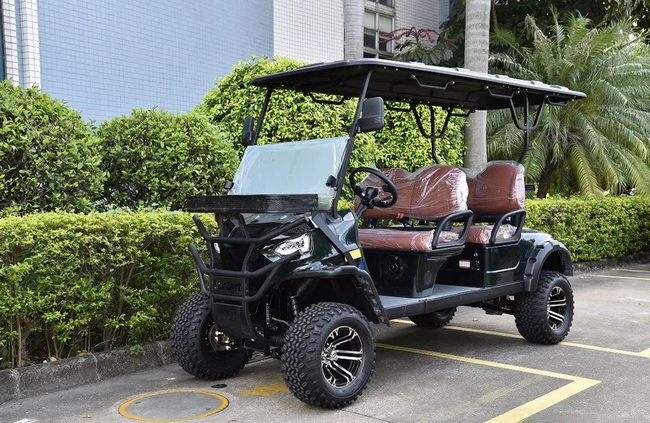
Electric buggies produce zero tailpipe emissions and significantly reduce local air pollution compared with petrol or diesel carts. When paired with renewable energy charging, their overall carbon footprint becomes very low over the vehicle lifetime.[6][5][4][2]
Yes. Modern cargo electric buggies can carry substantial loads across factories, warehouses, and logistics parks, replacing many internal combustion utility vehicles. With proper configuration, they offer strong torque at low speeds and improve air quality in work areas.[13][10]
Electric buggies need less maintenance than combustion vehicles because they have fewer moving parts and no engine oil or exhaust system. Regular checks focus on batteries, brakes, tires, and electrical components to ensure safety and optimal performance.[4][9]
With the right battery capacity and motor specification, electric buggies can operate on moderate inclines and longer routes within their designed range. Fleet owners should match route length, terrain, and load requirements to battery size, charging strategy, and gear ratios.[15][4]
Start with a pilot fleet on selected routes, evaluate performance and user feedback, and then scale up based on proven savings and satisfaction. Working with an OEM partner like BorCart allows you to fine‑tune configurations, charging solutions, and branding before rolling out a larger fleet.[7][11]
Electric buggies are increasingly used as last‑mile shuttles and micro‑transit vehicles in smart‑city districts, helping reduce congestion and emissions for short trips. They integrate well with public transport systems, pedestrian zones, and low‑speed streets.[12][3]
[1](https://www.rootsev.com/blog/top-sustainable-uses-of-electric-buggies/)
[2](https://trielectric.in/electric-buggies-csr-investment.php)
[3](https://www.linkedin.com/pulse/future-prospects-electric-buggies-sustainable-current-izzat-ali-khan-kevbf)
[4](https://1800buggies.com.au/blog/6-exciting-advantages-of-electric-buggies/)
[5](https://evtitan.com/are-electric-golf-carts-eco-friendly-a-breakdown-of-their-environmental-impact/)
[6](https://rariro.com.cn/electric-golf-carts-10-sustainable-advantages-for-modern-transportation/)
[7](https://www.rootsev.com/blog/the-role-of-electric-golf-carts-in-sustainable-tourism/)
[8](https://www.rootsev.com/blog/uses-of-electric-buggies-in-educational-institutions/)
[9](https://saeragolfcart.com/blog/environmental-benefits-of-electric-buggies/)
[10](https://trielectric.in/10-benefits-of-using-electric-buggies-for-large-factories.php)
[11](https://golfcartsuperstoretampa.com/blog/discover-the-environmental-benefits-of-electric-golf-carts)
[12](https://movcan-bike.com/blogs/blog/sustainable-transportation-guide-2025-e-bikes-lead)
[13](https://www.rootsev.com/blog/top-5-cargo-electric-buggy-models-for-industrial-use/)
[14](https://www.lvtonggolfcart.com/article/quiet-moving-electric-golf-buggy-6-seater-agency-application-parks-campus-community.html)
[15](https://golfcarsofthedesert.com/blogs/news/the-rise-of-electric-golf-carts-and-their-environmental-benefits)
[16](https://itdp.org/2025/01/24/ebuses-are-the-solution-for-public-transport-stmagazine-36/)
[17](https://www.linkedin.com/posts/roots-naveo_blog-roots-naveo-activity-7102500316167761920-4MEo)
[18](https://www.saeraauto.com/blog/driving-change-the-most-sustainable-ways-to-use-electric-buggies/)
[19](https://www.linkedin.com/pulse/driving-change-most-sustainable-ways-use-electric-xxqpc)
[20](https://www.hdkexpress.com/blog/advantages-of-best-electric-buggy-car-for-family-outings/)


