


Views: 222 Author: BorCart Publish Time: 2026-06-01 Origin: Site


Content Menu
● What "Last‑Mile" Logistics Means on Farms and Landscapes
● Core Technical Differences – Golf Cart Trucks vs Compact Tractors
>> Design Purpose and Target Tasks
● Performance in Real "Last‑Mile" Scenarios
>> Large‑Scale Row‑Crop and Orchard Farms
>> Commercial Landscaping and Grounds Maintenance
● Cost of Ownership, Energy, and Sustainability
>> Total Cost of Ownership (TCO) Patterns
>> Energy and Environmental Considerations
● Operator Experience, Safety, and Training
>> Ease of Use and Training Time
● Fleet Strategy – When Each Platform Wins
>> Decision Framework for Large Operations
● OEM and Customization Perspective – How BorCart Adds Value
● Practical Implementation Steps for Fleet Managers
>> How to Evaluate Your Own Operation
● When a Golf Cart Truck Is the Better Last‑Mile Choice
● FAQ: Golf Cart Truck vs Compact Tractor for Last‑Mile Work
Golf cart trucks and compact tractors can both transform "last‑mile" logistics in large‑scale farms and landscaping projects, but they solve different problems and pay off in different scenarios. Choosing the right platform is about matching terrain, payload, duty cycle, and TCO to your actual operations rather than buying the biggest machine on paper. [importjunkies]
From my experience working with OEM fleets and large estates, I see a clear pattern: golf cart trucks (electric utility golf carts with cargo beds) dominate short‑range people and light‑goods movement, while compact tractors win whenever heavy implements, ground‑engaging work, or steep terrain are non‑negotiable. In practice, most professional operators end up with a mixed fleet, but they still need a primary "last‑mile" workhorse that keeps crews, inputs, and tools moving efficiently between fields, barns, and job sites. [total-ind]
For context, BorCart is a China‑based OEM manufacturer of electric golf carts, utility cart trucks, and key automotive components, supplying global brands, wholesalers, and assemblers. As an OEM partner, the core question we help our customers answer is not "golf cart or tractor?" but "for which exact use‑case, under which load and runtime assumptions, does each platform deliver the lowest lifetime cost per productive hour?"
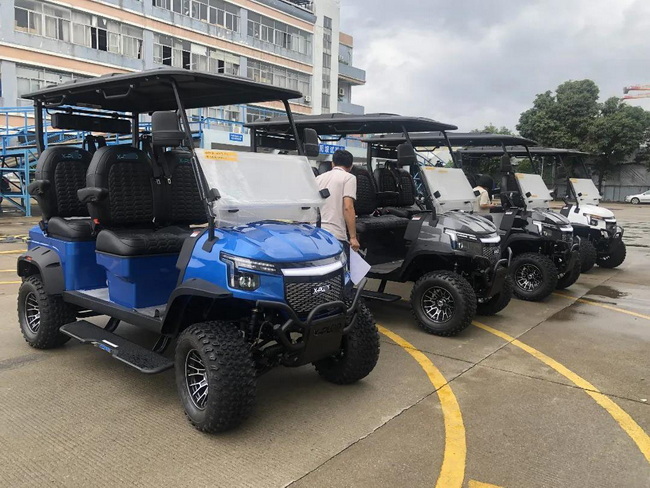
In agriculture and landscaping, "last‑mile" logistics is everything that happens after bulk inputs arrive at the main farm road, yard, or depot. It is the micro‑movement of people, tools, and materials across the final 0.5–5 km inside a large property. [upperinc]
Typical last‑mile tasks include: [golfcartsearch]
- Moving workers between fields, orchards, or job zones
- Distributing fertilizers, seedlings, irrigation parts, or packaging
- Collecting harvest bins or clippings from dispersed plots
- Spot‑spraying, scouting, or inspection runs
- Hauling small loads to and from remote storage or workshops
Globally, last‑mile logistics is a fast‑growing area of investment because every unoptimized transfer inside the farm adds hidden labor cost and delays. For large agricultural and landscaping operations, the vehicle you pick for these tasks can easily swing operating efficiency by double‑digit percentages. [maersk]
- Golf cart truck (utility golf cart)
Optimized for transport, not heavy traction. It provides seated positions for 2–4 passengers, a rear cargo bed, and often street‑legal lighting, making it ideal for patrol, supervision, light material handling, and quick service trips. [importjunkies]
- Compact tractor
Engineered primarily as a power unit for implements. It delivers PTO power, three‑point hitch capacity, and hydraulic flow to run mowers, tillers, loaders, and more, while also towing trailers when needed. [total-ind]
In short: if your main task is moving people and small loads across a wide area all day, a golf cart truck is usually the better "last‑mile" tool; if your last‑mile involves working the soil, lifting with a loader, or powering implements, the compact tractor is the core platform.
Below is a generalized comparison for typical farm/landscape configurations (values are indicative ranges from industry examples and field observations). [golfcartsearch]
| Factor | Golf cart truck (electric) | Compact tractor (diesel/compact) |
|---|---|---|
| Typical payload (bed) | 200–400 kg (importjunkies) | 500–1,000+ kg with loader/trailer (total-ind) |
| Passenger capacity | 2–4 seats (importjunkies) | 1 operator, occasional extra on trailer (total-ind) |
| Max speed | 20–32 km/h on farm roads (importjunkies) | 15–25 km/h depending on gearing (total-ind) |
| Turning radius | Very tight, golf‑course level maneuverability (importjunkies) | Larger, varies with wheelbase and steering geometry (total-ind) |
| Powertrain | Electric (48–72 V), low noise and emissions (importjunkies) | Diesel (or sometimes electric), high torque (total-ind) |
| Primary strengths | Low noise, low operating cost, easy to drive (importjunkies) | Implements, traction, heavy loads, slope work (total-ind) |
Key takeaway: golf cart trucks are optimized movers; compact tractors are optimized workers. Your last‑mile vehicle decision should start by listing which of those roles dominates 60–70% of your operational hours.
In large farms (hundreds of hectares), the last‑mile challenge is often moving people and small equipment quickly between blocks. [total-ind]
- Golf cart truck advantages:
- Fast deployment of supervisors, agronomists, and repair technicians
- Quiet entry into orchards or livestock areas
- On‑board storage for tools, samples, and spare parts
- Compact tractor role:
- Towing fertilizer trailers, sprayers, or harvest wagons
- Running PTO‑driven equipment
- Handling rough field entries and deep ruts
A common pattern is using golf cart trucks as "runners" between the main yard and field teams, while tractors stay allocated to work tasks that require traction and PTO.
On golf courses, parks, campuses, and resorts, surface conditions are usually smoother, and noise regulations are tight. [importjunkies]
- Golf cart trucks excel in:
- Turf‑friendly transport without rutting
- Early‑morning or evening work where noise is sensitive
- Tasks like trash collection, light material distribution, and crew movement
- Compact tractors are reserved for heavy mowing, aeration, and landscape renovation, where implement power is more important than quietness or passenger capacity. [total-ind]
Here, golf cart trucks often become the primary last‑mile vehicle, with compact tractors scheduled as "project machines" for heavier jobs.
While list prices vary widely, operators care about cost per productive hour. Electric golf cart trucks usually offer: [golfcartsearch]
- Lower energy cost per km vs diesel tractors
- Fewer moving parts, hence lower routine maintenance
- Less operator training overhead
Compact tractors, however, can justify their higher TCO whenever one tractor replaces multiple specialized machines due to its versatility. [total-ind]
According to multiple logistics and last‑mile studies, switching to electric vehicles in local operations significantly reduces local emissions and noise, which is increasingly important for both urban and semi‑urban farms and landscapes. Electric golf cart trucks align naturally with this trend. [networkon]
From an OEM perspective, BorCart's electric powertrains are designed for:
- Optimized duty cycles in stop‑and‑go operations
- Flexible battery configurations to meet local charging infrastructure
- Integration with fleet‑level telematics for route and usage optimization
For buyers serving ESG‑sensitive clients or operating near residential areas, this combination of low noise, zero tailpipe emissions, and telemetry data can be a competitive advantage. [upperinc]
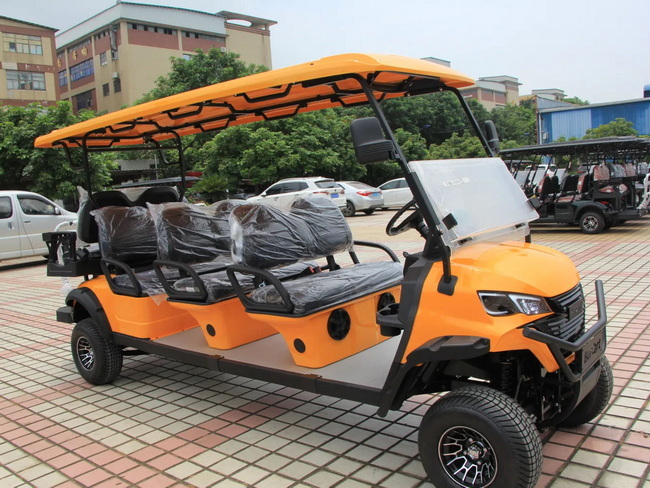
Golf cart trucks are typically easier for new workers to operate safely than compact tractors. They have automotive‑style controls, lower top speeds, and better inherent visibility. [importjunkies]
This matters in:
- Seasonal operations with high staff turnover
- Resorts and campuses using mixed‑skill staff
- Large farms that bring in temporary labor during peak seasons
Compact tractors require more structured training due to gears, PTO engagement, hydraulic controls, and implement safety. Misuse can damage both equipment and crops, so they're better reserved for skilled operators. [total-ind]
Both platforms demand clear operating rules, but risk profiles differ:
- Golf cart trucks: focus on speed control, seat belt use, and avoiding overloading or off‑design terrain.
- Compact tractors: add PTO safety, implement attachment/locking, roll‑over protection systems (ROPS), and steep‑slope procedures. [total-ind]
For last‑mile logistics where non‑professionals or semi‑skilled staff need to move quickly and safely, a golf cart truck with speed‑limiting and clear load charts is often the safer default.
You can frame the choice in four practical questions:
1. What percentage of hours are pure transport vs heavy work?
- If >70% is moving people and light loads, golf cart trucks should be the main last‑mile platform.
2. What is your average payload and towing requirement?
- Up to ~300–400 kg bed loads and light trailers: golf cart trucks. Higher routine loads: compact tractors plus trailers.
3. What terrain and surface do you face daily?
- Mostly paved/gravel/turf: golf cart trucks. Deep ruts, steep slopes, and loose soils: compact tractors.
4. How crucial are noise and emissions?
- Sensitive or semi‑urban environments favor electric golf cart trucks; remote or heavy‑duty fields can justify diesel tractors. [maersk]
A 1,000‑ha mixed‑crop farm might run:
- 3–4 compact tractors for tillage, spraying, and heavy haulage
- 6–10 electric golf cart trucks for crew movement, inspection, parts delivery, and harvest bin shuttling inside fields
In this scenario, the tractors handle the heavy, scheduled work, while the golf cart trucks unlock last‑mile agility, cutting delays and reducing the number of tractors needed for non‑core tasks.
As an OEM manufacturer, BorCart supports international brands, wholesalers, and assemblers who need customized golf cart truck platforms optimized for their specific markets and use‑cases. Typical customization levers include:
- Battery and range options for different daily route lengths and charging patterns
- Payload and bed configurations (steel, aluminum, drop‑side, enclosed)
- Suspension and tire setups tuned for turf, gravel, or mixed terrain
- Telematics‑ready harnesses and CAN‑bus integration for fleet management systems
In practice, many of our partners design "farm" and "landscape" variants that directly target last‑mile logistics, competing not against full‑size tractors but against aging pickup trucks, UTVs, and non‑optimized internal fleets.
For brands that already sell compact tractors, an OEM‑supplied electric golf cart truck line becomes a natural upsell: they can offer a complete work/fleet ecosystem without building electric platforms from scratch.
To move from theory to action, we recommend a simple three‑step evaluation:
1. Map last‑mile routes for one week
- Track which paths are used, how often, by how many people, with what loads.
- Identify trips that never actually use PTO or heavy traction.
2. Quantify loads and distances
- For each frequent route, note average and peak payload (kg) and daily distance (km).
- This identifies segments where a golf cart truck can fully replace heavier vehicles.
3. Run a TCO scenario
- Compare fuel vs electricity cost, maintenance intervals, and purchase price.
- Include operator training time and risk profile as "hidden costs."
Most operations discover 20–40% of current tractor or pickup trips can be offloaded to electric golf cart trucks with no loss of capability, reducing both fuel spend and machine wear. [golfcartsearch]
In summary, a golf cart truck is usually the smarter last‑mile investment when:
- Your primary need is frequent, light‑load transport of people and materials
- Terrain is moderate, with mostly prepared surfaces or stable turf
- Noise, emissions, and operating cost are critical decision factors
- Operators have varying skill levels and you want to minimize training and risk
In these conditions, a properly specified electric golf cart truck can deliver a lower cost per trip and free up your compact tractors to focus on the high‑value tasks they were designed for. [importjunkies]
If you are a brand owner, wholesaler, or equipment assembler looking to build or expand your last‑mile vehicle portfolio, the next step is to define your exact use‑case and duty cycle, then partner with an OEM who can tune the platform to that reality.
BorCart can help you:
- Design market‑specific golf cart truck configurations for farms and landscapers
- Integrate electric powertrains and components into your existing product lines
- Support global OEM and private‑label programs with scalable manufacturing
You can prepare your technical requirements (payload, range, terrain, charging, regulatory needs) and reach out to BorCart's OEM team to explore platform options, engineering collaboration, and sample builds.
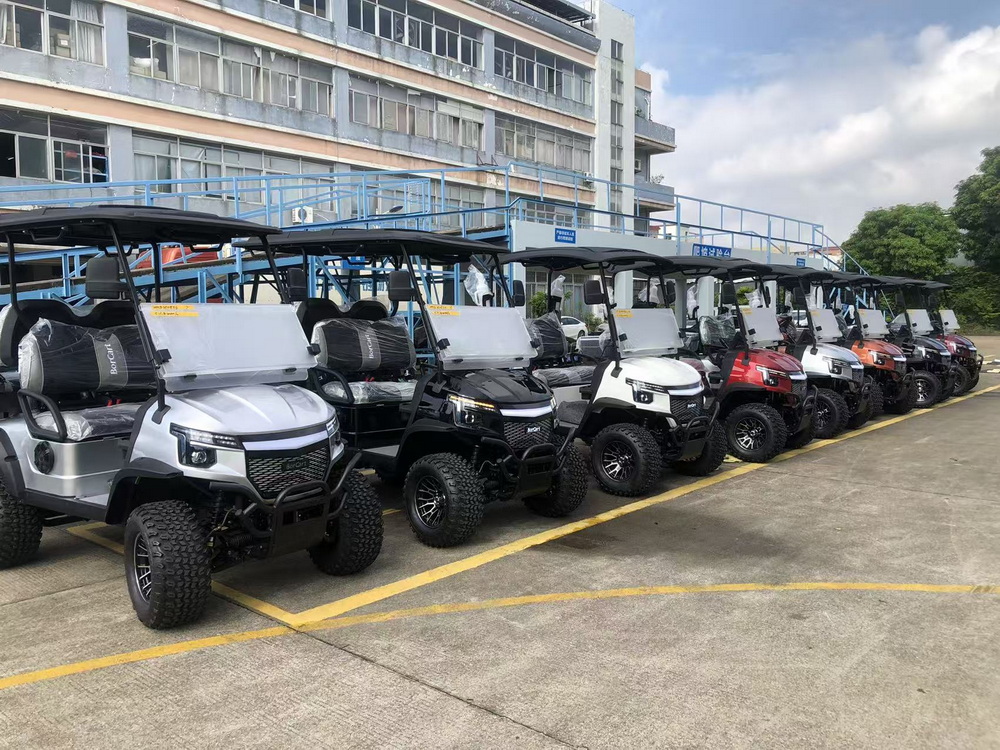
1. Can a golf cart truck replace a compact tractor completely on a large farm?
In most cases, no. Golf cart trucks are ideal for transport and light haulage, while compact tractors are still required for heavy implements, loader work, and deep tillage tasks. [golfcartsearch]
2. How much payload do I realistically need for last‑mile tasks?
Many last‑mile trips involve 100–300 kg of tools, parts, or supplies, which fits well within the bed capacity of a utility golf cart truck. For heavier loads beyond 400 kg, a tractor with a trailer may be more appropriate. [importjunkies]
3. Are electric golf cart trucks suitable for hilly or rough terrain?
Modern electric golf cart trucks with the right suspension, tire choice, and motor configuration can handle moderate slopes and firm off‑road paths, but they are not a replacement for tractors in steep or very rough conditions. [importjunkies]
4. How do I calculate the operating cost difference between a tractor and a golf cart truck?
Compare fuel vs electricity cost per hour, expected maintenance, tire wear, and operator training time. Electric golf cart trucks typically win on energy and maintenance in light‑duty, stop‑and‑go work. [networkon]
5. What should OEM buyers look for when sourcing golf cart trucks from manufacturers like BorCart?
Focus on platform flexibility (battery, payload, body options), component quality, compliance with your target market regulations, and the ability to integrate telematics and branding for your end customers.
- Import Junkies – Utility trucks vs. golf carts: which delivers more value? (2026) [importjunkies]
[https://www.importjunkies.com/blogs/news/utility-trucks-vs-golf-carts-which-delivers-more-value]
- Total Industries – Industrial Vehicles vs. Golf Carts. Which is best? (2024) [total-ind]
[https://total-ind.com/blog/industrial-vehicles-vs-golf-carts-which-is-best/]
- Upper Route Planner – Last-Mile Delivery Trends to Watch in 2026 [upperinc]
[https://www.upperinc.com/blog/best-last-mile-delivery-trends/]
- Maersk – Last-Mile Delivery Innovations [maersk]
[https://www.maersk.com/insights/logistics-trend-map/last-mile-delivery-innovations]
- NetworkOn – Advancing Last-Mile Solutions: Innovations and Strategies Reshaping Logistics (2024) [networkon]
- GolfCartSearch – Best Golf Carts For Farm And Ranch Work in 2026 [golfcartsearch]
[https://golfcartsearch.com/blog/best-golf-carts-for-farm-ranch-guide-2026]


