


Views: 231 Author: BorCart Publish Time: 2026-07-21 Origin: Site


Content Menu
● Why Historical Districts Need Special Mobility
● Electric Sightseeing Bus vs Open-air Tram
● Passenger Experience Matters
● Resident-Friendly Operations
● A Manufacturer's Perspective
● How to Choose the Right Vehicle
● FAQ
>> 1. Which is better for narrow historical districts, an electric sightseeing bus or an open-air tram?
>> 2. Is an open-air tram quieter than a sightseeing bus?
>> 3. Which option has higher passenger capacity?
>> 4. Can an electric sightseeing bus be used for both tourism and shuttle service?
>> 5. Why do residents often prefer electric sightseeing vehicles?
>> 6. What should buyers ask an OEM supplier before ordering?
>> 7. Can BorCart provide customized sightseeing buses for overseas markets?
In narrow historical districts, mobility is not only about transporting visitors. It is also about protecting heritage, keeping streets comfortable, and avoiding unnecessary disturbance to residents.
For operators, the key question is not simply which vehicle looks more impressive. It is which one can balance capacity, flexibility, footprint, cost, and community acceptance in a sensitive urban environment.
Historic neighborhoods often have narrow lanes, old paving, fragile facades, and limited room for infrastructure changes. In many places, the urban form itself restricts what kind of transport system can be introduced.
Residents usually care most about noise, crowding, vibration, visual clutter, and traffic interference. Tourists, on the other hand, want a smooth, memorable, and easy way to explore the area.
That is why transport in heritage zones must be quiet, compact, predictable, and respectful of the local environment.
The two options solve the same problem in different ways.
| Factor | Electric Sightseeing Bus | Open-air Tram |
|---|---|---|
| Street flexibility | High; can reroute around closures and events | Low; fixed alignment limits flexibility |
| Infrastructure need | Minimal; mainly charging and depot planning | High; rails, stations, and power systems are required |
| Historic streetscape impact | Lower visual intrusion | Higher visual permanence |
| Passenger capacity | Moderate; ideal for smaller, frequent batches | Higher; better for large-volume corridors |
| Noise and vibration | Very low in operation | Very low in operation, but installation is more disruptive |
| Resident disruption risk | Lower during deployment | Higher at the construction stage |
| Operational agility | Strong | Limited by fixed route design |
In practical terms, the electric sightseeing bus is usually the better choice for narrow, sensitive, or less predictable districts. The open-air tram becomes stronger when demand is steady, the route is fixed, and the city wants a long-term transport landmark.
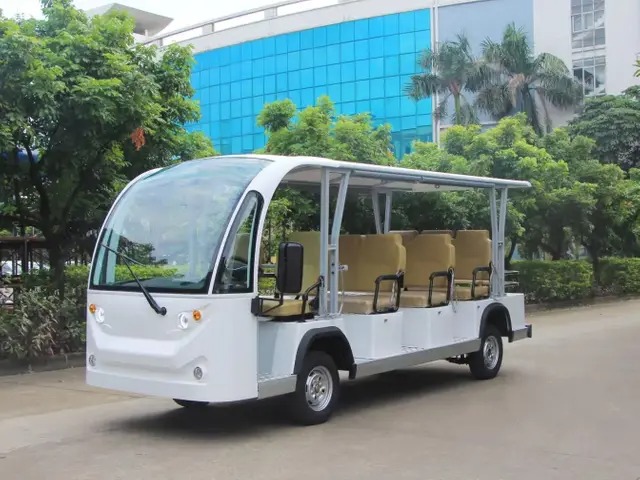
Tourist transport is part of the attraction itself. An open-air tram can create a strong sense of place and often feels iconic, especially in cities that want a heritage-inspired image.
Electric sightseeing buses, however, often provide greater flexibility in layout and service style. They can be designed with open seating, panoramic windows, step-free access, and different seating capacities.
For many operators, especially hotels, resorts, and historical town managers, the bus is more practical because it can serve multiple roles at once: sightseeing, shuttle service, resident circulation, and event transport.
If a historic district receives heavy visitor flow, capacity becomes a major issue. Trams usually have the advantage in raw throughput because they can move more passengers per vehicle and operate on a fixed corridor with frequent service.
But this advantage only matters when demand is high enough to justify the system. In smaller or seasonal tourism districts, a tram may be underused, while electric sightseeing buses can scale more efficiently by adding or reducing vehicles according to demand.
A simple rule can help:
1. Choose an electric sightseeing bus if demand changes by season, weather, cruise arrivals, or event schedules.
2. Choose an open-air tram if the route is fixed, demand is steady, and the city wants a permanent transit identity.
3. Use a mixed fleet if the area includes both narrow heritage streets and wider visitor corridors.
Resident acceptance often decides whether a mobility project succeeds or fails. Even a low-emission vehicle can create resistance if it blocks doorways, crowds sidewalks, or brings too much activity into a quiet neighborhood.
A resident-friendly operation should include:
- Service hours that avoid local peak inconvenience.
- Tight speed control in pedestrian-heavy areas.
- Smooth acceleration and braking.
- Defined loading points away from sensitive facades.
- Clear communication with local stakeholders.
Electric sightseeing buses are easier to adapt to these rules because they can shift routes, adjust frequency, and avoid bottlenecks. Trams can also be quiet and efficient, but their fixed infrastructure makes operational changes much harder.
From a manufacturer's point of view, the most valuable vehicle is not the one with the most features. It is the one that can be customized to the operator's street geometry, seating target, branding, and local regulations.
For overseas buyers, this means the best product strategy is not one standard model, but a configurable platform. Important options often include:
- Seating layouts for 6, 8, 11, or 14 passengers.
- Battery configuration based on route length.
- Turning radius optimization.
- Body styling for heritage or premium environments.
- Safety and comfort features for hotel, city-tour, and resort use.
This kind of flexibility is especially important in historical districts because every city has different lane widths, turning constraints, and loading conditions. A vehicle that works well in one place may not fit another location at all.

A clear trend in tourism transport is the move toward right-sized electric mobility instead of one large fixed answer. Cities increasingly want vehicles that support tourism without turning heritage streets into hard transit corridors.
This matters because it reflects a simple planning truth: not every historic district needs rail permanence. Many districts need operational flexibility, quick deployment, lower upfront disturbance, and easier approval from local stakeholders.
If you are planning a tourist route in a narrow historical district, use this decision framework.
1. Measure the street first.
Check lane width, turning radius, curb conditions, pedestrian density, and emergency access.
2. Define demand.
Estimate peak-hour loads, seasonal visitor volume, and the balance between residents and tourists.
3. Decide whether permanence is a goal.
If the city wants a fixed transit identity, a tram may be justified. If the goal is flexibility and low disruption, an electric sightseeing bus is usually the better fit.
4. Match the vehicle to the brand.
Heritage city tours often need a design that feels elegant, quiet, and visually unobtrusive.
5. Plan operations, not just purchase.
Charging, maintenance, dispatching, and resident communication should be designed before launch.
For overseas brand owners, wholesalers, and manufacturers, the strongest commercial angle is to treat sightseeing transport as a customizable mobility product rather than a standard vehicle. BorCart's OEM and ODM capability makes it possible to tailor sightseeing buses for route length, seating count, body design, and market-specific requirements.
That is especially valuable in heritage tourism, where operators need vehicles that are compact enough for narrow streets but polished enough to support a premium visitor experience. In this category, customization is not a luxury; it is a business necessity.
For narrow historical districts, the electric sightseeing bus is usually the more practical choice when flexibility, resident comfort, and low infrastructure impact are top priorities. The open-air tram is more suitable when demand is high, the route is permanent, and the city wants a long-term transport landmark.
If your project requires a vehicle that can move smoothly through sensitive streets without disturbing residents, the best next step is to design the vehicle around the district, not force the district to adapt to the vehicle.
For sightseeing vehicle projects, choose a platform that can be customized for turning radius, passenger capacity, route profile, and brand identity from day one.
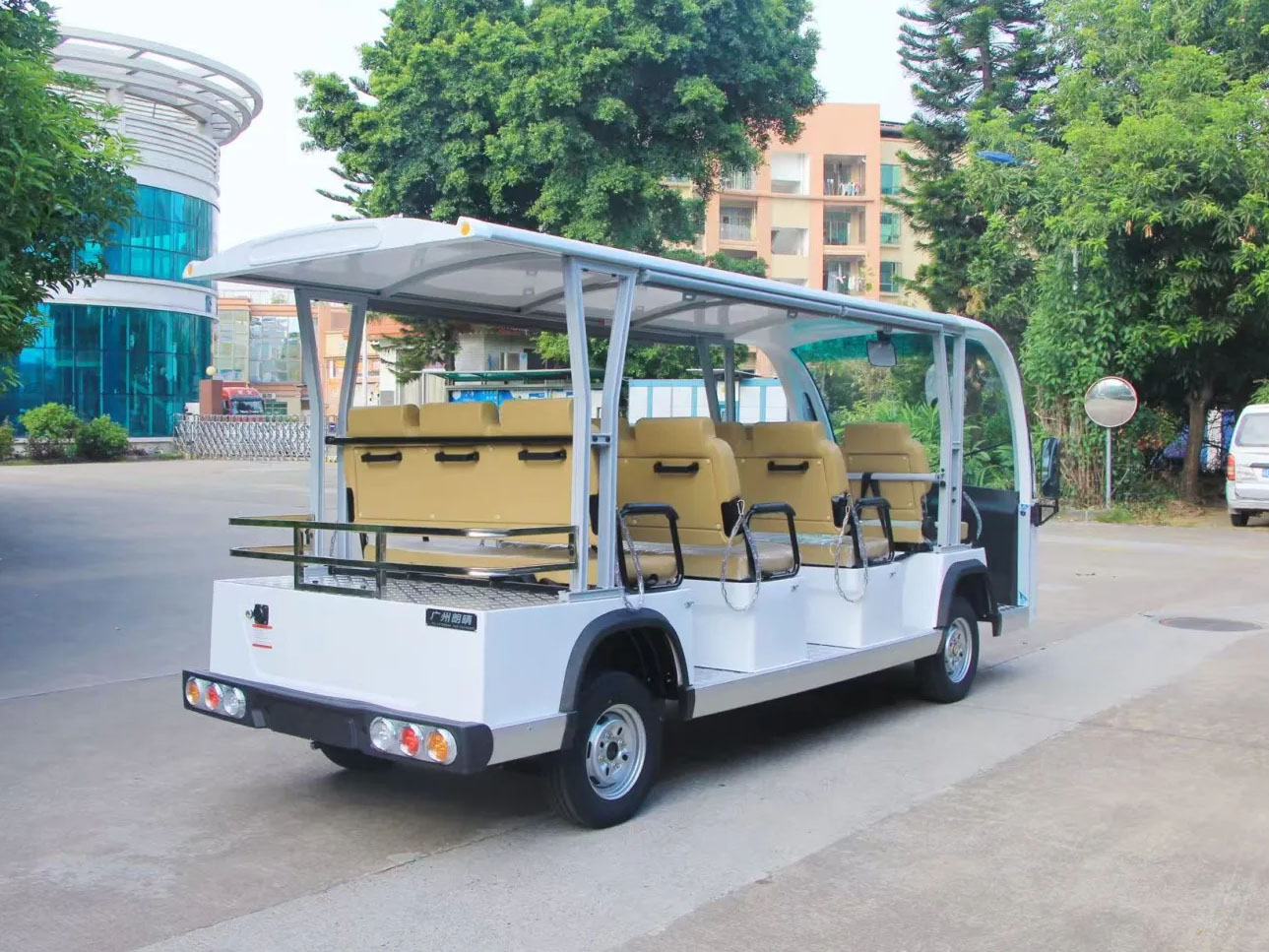
An electric sightseeing bus is usually better because it needs less infrastructure, can reroute more easily, and creates less disruption during deployment.
Both can be very quiet in operation because they are electric, but trams usually require more infrastructure and street intervention to build.
Open-air trams usually have higher per-vehicle capacity and are stronger on fixed high-demand corridors.
Yes. That is one of its biggest advantages, because it can serve multiple roles in resorts, hotels, scenic areas, and historic districts.
Residents generally prefer them because they are quieter, cleaner, and easier to operate without large-scale street reconstruction.
Buyers should ask about seating layout, battery range, turning radius, customization options, after-sales support, and whether the model fits local street conditions.
Yes. BorCart offers OEM and ODM electric vehicle solutions for global B2B customers.
- [BorCart About Us]
- [BorCart Products]
- [BorCart OEM 8 Seats Electric Tourist Bus]
- [BorCart 11/14 Seater Sightseeing Bus Specs]
- [Electric City Buses in Tourist Hotspots]
- [Global Street Design Guide: Historic Streets]
- [Tramway Overview and Capacity]
- [Passenger Capacity of Different Transport Modes]
- [Tram vs Electric Bus Analysis]
- [How EV Charging Can Boost Tourism]


