


Views: 268 Author: BorCart Publish Time: 2026-07-16 Origin: Site


Content Menu
● Understanding Torque vs Speed in Mountain EV Applications
● Key Performance Comparison in Mountainous Regions
>> High-torque Offroad EV: Built for Climbing and Control
>> High-speed Cart: Optimized for Smooth Surfaces
● Comparative Table: High-torque Offroad EV vs High-speed Cart in Mountainous Regions
● Expert Perspective: Why Torque Wins in Real-world Mountain Operations
>> Practical Lessons from OEM Projects
>> Safety and Liability Considerations for Brands and Wholesalers
● Engineering Deep Dive: Drivetrain, Battery, and Thermal Management
>> Drivetrain Design for Steep Slopes
>> Battery Sizing and Thermal Management in Mountainous Regions
● Industry Case Insight: Offroad Utility Cart vs Standard 4-seater in Challenging Environments
● Practical Selection Framework for Mountainous Deployments
>> Step-by-step Evaluation Checklist for Buyers
>> Long-term TCO and Fleet Management Considerations
● OEM Customization Opportunities with BorCart for Mountain Regions
● UX and Safety for End Users in Mountainous Regions
● Strategic Conclusion for Brands: Torque-first, Speed-second
● Targeted Call to Action (CTA)
● FAQs on High-torque Offroad EVs vs High-speed Carts
High-torque offroad EVs deliver superior climbing power and traction for mountainous terrains, while high-speed carts focus on flat-ground velocity and smooth handling. For hilly resorts, industrial sites, and hunting grounds, prioritizing torque over top speed often leads to safer, more reliable operations and longer vehicle life.
Mountain environments expose every weakness in an electric vehicle's drivetrain, braking system, and chassis design. As a China-based OEM manufacturer like BorCart, focused on utility carts and EV components, we see first-hand how different torque and speed profiles perform across mining sites, hillside resorts, and offroad paths. From an industry practitioner's standpoint, the key question is not "which is faster?" but "which configuration protects your drivers, assets, and brand in real-world slopes?" [borcart]
In this article, we compare high-torque offroad EVs and high-speed carts through the lens of engineering, safety, TCO (total cost of ownership), and OEM customization, so international brands and wholesalers can choose the right platform for mountainous regions. [borcart]
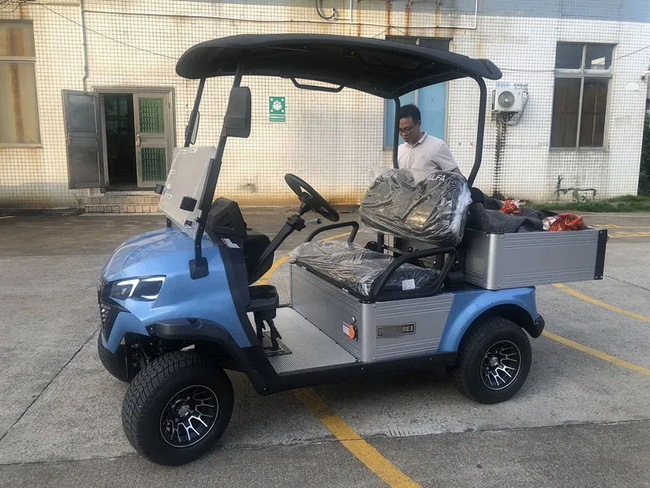
Torque is the rotational force at the wheels, directly responsible for starting on a slope, crawling over obstacles, and maintaining control at low speeds. In offroad EV utility carts, manufacturers tune motor controllers, gear ratios, and tire dimensions to maximize low-end torque for climbs of 20–30% grade or more. By contrast, high-speed carts prioritize gear ratios and motor mapping that favor cruising at 25–40 km/h on relatively flat ground, often used on golf courses, campuses, and landscaped resorts. [edacar]
From a driver's perspective, a high-torque offroad EV feels "stronger" at low speeds: it pulls confidently from standstill, resists bogging down in loose gravel, and responds predictably when loaded with passengers or cargo. A high-speed cart tends to feel "lighter" and more agile, but can struggle when suddenly asked to climb steep service roads with a full payload.
High-torque offroad utility carts are engineered around gradeability, traction, and durability. Typical configurations include:
- Reinforced chassis for torsional loads on uneven ground.
- Offroad tire patterns designed for mud, gravel, and sandy soil. [borcart]
- Motor controllers optimized for high current at low RPM.
- Lower gear ratios to translate motor power into wheel torque rather than top speed.
In mountainous environments, this configuration allows steady climbs with full loads, controlled downhill braking, and predictable behavior on loose surfaces. For an OEM like BorCart, this also means we can tune each vehicle to specific use cases, such as ski resorts, hillside farms, or quarry operations, by adjusting motor power, controller maps, and tire specifications. [borcart]
High-speed carts excel where paths are paved, gradients are moderate, and time-sensitive transportation is essential. They usually feature:
- Higher gear ratios favoring velocity over climbing torque.
- Smoother suspension tuned for asphalt or compacted paths.
- Speed-focused controller settings, sometimes with sport or eco modes.
- Body styling and seating layouts suited to golfers, tourists, or campus shuttles. [edacar]
In mountainous regions, high-speed carts can still operate, but they depend heavily on well-maintained roads and cautious routing. If gradients exceed design limits, users may experience slow climbs, overheating in the drivetrain, or unstable braking on long descents, especially when carts are overloaded or improperly maintained.
| Aspect | High-torque Offroad EV (Utility Cart) | High-speed Cart (Resort/Golf Style) |
|---|---|---|
| Primary design focus | Climbing power and traction (borcart) | Velocity and ride comfort (edacar) |
| Typical terrain | Steep, uneven, loose surfaces (borcart) | Flat or gently sloped paved paths (edacar) |
| Gear ratio tuning | Low-speed, high-torque | Higher-speed, lower torque |
| Gradeability | High (steep slopes under load) (borcart) | Moderate (limited by payload and road quality) |
| Suspension and chassis | Reinforced for offroad stress (borcart) | Comfort-oriented, lighter structure |
| Safety on long descents | Better torque-based braking support | Relies more on traditional braking |
| Ideal use cases | Mining, hillside farms, hunting, maintenance routes (borcart) | Golf, campus, resort shuttles (edacar) |
| OEM customization focus | Drivetrain, tires, protection packages (borcart) | Styling, seating, infotainment (borcart) |
Working with international EV brands as an OEM supplier, we consistently find that over-specifying speed and underestimating gradeability leads to operational and reputational issues. Fleets designed around high-speed carts often need expensive retrofits once they meet real-world mountain roads: stronger motors, different gear sets, or offroad tire upgrades. [borcart]
By contrast, fleets that start with high-torque offroad utility carts can gradually add speed-oriented features where safe: limited higher-speed modes on straight access roads, better seating comfort, or aesthetic body kits. As an OEM, BorCart's experience shows that it is easier to add comfort and styling to a torque-capable platform than to retrofit climbing power into a speed-centric cart. [borcart]
From a brand owner or distributor perspective, choosing the wrong platform for mountainous regions is not just a performance issue; it becomes a safety and liability concern. Overloaded high-speed carts on steep descents risk brake fade, loss of control, and rollovers, especially if operators treat them like road vehicles. [harris-sliwoski]
High-torque offroad EVs mitigate these risks by:
- Operating at lower typical speeds in hazardous areas.
- Using torque-heavy drivetrains that support controlled, engine-braking-like descents via regenerative systems.
- Allowing OEMs to integrate roll-over protection structures, stronger frames, and more robust braking systems.
For B2B buyers, this translates to fewer incidents, better insurance outcomes, and a stronger long-term reputation with commercial end users.
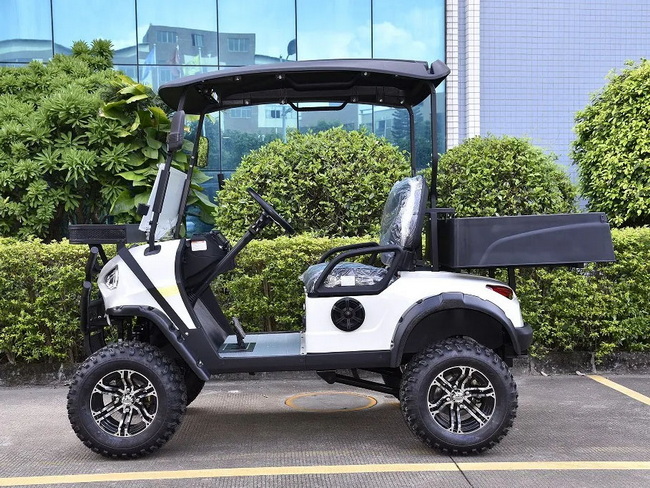
In high-torque offroad EVs, drivetrain packages emphasize:
- High-current motor controllers that sustain torque without overheating.
- Reduced gear ratios or dual-speed axles to balance climbing power and occasional higher speed.
- Reinforced differentials and axles to survive shock loads from offroad use. [borcart]
High-speed carts, designed for smooth operation, often have lighter drivetrains optimized for efficiency at constant medium speeds. While this improves range on flat routes, it can lead to stress and accelerated wear when used on steep or rough paths beyond their design intent.
Climbing demands more energy per kilometer than cruising on flat ground. This affects battery pack sizing, chemistry selection, and cooling strategies in mountainous deployments. OEMs supplying offroad utility EVs tend to:
- Specify larger battery capacities or more robust lithium packs for extended climbs.
- Prioritize thermal management and controller cooling to handle prolonged high-current draw. [borcart]
- Calibrate BMS (battery management systems) for frequent elevation changes, reducing unexpected cut-offs.
High-speed carts may use more compact battery solutions intended for predictable, flat routes. When repurposed in mountainous regions without adjustment, range estimates become unreliable, and users risk mid-slope power losses or derating due to thermal limits.
Recent industry discussions highlight how offroad utility carts outperform standard 4-seater carts in harsh conditions like beachfront estates with sandy soil and high salinity. These environments share key characteristics with mountainous trails: unstable surfaces, variable loads, and exposure to corrosive elements. [borcart]
The lessons apply directly to hilly regions:
- Vehicles purpose-built for offroad use resist corrosion and structural fatigue better.
- Utility-focused chassis designs accommodate cargo racks, tool boxes, and winches, making them multi-role assets.
- OEM customization ensures that the same base platform can serve maintenance teams, security patrols, and guest transport with tailored bodywork and seating. [borcart]
When brands and wholesalers adapt this mindset to mountainous deployments, they tend to favor high-torque offroad EV platforms, then configure seats, bodies, and branding according to target customers.
To decide between a high-torque offroad EV and a high-speed cart, B2B buyers can follow this practical checklist:
1. Map your gradients and surfaces. Identify maximum slope, typical road conditions, and weather impact.
2. Define payload and duty cycles. Consider passengers, tools, or cargo weights and daily operating hours.
3. Set safety thresholds. Decide acceptable risk levels for descents, night operation, and wet surfaces.
4. Align with brand positioning. Balance ruggedness with comfort and aesthetics according to your customer base.
5. Engage an OEM partner. Collaborate on drivetrain tuning, battery sizing, and body customization for your terrain. [borcart]
In most mountainous scenarios, this framework will guide you toward high-torque offroad EV platforms as the primary choice, with selective adaptation of high-speed cart features where roads permit.
From a fleet management perspective, torque-first platforms typically deliver better long-term TCO in demanding terrains:
- Lower mechanical failure rates because drivetrains are not constantly overloaded.
- More stable energy consumption profiles, aiding charging infrastructure planning.
- Higher residual value due to continued suitability for offroad applications. [borcart]
High-speed carts maintain advantages in flat, amenity-focused environments; however, moving them into mountainous contexts without adequate upgrades often increases maintenance costs and accelerates depreciation.
As an OEM-focused manufacturer in China, BorCart supports international brands, wholesalers, and producers with highly customizable utility carts and EV platforms. For mountainous deployments, we typically help partners with: [borcart]
- Selecting high-torque motor and controller configurations matched to specific gradient profiles.
- Designing offroad utility bodies with modular seating, cargo beds, and tool storage.
- Specifying corrosion-resistant materials and protective coatings for harsh climates. [borcart]
This OEM collaboration allows overseas brands to offer region-specific models—such as "Mountain Utility EV" and "Alpine Resort Shuttle"—while maintaining a unified design language and brand identity. It also shortens time-to-market compared with ground-up development, leveraging BorCart's manufacturing experience and existing platform architecture.
Beyond engineering, user experience determines whether fleets are truly practical and safe. In mountain environments:
- Clear torque advantages translate into smoother, more confident driving, especially for non-professional operators.
- Well-designed cabins and control layouts reduce fatigue, supporting precise low-speed maneuvers.
- Consistent braking and acceleration behavior builds operator trust and lowers training overhead. [indeedseo]
High-speed carts can deliver pleasant UX on flat resort roads, but when paths become steep or uneven, users often feel instability and hesitation. Choosing a high-torque offroad EV as the base platform and then layering intuitive controls, ergonomic seating, and clear speed limits leads to better UX and lower incident rates in mountainous regions.
For mountainous regions, high-torque offroad EVs provide a more future-proof foundation than high-speed carts. Torque-first platforms:
- Align naturally with safety, gradeability, and durability requirements.
- Offer predictable UX in mixed-terrain environments.
- Can be styled, branded, and equipped to meet diverse commercial use cases via OEM collaboration. [borcart]
High-speed carts remain an excellent choice for low-gradient, amenity-focused environments. However, when slopes, payloads, and offroad conditions are central to daily operations, strategic brands and wholesalers should prioritize climbing power over velocity—and work with experienced OEM partners to tailor utility EVs to the realities of mountain terrain.
If you are a brand owner, dealer, or wholesaler planning EV fleets for mountainous resorts, industrial sites, or hunting grounds, consider starting from a high-torque offroad utility EV platform and adding speed-capable features only where terrain permits. Partnering with an OEM like BorCart enables you to define torque, gradeability, and UX requirements upfront, then co-create customized carts that align with your market positioning, safety standards, and long-term TCO expectations. [borcart]
Q1: Are high-speed carts ever suitable for mountain resorts?
A1: They can be suitable on carefully designed, low-gradient, paved routes, but typically require strict load limits, clear operating rules, and potential drivetrain upgrades to ensure safety and reliability.
Q2: How do I calculate the required torque for my terrain?
A2: Start by measuring maximum gradients and typical payloads, then consult with your OEM partner to translate these into motor power, gear ratios, and controller settings that meet your gradeability targets.
Q3: Do high-torque offroad EVs consume more energy than high-speed carts?
A3: In climbs they draw higher currents, but over a full duty cycle they can be more efficient if they avoid repeated stalling, overheating, and inefficient operation outside the design envelope.
Q4: Can a single platform serve both flat and mountainous routes?
A4: Yes, with modular drivetrain and suspension configurations, one base platform can be tuned for torque-heavy mountain routes and speed-focused flat routes, allowing parts commonality across fleets.
Q5: What should brands prioritize in specs when targeting mountainous markets?
A5: Prioritize gradeability, torque, braking performance, chassis strength, and thermal management first, then refine speed, styling, and comfort features based on your customer profile and route design.
1. BorCart – Why Forward-Thinking EV Brands Choose BorCart for Next-Generation Golf Carts. Available at: [https://www.borcart.com] [borcart]
2. BorCart – Offroad Utility Cart vs Standard 4-Seater: Dealing with High Salinity and Sandy Soil in Beachfront Property Management. Available at: [https://www.borcart.com] [borcart]
3. BorCart – Denago EV Golf Cart vs BorCart OEM Golf Carts: Which Is Better for Dealers, Wholesalers, and Custom Brands? Available at: [https://www.borcart.com] [borcart]
4. EDACAR – Golf Course Sightseeing Cars and EV Carts Overview. Available at: [https://edacar.cn] [edacar]
5. IndeedSEO – SEO for E-Mobility Companies: Strategic Considerations for EV Brands. Available at: [https://indeedseo.com] [indeedseo]
6. Harris Sliwoski – Golf Cart Export Documentation and Regulatory Insights. Available at: [https://harris-sliwoski.com] [harris-sliwoski]


