


Views: 272 Author: BorCart Publish Time: 2026-07-22 Origin: Site


Content Menu
● Introduction: Why Smart EV Engineering Matters
● What Makes a Smarter Sightseeing Bus
● Motor and Driving Performance
● Chassis, Suspension, and Passenger Safety
● OEM Customization Advantages
● Market Trends Shaping EV Fleets
● FAQ
>> 1. What is a sightseeing bus used for?
>> 2. Why is lithium battery technology preferred in electric sightseeing buses?
>> 3. Can BorCart provide OEM customization?
>> 4. Why is regenerative braking useful in electric vehicles?
>> 5. What should overseas buyers check before choosing an OEM supplier?
>> 6. Are low-speed vehicle safety requirements the same in every market?
If you are looking for a Sightseeing Bus manufacturer that can deliver smarter electric vehicles, reliable OEM customization, and export-ready quality, BorCart is built for that job. This article explains the engineering logic, battery architecture, safety design, and OEM production standards behind modern electric sightseeing buses and related vehicle parts.
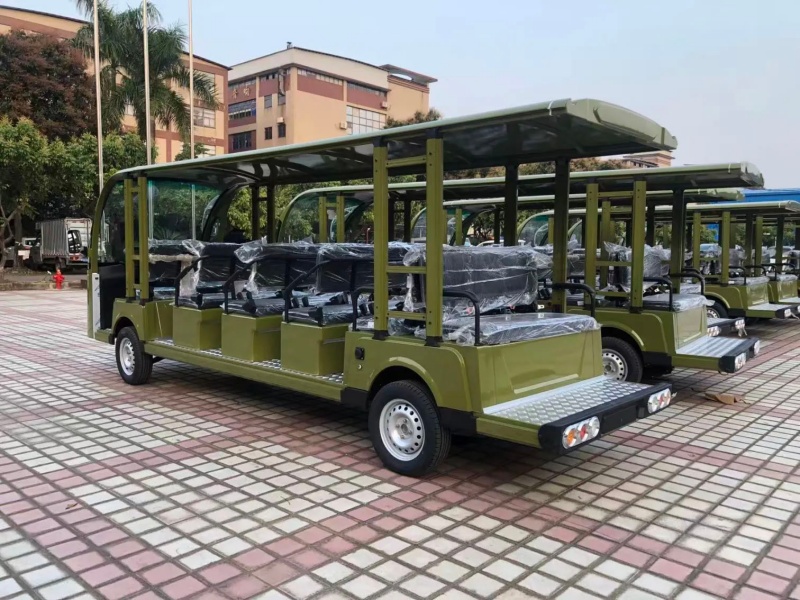
The electric vehicle market is no longer defined by basic mobility alone. Buyers now expect longer range, safer operation, easier maintenance, better passenger comfort, and stronger brand differentiation, especially in sightseeing buses, golf carts, utility EVs, and other low-speed electric vehicles.
For OEM buyers, this means the real value is not just in the vehicle body, but in the engineering choices behind it. BorCart's focus on battery systems, chassis design, controller logic, and manufacturability gives overseas brands and distributors a practical advantage when they need scalable, configurable electric vehicles for different markets.
A smarter sightseeing bus is not just an electric vehicle with seats added. It is a purpose-built platform designed around stability, passenger comfort, energy efficiency, and operational reliability.
At the product level, that usually means:
- A low and balanced center of gravity.
- Efficient electric drivetrain tuning.
- Safe and intuitive passenger access.
- Modular seat layouts for tourism, campus, resort, or community use.
- Parts that are easier to service and replace.
For international buyers, the biggest advantage of this approach is consistency. A well-engineered sightseeing bus reduces downtime, simplifies fleet operations, and supports a better user experience across multiple seasons and operating conditions.
One of the most important engineering decisions in any electric sightseeing bus is the battery system. BorCart's OEM approach emphasizes 51.2V lithium battery architecture because it offers a strong balance of energy density, charging speed, weight reduction, and long-term usability.
Compared with older lead-acid systems, lithium batteries typically support faster charging, more consistent output, and lower maintenance demands. That matters in commercial sightseeing operations where vehicles must return to service quickly and operate predictably throughout the day.
| Item | Conventional lead-acid system | 51.2V lithium system |
|---|---|---|
| Weight | Heavier | Lighter |
| Charging speed | Slower | Faster |
| Energy consistency | Drops during use | More stable output |
| Maintenance | Higher | Lower |
| Service life | Shorter | Longer |
A battery management system is also essential. It helps protect against overcharging, overheating, and uneven cell behavior, which supports safety and prolongs usable life in real-world fleet conditions.
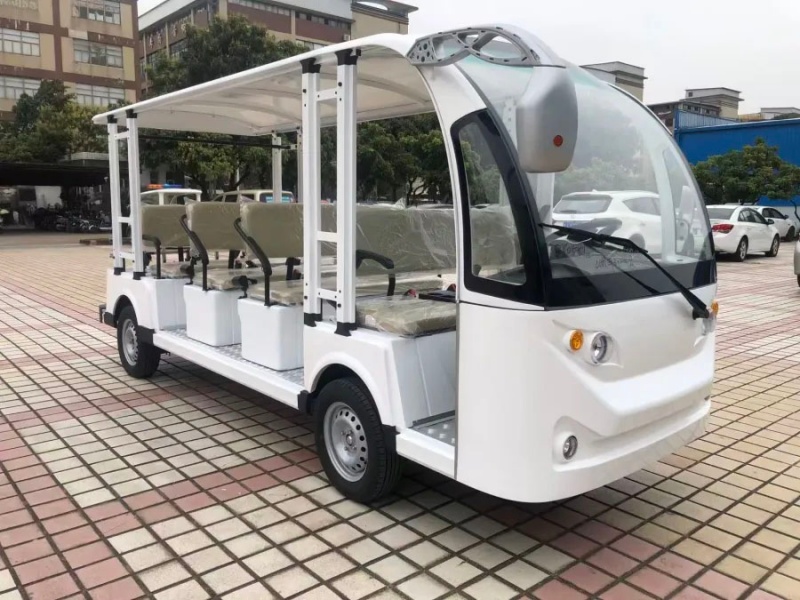
The motor is where engineering becomes tangible for passengers and operators. In a sightseeing bus, the ideal system should deliver smooth acceleration, dependable hill-climbing performance, and quiet operation that suits tourism, resort, and community environments.
A well-calibrated AC drive system also improves driving comfort. It creates steadier torque delivery than a rough low-end setup, which matters when passengers are boarding, unloading, or riding on mixed terrain.
Regenerative braking adds another layer of efficiency. It helps recover energy during deceleration, which can improve range and reduce brake wear over time. For fleets that stop frequently, that feature can translate into lower operating costs and better uptime.
For sightseeing buses, passenger safety starts with the structure. The chassis should be engineered for load balance, structural rigidity, and predictable handling, especially when the vehicle is carrying multiple riders on uneven roads or resort paths.
Suspension tuning also matters more than many buyers realize. A bus that rides softly but remains controlled is easier for passengers to enjoy and easier for operators to trust. Good suspension reduces vibration, supports traction, and helps the vehicle stay comfortable during daily use.
Lighting, seat belts, mirrors, reflectors, and braking systems should also be treated as core engineering features, not optional extras. In many markets, low-speed vehicle rules require specific safety equipment, so OEM buyers need a supplier that understands export compliance from the start.
BorCart's OEM value is not just that it manufactures electric vehicles. It is that it can adapt those vehicles for different brands, market segments, and use cases without losing engineering discipline.
Typical OEM customization options include:
- Body styling and brand identity.
- Seating capacity and cabin layout.
- Battery capacity and charging configuration.
- Color, trim, and interior material choices.
- Lighting, dashboards, and control interfaces.
- Region-specific safety and regulatory features.
This flexibility helps wholesalers and brand owners launch faster, reduce sourcing complexity, and build a more differentiated product line. It also supports a better buyer experience because the end product feels tailored rather than generic.
If you are evaluating a sightseeing bus OEM partner, use a simple decision framework. The best suppliers should be able to explain not only what they produce, but how and why they produce it.
1. Ask for full battery specifications, including BMS protection details.
2. Review chassis structure, suspension type, and braking configuration.
3. Confirm export compliance support for your target market.
4. Request customization options for branding and seating layout.
5. Evaluate serviceability, spare parts access, and lead times.
6. Check whether the supplier can support long-term OEM collaboration.
A supplier that answers these questions clearly is usually better prepared for global B2B work than one that only promotes product images.
The sightseeing bus category is evolving quickly because buyers want quieter vehicles, lower operating costs, and more flexible fleet configurations. At the same time, the market is demanding more proof: real engineering, clearer specifications, and stronger after-sales support.
That is why technical content and product pages now play a bigger role in B2B sales. Buyers often research long before they contact a supplier, so the website must help them compare options, understand risks, and feel confident in the manufacturer's capabilities.
For OEM exporters, this means your content should not only describe features. It should explain the operational benefit of those features in plain language, with enough specificity to support engineering, procurement, and purchasing decisions.
BorCart is positioned to serve foreign brand owners, wholesalers, and manufacturers who need a dependable partner for sightseeing buses, electric vehicles, and automotive components. Its strength lies in combining manufacturing capability with customization, export-oriented thinking, and a clear understanding of commercial mobility needs.
This matters because OEM buyers do not just buy a vehicle. They buy a production process, a quality standard, and a delivery promise. When those three elements are aligned, the partnership becomes easier to scale and easier to trust.
If your business needs an OEM sightseeing bus manufacturer that can support custom electric vehicles, branded fleet solutions, and export-focused production, BorCart is ready to discuss your project. Contact the team to request specifications, customization options, and a quotation tailored to your market.
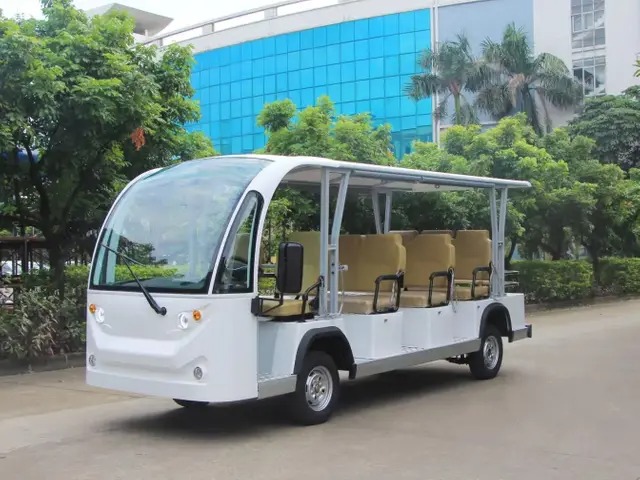
A sightseeing bus is used for tourism, resort transport, campus mobility, community circulation, and other short-distance passenger transport needs.
Lithium batteries are preferred because they are lighter, charge faster, and generally offer better long-term efficiency than lead-acid systems.
Yes. BorCart's OEM model supports branding, seating layouts, battery options, styling changes, and market-specific configuration needs.
Regenerative braking helps recover energy during slowing down, improves efficiency, and reduces brake wear in stop-and-go use cases.
They should check battery specs, compliance support, chassis quality, customization depth, spare parts availability, and long-term service capability.
No. Requirements vary by region, so OEM buyers should confirm lighting, seat belt, braking, and certification needs for each target market.
1. Google Search Central — Creating Helpful, Reliable, People-First Content: [https://developers.google.com/search/docs/fundamentals/creating-helpful-content]
2. Google Search Central — E-E-A-T update overview: [https://developers.google.com/search/blog/2022/12/google-raters-guidelines-e-e-a-t]
3. Windmill Strategy — The Anatomy of a High-Performing B2B Industrial Website: [https://www.windmillstrategy.com/anatomy-high-performing-b2b-industrial-website/]
4. Altitude Marketing — 6 Strategies to Optimize UX for B2B Manufacturing Websites: [https://altitudemarketing.com/blog/ways-to-optimize-ux-for-manufacturing-websites/]
5. Transports Canada — Safety standards for vehicles: [https://tc.canada.ca/en/road-transportation/safety-standards-vehicles-tires-child-car-seats/safety-standards-vehicles]
6. TEKO EV source article used as the structural and product basis: [https://tigongolfcarts.com/inside-teko-ev-the-engineering-secrets-behind-smarter-electric-vehicles/]


