


Views: 209 Author: BorCart Publish Time: 2026-07-03 Origin: Site


Content Menu
● Environmental Footprint – Why Electric Offroad Golf Carts Win in Protected Areas
>> Zero Tailpipe Emissions and Air Quality
>> Noise Disturbance and Wildlife Behavior
>> Trail Impact, Weight Distribution and Ground Clearance
>> Lifecycle Sustainability and Battery Technology
● Operational Performance – Can Offroad Golf Carts Replace Dune Buggies?
>> Speed, Torque and Climbing Ability
>> Range, Charging and Daily Schedules
>> Payload, Seating and Modular Configurations
● Safety, Compliance and Visitor Experience
>> Regulatory Compliance and Road Legality
>> Perceived Safety and Comfort for Non‑Expert Drivers
>> UX Perspective – How the Vehicle Shapes the Tour
● Practical Selection Framework – When to Choose Offroad Golf Carts vs Dune Buggies
● Expert Case Insight – How Operators Use Offroad Golf Carts in Protected Zones
>> Eco‑Lodges and Wildlife Sanctuaries
>> Research Stations and Conservation Teams
>> Golf‑Adjacent Wildlife Corridors
● OEM Perspective – How BorCart Configures Offroad Golf Carts for Protected Areas
>> Core Offroad Specifications for Low‑Impact Use
>> Battery and Charging Strategy for Fleets
>> Branding, UX and Eco‑Positioning
● Implementation Guide – Deploying Offroad Golf Carts in a Protected Wildlife Area
>> Step‑by‑Step Deployment Plan
● Clear CTA – Partner with BorCart for Low‑Impact Offroad Golf Carts
>> FAQs About Offroad Golf Carts vs Dune Buggies in Wildlife Areas
If you manage wildlife reserves, eco‑lodges or outdoor attractions, you already know the tension between access and protection. Visitors want to get closer to nature, while conservation teams must minimize noise, emissions and trail damage. Over the past decade, offroad electric golf carts have quietly become a preferred solution in many protected areas, often replacing traditional dune buggies and gas‑powered side‑by‑sides. In this article, I draw on hands‑on experience with electric offroad vehicles and OEM manufacturing projects to explain when an offroad golf cart is the smarter, lower‑impact choice—and how to specify the right vehicle for your terrain and regulatory context. [borcart.en.made-in-china]
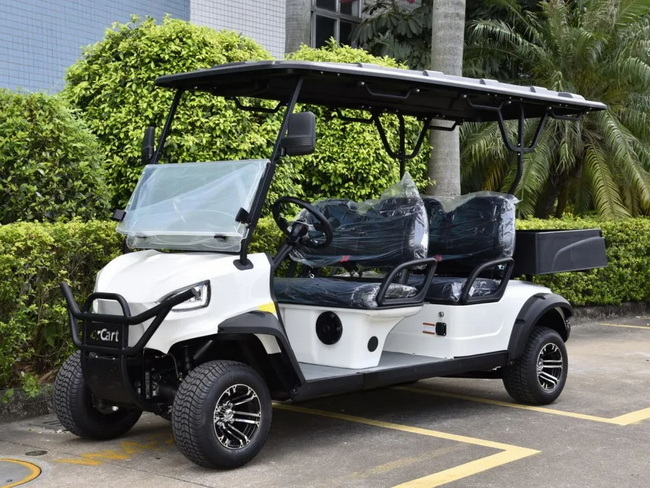
- Offroad golf cart: Low‑speed electric vehicle (LSV) optimized for mixed terrain, typically 4–6 seats, lifted suspension and all‑terrain tires. [zh.borcartev]
- Dune buggy: Lightweight recreational vehicle designed for sand dunes and rough trails, usually with higher speed and gas engines. [motoelectricvehicles]
- Protected wildlife areas: National parks, conservation reserves, private sanctuaries and eco‑lodges with regulated vehicle access. [borcart]
From a buyer's perspective, the core comparison is not "fun vs boring"; it is compliance vs risk—whether your chosen platform can meet noise, emission and trail‑impact limits without sacrificing operational efficiency. [zh.borcartev]
Most wildlife managers I work with start with one non‑negotiable requirement: minimal disturbance to animals and habitats. Here, electric offroad golf carts have clear advantages over typical dune buggies in four dimensions: emissions, noise, soil impact and lifecycle sustainability. [borcart]
Traditional dune buggies and gas‑powered UTVs rely on internal combustion engines that emit carbon dioxide, nitrogen oxides and particulate matter. In enclosed valleys or forested corridors, these emissions accumulate, degrading local air quality and conflicting with conservation goals. By contrast, electric golf carts run on battery‑powered motors and produce no tailpipe emissions during operation, which aligns with low‑carbon tourism policies and ESG reporting. [cn.shgolfcart]
Noise is often more immediately disruptive than emissions. Gas dune buggies generate engine roar and exhaust noise that can alter wildlife behavior—causing flight responses in birds, stress in mammals and avoidance of otherwise suitable habitat near roads and trails. Electric offroad golf carts operate with a near‑silent drivetrain, so the primary sounds are tire‑to‑ground contact and low‑speed motor whine. This quieter profile allows rangers and guides to approach observation points without startling animals, which improves both animal welfare and visitor satisfaction. [zh.borcartev]
A common concern from reserve managers is whether a lifted golf cart can handle uneven ground without rutting trails. Modern offroad golf carts, such as BorCart's ET series, balance moderate ground clearance (around 170 mm) with wide tire contact and tuned suspension to reduce localized pressure on soft soil. Dune buggies—especially performance‑oriented models—often use narrower, more aggressive tires and higher speeds, which can lead to deeper ruts, exposed roots and accelerated erosion on multi‑use paths. On low‑speed eco‑tour routes and maintenance trails, the golf cart's more controlled acceleration and braking profile helps keep surfaces stable over time. [zh.borcartev]
Environmental footprint is not only about what happens on the trail; it also involves production and end‑of‑life handling. Electric carts increasingly use advanced lead‑acid or lithium‑ion battery packs designed for high cycle life, with established recycling channels for spent units. Gas dune buggies rely on engine oils, filters and fuel systems that generate consumable waste over the vehicle's lifetime. For operators pursuing certifications or eco‑labels, choosing electric offroad carts simplifies documentation of emissions and waste management across the fleet's lifecycle. [redway-tech]
A fair buyer question is: "Do offroad golf carts have enough power, range and capability to support real‑world operations, not just sightseeing?" In my experience with utility fleets and resort deployments, the answer is "yes" for most protected‑area use cases, as long as you specify the right configuration. [borcart]
Dune buggies are built for speed, often exceeding 40–50 km/h on open trails. Protected wildlife areas rarely allow those speeds; many enforce 15–25 km/h limits for safety and noise control. Offroad golf carts such as BorCart's 4‑seater ET models are tuned for maximum speeds around 25 km/h, with torque curves optimized for low‑speed hill climbing and obstacle clearance. This combination is ideal for steep but regulated trails, where steady torque matters more than top speed. [motoelectricvehicles]
Electric fleet buyers typically structure routes around charging windows and battery capacity. With modern packs and efficient drivetrains, offroad golf carts can cover typical half‑day or full‑day eco‑tour loops on a single charge, especially when routes are below 60–80 km and speeds are moderate. Dune buggies using gas engines have longer refuel range, but they introduce fuel storage, transport and spill risks in sensitive habitats. Many eco‑lodges now install centralized charging stations at depots or trailheads, making golf carts the more logistically predictable choice. [redway-tech]
Protected areas rarely move only tourists; they also move equipment, feed, research gear and maintenance tools. Offroad golf carts are available in 2‑ to 8‑seat configurations, with options for rear cargo beds, roof racks and tow hitches, making them flexible for mixed passenger‑and‑payload missions. Dune buggies tend to prioritize driver and passenger ergonomics over cargo capacity in their standard designs, although some models add small racks or trailers. For long‑term fleet planning, carts offer a more modular platform: the same chassis can be configured as a tour cart, utility hauler or ranger vehicle with different bodies and accessories. [zh.borcartev]
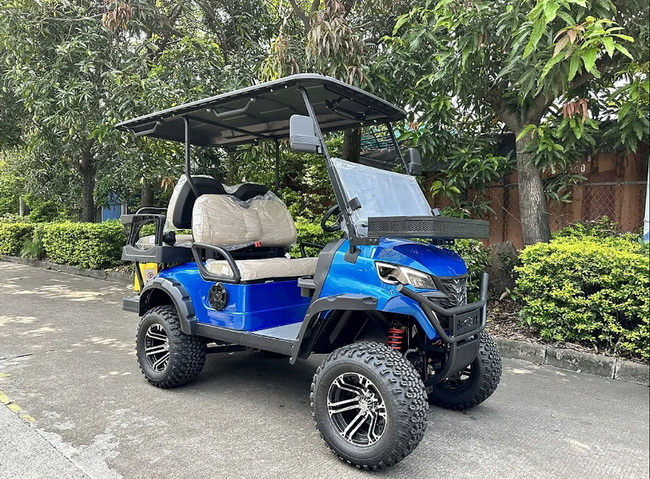
Regulation and guest experience are where offroad golf carts often outperform dune buggies for protected environments. [borcart]
Many conservation areas include internal roads that require vehicles to meet low‑speed vehicle (LSV) standards for lights, braking and signaling. Offroad golf carts are commonly designed to comply with these regulations, making them easier to register and insure on mixed‑use routes. Dune buggies, especially custom or performance builds, may face more complex homologation processes and noise or emission testing. For park authorities, a standardized electric cart platform simplifies rule enforcement and auditing. [golfs-cart]
From user reviews and on‑site feedback, non‑expert drivers—families, older visitors, school groups—often report feeling safer in golf carts than in open‑frame dune buggies. Carts emphasize upright seating, stable handling and controlled acceleration, which reduces anxiety on narrow trails and near drop‑offs. Dune buggies, while thrilling, can intimidate inexperienced drivers and may encourage risky behavior when speed is not strictly controlled. For guided tours and shuttle operations, the calm, predictable driving experience of an offroad golf cart contributes directly to higher satisfaction scores. [motoelectricvehicles]
As a UX specialist, I often examine how the vehicle itself shapes the emotional arc of a tour. Electric offroad golf carts support quiet conversations, clear guide narration and undisturbed listening to natural sounds—crucial for birding tours, photography trips and educational programs. Dune buggy tours create an adrenaline‑oriented experience with more noise and vibration, suitable for adventure parks but less aligned with contemplative wildlife observation. For brands positioning themselves as eco‑luxury or conservation‑first, offroad golf carts simply tell a more consistent story. [borcart]
To help buyers make decisions, the table below summarizes typical conditions in protected areas and the recommended vehicle type:
| Condition / Priority | Recommended platform | Rationale |
|---|---|---|
| Strict noise limits near nesting or den sites | Offroad electric golf cart | Quiet drivetrain, reduced wildlife disturbance |
| High‑speed recreational dunes outside core habitat | Dune buggy | Designed for speed and dynamic handling |
| Mixed passenger and cargo on regulated park roads | Offroad electric golf cart | LSV compliance, modular seating and cargo options |
| Short eco‑tour loops with centralized charging | Offroad electric golf cart | Adequate range, low emissions, simple charging logistics |
| Remote, long‑distance sand‑only routes | Dune buggy or UTV | Extended fuel range, specialized sand performance |
In practice, many operators adopt a hybrid fleet: offroad golf carts for core protected zones and dune buggies limited to designated adventure areas. [borcart]
Across projects with wildlife parks and golf‑adjacent resorts, several patterns recur in how offroad golf carts are deployed. [borcart]
Eco‑lodges leading sunset or dawn wildlife drives increasingly rely on electric carts along predefined trails. Their priorities include quiet operation, reduced fuel logistics, and a clear narrative of sustainability to guests, often highlighted in marketing materials and ESG reports. In these use cases, dune buggies are either banned from core zones or restricted to peripheral adventure circuits to avoid conflicting signals about environmental responsibility. [motoelectricvehicles]
Field biologists and rangers use offroad carts to move between camera traps, monitoring stations and observation blinds. The ability to carry equipment while remaining silent near study sites is a major advantage, as engine noise can bias animal behavior data. Operators also appreciate the lower maintenance burden: electric drivetrains require fewer routine services than combustion engines, reducing downtime in remote locations. [zh.borcartev]
Many golf courses integrate ponds, woodland edges and wildlife corridors into their layouts. Course managers now choose electric carts not only for player transport, but also for habitat inspection and light maintenance around sensitive areas. The crossover between golf‑course carts and offroad wildlife carts makes OEM customization—lift kits, tires, lighting—particularly valuable for brands like BorCart that serve both sectors. [borcart.en.made-in-china]
As a Chinese OEM manufacturer, BorCart works with overseas brands, wholesalers and producers to customize offroad golf carts to local terrain and regulations. [borcart.en.made-in-china]
Typical configuration for a protected‑area offroad cart includes: [zh.borcartev]
- Moderate lift with around 170 mm ground clearance to clear roots and rocks without raising center of gravity excessively. [zh.borcartev]
- All‑terrain tires with balanced tread to maintain traction while minimizing rut formation. [zh.borcartev]
- Speed‑limited controller settings (often capped at 25 km/h) to comply with park rules. [zh.borcartev]
- LED lighting and signaling for dawn/dusk operation and road‑legal requirements. [borcart]
OEM buyers can further specify seating layouts (2, 4 or 6 passengers), modular cargo beds or specialized racks for research equipment or maintenance tools. [borcart]
BorCart and similar manufacturers support both traditional deep‑cycle batteries and advanced lithium packs, depending on buyer budgets and expected duty cycles. For fleets in protected areas, the typical strategy is to size capacity to daily routes plus a safety margin, and to centralize charging at depots or maintenance hubs rather than scattered outlets. Brands can OEM‑label chargers and monitoring systems to integrate with their own fleet‑management platforms. [redway-tech]
From a UX and marketing standpoint, the vehicle becomes part of the brand story guests experience. OEM projects often involve color schemes, logo placement and interior design choices that reinforce eco‑tourism positioning: natural hues, quiet interiors and educational graphics about conservation and low‑impact mobility. Compared with dune buggies, this allows operators to visually signal their commitment to sustainability from the moment guests board the vehicle. [motoelectricvehicles]
For operators evaluating a transition from dune buggies to offroad golf carts, the following practical steps help ensure a smooth rollout. [borcart]
1. Map routes and impact zones
Identify existing trails, sensitive habitats and visitor flow patterns. [borcart]
2. Define vehicle roles
Separate roles into tour vehicles, utility haulers, ranger carts and emergency response units. [borcart]
3. Set performance and compliance specs
Establish requirements for speed limits, range, payload and lighting aligned with local regulations. [borcart]
4. Engage OEM partners
Work with manufacturers like BorCart to configure offroad golf carts with the right suspension, tires, batteries and accessories. [borcart.en.made-in-china]
5. Pilot and monitor
Run a pilot phase to gather ranger and visitor feedback on noise, comfort and wildlife responses, then adjust configurations as needed. [borcart]
- Train guides to leverage quiet operation—encouraging listening and observation rather than constant engine noise. [borcart]
- Design seating and sightlines so every passenger has unobstructed views, reinforcing the premium experience. [borcart]
- Communicate the low‑impact nature of electric carts in tour introductions, linking the vehicle choice to the conservation mission. [borcart]
If your brand, resort or wildlife reserve is evaluating the transition from dune buggies to offroad golf carts, now is the ideal time to design a custom, low‑impact fleet. As an experienced OEM manufacturer of golf carts and electric utility vehicles, BorCart can help you specify terrain‑ready, compliant configurations that align with your conservation, UX and branding goals. Reach out to discuss your routes, regulations and visitor expectations, and co‑create an offroad golf cart solution that protects wildlife while elevating every tour. [borcart.en.made-in-china]
Q1: Are offroad golf carts powerful enough for hilly wildlife trails?
A1: Properly configured offroad golf carts with tuned controllers and suitable gear ratios deliver sufficient torque for typical park gradients, even when carrying multiple passengers and equipment. [zh.borcartev]
Q2: Do electric golf carts really make a difference for wildlife disturbance?
A2: Yes. Their low noise and zero tailpipe emissions significantly reduce stress and habitat disruption compared to gas dune buggies, especially near sensitive nesting and feeding areas. [zh.borcartev]
Q3: What is the main limitation of offroad golf carts compared with dune buggies?
A3: Offroad golf carts are speed‑limited and optimized for controlled trails, so they are less suitable for high‑speed dune driving or very long, remote sand routes without charging infrastructure. [motoelectricvehicles]
Q4: How can operators manage charging in remote protected areas?
A4: Most fleets centralize charging at lodges, ranger stations or maintenance depots and design route lengths within daily capacity, often using higher‑capacity or lithium packs for extended loops. [redway-tech]
Q5: Can BorCart provide branded offroad golf carts for international eco‑tourism operators?
A5: Yes. As a Chinese OEM manufacturer serving overseas brands and wholesalers, BorCart customizes vehicle specs, exterior styling and branding elements to match local regulations and brand positioning. [borcart.en.made-in-china]
1. BorCart – Company overview and product range for electric golf carts and buggies. [https://borcart.en.made-in-china.com] [borcart.en.made-in-china]
2. BorCart – Different Types of Electric Vehicles: An In‑Depth Guide for Golf Carts, Low‑Speed and Utility EVs. [https://www.borcart.com/different-types-of-electric-vehicles-an-in-depth-guide-for-golf-carts-low-speed-and-utility-evs.html] [borcart]
3. BorCart – ET New Off Road 4 Seater Golf Cart specifications. [http://zh.borcartev.com/borcart-factory-et-new-off-road-4-seater-golf-cart-product/] [zh.borcartev]
4. BorCart – Top Sustainable Uses of Electric Buggies. [https://www.borcart.com/top-sustainable-uses-of-electric-buggies.html] [borcart]
5. BorCart – Gas vs Electric Golf Carts: Which is Better for Your Game? [http://zh.borcartev.com/news/gas-vs-electric-golf-carts/] [zh.borcartev]
6. MotoEV – Hunting Golf Carts and Off‑Road Electric Outdoor Vehicles. [https://www.motoelectricvehicles.com/vehicles/vehicles_list/golf-carts-outdoors/] [motoelectricvehicles]
7. Florescence New Energy – NEV Golf Cart manufacturer. [https://www.golfs-cart.com] [golfs-cart]
8. Yongkang Shuanghui – Gas vs Electric Golf Carts guidance (Chinese). [http://cn.shgolfcart.com/newsinfo-which-should-you-choose-gas-golf-carts-vs-electric-golf-carts.html] [cn.shgolfcart]
9. Redway – EZ Go golf cart battery and range insights. [https://www.redway-tech.com/zh-CN/2025/02/21/] [redway-tech]


