


Views: 242 Author: BorCart Publish Time: 2026-07-07 Origin: Site


Content Menu
● Lifted Offroad Cart vs 4x4 Truck: Which Handles Tight, Wooded Trails Better?
● What Do We Mean by a "Lifted Offroad Cart" vs a "4x4 Truck"?
● Key Dimensions: Why Size and Turning Radius Matter in Tight Woods
>> Typical Dimension Snapshot (Illustrative)
● Maneuverability on Narrow, Densely Wooded Trails
● Ground Clearance, Suspension and Ride Comfort Off‑Road
● Traction, Power and Climbing Ability
● Noise, Environmental Footprint and Trail Preservation
● Cargo, Passenger Capacity and Use‑Case Fit
● Ownership Cost, Maintenance and Fleet Management
● Real‑World Use Cases: When Each Platform Wins
● Expert Design Insights from a Golf Cart OEM
● Practical Selection Checklist: Lifted Offroad Cart or 4x4 Truck?
● How BorCart Supports OEM Partners on Trail‑Optimized Carts
● Conclusion: Which Is Better Through Tight, Wooded Trails?
● Call to Action: Develop Your Own Trail‑Optimized Offroad Cart Line
● FAQs
When you leave paved roads and dive into narrow, densely wooded trails, both a lifted offroad golf cart and a traditional 4x4 truck can get you there, but they perform very differently. From a manufacturer and hands‑on trail user perspective, a purpose‑built offroad cart often delivers more precise maneuverability and quieter, lower‑impact operation, while a 4x4 truck wins on highway comfort and heavy payloads. [borcart]
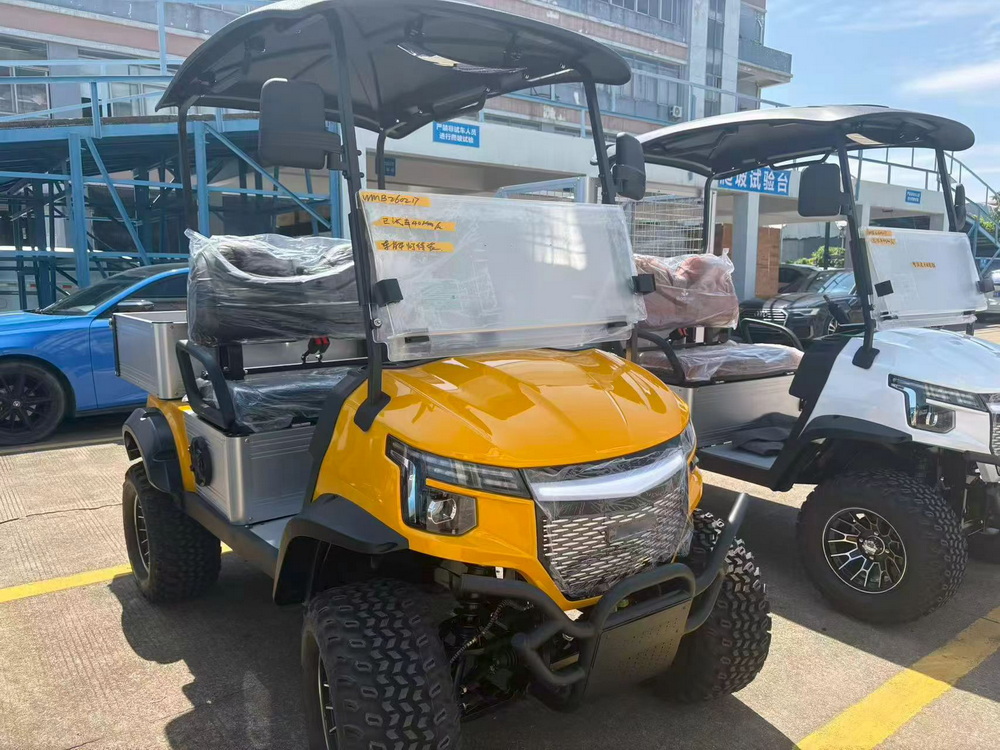
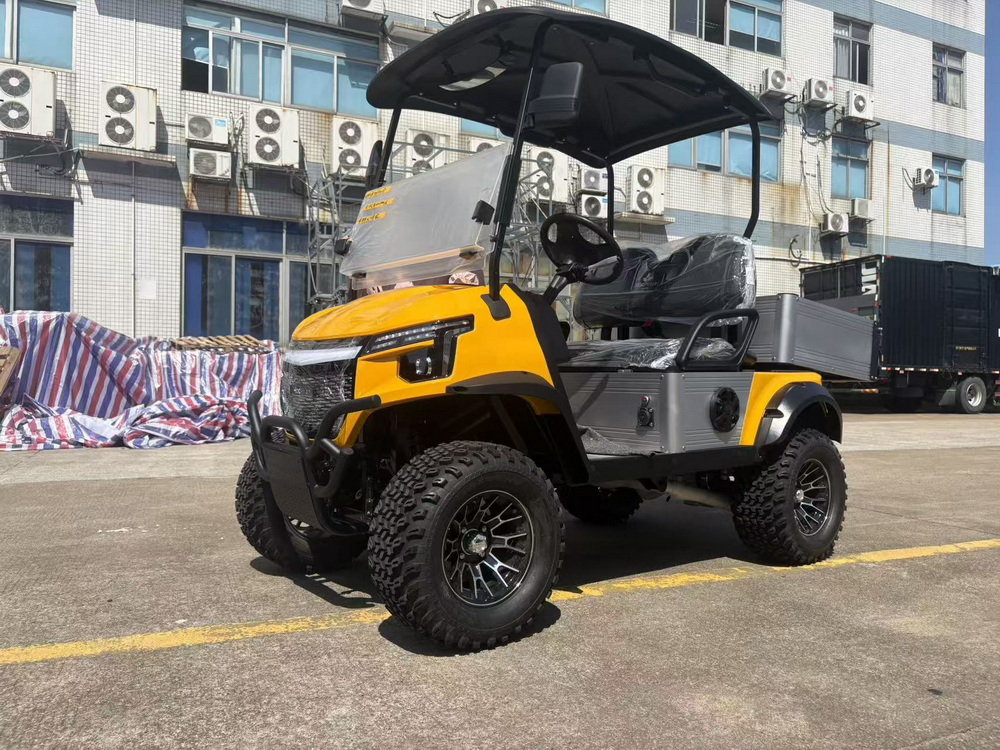
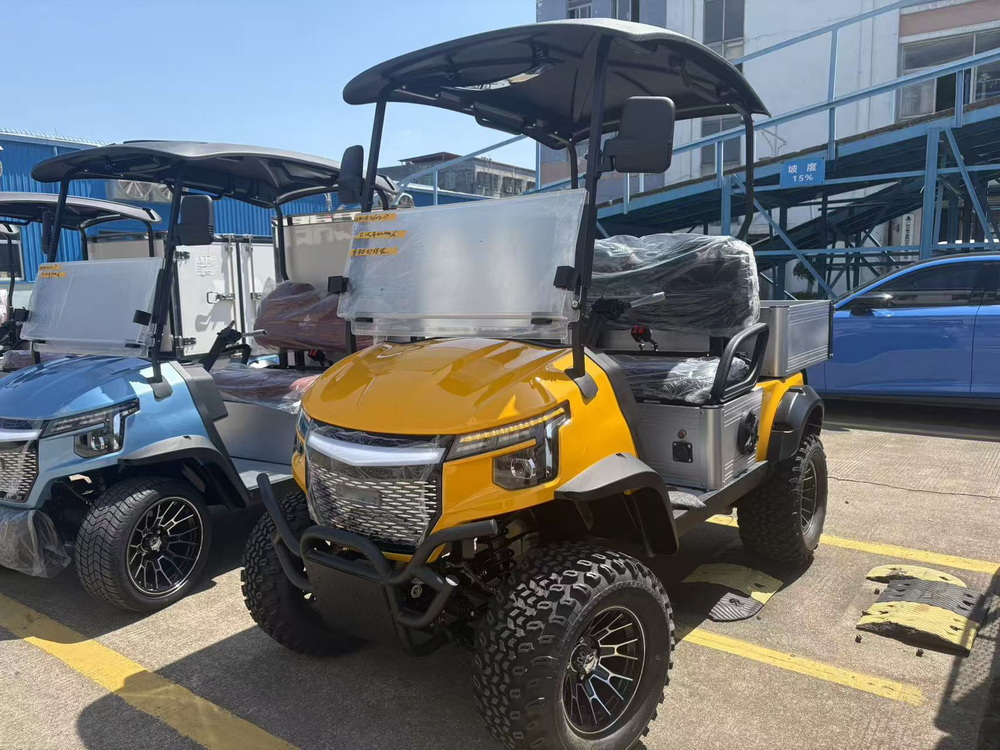
A lifted offroad cart in this context is an electric or hybrid golf‑cart‑based vehicle with increased ground clearance, upgraded suspension, and off‑road tires, designed for hunting, trail exploration, resort use, or utility work beyond the golf course. A 4x4 truck is a road‑legal pickup with four‑wheel drive, built primarily for mixed highway and offroad use, often with a ladder frame, high‑torque ICE powertrain, and larger overall dimensions. [zh.borcartev]
From our experience as an OEM manufacturer of electric golf carts and utility vehicles, these two platforms are engineered around different design priorities: compact agility and low‑speed control for the offroad cart versus high‑speed stability and towing for the truck. That fundamental design divergence shows up clearly when you enter constricted, tree‑lined trails with soft soil, roots, and tight turns. [zh.borcartev]
On narrow, wooded trails, vehicle footprint is often more critical than raw power. As a manufacturer, we pay particular attention to:
- Overall length and width
- Minimum turning radius
- Ground clearance
- Approach and departure angles
Typical lifted offroad carts are significantly narrower and shorter than full‑size pickups, with turning radii in the 3.0–4.0 m range and curb weights often under 500–700 kg, depending on configuration. By contrast, many 4x4 trucks exceed 5.3 m in length, 1.9–2.0 m in width, and 2,000+ kg in weight, with wider turning circles that become restrictive on switchbacks and single‑track‑style paths. [made-in-china]
| Vehicle type | Length (approx.) | Width (approx.) | Min turning radius | Curb weight (approx.) |
|---|---|---|---|---|
| Lifted offroad golf cart | 2.5–3.3 m (zh.borcartev) | 1.3–1.4 m (zh.borcartev) | 3.0–4.0 m (zh.borcartev) | 0.4–0.7 t (zh.borcartev) |
| Mid‑size 4x4 truck | 5.3–5.9 m (borcart) | 1.9–2.0 m (borcart) | 6.0–7.0 m+ (borcart) | 2.0–2.7 t+ (borcart) |
In dense woodlands with tight trees, that narrower profile and smaller turning radius often mean the difference between a clean one‑shot turn and multiple‑point maneuvering that tears up the surface and wastes time.
From real‑world use cases with hunting outfitters, estates, resorts and utility fleets, low‑speed maneuver control is where lifted offroad carts excel. Electric drivetrains deliver instant torque with fine throttle modulation, and the lower mass reduces momentum, making it easier to correct line errors without sliding or digging in. [borcart.en.made-in-china]
On technical single‑lane forest tracks, a properly lifted cart can:
- Thread between trees without mirror‑to‑tree contact
- Execute tight hairpins and switchbacks with fewer multi‑point turns
- Traverse soft, root‑covered soil with less rutting and compaction
- Stop and restart on uneven surfaces more predictably
A 4x4 truck, even with lockers and off‑road tires, tends to feel bulkier in close quarters. The steering input window is narrower, and any mistake translates into body contact risk, underbody hits, or trail damage because of the higher weight and longer wheelbase. [borcart]
Many buyers assume a 4x4 truck is always superior in ground clearance, but modern lifted offroad carts can achieve impressive clearances once fitted with long‑travel suspension and larger‑diameter all‑terrain tires. The key difference is in suspension tuning and the type of terrain each platform expects to see. [made-in-china]
- Offroad carts: Suspensions are usually tuned for low‑to‑medium speed trail use, with softer initial travel that absorbs roots, rocks, and cross‑ruts without throwing passengers around. [made-in-china]
- 4x4 trucks: Suspensions are designed for mixed highway and offroad, so damping is a compromise between on‑road stability and offroad articulation, which can feel harsher at crawling speeds in very broken terrain.
When navigating dense, slow‑speed woodland, occupants often experience less fatigue in a well‑set‑up offroad cart because of the inherently lower speed envelope, reduced cabin noise, and more open cabin design suitable for frequent stop‑and‑go tracking, scouting, or maintenance tasks. [zh.borcartev]
From an engineering point of view, a 4x4 truck still has the edge in raw power, towing, and gradeability on long, steep climbs, especially when fully loaded or operating at altitude. High‑displacement engines, low‑range transfer cases, and locking differentials are designed to sustain high loads for extended periods.
However, for typical short, technical inclines inside wooded areas, high peak torque at low speeds from electric motors in offroad carts, combined with aggressive offroad tires and lower total weight, yields surprisingly strong performance. The cart can climb and descend tight slopes with more granular control because every throttle or brake input produces smaller, more predictable reactions. [made-in-china]
For operators moving equipment, tools, or game within a forest property rather than towing multi‑ton trailers across regions, the offroad cart's usable trail power–that is, controllable torque in first 0–20 km/h–often matters more than the truck's maximum rated horsepower.
On narrow, densely wooded trails, noise and ground impact are not just comfort factors; they are operational constraints. Landowners, hunting operations, and eco‑tourism businesses frequently prioritize low acoustic and environmental footprints.
Electric offroad carts operate with near‑silent motors, generating minimal engine noise and vibration, which is ideal for:
- Wildlife observation and game management
- Early‑morning or late‑night operations near lodges or residences
- Sensitive conservation areas where noise regulations apply
Their lower weight also reduces soil compaction, root damage, and rut depth compared with multi‑ton trucks, especially in wet seasons. In contrast, even well‑driven 4x4 trucks tend to leave deeper tracks and generate more noise from engine, fan, exhaust, and larger tire contact patches. [borcart.en.made-in-china]
From both fleet‑management and OEM design perspectives, payload and seating are the areas where 4x4 trucks usually outperform carts, but offroad carts are closing the gap for specific use cases.
Typical 4x4 trucks:
- Higher rated payload and towing capacity
- Enclosed cabs for weather protection
- Better suited for long‑distance highway plus offroad mixed routes
Modern offroad carts, especially multi‑row or cargo‑bed variants, provide:
- 2–8 passenger configurations for group transport on site [borcart]
- Utility beds or racks for tools, gear, or harvested game
- Modular OEM/ODM options, such as custom bed dimensions, seating layouts, and accessory mounting points tailored to each fleet's tasks [borcart.en.made-in-china]
On short‑range, trail‑only operations inside a property, a lifted offroad cart often carries the necessary gear and passengers comfortably without the cost or bulk of a full‑size truck. For mixed public‑road plus offroad logistics or heavy hauling, the 4x4 truck remains the practical choice.
Looking at total cost of ownership as a manufacturer serving global OEM clients, we see distinct patterns between offroad carts and trucks:
- Acquisition cost: Carts with electric drivetrains and lifted offroad packages are typically significantly less expensive to purchase than new 4x4 trucks.
- Operating cost: Electric carts have lower energy costs per km, fewer moving powertrain parts, and simpler scheduled maintenance routines. [zh.borcartev]
- Maintenance skill level: Many routine service tasks on carts can be handled by in‑house technicians with basic training, while truck maintenance and diagnostics often require specialized equipment and OEM dealer support.
For B2B buyers running resorts, hunting operations, industrial sites, or landscaping fleets, deploying a cart‑first strategy for internal trail mobility can dramatically reduce per‑hour operating costs, preserving 4x4 trucks for tasks that truly require their capabilities.
Drawing on field feedback from international partners and fleet customers, we can generalize the best‑fit scenarios as follows:
- Choose a lifted offroad cart when:
- Trails are narrow, winding, and forested
- Quiet operation and low ground impact are critical
- Trips are short‑range, within a single property
- You prioritize maneuverability and low operating cost
- Choose a 4x4 truck when:
- You need highway legality and long‑distance transport
- You regularly tow heavy trailers or haul high‑mass loads
- Terrain includes long, steep climbs with poor surfaces
- You require full cab protection and higher top speeds
In many professional environments, the optimum configuration is mixed fleets, using carts as agile "last‑mile" vehicles inside wooded or constrained spaces and trucks for regional transport and heavy logistics.
As an OEM manufacturer supplying customized electric golf carts, utility vehicles, sightseeing buses and offroad configurations to brand owners and distributors worldwide, we design vehicles specifically for maneuverability, stability, and safety in challenging terrain. When adapting platforms for narrow, densely wooded trails, we focus on: [borcart]
- Optimized wheelbase‑to‑track ratio for stability on side slopes
- Raised but carefully balanced center of gravity under lifted suspensions
- Reinforced frames and underbody protection in high‑impact areas
- High‑torque, low‑noise electric drivetrains and sealed components for wet, muddy environments
For overseas OEM/ODM partners, this means you can co‑develop lifted trail‑focused carts under your own brand, tuned to the exact trail profile, load patterns, and user expectations in your target markets. This product‑market fit is difficult to achieve by simply repurposing a standard 4x4 truck that was not engineered primarily for dense‑trail maneuvering.
Use the following practical checklist when choosing between a lifted offroad cart and a 4x4 truck for wooded‑trail operations:
1. Trail profile
- Are average trail widths closer to cart dimensions or truck dimensions?
2. Range and speed
- Do you need long‑distance road travel, or mostly intra‑property trips under 20–30 km per day?
3. Noise and environmental constraints
- Are you operating in wildlife areas, residential zones, or eco‑tourism sites?
4. Payload and towing
- How heavy is typical cargo, and do you tow trailers frequently?
5. Budget and cost per hour of use
- What is your acceptable cost per operating hour, including energy and maintenance?
6. Brand and customization strategy
- Do you need a highly customized platform with your own branding and accessories, or will a standard truck suffice?
If your answers emphasize tight trails, low noise, short ranges, and customized branding, a lifted offroad cart is usually the more efficient and user‑friendly choice. If you prioritize public‑road use and heavy logistics, the 4x4 truck remains indispensable.
For international brand owners, wholesalers, and manufacturers seeking to expand into the offroad and trail‑mobility segment, partnering with a specialized electric vehicle OEM allows you to:
- Bring to market private‑label lifted offroad carts tuned for forests, hunting grounds, farms, resorts, and industrial campuses [zh.borcartev]
- Define seat layouts, cargo configurations, suspension heights, lighting packages, and accessory systems based on your customer insights
- Align vehicle performance with your brand's positioning (for example, silent eco‑trail exploration vs rugged, utility‑first offroad work)
By integrating your market knowledge with our manufacturing experience in electric golf carts and offroad derivatives, you can create differentiated products that outperform generic platforms on maneuverability, safety, and total cost of ownership in narrow, densely wooded trails.
When the central requirement is maneuverability through narrow, densely wooded trails, a lifted offroad cart, purpose‑built on a golf‑cart‑derived platform, generally delivers better line control, lower noise, and reduced environmental impact than a 4x4 truck, while still offering practical payload and passenger capacity for on‑site work. A 4x4 truck remains the more versatile solution for long‑distance mixed‑use routes, heavier towing, and public‑road travel, making it complementary rather than directly redundant.
For B2B buyers, fleet managers and outdoor‑industry brands, the most efficient strategy is often to deploy lifted offroad carts as agile, low‑impact trail vehicles, backed by 4x4 trucks for regional logistics and heavy‑duty assignments.
If you are a brand owner, wholesaler, or vehicle manufacturer looking to strengthen your product range in offroad trail mobility, now is the right time to explore a dedicated lifted offroad cart platform. By partnering with an experienced OEM focused on golf carts, utility vehicles, and sightseeing buses, you can create a customized, branded solution that outperforms generic 4x4 setups in narrow, wooded environments, both technically and commercially. [zh.borcartev]
Define your target use cases, required capacities, and branding strategy, then collaborate on a tailored lifted offroad cart solution that your customers will immediately recognize as purpose‑built for tight, densely wooded trails.
Q1. Are lifted offroad carts safe on steep, wooded trails?
Yes, when properly engineered with an appropriate wheelbase, track width, suspension geometry, and braking system, lifted offroad carts can operate safely on steep, wooded trails within their rated limits, especially at controlled speeds.
Q2. Can a lifted offroad cart replace a 4x4 truck entirely?
In most professional operations, carts complement rather than fully replace trucks; carts handle internal trail mobility and low‑impact tasks, while trucks continue to serve for long‑distance driving, heavy towing, and public‑road use.
Q3. How far can an electric offroad cart travel in a day?
Range depends on battery configuration, terrain, load, and driving style, but many modern electric carts comfortably cover typical intra‑property daily distances when properly specified for the use case.
Q4. What customization options are most valuable for B2B buyers?
Common priorities include seating layout, cargo bed design, suspension height, lighting and winch systems, weather protection, and brand‑specific styling or color schemes aligned to local market expectations.
Q5. How do maintenance needs compare between offroad carts and 4x4 trucks?
Electric offroad carts generally require less frequent and less complex maintenance than 4x4 trucks, with fewer moving powertrain parts and simpler service procedures suitable for in‑house technicians.
1. BorCart. "Offroad Golf Cart vs Electric Hunting Scooter: Group Expedition Stability vs Single‑Rider Maneuverability in Dense Brush." Available at: [https://www.borcart.com] [borcart]
2. BorCart. "Factory Custom Mini Electric Golf Carts Specifications." Available at: [http://zh.borcartev.com/factory-custom-2-4-6-seaters-mini-electric-golf-carts-product/] [zh.borcartev]
3. BorCart. "New 4 Wheel 4 Seater Golf Carts Electric Club Car Specifications." Available at: [http://zh.borcartev.com/new-4-wheel-4-seater-golf-carts-electric-club-car-product/] [zh.borcartev]
4. BorCart. "Golf Cart Truck vs Compact Tractor: Solving Last‑Mile Logistics in Large‑Scale Agricultural and Landscaping Operations." Available at: [https://www.borcart.com] [borcart]
5. Guangzhou Borcart Electric Vehicle Co., Ltd. "Company Profile – Golf Cart Manufacturer & OEM Supplier." Available at: [https://borcart.en.made-in-china.com/] [borcart.en.made-in-china]


