


Views: 268 Author: BorCart Publish Time: 2026-07-09 Origin: Site


Content Menu
● Understanding Utility Carts vs Specialized Hunting Carts
● Payload Capacity Fundamentals: What Really Matters
● Utility Cart Payload Capacity for Hauling Equipment
>> Typical Payload Ranges and Use Scenarios
>> Payload Distribution and Stability on Utility Carts
>> Operational Advantages for OEM Buyers
● Specialized Hunting Cart Payload Capacity for Game Recovery
>> Payload Requirements in Real Hunting Conditions
>> Load Handling Features for Hunters
>> From Group Expedition Stability to Solo Recovery Performance
● Direct Comparison – Payload Capacity and Use Cases
>> Payload Use Case Comparison Table
● Expert Perspective – How an OEM Manufacturer Like BorCart Approaches Payload Design
>> Co-Developing Payload Specs with Overseas Partners
>> Balancing Payload, Range, and Durability
● Practical Selection Guide – When to Choose Each Type
>> When a Utility Cart Is the Better Fit
>> When a Specialized Hunting Cart Delivers More Value
● OEM Customization Opportunities – Bridging Equipment Hauling and Game Recovery
● Key Takeaways for B2B Buyers and Fleet Managers
● Call to Action – Designing Your Next Payload-Optimized Cart
● FAQ
Utility carts and specialized hunting carts may look similar at first glance, but they are engineered for very different payload scenarios: daily hauling of mixed equipment versus focused game recovery in demanding terrain. Understanding these differences helps OEM buyers, fleet managers, and hunting outfitters choose the right platform—or co-develop the right custom spec—with a manufacturer like BorCart. [borcart]
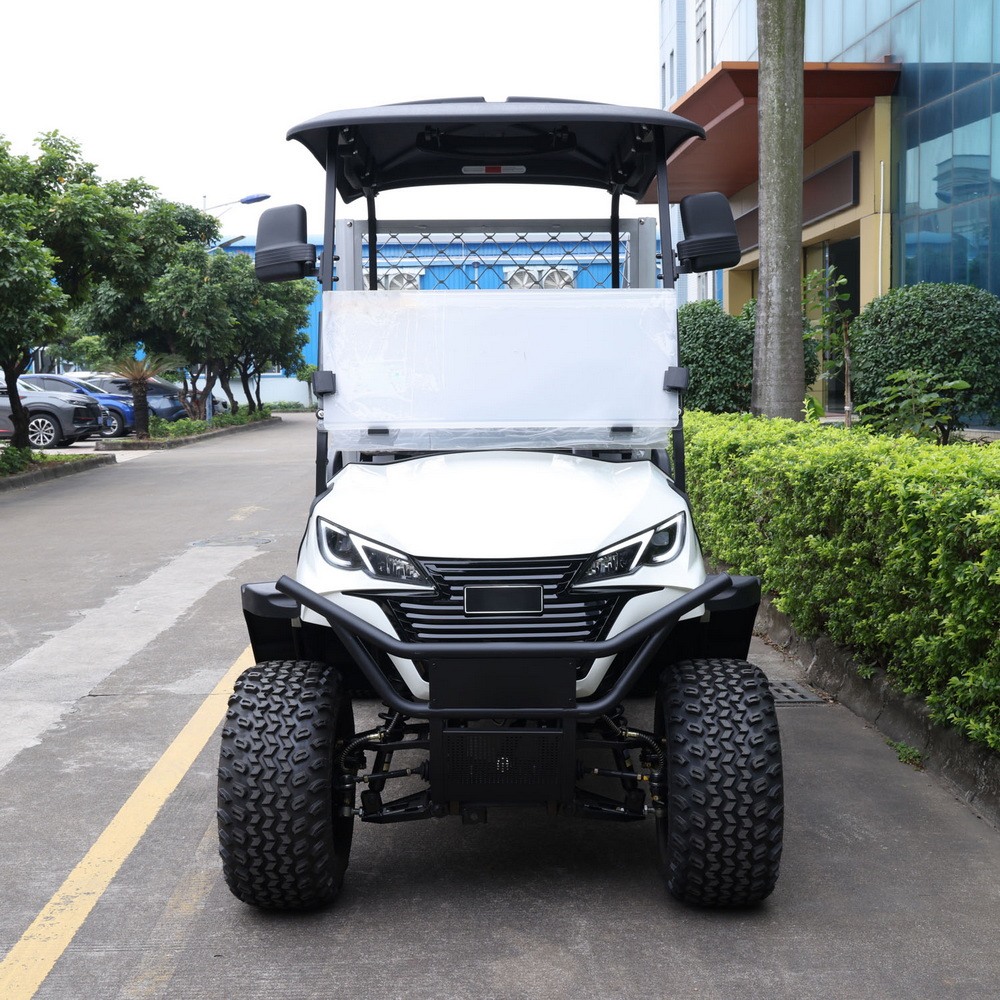
Utility carts are multi-purpose electric vehicles designed to move tools, materials, and personnel efficiently across industrial, commercial, and hospitality sites. Specialized hunting carts, on the other hand, prioritize off-road capability, stealth, and high rear payload capacity to transport harvested game and gear through uneven, often muddy terrain. [borcart]
From an OEM perspective, payload design choices—frame architecture, suspension, axle rating, and cargo area layout—must reflect these fundamentally different use cases. Choosing the wrong platform often leads to premature wear, unsafe loading practices, and poor user satisfaction in the field. [ek-tech]
Payload capacity is not just a single number printed on a spec sheet. It is a composite of multiple engineering and operational factors:
- Vehicle curb weight
- Gross vehicle weight rating (GVWR)
- Frame and chassis design
- Axle, spring, and shock absorber ratings
- Tire load capacity and size
- Brake system performance
- Battery and powertrain configuration
For utility carts, payload is typically distributed between a front seating area and a rear cargo bed or modular racks, supporting tools, parts bins, ladders, and sometimes passengers. Hunting carts often concentrate payload in a rear platform or extended cargo box optimized for heavy, compact loads such as deer, boar, or elk. [made-in-china]
Utility carts are built to be the workhorse of industrial and commercial sites, striking a balance between payload, maneuverability, and operator comfort. [borcart]
In many industrial and hospitality applications, electric utility carts commonly offer payload capacities ranging from several hundred kilograms up to more than 700–800 kg, depending on configuration and duty cycle. This capacity is ideal for: [marketintelo]
- Maintenance tools and toolboxes
- Cleaning equipment and consumables
- Manufacturing components and small assemblies
- Light construction materials
- Luggage, food service containers, and hospitality supplies
Because payload is often mixed and irregular, utility carts benefit from wider beds, side rails, and modular accessories that stabilize diverse loads without complex tie-down requirements. [ek-tech]
In equipment-hauling scenarios, load distribution is as important as total capacity. A well-designed utility cart:
- Keeps the center of gravity low and close to the vehicle's longitudinal centerline.
- Uses reinforced frames and cross-members at high-stress points.
- Provides clearly marked loading zones to help operators avoid overloading a single axle.
By distributing payload across the chassis rather than concentrating it at the rear, utility carts maintain predictable steering and braking even at higher loads. This makes them suitable for narrow factory aisles, resort pathways, and warehouse corridors where tight turning radii and precise control are critical. [borcart]
For OEM customers such as foreign brand owners and wholesalers, specification flexibility is key. A manufacturer like BorCart can:
- Adjust bed dimensions and side-wall height to match specific tool or container sizes. [borcart]
- Offer suspension and tire packages tuned for concrete floors versus mixed outdoor terrain. [ek-tech]
- Integrate racks, cabinets, and lockable compartments for organized equipment storage. [borcart]
These options allow B2B partners to build an equipment-hauling solution that reflects their industry's typical payload profile, from factories and construction sites to hotels and campuses. [ek-tech]
Specialized hunting carts push payload design in a different direction: compact, heavy loads in unpredictable off-road environments. [borcart]
Game recovery places unique stress on a vehicle:
- Heavy carcasses (sometimes over 150 kg) concentrated at the rear.
- Steep inclines and declines, muddy trails, and loose soil.
- Frequent start–stop cycles and low-speed maneuvering around trees and brush.
To cope, hunting carts typically combine reinforced rear frames, robust rear suspension, and high-traction off-road tires rated for both load and terrain. The emphasis is on keeping the rear platform structurally sound under continuous shock loads from ruts, rocks, and roots. [made-in-china]
Compared with general utility carts, hunting carts tend to integrate specialized features:
- Extended rear platforms or game racks with integrated tie-down points.
- Elevated ground clearance and skid plates to protect the undercarriage.
- Stealth-oriented drivetrains (quiet electric motors) to avoid spooking wildlife.
- Optional winches or ramps to load heavy game safely.
These design choices allow hunters to secure high-density payloads while preserving vehicle balance and braking performance under challenging field conditions. [borcart]
Industry experience shows that off-road vehicles designed around group transport (such as golf carts adapted for hunting) prioritize lateral stability and seating comfort, whereas dedicated hunting platforms emphasize single-rider maneuverability and rear payload optimization. In game recovery scenarios, this translates into: [borcart]
- Better navigation through dense brush.
- More controlled descents with heavy rear loads.
- Reduced risk of tipping when crossing uneven ground.
For OEM product planners, recognizing this distinction helps position hunting carts not just as "utility carts with bigger tires," but as specialized off-road payload solutions for a defined niche. [borcart]
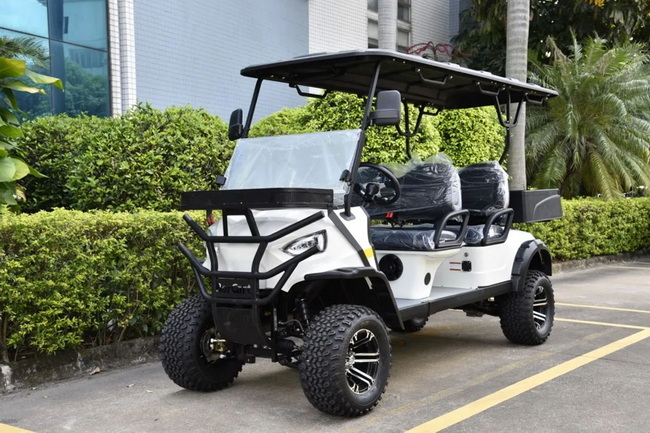
To clarify how utility carts and specialized hunting carts differ from a payload standpoint, consider the following high-level comparison.
| Aspect | Utility Cart – Hauling Equipment | Specialized Hunting Cart – Game Recovery |
|---|---|---|
| Primary payload type | Mixed tools, parts, supplies. (borcart) | Animal carcasses, hunting gear. (borcart) |
| Payload distribution | Spread across bed and sometimes front area. (borcart) | Concentrated at reinforced rear platform. (borcart) |
| Terrain focus | Paved, semi-smooth surfaces, light off-road. (borcart) | Rough trails, mud, slopes, dense brush. (borcart) |
| Stability priority | Balanced handling with varied loads. (ek-tech) | Rear-load stability and downhill control. (borcart) |
| Typical accessories | Tool racks, bins, lockable storage. (borcart) | Game racks, winches, gun/bow mounts. (borcart) |
| Ideal users | Facility managers, maintenance teams, resorts. (borcart) | Hunting outfitters, guides, serious hunters. (borcart) |
From a B2B and OEM perspective, this table illustrates that payload engineering must follow the intended duty cycle rather than a one-size-fits-all approach. [ek-tech]
Speaking from an industry and OEM collaboration perspective, designing payload capacity that truly works in the field starts with clear user scenarios.
Experienced manufacturers often follow a structured process when working with foreign brand owners and wholesalers:
1. Define typical daily loads – average and peak payload, load types, container dimensions.
2. Map operational routes – gradients, surface types, travel distance, frequency.
3. Select core chassis platform – wheelbase, frame material, steering system.
4. Specify suspension and tires – tuned for industrial versus off-road conditions.
5. Design cargo interface – bed size, game rack shape, tie-down layout, modular accessories.
By treating payload as a holistic system instead of a marketing figure, OEM partners can offer differentiated models that genuinely improve operational efficiency and safety for end users. [borcart.en.made-in-china]
In electric vehicles, increasing payload capacity always interacts with battery capacity, motor torque, and expected service life. Properly balanced designs:
- Match motor and controller output to expected loaded weight.
- Size battery packs for typical route length at realistic load factors.
- Reinforce high-stress joints and welds to prevent frame fatigue.
This systems-level view is essential for both utility carts and hunting carts, especially when vehicles are branded and sold overseas under different duty cycles and regulatory frameworks. [borcart.en.made-in-china]
From a buyer or fleet manager's standpoint, the most important question is not "which cart is stronger," but which cart is right for your specific payload.
A utility cart is usually the optimal choice if:
- You transport varied tools and supplies across relatively predictable routes.
- Your operations involve factories, hotels, campuses, or warehouses.
- You need modular storage, easy access, and simple loading/unloading.
- Maneuverability in tight spaces is more important than extreme off-road capability.
In these contexts, a utility cart's distributed load capacity and ergonomic cargo design will deliver better productivity and safer daily operation than a hunting-focused platform. [borcart]
A specialized hunting cart is preferable when:
- Your primary goal is safe, efficient game recovery in rough terrain.
- Loads are heavy and compact, concentrated to the rear.
- You routinely navigate unmaintained trails, mud, or steep slopes.
- Stealth, traction, and ground clearance are critical.
For outfitters and serious hunters, investing in a dedicated hunting cart reduces physical strain, shortens recovery time, and minimizes the risk of vehicle damage under repeated off-road shock loads. [made-in-china]
Manufacturers like BorCart can help B2B partners bridge the gap between equipment-hauling utility carts and game-recovery hunting carts through OEM customization. [borcart.en.made-in-china]
Potential customization paths include:
- Reinforcing rear frames on utility platforms for occasional game recovery needs.
- Adding modular cargo systems that switch between tool racks and game racks.
- Offering dual-purpose off-road packages that balance stability and maneuverability.
- Integrating branded accessories tailored to regional hunting practices or local industrial standards.
For overseas brand owners and wholesalers, these OEM options open up niche product lines that target specific user segments without requiring a completely new vehicle architecture. [borcart.en.made-in-china]
For decision-makers comparing "Utility Cart vs Specialized Hunting Cart: Payload Capacity for Hauling Equipment vs Game Recovery," several practical conclusions emerge:
- Utility carts excel at distributed, mixed payloads in organized environments such as factories, campuses, and hospitality sites. [ek-tech]
- Hunting carts are engineered for concentrated rear loads, extreme terrain, and game recovery efficiency. [made-in-china]
- Total payload rating is only meaningful when combined with thoughtful load distribution, terrain suitability, and powertrain matching. [marketintelo]
- OEM collaboration with an experienced manufacturer allows you to build purpose-driven payload solutions instead of generic carts. [borcart.en.made-in-china]
Choosing the right platform—or commissioning the right OEM spec—will determine not just how much weight you can carry, but how safely, efficiently, and profitably your teams or customers operate in the real world. [borcart]
If you represent an overseas brand owner, wholesaler, or hunting outfitter, now is the ideal time to reassess whether your current vehicles truly match your payload profile.
Consider:
- Are your teams overloading generic carts with specialized payloads?
- Are hunters improvising with golf carts that were never built for game recovery?
- Are you missing market opportunities where a dedicated utility or hunting cart line could carry your brand?
By partnering with an experienced electric vehicle manufacturer, you can co-develop OEM utility carts, specialized hunting carts, or hybrid platforms tailored to your equipment-hauling and game recovery needs, and bring differentiated, high-value products to your market.
Q1: Can one cart design handle both equipment hauling and game recovery effectively?
In some cases, a reinforced utility cart with modular racks can serve both roles, but truly intensive hunting use usually benefits from a dedicated platform optimized for rear payload and off-road performance. [borcart]
Q2: How important is tire selection for payload capacity?
Tires with insufficient load ratings or inappropriate tread patterns can negate other payload advantages, reducing safety and durability in both industrial and off-road environments. [ek-tech]
Q3: Does higher payload always mean better performance?
Not necessarily; higher payload without matching powertrain, braking, and chassis reinforcement may lead to slow acceleration, longer stopping distances, and accelerated wear. [marketintelo]
Q4: What should OEM buyers focus on beyond payload numbers?
They should prioritize real-world duty cycles, terrain profiles, maintenance expectations, and accessory needs, then align chassis, suspension, and cargo interface with those factors. [borcart.en.made-in-china]
Q5: Are electric hunting carts becoming more common globally?
Yes, as electric drivetrains offer quiet operation, strong torque, and lower local emissions, more hunting outfitters are exploring dedicated electric platforms for game recovery. [marketintelo]


