


Views: 222 Author: Loretta Publish Time: 2025-12-21 Origin: Site


Content Menu
● What Is an Electric Golf Cart?
● Electric vs Gas Golf Carts: Feature‑by‑Feature Comparison
>> Core Performance and Cost Differences
● Market Trends: Why Electric Golf Carts Are Growing Fast
● Performance: Power, Speed, and Terrain
● Range, Charging, and Refueling
>> Electric Golf Cart Range and Charging
>> Gas Golf Cart Range and Refueling
● Operating Costs and Total Cost of Ownership
● Environmental Impact and Noise
>> Emissions
● Maintenance: What Owners Need to Know
>> Electric Golf Cart Maintenance
● Practical Buying Framework: Which Golf Cart Is Right for You?
>> Step‑by‑Step Decision Checklist
● Where OEM Manufacturers Fit In (For Brands, OEMs, and Fleet Buyers)
● Best Use Cases for Electric vs Gas Golf Carts
>> When Electric Golf Carts Are the Better Choice
>> When Gas Golf Carts Are the Better Choice
● Final Thoughts and Call to Action
● FAQs
>> 1. Are electric golf carts cheaper to run than gas carts?
>> 2. How long do golf cart batteries last?
>> 3. Which is better for a hilly golf course: electric or gas?
>> 4. Are electric golf carts better for the environment?
>> 5. What range can I expect from an electric golf cart on one charge?
Choosing between an electric golf cart and a gas golf cart in 2025 comes down to how far you drive, how much power you need, and how important quiet, low‑emission operation is for you. Electric models now dominate new fleet upgrades on many golf courses, while gas carts still lead where range, towing, and steep hills matter most.[2][3][4]
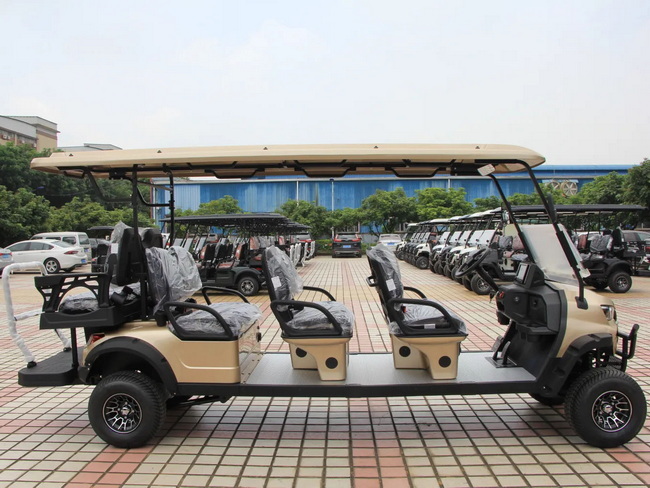
An electric golf cart is a small vehicle powered by one or more rechargeable batteries, usually lead‑acid or lithium‑ion, paired with an electric motor to drive the wheels. These carts are popular on golf courses, in gated communities, resorts, and large private properties where short‑range, quiet transport is required.[5][2]
Key characteristics of electric golf carts:
- Power source: 36 V or 48 V battery packs, increasingly lithium‑ion in newer models.[6][5]
- Ride feel: Instant torque, smooth acceleration, and very low noise levels, often near‑silent at low speed.[3]
- Typical range: About 15–25 miles per charge, depending on battery type, terrain, and payload.[5]
A gas golf cart uses a small internal combustion engine powered by gasoline (or sometimes diesel) to generate mechanical power for the drivetrain. Gas carts are common where higher speed, heavy loads, and long daily operating hours are required, such as hilly courses, farms, hunting grounds, and large industrial sites.[7][6]
Key characteristics of gas golf carts:
- Power source: Small gasoline engine with a fuel tank typically holding 4–6 gallons.[8][5]
- Ride feel: Stronger pull on hills, higher top speed, but with noticeable engine noise and vibration.[4]
- Typical range: Roughly 100–180 miles per tank, depending on load and driving style.[5]
The table below summarizes the core differences between electric vs gas golf carts to help buyers quickly see what matters most for their use case.[4]
Factor | Electric Golf Carts | Gas Golf Carts |
Power source | Rechargeable battery pack (lead-acid or lithium-ion). | Small internal combustion engine using gasoline or diesel. |
Noise level | Very quiet; often near-silent at low speeds. | Noticeably louder due to engine and exhaust noise. |
Range per “fill” | Around 15–25 miles per full charge in typical use. | Around 100–180 miles per tank with 4–6 gallons of fuel. |
Operating cost | Lower; electricity is cheaper than gasoline and maintenance is simpler. | Higher; ongoing fuel plus more frequent engine maintenance. |
Environmental impact | Zero tailpipe emissions; significantly lower local pollution. | Emits greenhouse gases and pollutants during operation. |
Maintenance | Focus on battery care and charging routines; fewer moving parts. | Requires oil changes, filters, spark plugs, belts, and fuel-system care. |
Initial cost | Often similar or slightly lower for basic models; lithium packs can increase price. | Comparable or slightly higher upfront; used gas carts often cost more than used electric. |
Long-term cost | Very competitive over time despite periodic battery replacement. | Higher long-term expense due to fuel and engine service. |
Best use cases | Quiet communities, golf courses, resorts, indoor or semi-indoor facilities. | Hilly courses, farms, hunting, heavy hauling, and remote locations. |
The electric golf cart market has broken out of golf courses and is now expanding into residential and commercial mobility, which shapes long‑term ownership decisions.[10][2]
- The global electric golf cart market was valued at around USD 1.7 billion in 2024 and is projected to grow at about 8.7% CAGR from 2025 to 2034.[2]
- One 2024 report estimates the global electric golf cart market at USD 1.55 billion in 2024, with a forecast of USD 2.58 billion by 2033.[11]
Driving forces behind this growth include:
- Noise and emission regulations pushing courses and resorts to phase out older gas fleets.[12][13]
- Rising adoption of carts in gated communities, retirement villages, and resorts, where quiet, low‑emission mobility is essential.[12][11]
- Increasing interest in lithium‑ion technology, which delivers longer life and faster charging compared with traditional lead‑acid batteries.[2][5]
Performance is one of the most important factors when comparing electric vs gas golf carts.
- Gas carts generally offer higher top speeds and stronger torque at sustained loads, making them ideal for steep hills, towing, or carrying heavy cargo.[14]
- Modern 48 V electric carts with efficient AC motors can match or exceed the acceleration of many gas models on flat terrain, thanks to instant electric torque.[1][6]
Ideal choice by terrain:
- Flat courses & communities: Electric carts provide plenty of power with much better comfort and noise levels.[3]
- Hilly, rough, or off‑road: Gas carts still have an edge where long climbs, mud, and heavy trailers are common.[7]
How far you need to drive in a day is a critical decision factor.
- A typical electric golf cart covers 15–25 miles per charge, depending on voltage, battery health, passenger count, and terrain.[5]
- Lead‑acid batteries often last 2–5 years with regular use and correct maintenance.[5]
- Lithium‑ion batteries can last up to 10–20 years if properly maintained, especially in controlled‑use environments.[2][5]
Charging considerations:
1. Overnight charging in a garage or designated cart barn is usually sufficient for daily golf or community driving.[1]
2. On‑course or on‑site chargers are increasingly common in resorts and modern communities, reducing range anxiety.[12][2]
- With a 4–6 gallon tank, a gas golf cart commonly reaches 100–180 miles before refueling.[5]
- Refueling takes just a few minutes, which is ideal for rental fleets, industrial use, and long outdoor workdays.[7]
Quick rule of thumb:
- Choose electric if your daily driving stays within a predictable area and you have easy access to power outlets.
- Choose gas if you routinely cover long distances, cannot install chargers, or operate in remote locations.
Over several years, operating cost often matters more than the sticker price.
- Electricity is much cheaper per mile than gasoline, so energy cost per trip is significantly lower.[1]
- Electric carts have fewer moving parts, so there is no engine oil, belts, or spark plugs to replace, reducing maintenance labor and parts.[1]
- The main long‑term cost is battery replacement, which can range roughly from USD 1,500 for lead‑acid packs to USD 2,000 or more for lithium‑ion, depending on brand and configuration.[5]
Industry analyses consistently show that electric golf carts are more economical over the long term, especially for fleets that run predictable daily routes.[9][1]
- Gas carts incur continuous fuel expenses, which rise with heavy daily use.[1]
- Routine maintenance includes oil and filter changes, valve and belt inspections, and occasional replacement of ignition components and exhaust parts.[6]
- These ongoing costs typically make gas carts more expensive over a multi‑year ownership period, even if some gas models hold resale value well in certain markets.[8][1]
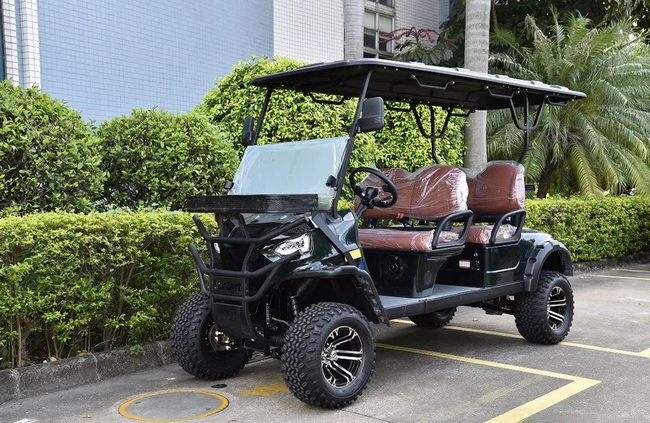
For many courses, communities, and resorts, environmental impact and noise are now strategic considerations—not just nice‑to‑have features.
- Electric golf carts produce zero tailpipe emissions, making them the preferred option for organizations with sustainability and “green operations” goals.[3]
- Gas carts emit carbon monoxide and other pollutants, and can create noticeable exhaust odor in garages, sheds, and on tightly packed courses.[6]
Many U.S. and international golf clubs are actively replacing aging gas fleets with electric models to align with environmental standards and local regulations.[13][12]
- Electric carts operate near‑silently, preserving the quiet atmosphere of golf courses and residential communities, and improving rider comfort.[3]
- Gas carts are audibly louder, although newer engines are quieter than older generations.[6]
Maintenance effort is another major difference between electric vs gas golf carts.
- Routine tasks focus on:
- Battery charging discipline and avoiding deep discharges.[1]
- Checking water and electrolyte levels on flooded lead‑acid batteries if used.[6]
- Inspecting cables and terminals for corrosion and tight connections.[1]
- With fewer moving parts, there is less risk of oil leaks, fuel system failures, or exhaust issues.[1]
- Typical service items include:
1. Engine oil and oil filter changes at scheduled intervals.
2. Air filter, fuel filter, and spark plug inspection and replacement.[6]
3. Belt, clutch, and exhaust system checks.
- Gas carts also require safe fuel storage and close monitoring of leaks or vapor buildup, especially in enclosed spaces.[6]
For many private users and smaller fleets, this makes electric carts more attractive from a day‑to‑day maintenance perspective.
When comparing electric vs gas golf carts, the smartest approach is to tie the decision directly to your usage scenario.
1. Define primary usage
- Golf course, gated community, resort, industrial site, farm, hunting area, or mixed use.[4]
2. Estimate daily distance
- Under 20 miles per day with easy access to power strongly favors electric.[5][1]
- Over 40–50 miles per day, with limited charging opportunities, leans toward gas.[7]
3. Assess terrain & load
- Flat, paved, or mild slopes = electric is usually sufficient.
- Steep hills, heavy trailers, or rough off‑road conditions = gas has the advantage.[14]
4. Check local rules and environment
- Communities and clubs with strict noise or emission rules often require electric carts.[12][3]
5. Calculate long‑term budget
- Compare 5–7 year cost of fuel vs electricity plus maintenance and expected battery replacement.[9][1]
If you are a golf cart brand owner, fleet operator, or large distributor, choosing the right OEM partner is as important as choosing between electric and gas power.
- The rapid growth of the electric golf cart market is creating opportunities for brands to launch customized fleets for communities, resorts, and industrial campuses.[11][2]
- Reliable OEM manufacturers can provide platform customization for golf carts, low‑speed vehicles, and multi‑purpose utility carts, including seating layouts, cargo beds, accessories, and powertrain options tailored to local regulations and customer demand.[13][2]
An experienced OEM supplier can help you:
- Develop branded electric golf carts that match your market's expectations for range, comfort, and safety.
- Offer both electric and gas platforms to serve different terrains and usage scenarios under a unified brand.
To make the choice even clearer, match your situation to the scenarios below.
Electric golf carts excel in:
- Golf courses and country clubs prioritizing quiet operation and reduced emissions.[12]
- Gated communities and retirement villages where residents value low noise and smooth driving.[11][12]
- Resorts and hotels offering guest shuttles or internal transport within defined areas.[2]
- Indoor or semi‑indoor facilities such as warehouses or large campuses where exhaust fumes are unacceptable.[4]
Gas golf carts are ideal for:
- Hilly or mountainous courses where strong continuous power is essential.[14]
- Farms, hunting grounds, and large rural properties with rough terrain and long distances.[7]
- Remote sites where charging infrastructure is limited or unavailable.[4]
- Heavy‑duty utility tasks, such as towing trailers, hauling equipment, or supporting maintenance teams all day.[7]
Electric golf carts are the best choice for most modern golf courses, communities, and resorts that value quiet, low‑emission, and low‑maintenance operation. Gas golf carts remain the right solution for rough terrain, extended range, and heavy‑duty workloads where frequent refueling is easier than installing charging infrastructure.[12][7]
If you are:
- A brand owner planning your next lineup of golf carts,
- A fleet manager upgrading from gas to electric, or
- A wholesaler targeting golf, resort, or multi‑purpose vehicle markets,
then now is the time to define your ideal mix of electric and gas golf carts and partner with a capable OEM manufacturer that can deliver reliable, customized vehicles for your target customers. Contact us right now![13][2]
Yes. Electric golf carts generally have lower running costs because electricity is cheaper per mile than gasoline, and routine maintenance is simpler. Over several years, this often offsets the cost of battery replacement.[9][1]
Lead‑acid golf cart batteries typically last 2–5 years with proper charging and maintenance. Modern lithium‑ion packs can last significantly longer, in some cases up to a decade or more in controlled service conditions.[2][5]
Gas carts still have an advantage for long, steep hills and heavy loads because they deliver consistent power over long runs without performance drop as the tank empties. High‑spec 48 V electric carts can perform very well but require careful battery sizing and management.[14][6]
Electric golf carts produce no tailpipe emissions and operate quietly, which significantly reduces local air and noise pollution on courses and in communities. Overall environmental impact also depends on how the electricity used for charging is generated.[3]
Most electric golf carts can travel 15–25 miles per charge under normal conditions, including typical golf or residential use. Actual range depends on battery age, terrain, load, and driving style.[5]
[1](https://carts-and-parts.com/gas-vs-electric-golf-cart/)
[2](https://www.gminsights.com/industry-analysis/electric-golf-cart-market)
[3](https://www.progressive.com/answers/gas-vs-electric-golf-carts/)
[4](https://www.neighbor.com/storage-blog/gas-vs-electric-golf-cart/)
[5](https://blog.acmetools.com/electric-vs-gas-golf-carts-which-is-right-for-you/)
[6](https://www.golfcartgarage.com/blog/gas-vs-electric-golf-cart-which-one-is-best/)
[7](https://www.vatrerpower.com/blogs/news/is-a-gas-or-electric-golf-cart-better-exploring-the-pros-and-cons)
[8](https://diamondgolfcars.com/are-electric-or-gas-golf-carts-better/)
[9](https://www.batteryminders.com/electric-vs-gas-golf-carts/)
[10](https://www.strategicmarketresearch.com/market-report/electric-golf-cart-market)
[11](https://www.grandviewresearch.com/industry-analysis/electric-golf-cart-market-report)
[12](https://www.grandviewresearch.com/industry-analysis/us-electric-golf-cart-market-report)
[13](https://www.gminsights.com/industry-analysis/golf-cart-market)
[14](https://www.morgolfmn.com/blog/electric-vs-gas-powered-golf-carts)
[15](https://www.youtube.com/watch?v=JIrtv8jQ8Cs)
[16](https://www.stchargers.com/news/a-complete-buyers-guide-to-gas-vs-electric-golf-carts/)
[17](https://www.reddit.com/r/golfcarts/comments/1eoxrxq/which_is_better_an_electric_or_gas_golf_cart/)
[18](https://www.reddit.com/r/golfcarts/comments/15ljtid/an_indepth_look_at_the_pros_and_cons_of_gas_and/)
[19](https://www.fortunebusinessinsights.com/golf-cart-market-106337)
[20](https://www.reddit.com/r/golfcarts/comments/1mka0ij/electric_vs_gas_golf_carts/)


