


Views: 222 Author: Leah Publish Time: 2026-01-20 Origin: Site


Content Menu
● How Fast Can an Electric Golf Cart Go?
>> Typical Factory Speed Limits
>> Real-World Performance Upgrades
● What Controls Electric Golf Cart Speed?
>> Key Components Affecting Speed
>> Software vs. Hardware Limits
● Legal and Safety Considerations
>> Regulations and Local Rules
>> Safety Upgrades to Add First
● Cost-Effective Ways to Speed Up an Electric Golf Cart
>> 2. Maintain Proper Tire Pressure and Alignment
● Controller Tuning and Upgrade Strategies
>> Reprogramming the Existing Controller
>> Installing a Higher-Amp Controller
● Battery and Voltage Upgrades
>> Higher Performance Battery Packs
● Motor, Gear Ratio, and Tire Changes
>> Using Larger Diameter Tires
● Aerodynamics and Body Optimization
>> Balancing Style and Efficiency
● Reliability, Range, and Daily Usability
>> Preserving Range at Higher Speed
● Practical Upgrade Paths for Different Users
>> Neighborhood and LSV Commuting
>> Commercial, Patrol, and Utility Use
● Summary for Electric Golf Cart Owners
● FAQ
>> 1. How much faster can I make my electric golf cart?
>> 2. What is the cheapest way to increase speed?
>> 3. Will speeding up my electric golf cart reduce battery life?
>> 4. Do I need to upgrade brakes when I increase speed?
>> 5. Is it legal to modify my electric golf cart for more speed?
Yes, you can speed up an electric golf cart by upgrading key components such as the controller, motor, batteries, tires, and gear ratio, and by optimizing weight and maintenance. However, every modification should balance speed, safety, battery life, and local regulations.

Most stock electric golf cart models are limited to about 12–15 mph to keep riders safe on golf courses and in residential communities. Some factory “high-speed” or LSV-ready versions are tuned to reach 20–25 mph to meet street‑legal requirements in many regions. With performance upgrades, many electric golf cart setups can safely reach 20–25 mph, and highly modified builds can go far beyond that on closed courses only.
- Many factory electric golf cart controllers are programmed with a “speed code” or governor that caps top speed.
- Manufacturers use these limits to protect the motor, preserve battery life, and comply with community or course rules.
- In many markets, golf carts that exceed certain speeds are classified differently in law, so brands deliberately keep standard electric golf cart models under those thresholds.
- Swapping to a higher‑amp speed controller can unlock the existing motor's potential and raise speed into the mid‑20 mph range on many platforms.
- Larger‑scale conversions with racing-grade motors and high‑voltage systems have produced electric golf cart builds capable of 70 mph or more, but these are strictly for controlled environments.
- For daily use, most owners aim for a practical range of 18–25 mph to keep an electric golf cart comfortable, controllable, and compliant.
A modern electric golf cart is governed by a system of batteries, controller, motor, gearing, tires, and software limits. Understanding how these parts work together helps you choose upgrades that match your budget and driving style.
- Batteries: Voltage and quality determine how much power can be delivered to the motor at a given time. Weak or aging batteries sag under load and limit top speed.
- Controller: The speed controller manages current to the motor and often enforces RPM and speed limits via its software.
- Motor: Motor design and rated RPM directly influence top speed for an electric golf cart at a given voltage.
- Gear ratio: Differential gears convert motor RPM into wheel speed and define the balance between acceleration and top speed.
- Tires: Diameter and tread pattern change effective gearing and rolling resistance, which affects how easily an electric golf cart can reach higher speeds.
- Many controllers are “choked” by conservative programming that limits acceleration and maximum RPM even when the hardware can safely do more.
- Speed codes and PTV (Personal Transportation Vehicle) settings can sometimes be reprogrammed by an authorized shop to safely increase electric golf cart speed without replacing parts.
- When software options are exhausted, hardware upgrades (controller, motor, and battery system) are the next step.
Before making an electric golf cart faster, it is essential to understand local rules and safety implications. Performance upgrades change how the cart handles, brakes, and qualifies for road usage.
- Many jurisdictions classify faster carts as low-speed vehicles (LSVs), typically requiring that they can travel around 20–25 mph and be equipped with lights, reflectors, mirrors, and other safety equipment.
- Street‑legal electric golf cart and LSV rules often restrict operation to roads with speed limits of roughly 35 mph or less.
- Golf courses, resorts, and gated communities may have their own speed caps and can restrict modified vehicles that exceed standard limits.
- Consider better brakes, quality tires, and suspension checks before chasing a higher top speed in any electric golf cart.
- Drivers should wear seat belts where available, avoid overloading the cart, and respect terrain limits when speed is increased.
- Higher speeds warrant more frequent inspections of steering components, hubs, and wheel bearings.
Not every performance gain requires a full powertrain overhaul. There are simple, affordable steps that can make an electric golf cart feel noticeably quicker and more responsive.
- Removing unused accessories, heavy cargo, and unnecessary add‑ons reduces strain on the motor and allows higher RPM under load.
- A lighter electric golf cart accelerates more easily and may gain a small bump in top speed because rolling and climbing resistance drop.
- Switching from heavy lead‑acid batteries to lighter lithium packs can further reduce weight while improving power delivery.
- Underinflated tires increase rolling resistance, forcing the electric golf cart to work harder and move more slowly.
- Keeping tires properly inflated and aligned reduces drag, helps the cart hold speed on flat ground, and improves battery efficiency.
- Periodically rotating tires and checking for uneven wear also keeps handling consistent at higher speeds.
- Clean electrical connections, healthy cables, and properly serviced brakes prevent power loss and dragging that limit speed.
- Regularly checking bearings, hubs, and drivetrain components ensures the electric golf cart can spin freely under power.
- Replacing worn brushes in DC motors and keeping the drivetrain lubricated preserves performance gains from other upgrades.
Upgrading or reprogramming the speed controller is often the most impactful “first big step” for a faster electric golf cart. A properly matched controller can unlock more speed, torque, and smoother throttle response.
- Many carts allow “speed code” upgrades from dealers or technicians to raise the software speed limit for a relatively low fee.
- Adjusting acceleration ramp rates and field mapping can make the electric golf cart feel livelier off the line without swapping hardware.
- Some modern AC systems support app‑based tuning, letting owners choose driving modes for economy, standard, or sport performance.
- Aftermarket controllers send more current to the motor, raising speed and torque up to the mid‑20 mph range on many models when correctly paired with suitable batteries.
- A high‑amp controller often pairs well with future motor upgrades and can improve regenerative braking and throttle smoothing.
- When upgrading, always verify cable size, solenoid ratings, and fuse protection to keep the electric golf cart safe and reliable.
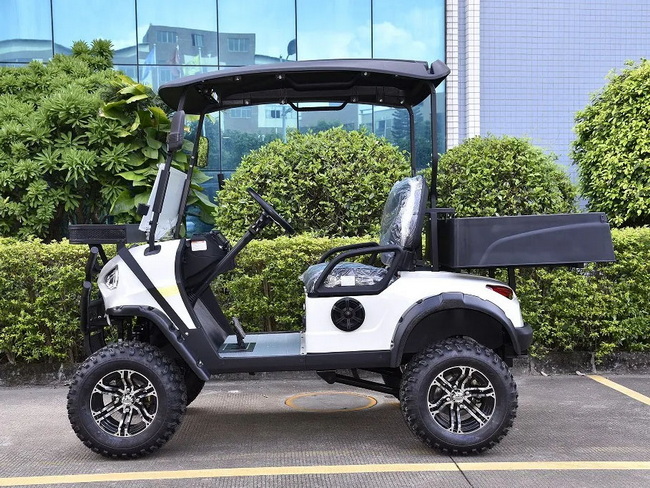
Batteries are the heart of an electric golf cart, and upgrading them can significantly boost both speed and acceleration. Better energy delivery also helps keep speed more consistent on hills and under heavy loads.
- Fresh, high‑quality batteries deliver stronger voltage under load, which helps the motor maintain RPM and speed.
- Upgrading to modern lithium battery packs can reduce weight, eliminate voltage sag, and provide more consistent performance throughout each charge.
- High‑performance packs typically come with advanced battery management systems that protect against over‑discharge and support the demands of a tuned electric golf cart.
- Moving from a lower‑voltage system to a higher‑voltage configuration (for example, from 36V to 48V or even 72V) can dramatically increase top speed when the motor and controller are compatible.
- Voltage upgrades usually require changes to the controller, charger, and sometimes the motor to keep the system operating safely.
- This type of conversion should be planned carefully, ideally in consultation with experienced suppliers or technicians, to prevent damage and ensure that the electric golf cart remains controllable.
Once controller and battery improvements are planned, motor, gear, and tire choices complete the performance puzzle for an electric golf cart. Each change affects the balance between low‑speed torque and high‑speed capability.
- Using a motor with a higher rated RPM lets the electric golf cart spin faster at the same voltage, raising its top speed.
- High performance DC or AC motors often require a controller upgrade and stronger batteries, but they can transform acceleration and hill climbing.
- AC motor systems tend to provide smoother power delivery, more efficient regeneration, and strong performance gains for street‑oriented electric golf cart builds.
- Adjusting the differential gear ratio can trade some low‑end torque for a higher top speed on flat ground.
- A “taller” gear ratio lets the electric golf cart travel farther per revolution of the motor, effectively stretching each RPM into more ground speed.
- Professional consultation is recommended to ensure that the new ratio keeps the cart safe, avoids overloading the motor, and still provides enough torque for hills.
- Larger diameter tires effectively increase the overall gear of the electric golf cart, raising ground speed at the same motor RPM.
- While this can add speed, it also requires more torque, so pairing tire changes with controller and motor improvements yields better results.
- Off‑road tread patterns are great for traction but can increase rolling resistance; smoother tread designs usually roll faster on pavement and golf paths.
Drag becomes more important as an electric golf cart goes faster, especially above normal course speeds. Small aerodynamic tweaks can reduce resistance and help the cart maintain speed more easily.
- Front air deflectors, smoother body panels, and streamlined canopies can reduce turbulence and drag on a faster electric golf cart.
- Choosing compact accessories and avoiding large, boxy add‑ons keeps the airflow cleaner and reduces the energy needed to cruise at higher speeds.
- Keeping windshields closed and properly seated at speed can also improve airflow compared with partially open panels.
- Cosmetic add‑ons like large roof racks, bulky enclosures, and wide utility boxes can slow an electric golf cart by increasing frontal area.
- When speed is the priority, aim for clean lines, minimal external clutter, and snug‑fitting accessories.
- For multi‑purpose use, some owners keep two setups: a lightweight, streamlined configuration for faster driving and a fully equipped one for work or hunting.
A faster electric golf cart must still remain reliable for daily use on golf courses, resorts, campuses, and communities. Every modification should respect thermal limits, battery capacity, and intended duty cycles.
- High‑performance DC setups can draw significant power from the batteries and may reduce range unless carefully matched to pack capacity.
- AC systems can improve range while delivering more speed and smoother control, though they require more initial investment.
- Additional cooling, such as better airflow around the motor and controller, helps prevent overheating during long high‑speed runs.
- Higher speeds consume more energy per mile, so monitor range and consider larger‑capacity packs when upgrading an electric golf cart.
- Smart driving habits—smooth throttle use, anticipating stops, and moderate cruising speeds—help keep range acceptable even on a modified cart.
- Many modern systems support Bluetooth or dash‑mounted monitors that allow drivers to watch real‑time current draw and adapt their style.
Not every electric golf cart owner has the same goals. Some want a bit more zip for the fairway, while others need road‑worthy performance for neighborhoods, campuses, or resorts.
- Focus on maintenance, tire pressure, and modest speed code adjustments that keep the electric golf cart under common course limits.
- Consider slightly larger tires and a mild controller tune to improve acceleration without stressing components.
- Keep comfort features like enclosures and coolers but avoid excessive weight and drag.
- Target a safe and legal range of about 20–25 mph, supported by a quality controller and motor combination.
- Upgrade lighting, mirrors, signals, and braking components to meet LSV or local road regulations.
- Choose battery and tire setups that provide enough range for daily trips with reserve capacity.
- For property management, patrol, and utility fleets, prioritize reliability, torque, and range over extreme speed.
- Use heavy‑duty controllers, motors, and battery packs designed for frequent stop‑and‑go driving and loaded operation.
- Speed upgrades should remain moderate so that the electric golf cart stays safe when carrying tools, cargo, or passengers.
Electric golf cart speed is the result of several interacting systems: batteries, controller, motor, gearing, tires, and aerodynamics. By understanding these elements, owners can choose upgrades that meet their particular needs, whether that means a bit more pace on the fairway or a confident 25 mph on local roads. Above all, smart planning and responsible driving ensure that a faster electric golf cart remains safe, enjoyable, and dependable.
An electric golf cart can absolutely be made faster with the right combination of controller tuning, motor choices, battery improvements, gearing, tire selection, and careful maintenance. The most successful builds start with safety and legal compliance, then layer in thoughtful upgrades that match how and where the cart will be used. When speed, braking, handling, and range are balanced, an upgraded electric golf cart becomes a versatile, efficient companion for golf, leisure, work, and neighborhood travel.
Contact us to get more information!
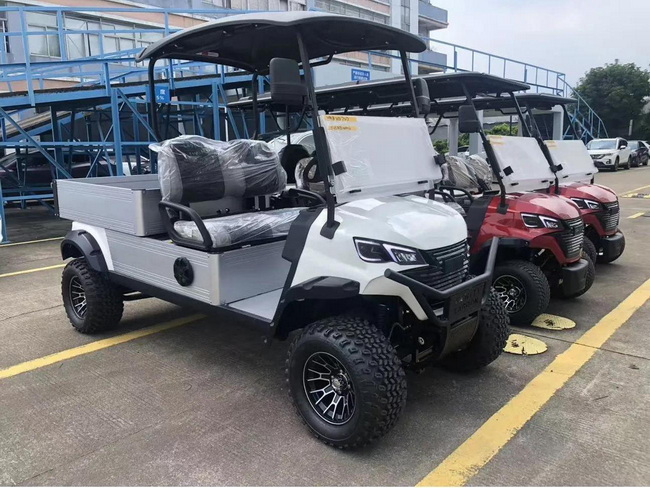
Most owners can safely move from around 12–15 mph to roughly 20–25 mph with controller, battery, and tire upgrades on a typical electric golf cart. Pushing beyond that usually requires more extensive modifications and may exceed local legal limits for low‑speed vehicles. For everyday use, staying in the 18–25 mph range tends to offer the best mix of speed, stability, and range.
The most budget‑friendly steps are reducing weight, keeping tires fully inflated, and having a dealer reprogram existing speed codes where possible. These changes give the electric golf cart a noticeable performance boost without a full hardware swap. If you are ready to spend a bit more, a mild controller upgrade often delivers excellent value per dollar.
Higher speeds draw more current, which can shorten runtime per charge and may reduce battery lifespan if components are pushed too hard. Choosing quality batteries and matching controller, motor, and gearing correctly helps protect the electric golf cart's energy system. Thoughtful driving habits, like avoiding full‑throttle starts whenever possible, also extend pack life.
When an electric golf cart is tuned for higher speed, improved brakes and properly maintained components become more important for safe stopping distances. Many performance‑oriented setups combine powertrain upgrades with brake, tire, and suspension improvements to maintain control. At the very least, pads, cables, and hydraulic components should be inspected and refreshed before serious speed increases.
Legality depends on local laws, speed thresholds, and where the electric golf cart is used, such as private property, golf courses, or public streets. Once the cart exceeds certain speeds, it may be treated as a low‑speed vehicle and require lights, mirrors, safety equipment, registration, and sometimes insurance. Always confirm the rules in your region before making major performance upgrades.
1. https://www.kandiamerica.com/electric-golf-cart-speed-tips/
2. https://blog.buggiesunlimited.com/how-to-make-your-golf-cart-faster/
3. https://carts-and-parts.com/how-to-remove-speed-limiter-on-electric-golf-cart/
4. https://extremekartz.com/blogs/extreme-blogging/six-proven-tips-to-boost-your-golf-cart-performance
5. https://taraelectricvehicles.com/blog/2025/05/26/understanding-golf-cart-top-speed-regulations-and-safety/
6. https://leochlithium.us/36-volt-golf-cart-battery-replacement-a-comprehensive-guide-for-fleet-managers/
7. https://fleetlithium.com/blogs/news/fleet-lithium-golf-cart-battery-application-guide-u-s-market
8. https://sandiegogolfcart.com/street-legal-golf-cart-review-top-10-faqs-about-owning-a-golf-cart-in-southern-california/


