


Views: 222 Author: BorCart Publish Time: 2026-05-02 Origin: Site


Choosing between gas vs electric golf carts in 2026 is no longer a simple "power vs eco" decision—it is a long‑term investment choice that affects your running costs, sustainability goals, and even the resale value of your fleet. Drawing on hands‑on experience from BorCart as an OEM golf cart and EV manufacturer, this guide walks you through real‑world performance, ownership costs, and future‑proofing so you can choose the cart that actually fits your business or lifestyle. [golfcartsearch]

In this article, you will find:
- A clear, updated comparison of gas vs electric golf carts in 2026. [eacarts]
- Expert insights from the perspective of an OEM manufacturer serving global brands, wholesalers, and fleet operators. [sphericalinsights]
- Practical checklists and decision frameworks tailored for golf courses, resorts, real‑estate communities, and commercial users. [carts-and-parts]
For most golf courses, gated communities, resorts and personal users, electric golf carts are now the smarter choice thanks to lower operating costs, quieter performance, and strong market momentum toward electrification. Gas golf carts still make sense for heavy‑duty use on large properties, hilly terrain, and remote locations where fast refueling and long range matter more than noise and emissions. [galaxygolfcars]
Gas golf carts use small internal combustion engines, usually 4‑cycle gasoline units, similar to compact garden equipment or small utility vehicles. [carts-and-parts]
Key characteristics of gas carts: [golfcartsearch]
- Fuel source: Regular pump gasoline stored in a small tank (often 4–6 gallons).
- Range: Commonly around 100–120 miles per tank, sometimes more under light loads. [galaxygolfcars]
- Top speed: Typically 15–19 mph in stock form. [golfcartsearch]
- Noise & emissions: Noticeable engine noise and exhaust emissions, which may be restricted by some communities and courses. [golfcartresource]
Gas carts appeal to users who need extended runtime, consistent performance on hills, and the ability to refuel in minutes rather than waiting for a battery to charge. [galaxygolfcars]
Electric golf carts run on battery packs that power an electric motor, typically 48V systems in modern models. [golfcartsearch]
Key characteristics of electric carts: [centralcoastcarts]
- Power system: Lead‑acid or increasingly lithium‑ion batteries feeding an AC or DC motor.
- Range: Traditional 48V carts typically cover 25–40 miles per charge, while newer lithium models can exceed 70 miles in real‑world use. [intermountaingolfcars]
- Top speed: Modern electric carts often reach 12–15 mph stock, and some upgraded models can achieve 25–30 mph or more. [golfcartsearch]
- Noise & emissions: Very quiet operation with zero direct tailpipe emissions, ideal for residential and hospitality environments. [golfcartresource]
Because electric motors deliver instant torque, electric carts feel responsive off the line and can climb typical course inclines confidently, especially with modern AC motors. [golfcartresource]
The original article correctly notes that electric motors produce power every rotation, giving them instant torque, while gas engines produce power on every other rotation. This remains a major advantage for electric carts when starting from a stop or carrying loads at low speeds. [golfcartsearch]
Power and torque in real use: [carts-and-parts]
- Electric carts:
- Instant torque for quick starts.
- Strong low‑speed pulling power, ideal for stop‑and‑go driving, steep cart paths, and residential use.
- Gas carts:
- More consistent power on extended hill climbs and at higher speeds.
- Better suited for heavy towing on uneven or off‑road terrain.
Speed:
- Gas: Stock speeds around 15–19 mph. [carts-and-parts]
- Electric: Modern 48V carts frequently match or exceed this; some OEM and aftermarket configurations reach 25–30 mph while staying within many local regulations. [golfcartsearch]
From an OEM standpoint at BorCart, we typically recommend electric powertrains for standard fleet and community applications, and gas or high‑spec electric (e.g., lithium packs, higher‑power AC motors) for demanding commercial or off‑road use. [intermountaingolfcars]
The original article highlights an important nuance: while gas carts can achieve 120+ miles per tank, most users simply do not need that much range in daily operation. [galaxygolfcars]
Typical daily usage:
- Many golf cart users drive around 10 miles per day on courses, in neighborhoods, or around resorts. [golfcartsearch]
- For this profile, an electric cart with 25–40 miles of range is more than sufficient. [galaxygolfcars]
Modern range realities:
- Gas carts:
- 100–180 miles per tank depending on load and terrain. [carts-and-parts]
- Conventional electric carts:
- 25–40 miles per charge for 48V lead‑acid packs. [galaxygolfcars]
- Advanced lithium electric carts:
- 60–70+ miles per charge thanks to higher energy density and improved efficiency. [centralcoastcarts]
If you manage large properties, farms, or industrial sites without reliable charging access, gas still holds a clear advantage. For golf courses, gated communities, and resorts with overnight charging, electric is usually the more efficient and convenient choice. [golfcartresource]
The original article rightly points out that gas engines have more moving parts, which naturally increases the maintenance workload over the life of the cart. [carts-and-parts]
Gas cart maintenance typically includes: [carts-and-parts]
- Regular engine oil changes and filter replacements.
- Spark plug, carburetor/injection, and starter maintenance.
- Fuel system and exhaust inspections.
Electric cart maintenance typically includes: [carts-and-parts]
- Periodic battery inspections (water levels for lead‑acid, state of charge, cable checks).
- Occasional battery replacement every 4–8 years, depending on chemistry and care. [golfcartsearch]
- Standard chassis items (tires, brakes, suspension) similar to gas carts.
Over a 10‑year ownership horizon, several independent analyses show that electric carts are usually USD 3,000–4,000 cheaper to own than gas carts, primarily due to lower fuel and maintenance costs, even when including one battery replacement cycle. As OEMs, we see fleet operators increasingly running total cost of ownership (TCO) calculations and finding electric more favorable for most environments. [finance.yahoo]
Fuel and energy costs are one of the biggest reasons many buyers are now shifting to electric. [golfcartresource]
- Gas carts:
- Annual fuel costs often range between USD 250–500, depending on usage and local fuel prices. [carts-and-parts]
- Electric carts:
- Annual charging costs typically fall in the USD 50–150 range for comparable use. [golfcartsearch]
When you multiply these differences across entire fleets, the savings become substantial, which is why many resorts, campuses, and communities now specify electric‑only fleets for new purchases. [finance.yahoo]
The original article notes that gas carts have historically held a slight edge in resale value, though electric technology improvements are rapidly closing the gap. [golfcartsearch]
What we see in the market as an OEM partner: [finance.yahoo]
- Gas carts:
- Still attractive in used markets where buyers prioritize range and ruggedness.
- Electric carts:
- Increasingly preferred in urban, resort, and residential markets.
- Lithium‑equipped carts command stronger resale because of perceived longevity and lower maintenance.
At the same time, global market data shows electric carts dominating market share, capturing over 80% of new sales by 2025 and projected to reach about 85% in 2026. This electrification trend suggests that demand for used electric carts will likely strengthen, especially where local regulations favor low‑emission or zero‑emission vehicles. [finance.yahoo]
From an ESG and regulatory standpoint, the momentum is clear: electric golf carts are becoming the default choice. [sphericalinsights]
- Electric carts produce no direct tailpipe emissions, significantly reducing local air pollution, especially in enclosed resort or community environments. [golfcartresource]
- Many regions are tightening rules on small combustion engines, encouraging or requiring low‑emission vehicles on golf courses and in residential developments. [finance.yahoo]
For brand‑owners and fleet operators, electrification is not only a cost decision, but also a branding and compliance decision. Operating a quiet, electric fleet aligns with sustainability messaging and can become a selling point for upscale communities and tourism properties. [sphericalinsights]
One area underdeveloped in the original article is the technology shift happening in golf carts and low‑speed vehicles. [centralcoastcarts]
Key 2025–2026 technology trends:
- Lithium‑ion batteries:
- Offer lighter weight, faster charging, and 70+ mile ranges for some models. [intermountaingolfcars]
- Provide more consistent performance across discharge, which fleet operators appreciate.
- Energy recovery & efficiency:
- Some electric carts now use regenerative braking to recover energy, improving effective range. [centralcoastcarts]
- Solar integration:
- High‑efficiency solar panels integrated into the roof can add 10–15 miles of daily range, reducing grid dependence for sunny properties. [intermountaingolfcars]
- Smart and autonomous features:
- Route optimization, predictive maintenance, and AI‑assisted navigation are emerging, especially in high‑end commercial applications. [intermountaingolfcars]
As an OEM, BorCart builds systems with these trends in mind—offering flexible powertrain platforms and modular components so global brand partners can adapt quickly to new regulations and user expectations. [sphericalinsights]
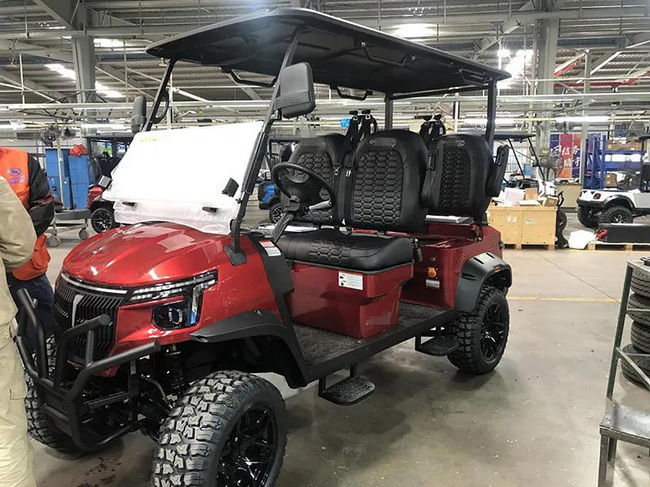
The original article offers a helpful rule of thumb: electric carts are best for most people, while gas carts are preferable if you "push the limits" of your cart daily. Building on that, here is a more structured decision framework.
Choose electric if: [golfcartresource]
1. You operate on golf courses, resorts, or gated communities with predictable routes and easy access to overnight charging.
2. You value quiet, low‑emission operation for guest experience or community regulations.
3. You want lower total cost of ownership, especially across fleets.
4. Your daily driving distance is typically under 30–40 miles per cart.
Choose gas if: [galaxygolfcars]
1. You manage large or remote properties (farms, ranches, industrial sites) with limited charging infrastructure.
2. Your carts must run all day with minimal downtime, making quick refueling critical.
3. You regularly carry heavy loads or tow equipment over hills and off‑road terrain.
4. Ambient temperatures or usage patterns make battery performance less predictable and you cannot easily add charging capacity.
Below is a consolidated view of the most important differences for 2026 buyers. [galaxygolfcars]
| Category | Electric Golf Cart | Gas Golf Cart |
|---|---|---|
| Purchase price | Often similar; sometimes slightly higher for lithium packs. (golfcartsearch) | Comparable upfront price; slight edge at low trim levels. (golfcartsearch) |
| Energy cost per year | Around USD 50–150 with standard usage. (golfcartsearch) | Around USD 250–500 depending on fuel prices. (golfcartsearch) |
| Maintenance | Fewer moving parts, mainly battery and basic checks. (golfcartsearch) | Regular engine service, oil changes, more components. (carts-and-parts) |
| Range | 25–40 miles (lead‑acid), 60–70+ miles (lithium). (galaxygolfcars) | 100–180 miles per tank in typical use. (galaxygolfcars) |
| Torque feel | Instant torque, strong low‑speed pull. (golfcartsearch) | Good sustained power at higher speeds and steep grades. (golfcartsearch) |
| Top speed (stock) | 12–15 mph typical; 25–30 mph for performance setups. (golfcartsearch) | 15–19 mph in many models. (golfcartsearch) |
| Noise | Very quiet, ideal for residential areas. (golfcartsearch) | Noticeable engine sound and vibration. (golfcartsearch) |
| Emissions | Zero direct exhaust emissions. (golfcartsearch) | Produces exhaust gases; impacted by local regulations. (golfcartsearch) |
| Best suited for | Golf courses, resorts, communities, light commercial fleets. (golfcartsearch) | Large, remote properties, heavy‑duty commercial and utility use. (galaxygolfcars) |
From a golf cart OEM market standpoint, demand has been shifting toward customizable electric fleets that can be branded and configured for specific use cases. [lvtonggolfcart]
Key trends we see when working with overseas brands, wholesalers, and manufacturers: [lvtonggolfcart]
- Electrification of fleets: Many partners now specify electric as the default and keep gas only for specific high‑duty segments.
- Brand customization: Requests for custom body colors, seat materials, dashboards, lighting systems, and digital interfaces to differentiate in local markets.
- Component OEM supply: Growing demand for branded steering wheels, lighting systems, suspension parts, and bespoke battery packs to match local regulatory and branding requirements.
As BorCart, we support clients with OEM and ODM services, including private‑label golf carts, EVs, and a full portfolio of automotive components designed for global certification and local market adaptation. [lvtonggolfcart]
Use this checklist before you decide on gas vs electric golf carts for your project or business.
1. Define your primary application.
- Golf course, resort, community, industrial site, farm, or rental business? [golfcartsearch]
2. Measure realistic daily mileage.
- Average and maximum mileage per cart per day. [galaxygolfcars]
3. Evaluate charging and fueling infrastructure.
- Can you provide overnight charging or do you need on‑demand refueling? [galaxygolfcars]
4. Assess terrain and load.
- Flat vs hilly, paved vs off‑road, passengers vs heavy cargo. [carts-and-parts]
5. Consider noise and emissions constraints.
- Local community rules, resort guest expectations, sustainability commitments. [finance.yahoo]
6. Plan for 5–10 years of ownership.
- Total cost of fuel/power, maintenance, and eventual battery or engine replacement. [carts-and-parts]
By answering these questions, you will quickly see whether electric or gas lines up better with your environment and long‑term business goals.
If you are planning to launch your own golf cart brand, upgrade an existing fleet, or source components for assembly, working directly with an experienced OEM partner will save you time, cost, and technical risk. [lvtonggolfcart]
BorCart offers:
- Custom electric and gas golf carts for private‑label brands and fleet projects.
- Modular powertrain options, including advanced lithium‑ion packs, AC motors, and smart controllers.
- Automotive‑grade components, from suspension and braking systems to lighting and body kits.
Tell us your target market, use scenarios, and required certifications, and our engineering team will help you configure a future‑ready golf cart solution that meets both performance and regulatory expectations.
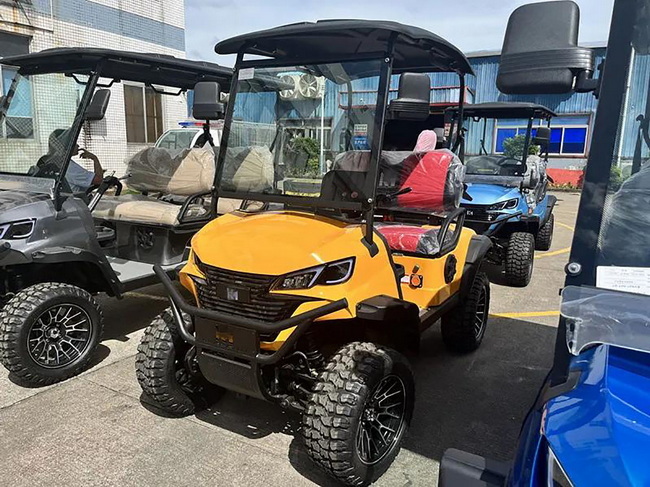
1. Are electric golf carts always cheaper than gas carts?
Not always at the moment of purchase, especially if you select high‑end lithium batteries, but over 10 years electric carts typically cost USD 3,000–4,000 less to own due to lower energy and maintenance costs. [carts-and-parts]
2. How long do golf cart batteries last?
With proper maintenance, traditional lead‑acid batteries typically last 4–8 years, while many lithium‑ion packs can remain effective even longer, depending on usage cycles and charging practices. [centralcoastcarts]
3. Can electric carts handle hills and heavy loads?
Modern electric carts with AC motors and appropriate gear ratios handle typical golf‑course hills and moderate loads very well, thanks to instant torque and refined controller logic. For extreme terrain or continuous towing, gas still has an edge. [golfcartresource]
4. Is it worth upgrading to lithium batteries?
For high‑utilization fleets and demanding users, lithium batteries offer longer range, faster charging, and lower lifetime maintenance, making them attractive despite higher upfront cost. For light‑duty personal use, high‑quality lead‑acid packs can still be a cost‑effective choice. [centralcoastcarts]
5. How is the global golf cart market changing?
Recent market analyses show the golf cart OEM sector growing at around 4.7% CAGR to 2033, with electric carts taking a steadily larger share driven by emission regulations and demand for quiet, sustainable transport. OEM partners like BorCart are increasingly focused on electric product lines and customizable fleets to serve this shift. [sphericalinsights]
1. GolfCarts.com – "Gas vs Electric Golf Carts."
[https://golfcarts.com/gas-vs-electric-golf-carts/]
2. GolfCartSearch – "Electric vs Gas Golf Cart: Complete Comparison Guide 2026."
[https://golfcartsearch.com/blog/electric-vs-gas-golf-cart-comparison-2026]
3. Carts And Parts – "Gas vs Electric Golf Cart | Complete Comparison Guide."
[https://carts-and-parts.com/gas-vs-electric-golf-cart/]
4. Galaxy Golf Cars – "Electric vs. Gas Golf Carts — Which is Right for You in 2026?"
[https://galaxygolfcars.com/electric-vs-gas-golf-carts-which-is-right-for-you-in-2026/]
5. Golf Cart Resource – "Golf Cart Trends for 2026: What's Driving the Industry Forward."
[https://golfcartresource.com/golf-cart-trends-for-2026-whats-driving-the-industry-forward/]
6. Central Coast Carts – "What to Look for in 2025 Golf Cart Technology."
[https://centralcoastcarts.com/central-coast-carts/2025-golf-cart-technology/]
7. Intermountain Golf Cars – "The 2025 Golf Cart Technical Revolution."
[https://intermountaingolfcars.com/the-2025-golf-cart-technical-revolution/]
8. Spherical Insights – "Golf Cart OEMs Market Size, Growth, Trends, Reports to 2033."
[https://www.sphericalinsights.com/press-release/golf-cart-oem-market]
9. Yahoo Finance – "Global Golf Cart OEMs Market Size To Exceed a Significant Share …"
[https://finance.yahoo.com/news/global-golf-cart-oems-market-060000587.html]
10. OEM Golf Cart Manufacturer Article – "OEM Golf Cart Manufacturer for Commercial Projects."


