


Views: 222 Author: BorCart Publish Time: 2026-05-05 Origin: Site


For most families, retirees, and community residents, neighborhood golf carts and neighborhood electric vehicles (NEVs) have quietly become the most practical way to move within a community—cheaper than a second car, easier to park, and far more fun for daily errands or school runs. Drawing on my experience working with global brands and OEM factories in China, this guide walks you through how to choose the best golf carts for neighborhood use, what features truly matter in 2026, and how OEM manufacturing partners like BorCart help brands and distributors create differentiated, street‑ready carts for their local markets. [dragon-era]
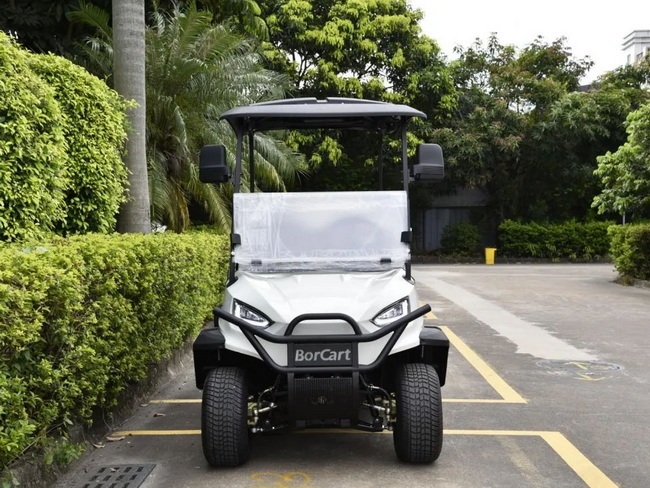
In 2026, the line between a traditional golf cart and a Neighborhood Electric Vehicle (NEV) has almost disappeared in many communities. A NEV is a compact, 100% electric, street‑legal vehicle designed for short trips on local roads, typically allowed on roads with limits up to 35 mph and capped at a top speed of around 25 mph in many markets. [titanwnc]
Key characteristics of modern neighborhood golf carts and NEVs [solanaev]
- Top speed: Normally limited to about 20–25 mph, depending on local regulations and classification.
- Road access: Typically allowed on community roads and public streets up to 35 mph, with required safety equipment.
- Power: Fully electric, powered by rechargeable lead‑acid or increasingly by lithium battery packs.
- Capacity: Usually 2–6 passengers, with 4‑seat and 6‑seat layouts dominating neighborhood use.
- Primary use: Local commuting, school runs, shopping, visiting neighbors, and leisure drives.
From an OEM and manufacturing perspective, this shift means more demand for street‑legal packages, lithium power systems, and comfort‑oriented chassis designs rather than purely golf‑course configurations. [marshell]
Based on recent residential market guides and dealer reports, neighborhood golf carts and NEVs are now among the fastest‑growing categories in the light electric vehicle space. [canyonlakemobile]
Main reasons homeowners are switching to neighborhood carts [golfcartsearch]
- Lower total cost of ownership: Charging at home and minimal maintenance make carts cheaper than running a second car for short trips.
- Eco‑friendly commuting: Electric drivetrains help households lower emissions and align with community sustainability rules.
- Community lifestyle: Open‑air seating, slower speed, and compact design encourage more interaction with neighbors and a relaxed pace of life.
- Parking convenience: Carts fit into smaller spaces, making them ideal for resort towns, gated communities, and high‑density neighborhoods.
- Customization culture: Owners increasingly treat neighborhood carts like personal lifestyle vehicles—adding custom paint, wheels, audio, and storage.
For OEM suppliers like BorCart, this demand translates into higher interest in custom bodies, branded trims, and modular parts that help local dealers and brands position differentiated neighborhood models at different price points. [made-in-china]
Choosing the best golf cart for neighborhood use is not just about brand names; it is about matching features to how you actually drive, who rides with you, and what your local regulations require. [eacarts]
To be driven on public or community roads in many regions, carts and NEVs need a minimum safety and lighting package. [cologolfandturf]
Typical street‑legal requirements include (varies by jurisdiction): [solanaev]
- Headlights, tail lights, and brake lights
- Turn signals and hazard indicators
- Side mirrors and rearview mirror
- Horn and clearly visible VIN
- Seat belts for each seating position in many areas
- Reflectors and approved tires suitable for paved roads
From an OEM standpoint, it is far more efficient for brands to specify a complete street‑legal kit (wiring harnesses, lights, mirrors, belts, switches) at the factory level instead of retrofitting later locally. [dragon-era]
Most neighborhood buyers choose between 2, 4, and 6‑seat configurations depending on family size and frequent use cases. [eacarts]
- 2‑seat carts: Ideal for couples and small communities with tight parking.
- 4‑seat carts: The most popular layout for families, school runs, and multi‑purpose neighborhood use.
- 6‑seat carts: Perfect for resorts, rentals, or large families in busy gated communities.
BorCart and other OEM factories commonly offer modular frames that can be built as 2+2 (rear‑facing seats) or extended 6‑seat layouts on the same platform, reducing tooling costs for brands. [made-in-china]
Battery choice is one of the biggest decisions that affects running cost, performance, and long‑term satisfaction. [canyonlakemobile]
Lead‑acid vs. lithium for neighborhood use [golfcartsearch]
- Lead‑acid batteries
- Lower upfront cost
- Heavier, slower charging, and shorter lifespan
- Require more maintenance (water level checks, cleaning terminals)
- Lithium batteries
- Higher initial price but significantly lighter
- Longer cycle life, fast charging, and more consistent performance
- Lower maintenance and better range per charge
For typical neighborhood driving, a real‑world range around 25–40 miles per charge is enough for most households, with lithium packs often on the higher end of that spectrum. [solanaev]
Neighborhood roads look smooth, but speed bumps, curbs, and patched asphalt can quickly reveal a poorly tuned suspension. [eacarts]
Look for: [canyonlakemobile]
- Independent front suspension or upgraded shocks for comfort.
- Street‑oriented tires for quieter, more efficient rolling on pavement.
- Lifted vs. non‑lifted frames: Lifted carts look aggressive and help with visibility but can slightly raise the center of gravity; low‑slung carts feel more "car‑like."
From the OEM side, offering multiple suspension and wheel packages from a single base chassis is a cost‑effective way for brands to address both "comfort‑first" and "off‑road‑style" neighborhood buyers. [dragon-era]
Although neighborhood usage is now dominated by electric models, some regions still consider gas carts for unique conditions. [golfcartsearch]
Electric carts are usually the first choice for neighborhoods. [canyonlakemobile]
Advantages:
- Quiet operation that keeps communities peaceful.
- Zero tailpipe emissions, fitting clean‑energy and HOA requirements.
- Lower running cost when charged at home on standard outlets.
- Instant torque that feels smooth and responsive in low‑speed driving.
Gas carts still appear in rural communities, hilly areas, or commercial fleets that need extended runtime without charging downtime. [eacarts]
Advantages:
- Long range between refuels.
- Stronger performance on steep inclines.
- Quick refuelling where charging infrastructure is limited.
BorCart and many other OEM manufacturers now focus primarily on electric platforms but can design frames and components that support both gas and EV drivetrains for markets that require dual‑energy portfolios. [marshell]
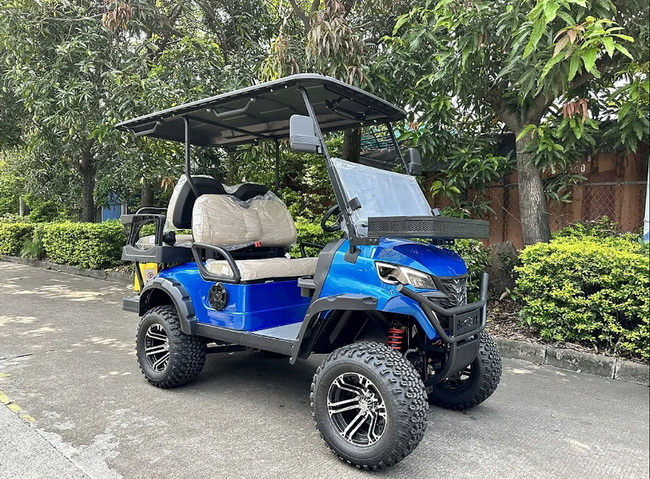
Based on current NEV regulations, brand offerings, and consumer reviews in the U.S. market, an ideal neighborhood‑focused cart in 2026 tends to share similar core specifications. [cologolfandturf]
| Feature | Expert Recommendation For 2026 Neighborhood Use |
|---|---|
| Top speed | Around 20–25 mph, aligned with NEV/LSV rules in many regions (solanaev) |
| Road type | Streets with speed limits up to 35 mph where allowed (solanaev) |
| Drivetrain | 100% electric with modern controller and regenerative braking where possible (solanaev) |
| Battery | Lithium pack for low‑maintenance daily use and long cycle life (golfcartsearch) |
| Range per charge | 25–40 miles for neighborhood errands and leisure drives (golfcartsearch) |
| Seats | 4‑seat (2+2) layout for families, 6‑seat for resorts or large households (golfcartsearch) |
| Safety and street‑legal | Lights, signals, mirrors, horn, belts, reflectors, compliant VIN and labeling (solanaev) |
| Comfort | Upgraded seats, quality suspension, and street‑oriented tires (eacarts) |
| Customization options | Body color, wheels, upholstery, roof, windscreen, infotainment/audio, storage accessories (golfcartsearch) |
As an OEM partner, BorCart can build brand‑specific versions of this template with different body shells, lighting signatures, or dashboards, helping dealers position "premium," "value," and "fleet" versions with shared core components. [marshell]
Industry surveys and dealer feedback show that owners rarely use neighborhood carts for single tasks; instead, they become multi‑purpose daily tools. [golfcartsearch]
Common neighborhood use patterns [solanaev]
- Short hops to community pools, gyms, or clubhouses.
- Morning school runs within the same district or gated community.
- Evening grocery trips or local shopping.
- Visiting friends, delivering parcels, or picking up takeout.
- Leisure drives to parks, lakes, or beachfront paths where allowed.
For OEM configuration, this means cargo options (rear flip seats, storage boxes, baskets) and weather protection (windshields, enclosures) are not "nice‑to‑have" extras; they are critical to customer satisfaction and repeat sales. [dragon-era]
If you are advising end customers—or planning your own branded lineup—this step‑by‑step checklist keeps decisions focused on what truly matters. [eacarts]
1. Confirm local laws and HOA rules
- Verify whether NEVs or low‑speed vehicles are allowed on your roads, and what safety equipment is mandatory. [cologolfandturf]
2. Define your core use cases
- Daily school runs, grocery trips, or resort rentals require different seating, range, and durability levels. [canyonlakemobile]
3. Choose seating and body style
- Decide between 2, 4, or 6 seats, and whether you need a rear flip‑down cargo seat. [golfcartsearch]
4. Select battery type and range
- Decide if lithium's higher upfront price is justified by lower maintenance and greater longevity in your scenario. [canyonlakemobile]
5. Evaluate comfort and ride quality
- Test suspension, braking, noise levels, and seat comfort, especially if older family members ride frequently. [eacarts]
6. Check after‑sales support and parts
- Ensure dealers or fleet managers have reliable access to OEM parts, technical documentation, and service support. [marshell]
7. Plan customization and branding
- Decide which visual and functional upgrades matter now (color, wheels, audio) and which can be added later via OEM accessories. [made-in-china]
As a Chinese manufacturer focusing on golf carts, electric vehicles, and automotive components, BorCart operates as a behind‑the‑scenes partner for overseas brands, distributors, and regional assemblers who need stable supply, compliant designs, and customizable options. [made-in-china]
Based on standard capabilities among Chinese golf cart OEMs, BorCart can support international clients in several ways. [dragon-era]
- Platform customization: Wheelbase, seating layout, and body shell design tailored to each brand's positioning.
- Battery and powertrain options: Lead‑acid or lithium systems matched to local price points and performance needs.
- Street‑legal kits: Integrated lighting, mirrors, belts, and wiring harnesses configured to target regulations.
- Branding and cosmetics: Body colors, decals, badges, and upholstery aligned with brand identity.
- Component supply: Long‑term supply agreements for spare parts, accessories, and upgrade kits.
For neighborhood markets, this allows overseas companies to launch a full range of neighborhood carts under their own brand, while relying on BorCart for engineering, manufacturing, and logistics. [made-in-china]
If you are a brand owner, wholesaler, or local assembler planning to launch or upgrade a line of neighborhood golf carts, partnering with an experienced OEM like BorCart helps you move faster while maintaining quality and compliance. You can collaborate on custom neighborhood platforms, street‑legal packages, and branded accessories that match your local regulations and customer expectations in 2026 and beyond. [dragon-era]
Contact the BorCart team to discuss your target market, volume, and customization needs, and start designing neighborhood carts that feel tailored to your customers—before your competitors do. [made-in-china]
Q1: Are neighborhood golf carts and NEVs legal on public roads?
In many regions, NEVs and low‑speed vehicles are allowed on public roads with speed limits up to around 35 mph, as long as they meet safety and equipment requirements. Always check local regulations before driving on public streets. [cologolfandturf]
Q2: How fast can a street‑legal neighborhood golf cart go?
Most NEV‑classified carts are legally capped at about 25 mph, which balances safety and practicality for local commuting. Some communities impose even lower limits inside gated areas. [solanaev]
Q3: How far can a neighborhood golf cart drive on one charge?
For residential use, many modern electric carts offer a practical range of 25–40 miles per charge, depending on battery type, load, terrain, and driving style. [canyonlakemobile]
Q4: Is a lithium battery worth the extra cost for neighborhood use?
Lithium batteries cost more upfront but typically provide longer lifespan, faster charging, better performance, and less maintenance than lead‑acid packs, making them a strong choice for frequent neighborhood driving. [golfcartsearch]
Q5: Can BorCart customize golf carts for my brand or dealership?
Like many established Chinese EV and golf cart manufacturers, BorCart can provide OEM services that include body customization, branding, street‑legal kits, and component supply tailored to the needs of overseas brands, distributors, and assemblers. [marshell]
1. GolfCartSearch – "Best Golf Carts for Neighborhood Use (2026 Guide)" – price ranges, specs, and use‑case insights. [https://golfcartsearch.com/blog/best-golf-carts-for-neighborhoods-guide-2026] [golfcartsearch]
2. EAC Carts – "Best Golf Carts for Neighborhoods: Top Picks for 2026" – recommended speeds and comfort considerations. [https://www.eacarts.com/blogs/blog/best-golf-cart-for-neighborhood] [eacarts]
3. Titan WNC – "What Are Neighborhood Electric Vehicles (NEVs) and How Do They Work?" – NEV definition and typical features. [https://titanwnc.com/2023/04/what-are-neighborhood-electric-vehicles-nevs-and-how-do-they-work/] [titanwnc]
4. Solana EV – "What Is a Neighborhood Electric Vehicle Explained" – NEV top speed, road access, and typical use. [https://solanaev.com/what-is-a-neighborhood-electric-vehicle/] [solanaev]
5. Colo Golf & Turf – "Why You Should Consider Buying a Neighborhood Electric Vehicle (NEV)" – NEV classification and safety requirements. [https://cologolfandturf.net/why-you-should-consider-buying-a-neighborhood-electric-vehicle-nev/] [cologolfandturf]
6. Canyon Lake Mobile – "Best Golf Carts for Residential Use in the United States (2026 Guide)" – residential feature preferences and brand positioning. [https://canyonlakemobile.com/blogs/news/best-golf-carts-for-residential-use-in-the-united-states-2026-guide] [canyonlakemobile]
7. Dragon‑Era – "Top 10 Golf Cart Manufacturers From China" – OEM practice overview and customization notes. [https://dragon-era.com/top-10-golf-cart-manufacturers-from-china/] [dragon-era]
8. Marshell Electric Vehicle – Company Profile – reference for Chinese EV manufacturing scale and capability. [https://www.marshell.net/CompanyProfile/] [marshell]
9. Made‑in‑China – Golf Cart Manufacturers Directory – OEM manufacturing context for exports. [https://www.made-in-china.com/manufacturers-directory/item3/Golf-Cart-1.html] [made-in-china]
10. Tigon Golf Carts – "Best Golf Carts for Neighborhood Use – Best Deals, Services & Options Available" – original reference article and dealer positioning. [https://tigongolfcarts.com/best-golf-carts-for-neighborhood-use-best-deals-services-options-available/]


