


Views: 222 Author: BorCart Publish Time: 2026-05-03 Origin: Site


Choosing between new vs used golf carts is no longer a simple price comparison; it is a long‑term decision about safety, battery technology, customization potential, maintenance risk, and total cost of ownership. As an OEM golf cart and parts manufacturer working with global brands, distributors, and fleet operators, we see every stage of a cart's life cycle—on the production line, in the field, and on the secondary market—so this guide combines hands‑on experience with the latest industry best practices. [diamondgolfcars]

By the end of this article, you will clearly know whether a new golf cart or a used golf cart better fits your budget, usage scenario, and risk tolerance—and what to check before signing any contract. We will also show you how working with an experienced OEM manufacturer like BorCart can reduce long‑term ownership costs, even if you start with used carts and upgrade them over time. [backyardescapism]
Modern new golf carts have changed dramatically over the last decade, especially with the shift from lead‑acid to lithium batteries and the rise of neighborhood and resort use beyond the golf course. [diamondgolfcars]
For many buyers, a new golf cart delivers maximum peace of mind and minimum guesswork. [diamondgolfcars]
- Factory warranty and dealer support: New carts usually include comprehensive manufacturer warranties and dealer service support, reducing unexpected repair costs in the first years. [cunninghamgolfcar]
- Latest battery technology: Many new models are designed around lithium batteries, which offer lighter weight, faster charging, longer life cycles, and significantly less maintenance than traditional flooded lead‑acid packs. [golfcartgallery]
- Modern safety and comfort features: LED lights, improved braking, digital speedometers, upgraded dashboards, Bluetooth audio, and multi‑passenger configurations are now common, especially on lifestyle‑oriented models. [cunninghamgolfcar]
- Customization from day one: Color schemes, seats, wheels, lift kits, storage solutions, and infotainment options can be configured before delivery, which is ideal for branding, community fleets, and resorts. [extremekartz]
- Predictable ownership: With new components, there is lower short‑term risk of major failures, which simplifies budgeting for golf courses and commercial operators. [richmondequipment]
Even with the clear technical advantages, a new golf cart is not always the right choice. [thekartking]
- Higher upfront price: New carts typically sit at the top of the price range, often several thousand dollars more than comparable used units. [backyardescapism]
- Faster early depreciation: Like most vehicles, new carts lose value the moment they are purchased and see steeper depreciation in the first few years than well‑chosen used carts. [backyardescapism]
- Over‑spec for light use: If you only need a cart for occasional use at a vacation property or as a backup vehicle in a small fleet, the premium for "latest and greatest" may not pay off. [cunninghamgolfcar]
From an OEM and fleet‑planning perspective, new carts usually make the most sense when: [richmondequipment]
- You run a golf course, resort, or community where downtime directly impacts revenue and guest satisfaction.
- You want to standardize a brand image across a fleet (consistent colors, logos, seat designs, lighting packages).
- You are converting to lithium power and want factory‑engineered battery, BMS, and charger integration.
- Your local regulations require specific safety or street‑legal features that older models lack. [kevinharvickgolfcarts]
Used golf carts appear attractive because the sticker price is lower—but the true cost depends heavily on history, inspection, and how you plan to use the cart. [thekartking]
A well‑chosen used cart can be a smart financial move, especially for mechanically savvy owners or buyers who can rely on trusted technicians. [thekartking]
- Lower purchase price: Used carts often cost a fraction of new models, with typical resale ranges significantly below new price tags depending on age and configuration. [backyardescapism]
- Depreciation already absorbed: Much of the initial value drop has already happened, so used carts can hold their value relatively well if kept in good condition. [golfcartgallery]
- Flexible upgrade path: Owners can upgrade batteries, controllers, seats, and accessories gradually, spreading out costs while customizing to their exact needs. [reddit]
- Great for low‑demand usage: For light residential or farm use, a used cart can be an economical runabout if inspected and maintained correctly. [thekartking]
In our experience supporting dealers and fleets, the biggest problems with used carts come from unknown history and incorrect parts sourcing. [golfcartstuff]
- Battery replacement shock: Many buyers save on purchase price but immediately face full battery pack replacement, which can cost thousands of dollars, wiping out the initial savings. [golfcartgallery]
- Unseen structural wear: Frame corrosion, worn steering components, and damaged suspension may not be obvious without a lift and proper inspection. [richmondequipment]
- Electrical "mystery issues": Modified wiring, mismatched controllers, and low‑quality aftermarket accessories can create intermittent faults that are time‑consuming to diagnose. [extremekartz]
- Limited or no warranty: Many used carts are sold "as‑is," leaving the buyer fully exposed if major components fail soon after purchase. Some certified used programs exist but vary widely in quality. [cunninghamgolfcar]
A used golf cart can be a strategic choice if you: [backyardescapism]
- Have reliable technical support (in‑house maintenance team or trusted dealer).
- Plan to rebuild or upgrade key systems (batteries, controllers, seats, tires) using quality OEM parts.
- Operate on a tight initial budget but are prepared to invest in staged upgrades.
- Need carts for shorter ownership cycles, such as seasonal rentals or temporary facilities.
The table below summarizes how new vs used golf carts usually compare across key decision factors. [diamondgolfcars]
| Factor | New Golf Carts | Used Golf Carts |
|---|---|---|
| Upfront Cost | Highest purchase price, especially for lithium and premium trims. (backyardescapism) | Lower entry cost; pricing varies by age, condition, and brand. (backyardescapism) |
| Depreciation | Steeper depreciation in first 3–5 years. (diamondgolfcars) | Early depreciation already absorbed; value retention improves if condition is good. (diamondgolfcars) |
| Battery Situation | New pack, often lithium‑ready or lithium‑equipped from factory. (diamondgolfcars) | Battery age varies; may require immediate replacement, especially for older lead‑acid packs. (backyardescapism) |
| Warranty Coverage | Full manufacturer warranty, sometimes extended by dealers. (diamondgolfcars) | Commonly sold as‑is or with limited coverage; certified used programs are exceptions. (backyardescapism) |
| Maintenance Predictability | High; components are new and service intervals are clear. (backyardescapism) | Variable; risk depends on prior use, maintenance, and modifications. (backyardescapism) |
| Feature Set | Latest safety, comfort, and connectivity features, ready for customization. (diamondgolfcars) | Features depend on model year; may lack modern lighting, displays, or comfort upgrades. (backyardescapism) |
| Customization Strategy | Configure at purchase; higher initial cost but integrated design. (diamondgolfcars) | Customize gradually; good for budget shoppers but requires careful parts selection. (reddit) |
| Ideal Buyer | Fleet operators, resorts, communities, and users prioritizing reliability and warranty. (diamondgolfcars) | DIY owners, budget‑conscious buyers, and operations with strong in‑house maintenance. (backyardescapism) |
If you decide to pursue used golf carts, a structured inspection process is critical for avoiding hidden costs. [richmondequipment]
1. Verify identity and history
- Check serial number, make, and model to confirm compatibility with OEM parts catalogs and service documentation. [golfcartstuff]
- Ask for service records, prior ownership type (private owner vs golf course fleet), and any accident or flood history. [golfcartgallery]
2. Evaluate batteries and charging system
- Inspect battery age codes, case condition, terminals, and signs of leakage or swelling; heavily corroded or mismatched batteries are a red flag. [backyardescapism]
- Confirm charger type and settings match the battery chemistry (lead‑acid vs lithium); incorrect charging shortens battery life dramatically. [richmondequipment]
3. Inspect chassis, suspension, and steering
- Look for rust on frame rails, welds, and mounting points, especially on coastal or humid‑climate carts. [golfcartgallery]
- Test steering play, suspension travel, and brake performance; uneven tire wear may signal deeper issues. [backyardescapism]
4. Check electrical and accessories
- Test all lights, horn, display, and accessories; flickering or inconsistent performance may indicate wiring problems. [golfcartstuff]
- Watch for low‑quality "clone" parts or unbranded electronics, which can compromise reliability. [extremekartz]
5. Road‑test under realistic load
- Drive on flat and inclines with typical passenger load to feel acceleration, braking, and noise. [golfcartgallery]
- Monitor for unusual vibrations, smells, or warning indicators, which often emerge only under load. [backyardescapism]
When our OEM partners source used fleets for refurbishment, they follow a similar checklist, then plan standardized upgrades (batteries, braking components, suspension, and lighting) using certified OEM parts to ensure consistent performance. [extremekartz]
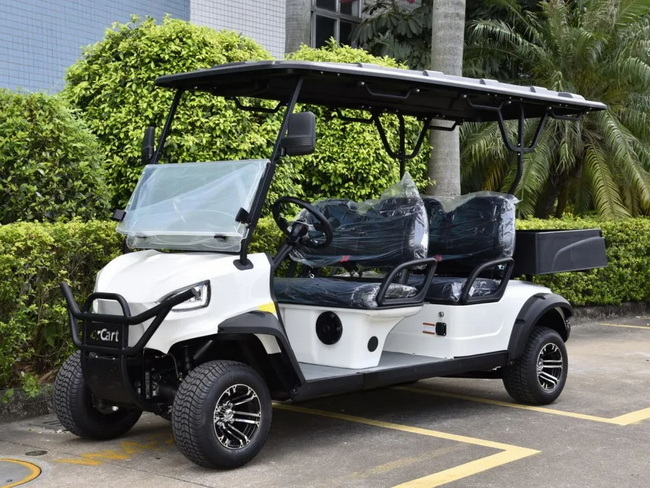
Battery technology is now the single most important factor in golf cart performance, range, and long‑term cost. [diamondgolfcars]
Many newer carts are designed around lithium battery systems, and older carts can often be upgraded using OEM‑approved kits. [diamondgolfcars]
- Longer life span: Lithium packs can deliver more charge cycles than lead‑acid, reducing replacement frequency. [richmondequipment]
- Lower maintenance: No watering, less corrosion, and fewer routine service tasks mean less downtime. [diamondgolfcars]
- Improved performance: Lithium maintains voltage more consistently, improving acceleration and hill‑climbing under load. [richmondequipment]
- Weight savings: Reduced battery weight can improve handling, braking, and overall efficiency. [golfcartgallery]
For buyers comparing new vs used golf carts, it is essential to consider not just the purchase price but the cost per year of usable battery life, especially if future lithium upgrades are part of the plan. [richmondequipment]
Whether you choose a new or used cart, long‑term reliability depends heavily on the quality of parts used for maintenance and upgrades. [golfcartstuff]
As an OEM supplier, we see daily how component quality affects safety and user experience. [extremekartz]
- Fit and compatibility: OEM parts are engineered for specific models, which reduces installation issues and unexpected failures. [extremekartz]
- Safety and compliance: Brakes, steering, and structural components from reputable OEMs meet tested safety standards that many low‑cost clones do not. [golfcartstuff]
- Consistent performance: OEM electrical and battery components align with the cart's controller and wiring design, reducing the risk of overheating or premature wear. [golfcartstuff]
Strategic use of quality aftermarket accessories can still make sense—for example, cosmetic upgrades or non‑critical accessories—but should be chosen from reputable brands with strong support and reviews. [extremekartz]
Drawing on industry patterns and buyer feedback, here is how different user types often decide between new vs used golf carts. [diamondgolfcars]
- Golf courses and resorts: Often favor new or late‑model carts with strong warranties and standardized specs, then rotate them to secondary markets after several seasons. [cunninghamgolfcar]
- Master‑planned communities: Mix of new and certified pre‑owned carts; safety features, lighting, and street‑legal compliance are key. [kevinharvickgolfcarts]
- Dealers and fleet managers: Frequently purchase 3‑ to 5‑year‑old lease‑return carts, refurbish them with OEM parts and new batteries, then resell as certified used. [backyardescapism]
- Individual homeowners: Split between value‑driven used carts and lifestyle‑focused new carts, depending on budget and desired features like lifts, audio, and premium seating. [reddit]
If you are still weighing new vs used golf carts, you do not have to decide alone. As an experienced OEM manufacturer of golf carts and automotive components, BorCart can: [diamondgolfcars]
- Supply complete new carts tailored to your brand, community, or fleet standards.
- Help you design a refurbishment and upgrade program for used carts using high‑quality OEM parts.
- Advise on battery strategy, from lead‑acid replacements to full lithium conversions.
- Work with your team to specify street‑legal and safety configurations that meet local regulations. [kevinharvickgolfcarts]
Talk to our OEM team today to discuss your project, get a tailored cost‑of‑ownership comparison, and design the right mix of new and used carts for your operation.
1. Is a new golf cart always more cost‑effective in the long run?
Not always. New carts usually provide lower risk, stronger warranties, and better battery technology, but well‑chosen used carts can be more cost‑effective if you buy at the right price and budget for upgrades. [golfcartgallery]
2. How many years does a golf cart battery pack typically last?
Lead‑acid packs often last around 3–5 years with proper maintenance, while lithium packs can last significantly longer in terms of charge cycles and usable capacity if operated within specifications. [richmondequipment]
3. Should I prioritize lithium batteries when buying my next cart?
If you have the budget and plan to keep the cart for many years or use it heavily, lithium's lower maintenance, longer life, and consistent performance usually justify the higher initial cost. For low‑use, seasonal applications, a well‑maintained lead‑acid system may still be adequate. [diamondgolfcars]
4. What is the safest way to buy a used golf cart?
Verify serial number and service records, follow a structured inspection checklist, test batteries and charging system, and have a qualified technician review the cart before purchase. Whenever possible, choose certified used programs supported by reputable dealers or OEM partners. [cunninghamgolfcar]
5. Can I mix OEM and aftermarket parts on the same cart?
Yes, but critical systems such as brakes, steering, and structural components should ideally remain OEM for safety and reliability, while cosmetic and non‑critical accessories can be high‑quality aftermarket. Always verify compatibility with your cart's make, model, and controller before installing upgrades. [golfcartstuff]
1. GolfCarts.com – "New vs Used Golf Carts" (original article) – [https://golfcarts.com/new-vs-used-golf-carts/]
2. Diamond Golf Cars – "New vs. Used Golf Carts | Which Should You Buy?" – [https://diamondgolfcars.com/new-vs-used-golf-carts/] [diamondgolfcars]
3. Backyard Escapism – "Value Comparison of New vs Used Carts, Explained" – [https://backyardescapism.com/blogs/the-escapist/value-comparison-of-new-vs-used-carts] [backyardescapism]
4. The Kart King – "The Pros and Cons of Buying a Used Golf Cart Versus a New One" – [https://thekartking.com/the-pros-and-cons-of-buying-a-used-golf-cart-versus-a-new-one/] [thekartking]
5. Cunningham Golf Car – "New Golf Carts vs. Used Golf Carts: Which One Should You Buy?" – [https://cunninghamgolfcar.com/buying-guide/new-golf-carts-vs-used-golf-carts-which-one-should-you-buy/] [cunninghamgolfcar]
6. ExtremeKartz – "Aftermarket vs OEM Golf Cart Parts Guide" – [https://extremekartz.com/blogs/extreme-blogging/aftermarket-vs-oem-golf-cart-parts-guide] [extremekartz]
7. GolfCartStuff – "Golf Cart Parts Sourcing Tips: Buy Smart, Avoid Clones" – [https://golfcartstuff.com/blogs/news/golf-cart-parts-sourcing-tips-buy-smart-avoid-clones] [golfcartstuff]
8. Richmond Equipment – "A Comprehensive Guide to Buying OEM Parts for Your Golf Cart" – [https://www.richmondequipment.com/blog/a-comprehensive-guide-to-buying-oem-parts-for-your-golf-cart--104644] [richmondequipment]
9. Golfcartgallery.com – "Used vs New Golf Carts (2025 Guide)" – [https://golfcartgallery.com/used-vs-new-golf-carts-2025/] [golfcartgallery]
10. Google Search Central – "SEO Starter Guide" – [https://developers.google.com/search/docs/fundamentals/seo-starter-guide] [developers.google]
11. Team WTI – "Content Strategy and Google's E-E-A-T Principles" – [https://teamwti.com/your-content-strategy-high-quality-content/] [teamwti]


