


Views: 222 Author: Leah Publish Time: 2026-01-09 Origin: Site


Content Menu
● The Different Jobs Batteries Perform
● Voltage: Golf Car Systems vs Passenger Cars
● Deep‑Cycle vs Starter Design
● Capacity, Range, and Power Delivery
● Chemistry Choices for Golf Car Batteries
>> Flooded Lead‑Acid (Wet) Batteries
>> AGM and Gel Lead‑Acid Batteries
>> Lithium‑Ion (LiFePO4) Golf Car Batteries
● Why You Should Not Swap Car and Golf Car Batteries
● Lifespan and Maintenance Expectations
● Performance in Real‑World Golf Car Scenarios
● Choosing the Right Golf Car Battery System
● BorCart as an OEM Golf Car Partner
● FAQ
>> 1. Are golf car batteries the same as car batteries?
>> 2. Can I install regular car batteries in my golf car?
>> 3. How long do golf car batteries typically last?
>> 4. What is the best battery type for a modern golf car?
>> 5. How can an OEM like BorCart help with my golf car battery choice?
Golf car batteries are not the same as car batteries; they are designed as deep‑cycle power sources that deliver steady energy over long periods, while car batteries are starter units built for short, powerful bursts to crank an engine. Understanding this difference is essential for anyone who owns, operates, or specifies a golf car fleet, from course managers and resort operators to hunting, sightseeing, and multi‑purpose utility users.[1][2]
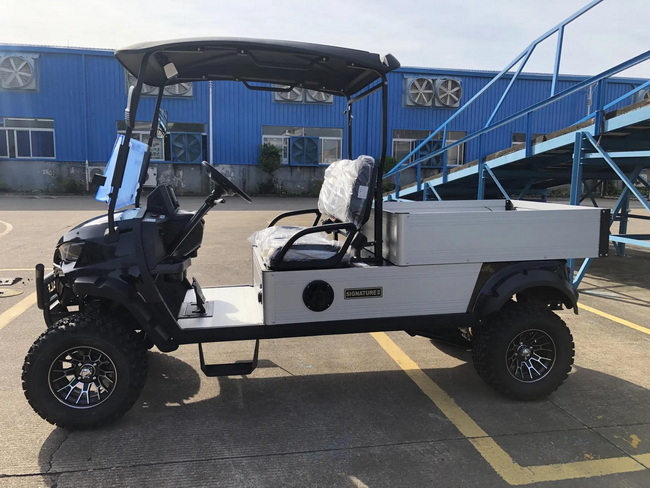
In a traditional passenger car, the battery has a surprisingly narrow job. It provides one strong burst of current to start the engine, then the alternator takes over and keeps the battery topped up while the car runs. Once the engine is running, the car battery is more of a backup power source than the primary driver of the vehicle.[1]
In an electric golf car, the situation is completely different. The golf car battery pack is the main energy source that moves the golf car, powers its controller, and often supports accessories such as lights, audio, and onboard chargers. Every time a golf car climbs a hill, accelerates with a full load of passengers, or covers another hole on the course, it is drawing directly from the golf car battery pack.[2][3]
Because the roles are so different, the internal design and performance profile of golf car batteries and car batteries diverge in almost every important way.[2][1]
One of the most visible differences between a golf car electrical system and a typical passenger car is the system voltage.[4][5]
Most modern cars use a single 12‑volt lead‑acid battery to power starting, lighting, and ignition systems. All of the electronics in the vehicle are built around this 12‑volt standard, and the alternator is sized to maintain that voltage level as you drive.[4][1]
By contrast, a typical electric golf car operates on a 36‑volt, 48‑volt, or sometimes 72‑volt system. This higher voltage is created by wiring multiple deep‑cycle batteries in series; for example, a 48‑volt golf car might use six 8‑volt batteries or eight 6‑volt batteries in a carefully balanced pack. The higher voltage allows the golf car motor and controller to deliver more torque and better efficiency, which is vital for climbing slopes, carrying loads, and maintaining range on a course or within a resort.[5][6][7][4]
For this reason, a single 12‑volt car battery cannot run a full‑size golf car; the motor and controller simply require more voltage and sustained current than a car battery system can safely provide.[6][8][5]
The most important structural difference between golf car batteries and car batteries lies in their internal plate design and how they are meant to be used.[1][2]
Car batteries are “starter” or “cranking” batteries. They are optimized for very high current output in a short burst, which is what the engine requires when you turn the key or press the start button. The internal plates are relatively thin and arranged to maximize surface area, giving high cold‑cranking amps (CCA) but not designed for frequent deep discharge.[9][1]
Golf car batteries, on the other hand, are deep‑cycle batteries. These batteries have thicker, more robust plates that can tolerate being discharged to a much lower state of charge and then recharged again, hundreds or even thousands of times. In a golf car, the battery pack may be cycled daily; it needs to provide energy steadily over hours rather than seconds.[10][2]
If a regular starter battery is used like a golf car battery and deeply discharged on a regular basis, its lifespan drops drastically. The thin plates shed active material, capacity falls quickly, and the user experiences weak cranking, voltage drop, and early failure compared with a true deep‑cycle golf car battery.[9][2][1]
Golf car operators typically care about range, hill‑climbing ability, and how many hours or holes a golf car can cover on a single charge. All of these factors depend heavily on the amp‑hour capacity of the golf car battery pack and its ability to sustain voltage under load.[5][2]
Golf car batteries are usually rated in amp hours (Ah) at a 20‑hour or similar rate, which gives a realistic picture of how long the golf car can run at a given load. Deep‑cycle golf car batteries are engineered to deliver moderate current over long periods, maintaining stable voltage even as the golf car climbs hills, carries heavy cargo, or operates as a multi‑purpose vehicle in a resort, industrial park, or hunting environment.[2][5][1]
Car batteries, by contrast, emphasize CCA and peak current rather than long‑duration energy delivery. That is why the labels on car batteries highlight the ability to start at low temperatures rather than how many hours they can supply a smaller continuous load. In the context of a golf car, this design is simply the wrong tool for the job.[9][1]
Golf car fleets today can choose from several battery chemistries, each balancing cost, maintenance, and performance in different ways.[3][11][12]
Flooded lead‑acid batteries remain the most common energy source for traditional golf car applications. They offer a reliable, well‑understood technology with relatively low upfront cost and good compatibility with existing golf car chargers and controllers.[12][3]
However, these deep‑cycle golf car batteries require regular maintenance, including checking electrolyte levels, topping up with distilled water, cleaning terminals, and sometimes performing equalization charges to keep cells balanced. For large golf car fleets, this maintenance commitment is a key operational consideration.[3]
AGM (Absorbent Glass Mat) and gel batteries are sealed lead‑acid options that replace free liquid electrolyte with absorbed or gelled electrolyte. These solutions reduce maintenance and almost eliminate watering, making them attractive for customers who want a cleaner golf car battery system with less daily attention.[12][3]
Although AGM and gel golf car batteries usually cost more than flooded batteries, they provide better resistance to vibration and potential acid spills, which is useful in golf cars used on rough terrain, in industrial environments, or in hunting and multi‑purpose roles.[3][12]
Lithium‑ion, especially LiFePO4 (lithium iron phosphate), is increasingly popular in new‑generation golf cars. Lithium golf car batteries are much lighter than lead‑acid equivalents, improving acceleration, handling, and braking, particularly in multi‑passenger sightseeing and utility golf cars.[11][12]
Lithium packs offer very long cycle life, fast charging, and more usable capacity per charge because they tolerate deeper discharge without damage. For golf course fleets, resorts, and commercial users, these benefits often translate into fewer replacements over the life of the golf car and more usable hours per day.[11][3]
The higher upfront investment is offset by lower long‑term total cost of ownership for many high‑utilization golf car applications.[11][12]
Because car batteries and golf car batteries both use lead‑acid chemistries in many cases, some users are tempted to interchange them. This is almost always a bad idea from both a performance and safety perspective.[8][1]
A single 12‑volt car battery cannot meet the voltage requirements of a 36‑volt or 48‑volt golf car system, which is engineered for a series‑connected deep‑cycle pack. Even when several 12‑volt car batteries are wired in series to reach 36 or 48 volts, the internal design remains that of starter batteries, not deep‑cycle units.[6][8][10][4][5]
Used in a golf car, these starter batteries will:
- Lose capacity quickly when subjected to daily deep discharge cycles.[10][1][2]
- Suffer plate damage and shedding, leading to early failure and possible leakage.[1][9]
- Deliver inconsistent voltage under heavy load, reducing golf car range and hill‑climbing ability.[5][2]
Conversely, installing deep‑cycle golf car batteries as starter batteries in a car is also inappropriate. Golf car deep‑cycle units generally cannot deliver the instantaneous high current needed for reliable engine cranking, especially in cold climates; this can stress both the battery and the starting system.[2][9][1]
A well‑cared‑for golf car battery pack can deliver many years of service, but it depends heavily on charging behavior, storage conditions, and daily usage.[3][1][2]
Lead‑acid golf car batteries typically last about 4–7 years when charged after each use, watered correctly, and kept clean and dry. Under‑charging, leaving the golf car idle for long periods in a low state of charge, or frequently over‑discharging the pack can shorten this lifespan significantly.[1][2][3]
Car batteries usually last around 3–5 years in normal driving conditions. Because they are constantly being topped up by the alternator and rarely deeply discharged, their failure pattern is more related to age, temperature extremes, and vibration than to regular deep cycling.[9][1]
Lithium golf car batteries often exceed the lifespan of both, with cycle life that can reach several thousand full cycles. They are less sensitive to partial‑state‑of‑charge operation and do not require watering or equalization, making them attractive for demanding golf car fleets.[12][11][3]
On the course, in a resort, or in an industrial park, the battery pack is the heart of every electric golf car. Real‑world conditions quickly show the benefits of a properly matched deep‑cycle golf car battery system.[5][2]
For a standard two‑seat golf car operating on a course, range and consistent power over 18 or 36 holes are crucial. The pack must deliver energy smoothly as the golf car climbs hills, traverses long fairways, and stops and starts repeatedly.[2][5]
For sightseeing buses and multi‑row golf car shuttles, heavier passenger loads and more frequent stops demand higher capacity and reliable peak current to keep acceleration comfortable and safe. In hunting or utility golf cars, where rough terrain, cargo loads, and steep grades are common, the golf car battery pack must deliver strong torque and endure high current draws without excessive voltage sag.[7][3][5]
In each of these scenarios, a purpose‑designed golf car battery pack outperforms a jury‑rigged solution using starter car batteries, both in day‑to‑day operation and in long‑term cost.[10][1][2]
Selecting the ideal golf car battery configuration involves balancing performance, budget, and maintenance resources.[3][5][2]
Key factors include:
- Intended use of the golf car: traditional golf course, neighborhood electric vehicle, sightseeing bus, hunting vehicle, or industrial utility golf car.[7][3]
- Desired range per charge and daily operating hours, which determine required pack capacity and voltage.[5][2]
- Availability of charging infrastructure and acceptable charging time, which influence the choice between lead‑acid and lithium golf car batteries.[11][3]
- Maintenance capability: whether staff can regularly water and service flooded lead‑acid golf car batteries or prefer sealed or lithium options.[12][3]
For many commercial operators and brand owners, working with an experienced golf car OEM helps tailor the battery system to real‑world needs and local conditions.[13][14]
BorCart is a professional Chinese manufacturer of electric vehicles, focused on golf cars, sightseeing buses, low‑speed vehicles, hunting vehicles, and multi‑purpose utility golf cars for international markets. The company provides OEM and ODM services for overseas brands, wholesalers, and manufacturers who want to launch or expand their own golf car product lines.[14][15][13]
As an OEM partner, BorCart customizes both the vehicle platform and its energy system. That includes:[13][14]
- Designing golf car chassis, bodies, and seating layouts suited to golf courses, resorts, communities, or industrial sites.[14][13]
- Matching appropriate deep‑cycle battery packs—flooded, AGM, gel, or lithium—to the performance targets and cost level of the customer's golf car line.[13][14][11]
- Tuning controllers and motors to work efficiently with the selected voltage and capacity, ensuring that each golf car delivers reliable range, acceleration, and hill‑climbing ability.[7][14][3]
For brand owners, this approach makes it possible to offer differentiated golf car products while relying on BorCart's engineering and production capabilities, especially in markets demanding tailored solutions such as multi‑purpose utility golf cars or high‑end resort fleets.[15][14][13]
Golf car batteries and car batteries may look similar at first glance, but they are fundamentally different in design, purpose, and performance. Golf car batteries are deep‑cycle units arranged in higher‑voltage packs to provide hours of steady power, while car batteries are starter units built for short bursts of high current at 12 volts.[4][1][2]
Using the wrong battery type in a golf car or a passenger car results in poor performance, short lifespan, and potential safety issues, especially under deep‑cycle conditions. By choosing the right deep‑cycle battery chemistry and configuration, and by working with experienced OEM manufacturers such as BorCart, operators and brand owners can build reliable, efficient golf car fleets tailored to golf, sightseeing, hunting, and multi‑purpose applications around the world.[8][14][10][13][11][1][3]

No. Golf car batteries are deep‑cycle packs designed to provide steady power over many hours, while car batteries are starter batteries for short, intense bursts of current at 12 volts. The internal plate design, voltage configuration, and intended usage are completely different between a golf car battery pack and a standard car battery.[4][9][1][2]
This is strongly discouraged. Regular car batteries are designed for quick engine starts, not for deep discharge and continuous operation as required in a golf car. Even if several car batteries are wired to reach 36 or 48 volts, they will degrade rapidly and deliver poor range and performance compared to true deep‑cycle golf car batteries.[6][8][10][1][2]
Well‑maintained lead‑acid golf car batteries usually last between 4 and 7 years, depending on charging habits, depth of discharge, and operating conditions. Lithium golf car batteries can last even longer, with a much higher cycle life and more stable performance over time, although the initial investment is higher.[11][12][1][2][3]
There is no single “best” type; it depends on how the golf car will be used, budget, and maintenance capabilities. Flooded lead‑acid batteries remain popular for cost‑sensitive fleets, while AGM and gel reduce maintenance needs, and lithium golf car batteries offer the best combination of low weight, long cycle life, and fast charging for intensive commercial applications.[12][3][11]
An OEM manufacturer such as BorCart can analyze your target market, range requirements, terrain, and cost structure to recommend the most suitable golf car battery system for your vehicles. BorCart integrates the chosen deep‑cycle packs with motors, controllers, and chassis designs so that your branded golf car line delivers the performance, reliability, and lifespan your customers expect.[15][14][13]
[1](https://wis-tek.com/blogs/knowledge/understanding-how-golf-cart-batteries-differ-from-regular-car-batteries)
[2](https://hartvillegolfcarts.com/are-golf-cart-batteries-deep-cycle/)
[3](https://www.advantagegolfcars.com/blog/golf-carts-batteries-101-a-complete-guide--28027)
[4](https://bigbattery.com/2023/10/06/car-vs-golf-cart-batteries-whats-the-difference/)
[5](https://www.golfcartgeeks.com/blogs/news/voltage-and-amperage-in-golf-cart-batteries)
[6](https://www.vatrerpower.com/blogs/news/can-i-put-4-12-volt-batteries-in-my-48-volt-golf-cart)
[7](https://www.facebook.com/groups/GolfCartsModified/posts/4036493229957035/)
[8](https://www.vatrerpower.com/blogs/news/can-you-put-regular-car-batteries-in-a-golf-cart)
[9](https://patriotpowersource.com/blogs/lithium-golf-cart-batteries/what-is-the-difference-between-a-deep-cycle-battery-and-a-lithium-battery)
[10](https://www.vatrerpower.com/blogs/news/can-i-use-regular-deep-cycle-batteries-in-my-golf-cart)
[11](https://www.litime.com/blogs/compare-batteries/types-of-golf-cart-battery-lead-acid-vs-lithium)
[12](https://lithiumhub.com/finding-the-best-golf-cart-batteries/)
[13](https://www.borcartev.com/chinese-golf-cart-brands/)
[14](https://www.borcart.com)
[15](https://borcart.en.alibaba.com)


