


Views: 222 Author: Leah Publish Time: 2026-01-23 Origin: Site


Content Menu
● Golf Buggy vs Motor Vehicle in Law
● When Does a Golf Buggy Become a Motor Vehicle?
● Practical Implications for Golf Buggy Owners
● Golf Buggies as Low‑Speed Vehicles
● The Expanding Role of the Golf Buggy
● OEM Manufacturing and the Role of BorCart
● Technical Features of Modern Golf Buggies
● Business and Branding Opportunities with Golf Buggies
● Operational Best Practices for Golf Buggy Fleets
● FAQ
>> 1. Is a standard golf buggy classed as a motor vehicle?
>> 2. When does a golf buggy become a low‑speed vehicle?
>> 3. Can a golf buggy be driven on public roads?
>> 4. Do you need a driver's license to operate a golf buggy?
>> 5. How can OEM buyers specify the right type of golf buggy?
A golf buggy is a motorized vehicle in the broad, everyday sense, but in most legal systems it is not automatically treated the same as a standard road motor vehicle such as a passenger car. Whether it is legally recognized as a motor vehicle depends on its design, equipment, speed, and, most importantly, where and how it is used. For golf courses and private resorts, a golf buggy is usually categorized separately from road vehicles, but once upgraded and used on public streets it can enter formal motor‑vehicle categories such as low‑speed vehicles.
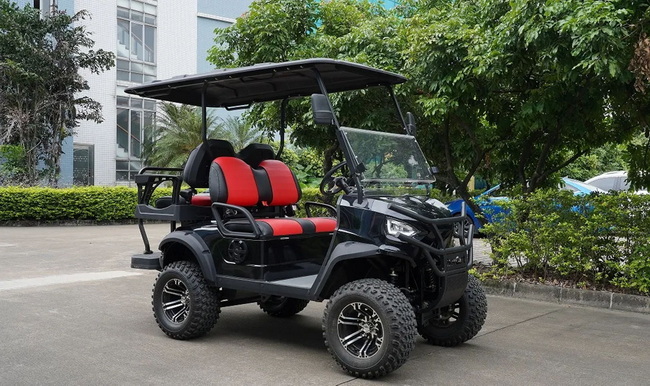
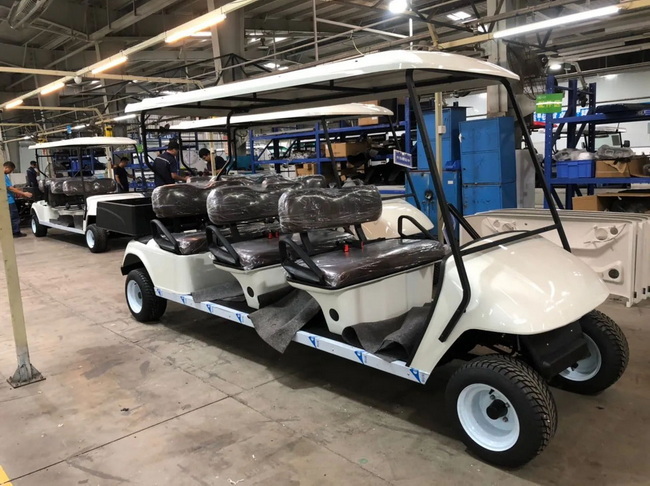
A golf buggy (often called a golf cart or golf car) is a small electric or gasoline‑powered vehicle designed to carry golfers, clubs, and sometimes staff around a golf course. It typically has two to eight seats, compact dimensions, and a low top speed, often around 15 mph, which is ideal for turf and short, frequent trips. The emphasis is comfort, maneuverability, and low noise rather than high speed or crash protection.
Over time, the humble golf buggy has evolved into a versatile platform for short‑distance mobility in many environments. Modern electric golf buggies are now common in resorts, hotels, airports, industrial parks, gated communities, campuses, theme parks, tourist attractions, and hunting or outdoor recreation sites. The same basic golf buggy platform can be adapted with different bodies, seat layouts, and cargo spaces to serve roles as diverse as passenger shuttles, utility haulers, security patrol vehicles, and housekeeping vehicles.
In everyday conversation, any powered vehicle on wheels might be called a motor vehicle, but legal definitions are more precise. Laws typically distinguish between:
- Full motor vehicles used on public roads (passenger cars, trucks, buses).
- Specialty or off‑road vehicles (agricultural machines, ATVs, golf buggies).
- Low‑speed vehicles (LSVs) or neighborhood electric vehicles, which are a formal category in many countries.
A key point is that in many jurisdictions a standard golf buggy used on a golf course is not treated as a full motor vehicle. It may not need a vehicle identification number, license plate, or road registration as long as it operates only on private land or designated golf cart paths. Local or site rules can still impose safety requirements or minimum operating ages, but these are separate from full road‑traffic laws.
Once a golf buggy is used on public streets or designed to meet certain speed and equipment standards, regulators often reclassify it into a low‑speed vehicle or another road‑legal category. At that point, the golf buggy becomes a motor vehicle in the legal sense and is subject to registration, insurance, and traffic rules similar to other road vehicles.
The transition from “golf course buggy” to “road‑legal motor vehicle” usually depends on three main factors: speed capability, safety equipment, and the environment of use.
Standard golf buggies are typically limited to relatively low speeds, often around 12–15 mph, which is appropriate for fairways and resort paths. They are not designed with high‑speed stability, crash structures, or long‑distance performance in mind. When a golf buggy is modified or factory‑built to go faster—commonly in the 20–25 mph range—it begins to overlap with the performance band of low‑speed vehicles.
Many countries and regions specify speed thresholds that separate simple golf buggies from LSVs. If a golf buggy's top speed exceeds those thresholds and it is intended for mixed traffic, it may be required to meet the standards for a low‑speed motor vehicle instead of being treated as a simple course vehicle.
Another critical factor is equipment. A typical golf buggy used only on a course might have basic lights and a simple windshield, but it often lacks:
- Automotive‑grade headlights and tail lights.
- Turn indicators and brake lights.
- Rear‑view and side mirrors.
- Certified windshields and wipers.
- Seat belts and reinforced frames.
- Horns, reflectors, and other road‑safety features.
To qualify as a road‑legal low‑speed motor vehicle, a golf‑buggy‑type platform usually needs all or most of these features. It may also need specific tires, braking systems, and other safety details defined in local regulations. When a manufacturer designs a golf buggy fully equipped to those standards, it is usually treated as a motor vehicle and can be registered for use on streets with limited speed limits.
Finally, where and how the golf buggy is used is decisive. Even a simple, low‑speed golf buggy may be allowed on certain public roads in clearly marked “golf cart zones” or within special communities that adopt their own mobility rules. In such areas, law‑makers sometimes carve out exceptions that allow golf buggies to share low‑speed roads under specific conditions, such as daylight operation only, restricted routes, or minimum driver ages.
In other regions, any vehicle on a public road must meet full motor‑vehicle standards unless a special category like LSV applies. In these places, driving a basic golf buggy on a public street without proper classification can be illegal, regardless of how slow or small it is. That is why golf buggy owners and operators must always check local traffic codes rather than relying on general assumptions.
From a practical point of view, the question “Is a golf buggy a motor vehicle?” matters because it affects how an owner can use it, what documents are required, and what responsibilities fall on the operator.
For private‑property use, such as golf courses, resorts, hotels, factories, or residential compounds, a golf buggy is often treated like site equipment rather than a road car. In this scenario:
- It may not need registration or plates.
- Operators may not need a full driver's license, though internal rules and insurance requirements still apply.
- The owner is usually responsible for ensuring that brakes, steering, and basic safety features function correctly to protect staff and guests.
However, as soon as the golf buggy is intended for road use—even short trips across a public street or along a public road shoulder—the situation changes. Owners must then ask:
- Does the vehicle qualify as an LSV or another road‑legal category?
- Are lights, mirrors, reflectors, and seat belts compliant with regulations?
- Is insurance in place, and does it cover the planned mode of operation?
Ignoring these questions can expose operators and businesses to fines, accidents, and liability claims, especially when a golf buggy is involved in an incident with pedestrians or larger vehicles.
The rapid growth of low‑speed electric mobility has pushed golf buggies into the spotlight as practical urban and community vehicles. When engineered correctly, a golf‑buggy‑based platform can serve as:
- A neighborhood electric shuttle.
- A short‑range logistics or utility vehicle.
- A patrol and security vehicle in campuses or gated communities.
- A sightseeing vehicle in tourist zones and parks.
To do this legally, many manufacturers produce versions of their golf buggy platforms that meet LSV or equivalent standards. These versions are equipped with:
- Certified lighting and signaling systems.
- Seat belts and reinforced seating structures.
- Approved safety glass windshields and wipers.
- Mirrors, reflectors, and audible warning devices.
- Speed limiters set to the allowed range for LSVs.
Once a golf buggy has these features, it can usually be registered as a low‑speed motor vehicle and used on roads with posted limits up to a specified threshold (commonly around 35 mph). Drivers typically need a standard driver's license, and the vehicle is subject to traffic rules, insurance obligations, and sometimes periodic inspection. In this configuration, the golf buggy is clearly a motor vehicle in the eyes of the law, even though it may still look like a compact cart.
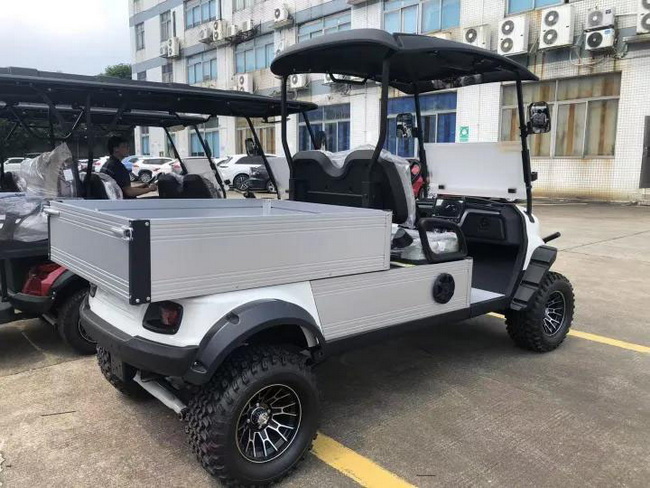
Originally, the golf buggy was a niche product serving a very specific sport. Today it is a central tool in a broad range of mobility scenarios. This evolution has been driven by several trends:
- Growing demand for quiet, zero‑emission transport in tourist and residential environments.
- Urbanization and congestion, which create a need for compact, low‑speed vehicles for short trips.
- Sustainability goals, which encourage operators to shift from fuel‑powered vans to electric golf buggies where possible.
- Technological improvement in batteries, controllers, and motors, making golf buggies more capable and reliable.
As a result, fleets of golf buggies now operate in environments as varied as coastal resorts, university campuses, historic city centers, industrial warehouses, airports, and wildlife parks. In some of these settings, the golf buggy remains an off‑road utility vehicle; in others, it is integrated into regulated traffic systems as a low‑speed motor vehicle.
This dual identity makes it important to understand the fine line between a simple leisure buggy and a street‑legal electric vehicle. The same model, with minor changes in speed, equipment, and documentation, can fall into very different legal categories.
Chinese manufacturers have played a major role in the global expansion of electric golf buggies. BorCart is one such professional manufacturer headquartered in China, focusing on electric vehicles and a wide range of automotive components. The product portfolio centers on golf buggies but also includes sightseeing buses, low‑speed vehicles, hunting vehicles, and multi‑purpose vehicles.
As an OEM‑oriented supplier, BorCart cooperates with overseas brand owners, wholesalers, and vehicle manufacturers who want to sell golf buggies under their own labels without building their own production facilities. Typical OEM services around the golf buggy segment include:
- Co‑developing golf buggy platforms tailored to specific markets or applications.
- Adjusting performance specifications, such as motor power, speed limits, and battery capacity.
- Customizing seating layouts, body designs, colors, dashboards, and accessories to match customer branding.
- Preparing documentation, labels, and packaging that comply with the laws and languages of the destination markets.
Because regulations differ widely from country to country, OEM customers often need different versions of the same basic golf buggy. For example, a resort in a private coastal compound may need non‑road‑legal golf buggies optimized for comfort and style, while a gated community in a foreign city may demand road‑legal low‑speed vehicles derived from the same platform. BorCart's role is to translate these functional and legal requirements into concrete engineering specifications, ensuring that each golf buggy is correctly configured for its intended use.
Modern electric golf buggies are far more sophisticated than their early predecessors. While they still share a simple chassis and open body, they incorporate advanced electrical and mechanical components similar to those found in larger electric vehicles. Key technical areas include:
- Powertrain: High‑efficiency electric motors paired with controllers that manage torque, acceleration, and regenerative braking. Some golf buggies still use gasoline engines, but electric variants dominate new fleets due to low noise and emissions.
- Energy Storage: Lead‑acid batteries remain common in cost‑sensitive applications, but lithium‑ion batteries are increasingly popular. Lithium packs improve range, reduce weight, and lower lifetime operating costs, especially in intensive fleet use.
- Chassis and Suspension: Golf buggies employ light but robust frames, often steel or aluminum, with suspensions tuned for comfort on mixed surfaces such as turf, paths, and paved roads in resort environments.
- Interior and Controls: Simple, intuitive controls with automotive‑style steering wheels, pedals, and dashboards. Many golf buggies now offer digital displays, onboard diagnostics, and smart charging indicators.
For specialized applications, the golf buggy platform can be further upgraded with features such as off‑road tires, lifted suspensions for hunting or rugged terrain, enclosed cabins for all‑weather use, and cargo boxes or racks for logistics and maintenance tasks. These variations allow one core golf buggy design to serve many industries.
For foreign brand owners and distributors, the golf buggy segment presents attractive opportunities. A well‑specified golf buggy line can enhance a company's image in several sectors:
- Golf and leisure: Branded fleets of golf buggies can create a consistent visual identity across courses and resorts, from colors and upholstery to logos and accessories.
- Hospitality and tourism: Electric golf buggies can act as moving advertisements in hotels, parks, and tourist districts, reinforcing brand presence while providing essential shuttle services.
- Real estate and community management: High‑quality golf buggies in residential developments can signal a premium lifestyle and commitment to sustainable mobility.
OEM manufacturers like BorCart support these strategies by integrating brand elements into the vehicle design. This can include customized body panels, seat embroidery, steering‑wheel badges, digital interface themes, and even co‑branded documentation and promotional materials. By linking the technical strengths of Chinese manufacturing with local marketing expertise, partners can build distinctive golf buggy product lines tailored to their audiences.
Operators of golf buggy fleets—whether on golf courses, in resorts, or in industrial parks—need to balance safety, reliability, and cost control. Some key practices include:
- Regular maintenance: Scheduled inspections of brakes, steering, tires, and electrical systems extend the life of each golf buggy and reduce breakdowns. Battery health checks and proper charging routines are especially important.
- Charging management: For electric fleets, it is essential to plan charging schedules around usage peaks. Smart chargers, centralized charging stations, and clear procedures help ensure that every golf buggy is ready when needed.
- Training and rules: Operators should receive basic training in safe driving, load limits, and route rules. Even though a golf buggy is small and low‑speed, improper driving can still cause accidents and property damage.
- Data and fleet management: Larger operators can benefit from telematics solutions that track usage, charging, and maintenance needs across all golf buggies in the fleet. This information helps optimize deployment and plan upgrades or replacements.
By treating a golf buggy fleet with the same seriousness as a larger vehicle fleet, operators protect users, reduce downtime, and present a professional image to guests and clients.
A golf buggy is undeniably a powered vehicle, but its legal status as a motor vehicle depends on how it is built and used. On golf courses and private property, a standard golf buggy is often regulated as a special‑purpose vehicle rather than a full motor vehicle, with site‑specific rules instead of full road‑traffic legislation. When that same platform is engineered to meet low‑speed vehicle standards—with the right lighting, safety equipment, and performance limits—it is typically recognized as a street‑legal motor vehicle and must be registered, insured, and driven under the usual traffic rules.
Understanding this distinction is essential for owners, operators, and especially for international buyers working with OEM manufacturers. Companies like BorCart help partners navigate these categories by delivering tailored golf buggy designs: pure course vehicles, multi‑purpose off‑road and resort buggies, and fully compliant low‑speed vehicles. With the right specification, a golf buggy can move seamlessly from fairways to resorts to community streets, supporting a new era of clean, quiet, and flexible electric mobility.
Contact us to get more information!
In many regions, a standard golf buggy used exclusively on golf courses or private land is not classed as a full road motor vehicle like a car or truck. It may not need registration, plates, or a vehicle identification number when kept off public roads. However, local rules can still impose safety requirements, minimum ages, or operator training, so owners should consult site policies and local regulations before allowing guests to drive a golf buggy.
A golf buggy typically becomes a low‑speed vehicle when it is configured to reach a regulated speed band—commonly around 20–25 mph—and equipped with mandatory road‑safety features such as headlights, turn signals, mirrors, seat belts, reflectors, and approved windshields. Once it meets these criteria and is intended for use on public streets, it must usually be registered and insured like other motor vehicles. At that point it falls under traffic laws, and the driver must hold the appropriate license.
Whether a golf buggy can be driven on public roads depends entirely on local law. Some jurisdictions allow standard golf buggies on designated low‑speed streets or in clearly marked golf cart zones, often with restrictions on time of day, road type, and maximum speed. Other areas require any golf‑buggy‑type vehicle on public roads to be certified as a low‑speed motor vehicle and properly registered. Before driving a golf buggy on a public street, owners should verify the specific rules in their city, state, or country.
On private property, such as golf courses and enclosed resorts, a formal driver's license is sometimes not required, but operators still have to follow the owner's policies and any applicable safety rules. On public roads, a golf buggy that has been classified as a low‑speed vehicle or similar category usually requires the driver to hold a valid driver's license, and sometimes to meet a minimum age limit. Businesses should clearly communicate these requirements to staff and guests to ensure compliance.
OEM buyers should begin by defining exactly where and how their customers will use the golf buggy: only on golf courses, in resorts and private communities, or also on public roads. They then need to translate this usage profile into concrete specifications, including speed limits, safety equipment, seating capacity, cargo options, and branding details. By working closely with an experienced manufacturer like BorCart, buyers can develop customized golf buggy models that comply with local regulations, reflect their brand identity, and offer the right balance of cost, performance, and safety for each target market.
1. https://en.wikipedia.org/wiki/Golf_cart
2. https://www.yourdictionary.com/golf-buggy
3. https://destino-kart.com/what-is-a-golf-cart-buggy-and-where-is-it-used-in-the-uae/
4. https://www.merriam-webster.com/dictionary/golf%20cart
5. https://golfcartsearch.com/golf-cart-laws/washington
6. https://evtitan.com/golf-cart-laws-regulations-state-by-state-guide/
7. https://westwardindustries.com/low-speed-vehicle-lsv/the-definition-of-lsv/
8. https://www.gemcar.com/low-speed-vehicles/
9. https://www.borcart.com/top-10-electric-golf-buggy-manufacturers-in-china.html
10. https://www.borcartev.com/chinese-made-golf-carts/


