


Content Menu
● Understanding Your Golf Buggy's Speed Potential
● Regular Maintenance: The First Step to a Faster Golf Buggy
● Battery Upgrades: More Voltage, More Range, More Speed
● Motor and Controller: Unlocking Real Performance
>> Smarter, Stronger Controllers
● Mechanical Tweaks: Tires, Gearing, and Rolling Resistance
● Reducing Weight for Better Acceleration
● Special Considerations for Gas Golf Buggies
>> Governor Adjustment and Engine Breathing
● Driving Habits and Safety for Faster Golf Buggies
● Long‑Term Care: Keeping a Fast Golf Buggy Reliable
● Choosing OEM Performance Solutions for Your Golf Buggy
● FAQ
>> 1. How fast can a modified golf buggy safely go?
>> 2. What is the cheapest way to speed up a golf buggy?
>> 3. Do bigger tires always make a golf buggy faster?
>> 4. Is upgrading to lithium batteries worth it for a golf buggy?
>> 5. Will speeding up a golf buggy void the warranty?
Speeding up a golf buggy safely and efficiently comes down to three pillars: smart upgrades, proper maintenance, and responsible driving habits. Whether your golf buggy is used on a golf course, in a resort, in a community, or for utility transport, the right changes can noticeably improve acceleration, top speed, and overall performance.
As a professional manufacturer of electric vehicles and automotive components, focusing on golf buggies, BorCart understands that many international OEM customers want both higher performance and long‑term reliability. This guide walks through practical ways to make a golf buggy faster while protecting components and staying within reasonable safety limits.
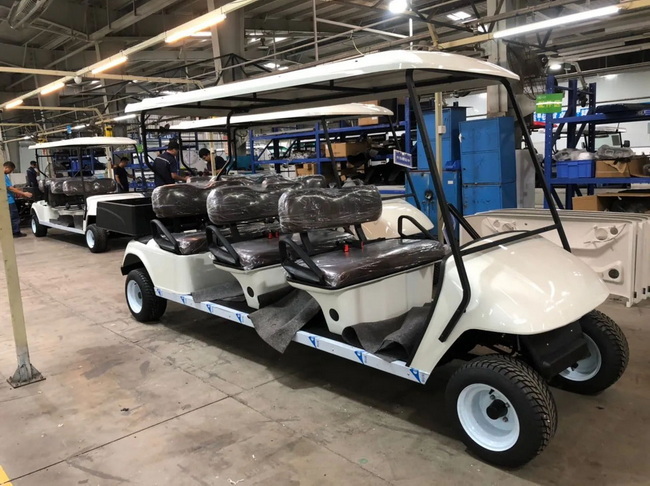
Before modifying anything, it is crucial to understand the natural limits and design of your golf buggy so you do not damage components or break local regulations.
- Most standard electric golf buggies are designed for about 12–15 mph (19–24 km/h), depending on load, terrain, and battery health.
- Gas golf buggies often sit in a similar speed range but rely on engine tuning and a governor system to control performance.
- The key factors that affect golf buggy speed include:
- Battery voltage and capacity
- Motor power and type
- Controller settings
- Tire size, tread pattern, and pressure
- Vehicle weight and load
- Aerodynamics and rolling resistance
You should also check any speed limits set by course management, local communities, or road regulations, because many areas restrict golf buggy speed for safety.
Many “slow” golf buggies simply need maintenance rather than expensive upgrades. Good upkeep restores the performance the golf buggy was designed to deliver.
- Keep the batteries fully charged and clean; corrosion on terminals and low electrolyte levels can cause voltage drop under load and make the golf buggy feel weak.
- Maintain correct tire pressure according to the manufacturer's recommendations; underinflated tires increase rolling resistance and reduce golf buggy speed, while overinflation can reduce grip.
- Inspect brakes and wheel bearings regularly; dragging brakes or worn bearings create mechanical resistance that robs the golf buggy of speed.
Adding periodic checks to a simple weekly or monthly maintenance schedule helps a golf buggy stay close to its original performance. For fleet operators, a structured checklist across batteries, tires, brakes, steering, and suspension is a cost‑effective way to keep every golf buggy running at its best.
For electric golf buggies, the battery pack is the heart of performance. Upgrading this system often delivers the most noticeable improvement in speed and responsiveness.
Increasing the system voltage (for example, from 36V to 48V) can give a golf buggy more power, improving both top speed and hill‑climbing ability when components are correctly matched.
- Higher voltage allows the motor to spin faster, which directly translates into more speed.
- However, the motor, controller, cabling, and protection devices must be compatible with the new voltage to avoid overheating or damage.
Professional OEM‑level engineering, like that used on BorCart golf buggies, ensures that the complete electric powertrain is designed as a system rather than a collection of random parts.
Switching from lead‑acid batteries to lithium‑ion packs can transform how a golf buggy feels on the course or around a resort.
- Lithium‑ion batteries are lighter, which reduces overall vehicle weight and helps the golf buggy accelerate faster.
- They deliver more consistent voltage throughout the discharge cycle, so the golf buggy maintains similar speed from a full charge down to a low state of charge.
- Lithium packs charge faster and usually last longer, lowering lifetime cost for fleets that run golf buggies every day.
While the upfront cost is higher, many operators find the performance gains and reduced maintenance attractive, especially when the golf buggy is part of a commercial operation.
Once maintenance and batteries are sorted, motor and controller upgrades can unlock the true performance potential of a golf buggy.
Replacing a stock motor with a performance‑oriented unit is one of the most direct ways to make a golf buggy faster.
- High‑torque motors help a golf buggy accelerate more strongly and climb hills without slowing dramatically.
- High‑speed motors are designed for higher RPM, which increases top speed, especially when combined with the right tire size and voltage.
Choosing between torque‑focused, speed‑focused, or balanced motors depends on how the golf buggy is used: hilly courses, flat resorts, heavy utility loads, or personal transport.
The controller is effectively the brain of an electric golf buggy, managing how much power is delivered from the batteries to the motor.
- Upgrading to a higher‑amperage controller allows more current to flow to the motor, which improves acceleration and responsiveness.
- Programmable controllers let owners or technicians tune speed limits, torque curves, and throttle response to match each golf buggy's application.
- When upgrading the motor, pairing it with a compatible controller is essential to avoid bottlenecks and to keep temperatures under control.
Advanced AC systems, which combine an AC motor with a dedicated controller, are becoming popular because they offer higher efficiency, smoother power delivery, and strong hill performance.
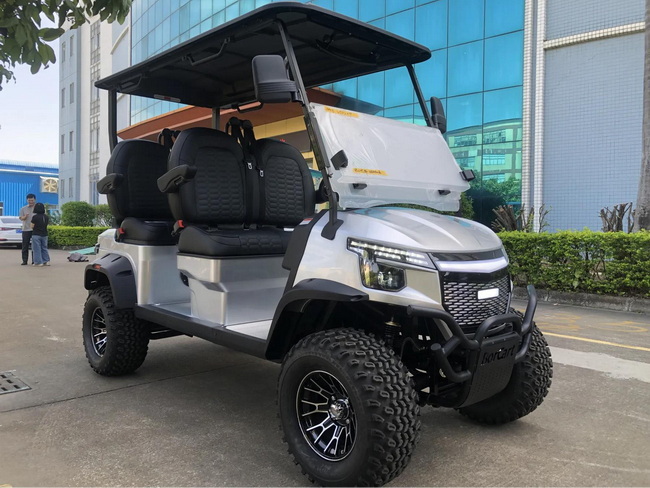
Mechanical changes can have a surprisingly large effect on how quickly a golf buggy moves and how efficiently it uses power.
Tires are the only part of the golf buggy that actually touch the ground, so their characteristics are crucial.
- Larger‑diameter tires increase the distance traveled per wheel revolution, effectively raising the top speed of a golf buggy.
- Low‑rolling‑resistance tires or road‑oriented patterns reduce drag and help the golf buggy reach higher speeds with the same power input.
- Off‑road or aggressive tread patterns increase grip but may slightly reduce top speed due to greater rolling resistance.
Any change in tire size must consider body clearance, suspension travel, and speedometer accuracy (if fitted).
Adjusting gear ratios, where the design allows, can tune a golf buggy more toward speed or toward torque.
- Taller gearing allows a golf buggy to travel faster at the same motor or engine RPM but can make it slower off the line and on steep hills.
- Shorter gearing improves climbing and acceleration but caps top speed.
In many modern electric golf buggies, gear ratios are fixed, so owners rely more on motor/controller tuning and tire diameter for effective gearing changes.
A lighter golf buggy is a faster golf buggy, especially on hilly courses or in stop‑and‑go use.
- Removing unnecessary accessories, tools, or heavy aftermarket parts reduces strain on the powertrain and helps the golf buggy accelerate and climb more efficiently.
- Choosing lighter components where practical (for example, lithium batteries, lightweight seating, or optimized body panels) further improves performance.
Fleet operators often underestimate how much weight accumulates over time from add‑ons and cargo. A periodic weight review helps each golf buggy return closer to its original performance profile.
Gas‑powered golf buggies rely on engine and drivetrain tuning rather than voltage and controllers, but many principles are similar.
Most gas golf buggies use a mechanical or electronic governor to limit maximum speed.
- Carefully adjusting the governor can increase speed, but excessive changes may push the engine beyond safe RPM limits.
- Improving air intake and exhaust flow, such as by using a high‑flow air filter or a tuned exhaust system, helps the engine breathe more efficiently and deliver more power.
Because these modifications affect engine durability, they should be done with a clear understanding of the manufacturer's limits.
Gas golf buggies often use continuously variable transmissions (CVTs) with clutches and belts.
- Upgrading to performance clutches can improve the way power is transmitted, making the golf buggy feel sharper and quicker out of corners or on hills.
- A high‑quality drive belt complements the clutch to reduce slip and maintain more consistent power delivery.
As with electric upgrades, higher speed and power require that the brakes, suspension, and steering of the golf buggy be kept in excellent condition.
When a golf buggy becomes faster, the driver's habits matter even more. A performance‑tuned buggy that is driven carelessly can quickly become unsafe.
- Avoid overloading the golf buggy with passengers or cargo beyond its rated capacity; excess weight makes it harder to stop and increases the risk of tipping.
- Drive smoothly and avoid sharp turns at high speed, particularly with lifted golf buggies running large tires that raise the center of gravity.
- Always obey local rules on where a golf buggy may be driven and what maximum speed is allowed, especially in resort areas, gated communities, and near pedestrians.
Owners should consider safety accessories such as better lighting, mirrors, and seat belts when their golf buggy is frequently used at higher speed.
Upgrades can make a golf buggy faster, but long‑term reliability still depends on ongoing care.
- Create a maintenance schedule that covers batteries or fuel system, filters, brakes, tires, steering, and suspension at regular intervals.
- After major upgrades, regularly inspect wiring, connectors, mounts, and brackets for signs of stress or heat damage.
- Pay attention to unusual noises, vibrations, or smells; they are often early warning signs that a high‑performance golf buggy needs adjustment.
For OEM users, working with a manufacturer that designs, tests, and validates performance components together—like BorCart—reduces risk and simplifies maintenance planning.
When you need a faster golf buggy for international markets, OEM cooperation becomes critical.
- Professional manufacturers can tailor controller maps, motor specifications, battery chemistry, and gear ratios to your brand's positioning and your end users' expectations.
- Integrated testing at the factory ensures that each golf buggy platform balances speed, range, and durability rather than chasing single performance numbers.
- By working with a supplier that already specializes in golf buggies, sightseeing buses, low‑speed vehicles, hunting vehicles, and multi‑purpose vehicles, you gain a consistent technical base across your product line.
This OEM‑level approach allows wholesalers, brand owners, and producers to offer golf buggies that feel faster and more refined while still being robust enough for daily commercial use.
Speeding up a golf buggy is not about one single modification but about a complete approach that starts with strong maintenance and smart, compatible upgrades. Better batteries, higher‑performance motors and controllers, optimized tires and gearing, and weight reduction all contribute to a more responsive golf buggy that accelerates strongly and maintains speed on hills.
For gas models, careful governor tuning, improved engine breathing, and upgraded clutches can also deliver satisfying gains. In every case, owners and OEM partners must balance performance with safety, reliability, and regulatory limits so the golf buggy remains enjoyable and dependable in the long run.
Contact us to get more information!
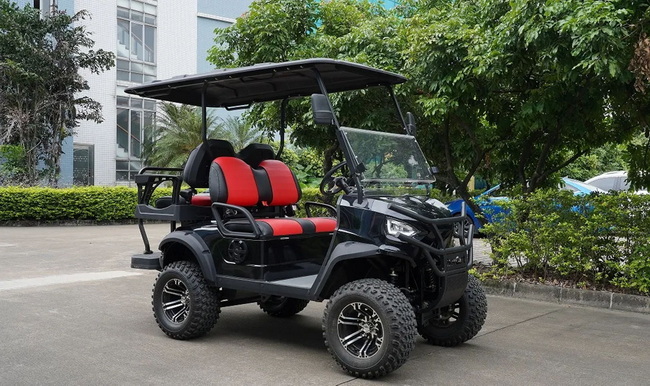
A well‑upgraded golf buggy commonly reaches about 20–25 mph (32–40 km/h) while still remaining controllable with appropriate brakes and suspension. Some specialized builds can go faster, but higher speeds increase stopping distances and rollover risk, especially on uneven ground. Always check local rules for maximum legal speed and ensure the golf buggy has safety equipment suited to its performance level.
The most affordable methods usually focus on maintenance and fine‑tuning rather than hardware upgrades. Proper tire pressure, clean and healthy batteries, well‑adjusted brakes, and lubricated bearings can restore much of the performance lost over time. Beyond that, small changes such as removing unnecessary weight and optimizing controller settings (on electric models that allow it) can make the golf buggy feel noticeably quicker without major expense.
Bigger‑diameter tires can increase the effective top speed of a golf buggy because each wheel rotation covers more distance. However, they may reduce low‑speed torque, strain the motor or engine, and raise the center of gravity, which can affect stability in corners. The best approach is to choose a tire size that offers a balance between higher cruising speed, safe handling, adequate ground clearance, and the terrain where the golf buggy operates.
Upgrading to lithium batteries is often worthwhile for users who drive their golf buggy frequently or demand strong, consistent performance. Lithium packs are lighter, recharge faster, and maintain voltage better under load, which means the golf buggy feels more energetic throughout the day. Although the initial cost is higher, the longer service life and reduced maintenance can offset the investment, especially for commercial fleets and rental operations.
Modifications that change the original powertrain—such as altering controllers, raising voltage, replacing motors, or adjusting governors—can affect warranty coverage. Many manufacturers specify that any non‑approved performance upgrades may void some or all of the golf buggy's warranty, particularly for the electrical and drivetrain systems. Before making changes, it is important to review warranty terms and, if possible, work with OEM‑approved components and service partners.
1. https://www.kandiamerica.com/electric-golf-cart-speed-tips/
2. https://golfcartsuperstoretampa.com/blog/how-to-maximize-your-golf-cart-s-performance-tips-tricks
3. https://www.gowithgarretts.com/how-to-make-a-golf-cart-faster-pro-tips-for-more-speed/
4. https://www.golfcartgarage.com/blog/golf-cart-maintenance-guide/
5. https://evtitan.com/boosting-the-speed-and-performance-of-your-electric-golf-cart-what-you-should-know/
6. https://extremekartz.com/blogs/extreme-blogging/six-proven-tips-to-boost-your-golf-cart-performance
7. https://tigongolfcarts.com/the-best-golf-cart-upgrades-to-boost-performance/
8. https://www.hjgt.org/blog/5-biggest-tips-to-maintain-a-golf-cart/
9. https://ipowerqueen.com/blogs/tips-and-tricks/how-fast-do-golf-carts-go
10. https://luxeelectriccar.com/how-to-make-your-electric-golf-cart-faster/
11. https://eworkorders.com/cmms-industry-articles-eworkorders/golf-cart-checklist/
12. https://blog.buggiesunlimited.com/how-to-make-your-golf-cart-faster/
13. https://cunninghamgolfcar.com/lifestyle/improving-your-golf-cart-performance-a-comprehensive-guide/
14. https://www.gcsuperstore.com/tips-to-boost-electric-golf-cart-speed/


