


Views: 222 Author: Leah Publish Time: 2026-01-13 Origin: Site


Content Menu
● How Golf Cars Are Classified
● When a Car Seat Is Legally Required
● When a Car Seat May Not Be Legally Required
● Safety Risks for Children in a Golf Car
● Best Practices: Using a Car Seat in a Golf Car
● How to Install a Car Seat in a Golf Car
● General Golf Car Safety Tips for Families
● Street-Legal Golf Cars and LSV Compliance
● How OEM Manufacturers Can Support Safer Golf Cars
● Advanced Safety Features for Modern Golf Cars
● FAQ About Car Seats and Golf Cars
>> 1. Do I always need a car seat in a golf car?
>> 2. Can I use a regular car seat in my golf car?
>> 3. Is it safe for toddlers to ride in a golf car?
>> 4. What if my golf car has no seat belts?
>> 5. Are rear-facing seats on a golf car safe for kids?
Using a car seat in a golf car depends on how and where the golf car is used, as well as the safety regulations in your region. Even when the law does not explicitly require a child restraint, securing children properly in a golf car is essential for reducing the risk of serious injury.
A modern golf car is more than a simple course vehicle. Resorts, gated communities, campuses, factories, and parks now use golf cars as flexible low‑speed transport, often sharing paths or roads with larger vehicles. When families bring infants and young children into this environment, the question of car seats, seat belts, and structured safety becomes critical.
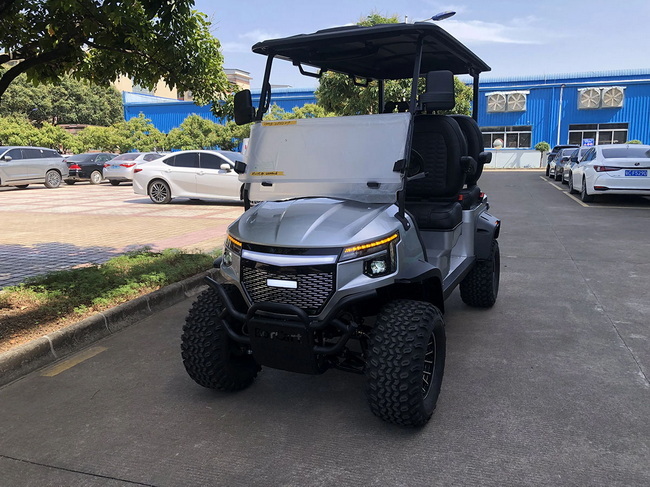
Understanding how your local authority classifies a golf car is the first step to deciding whether a car seat is needed. In some regions, a basic golf car operating only on private property is treated differently from a road-going vehicle, while in others, once a golf car reaches certain speed and equipment standards, it is treated as a low-speed vehicle.
These classifications often depend on maximum speed, lighting equipment, mirrors, and registration status. A standard golf car used only on golf courses or internal resort paths may not require registration, plates, or insurance. Once the same electric golf car is upgraded with lights, indicators, and safety equipment and is allowed on public streets, it may be reclassified and expected to follow rules closer to those for passenger cars.
The more a golf car behaves like a small city vehicle—carrying passengers on public streets at higher speeds—the more likely it is that child restraint rules similar to car laws will apply. This can include requirements for seat belts, child safety seats, and even restrictions on where children may sit in the golf car.
Local rules vary widely, but many jurisdictions connect the legal requirement for car seats directly to whether the golf car is allowed on public roads. When an electric golf car meets the definition of a low-speed vehicle, it is often subject to the same child restraint laws that govern normal cars.
In these situations, any child below a specific age, height, or weight must be placed in an approved car seat or booster when riding in the golf car on public streets. The details differ from place to place; some regions might use age-based rules, others emphasize height and weight, and some combine all three in their regulations.
This means a family using a street‑legal golf car for school runs, neighborhood errands, or trips between home and a community center should treat child safety in the same way they would in a full-size car. If the child would need a car seat or booster in a sedan, that same child typically needs similar protection in a road‑legal golf car.
On golf courses, private estates, resort grounds, campuses, or industrial sites, the legal framework is often more flexible, but that does not remove the need for responsible safety decisions. A golf car traveling at modest speeds on internal paths may not fall under standard road traffic laws, and authorities may leave safety policies to property owners and operators.
However, children remain vulnerable even at low speeds. An abrupt turn, sudden stop, pothole, or curb can easily throw a small child from an open-sided golf car. Parents, fleet managers, and resort operators should think beyond compliance and ask whether a child is effectively protected in realistic driving situations.
For many families, this leads to a practical rule: if the child is too young to maintain a stable seated position or follow instructions consistently, a secure child restraint or dedicated family‑oriented golf car seat system is strongly advisable, even when the law is silent.
Golf cars are light, open, and often driven in relaxed environments, which can give a false sense of safety. Yet their design introduces unique risks for young passengers. Open sides and rear platforms make it easy for children to lean out or slip off the edge of the golf car. Narrow track width and a higher center of gravity can increase the chance of tipping during sharp turns or fast maneuvers.
Children are less able to react to sudden movements and may not understand how to brace themselves. When a golf car hits a bump or corner at speed, a child who is standing, perched on a lap, or sitting sideways can be thrown out of the vehicle. The combination of hard ground, nearby obstacles, and larger vehicles can turn a minor incident into a severe injury.
These risks are amplified in crowded resort areas, busy residential roads, or industrial campuses, where the golf car shares space with larger vehicles, pedestrians, and bicycles. In such environments, the way passengers are seated and restrained becomes as important as the mechanical status of the golf car itself.
Even where the law does not specifically address golf cars, best practices for child safety can guide your decisions. Many of the principles used for standard vehicles can be adapted to the golf car environment with thoughtful planning.
First, match the child seat to the child. A rear‑facing infant seat, a forward-facing seat with harness, or a booster should be chosen according to the child's age, weight, and height. Second, make sure the bench or seat in the golf car is solid, forward-facing, and wide enough to support the base of the car seat without overhang.
Third, verify that the belt system of the golf car can be tightened securely through the designated belt paths on the child seat or booster. Excess movement in any direction weakens the protective effect in a sudden stop or minor collision. Many operators also consider limiting the number of children in the golf car at one time to maintain safe loading and avoid crowding around the child seat area.
Installing a child seat in a golf car follows the same principles used in a passenger vehicle, but the structure and belts on a golf car can be different. The aim is to create a firm, stable, and correctly oriented installation that keeps the child in the safest possible position during every phase of the ride.
Begin by selecting the best seat position on the golf car. A forward-facing bench near the center of the vehicle is often preferable, though many golf cars offer front and rear benches that can be safely used once properly equipped with belts. Avoid placing the car seat on side-facing or narrow auxiliary seats, because these positions do not manage crash forces as effectively.
Next, route the lap-and-shoulder belt system (or appropriate lap belt where allowed) through the designated path on the car seat or booster and lock it firmly. Test the installation by pushing and pulling the seat at the belt path; it should not move more than a small amount side-to-side or front-to-back. If the belt geometry of your golf car makes this difficult, consult the seat manufacturer's guidance and consider using specialized locking hardware or compatible retrofit kits designed for low-speed vehicles.
Finally, adjust the harness or headrest for the child according to the manufacturer's instructions. A child whose shoulders, ears, or head are positioned incorrectly in relation to the seat structure may not receive full protection, even if the seat itself is securely attached to the golf car bench.
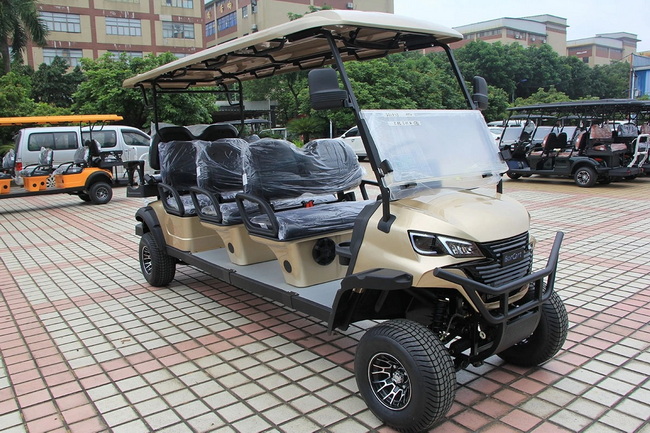
Using a golf car safely with children requires more than one product or accessory; it is a combination of equipment, rules, and habits. For families, fleets, and resorts, a simple safety code can help everyone operate a golf car more responsibly.
Key practices include always keeping children seated while the golf car is moving, never allowing them to stand on the rear platform, and insisting that hands, feet, and heads stay inside the passenger space. Adults should avoid driving a golf car with a child on their lap or sharing the driver's seat, as this can interfere with steering and braking.
Operators should pay attention to speed, particularly when turning, descending slopes, or driving on uneven ground. Slower, smoother driving creates more time to react and reduces the chance of losing control. It also makes it easier for children to remain seated comfortably in the golf car with their restraints properly positioned. Regularly checking tires, brakes, lights, and steering also supports overall safety and comfort for family passengers.
When a golf car is upgraded to travel legally on public roads, the safety context changes significantly. Street‑legal golf cars and low-speed vehicles must typically meet certain design and equipment requirements, such as lighting, mirrors, reflectors, and sometimes windshields and wipers. These features signal that the golf car is no longer just a course vehicle but part of the wider traffic environment.
In many regions, operating such a golf car on public roads requires a valid driver's license and compliance with local traffic laws. Speed limits often restrict where the golf car can travel; for example, it may be allowed only on roads with lower posted limits, and sometimes within a specified distance of a registered address. In this setting, car seat and seat belt laws are more likely to apply, because the golf car is exposed to the same collision risks as other vehicles.
Families should therefore treat a street-legal golf car as they would any city car when planning how children travel. If a child would normally ride in a rear seat with a harnessed car seat or booster in a sedan, that same child should have equivalent protection when the family uses a golf car to navigate neighborhood streets or small town centers.
Safety does not start at installation; it starts at the design stage. Professional OEM manufacturers like BorCart, specializing in electric golf cars and related low-speed vehicles, can integrate key safety elements directly into the structure of the golf car. This approach makes it easier for brands, distributors, and end users to apply child safety guidelines in real-world conditions.
Designing golf car frames with reinforced mounting points for seat belts and optional child-seat anchor systems allows operators to configure their fleets for family use, resort transport, or light urban mobility. By engineering golf car benches to accommodate the base dimensions of common car seats and boosters, OEMs can simplify installation and reduce the risk of improper setups in the field.
BorCart and similar OEM partners can also offer customized golf car variants tailored to different applications. For example, family-focused golf cars designed for vacation resorts might include forward-facing second rows with integrated belts and easy-access steps, while utility golf cars for campuses or factories might prioritize cargo decks and safety railings. Thoughtful differentiation ensures that each golf car is both efficient and safe for its intended environment.
As demand for multi-purpose golf cars grows, more advanced safety technologies are being adapted from larger vehicles and applied to low-speed platforms. These features can further enhance child safety, especially in busy or confined areas.
Speed limiters, for instance, allow operators to cap the maximum speed of a golf car to match the environment—slower settings for resort paths or dense neighborhoods, slightly higher limits for wider internal roads. Electronic stability enhancements or carefully tuned suspension systems can help reduce the likelihood of tipping during cornering, particularly when the golf car is carrying a full load of passengers.
Other innovations may include automatic parking brakes, hill-hold functions, and acoustic alerts to signal pedestrian presence or backing maneuvers. When paired with good seating and restraint design, these technologies help a golf car behave predictably and smoothly, making it easier for children to remain safely seated throughout the journey.
To understand how these principles work in everyday life, consider a few common golf car scenarios. In a gated community, a family might use a golf car for short trips to the pool, playground, or clubhouse. Even if local law does not require car seats on internal roads, the parents may choose to use a booster or harnessed seat for a younger child, along with clear rules about staying seated and buckled.
At a large resort, management might operate multiple golf cars as shuttle vehicles between rooms, restaurants, and beaches. Here, equipping selected golf cars with dedicated family seating—belted benches suitable for child restraints—allows guests to choose the safest option when traveling with young children. Training staff drivers on gentle driving techniques and passenger supervision further reduces risk.
In a commercial or industrial setting, a golf car might be used to move staff and light cargo. Operators might adopt a policy that forbids transporting small children altogether, recognizing that even well-equipped utility golf cars are primarily engineered for work rather than family transport. Each setting can combine legal requirements, technical equipment, and operational policies to create a safety strategy that respects how a golf car is actually used day-to-day.
A car seat for a golf car is both a legal and practical safety question, and the correct answer depends on vehicle classification, operating environment, and passenger age. When an electric golf car is configured as a street-legal low-speed vehicle and driven on public roads, families should expect to follow child restraint rules similar to those used in passenger cars.
On private property, where regulations may be less strict, parents, fleet managers, and resort operators still carry the responsibility to protect young passengers. Proper use of car seats, boosters, and seat belts, combined with thoughtful golf car design, careful driving, and clear passenger rules, dramatically reduces the risk of falls, ejections, and collision-related injuries.
Manufacturers like BorCart can play an important role by integrating anchor points, robust seating, and optional safety technologies directly into the golf car structure. In this way, the modern golf car becomes a safe, comfortable, and versatile mobility solution—whether it is transporting golfers between holes, families around a resort, or residents through a quiet community.
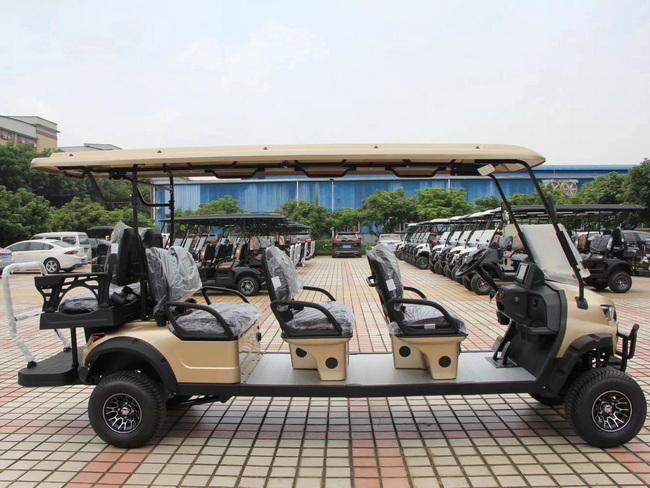
Not always, because the requirement depends on local regulations, the type of golf car, and whether it is permitted on public roads. In many regions, a child seat or booster is required when the golf car is classified as a low-speed vehicle and used in regular traffic. On private paths and courses, a car seat may not be legally required, but using an appropriate child restraint is still strongly recommended for young passengers.
In most cases, a standard, approved car seat can be used in a golf car as long as the seat is installed on a stable, forward-facing bench with a suitable belt system. The car seat should fit the child's age, height, and weight, and the belt routing must follow the manufacturer's instructions. If the golf car's belt layout does not allow a secure installation, consider retrofit solutions or specialized seating designed for low-speed vehicles.
Toddlers are particularly vulnerable in any open vehicle, including a golf car, because they can easily lose balance and may not understand safety instructions. If toddlers do ride, they should be secured in an appropriate child safety seat that is properly attached to a forward-facing bench in the golf car. They should never stand, sit on laps, or ride on the edge of the seat, and the driver should use extra caution with speed and cornering.
A golf car without seat belts makes it nearly impossible to secure a car seat or booster properly. This significantly reduces protection for children and raises the risk of ejection during turns, bumps, or sudden stops. Retrofitting the golf car with correctly mounted seat belts and, if necessary, anchor points for child restraints is highly advisable before transporting young passengers. Alternatively, consider choosing a golf car model that is factory-equipped for belt installation.
Rear-facing auxiliary seats on a golf car are generally less safe for children because they place the child at the outer edge of the vehicle with limited structural protection. The motion of the golf car, especially over bumps or during turns, can cause a child to slide or fall from these seats. For young passengers, a forward-facing bench equipped with seat belts and, when needed, a properly installed child seat or booster provides a safer and more controlled seating position.


