


Views: 222 Author: BorCart Publish Time: 2026-05-19 Origin: Site


Medium speed vehicles (MSVs) and street‑legal golf carts are reshaping short‑distance mobility, but they serve different use cases, regulations, and buyer expectations—understanding these differences is essential if you are choosing, specifying, or sourcing the right platform from an OEM partner like BorCart. [en.wikipedia]
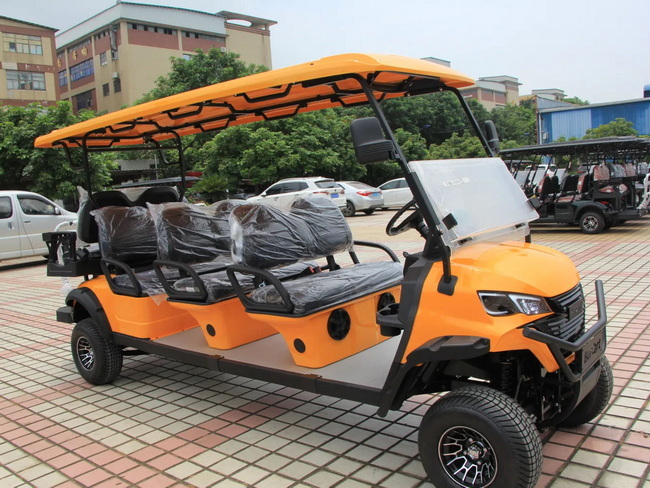
From an engineering and regulatory perspective, medium speed vehicles are a legal vehicle class designed to operate on public roads at higher speeds than traditional low‑speed or golf‑cart‑based platforms. They typically run at 35–45 mph, meet stricter safety requirements, and are often used as compact electric cars for campuses, communities, and municipalities. [en.wikipedia]
By contrast, street‑legal golf carts (often classified as LSVs in many markets) originate from golf course vehicles that have been upgraded with road‑legal equipment. They usually operate on roads with speed limits up to 25–35 mph and are widely used in gated communities, resorts, industrial parks, and short‑distance urban trips. [lexsong-ev]
| Aspect | Medium Speed Vehicles (MSVs) | Street‑Legal Golf Carts / LSV‑Type Carts |
|---|---|---|
| Typical top speed | 35–45 mph, depending on state regulations en.wikipedia | 20–25 mph for classic LSVs; some models engineered up to 30–35 mph where allowed |
| Regulatory category | Dedicated MSV category in some US states, with stricter safety rules than LSVs en.wikipedia | Generally classified as Low‑Speed Vehicles (LSVs) or modified golf carts; must meet basic federal and local road rules |
| Safety equipment | More stringent: reinforced structure, advanced lighting, mirrors, restraints; requirements vary by state en.wikipedia | Road‑legal package: headlights, turn signals, mirrors, windshield, seat belts, horn; lighter overall |
| Primary use cases | Neighborhood EV, campus shuttle, urban utility, fleet / municipal mobility | Golf courses, gated communities, resorts, hotels, industrial facilities, campuses |
| Comfort level | Closer to compact EV: enclosed cabin options, enhanced comfort features | Open or semi‑enclosed; comfort upgrades on demand (seating, infotainment, storage) |
| Typical buyers | Municipalities, institutions, fleet managers, real‑estate developers | Golf clubs, resort operators, property managers, dealers, lifestyle users |
For an OEM like BorCart, this difference affects chassis design, safety engineering, certification planning, and the sales narrative you offer to your private‑label partners.
From an industry insider's view, the regulatory path is the first major fork in your product and sourcing decision.
- MSVs in the United States are defined by state‑level rules that typically allow operation on roads with higher speed limits and therefore require more robust safety engineering. [en.wikipedia]
- These vehicles often need stronger crash protection, certified lighting systems, and may be subject to more detailed inspection or registration processes. [en.wikipedia]
Street‑legal golf carts, on the other hand, usually need:
- Basic road‑use equipment – headlights, tail lights, turn signals, rear‑view mirrors, seat belts, horn, and a compliant windshield. [borcart]
- Compliance with local rules restricting them to roads with lower posted speed limits, often under 35 mph. [lexsong-ev]
For foreign brands and wholesalers collaborating with a Chinese OEM, the practical takeaway is:
- If your customers demand higher‑speed, multi‑purpose urban mobility, you should design and label the platform toward the MSV category and plan for more extensive homologation. [en.wikipedia]
- If your target is residential communities, resorts, and golf facilities, a street‑legal golf cart platform delivers faster time‑to‑market with more flexible customization and lower certification complexity. [borcart]
From real project experience, end‑users rarely start with the legal category. They start with jobs to be done.
Customers tend to choose MSVs when they need:
- Longer routes and faster trips between neighborhoods, campuses, or satellite facilities. [msvdealer]
- A vehicle that feels closer to a compact passenger car, including enclosure, climate comfort, and more robust perceived safety. [lexsong-ev]
- Fleet standardization for municipalities or campuses, where one platform must cover multiple use cases. [msvdealer]
Street‑legal golf carts become the first choice when:
- Typical trips are short, repetitive, and predictable—around a golf course, inside gated communities, or on internal plant roads. [borcart]
- The vehicle is part of a service experience (resort shuttle, hotel buggy, tourism tour) where open design and good visibility matter. [lexsong-ev]
- Budget, simplicity, and customization flexibility (seating layouts, cargo beds, styling, branding) are more important than maximum speed. [borcart]
For BorCart's OEM partners, mapping these real‑world scenarios to the right platform helps position your catalogs and landing pages around clear buyer outcomes instead of only specs.
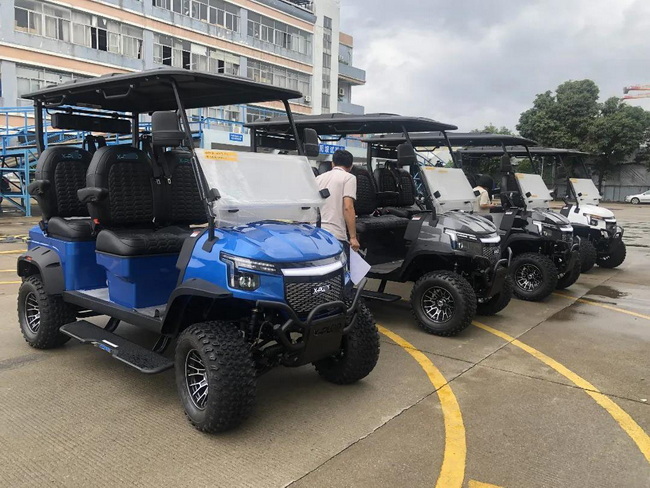
The rapid electrification of light vehicles is reshaping both MSVs and golf carts, with electric powertrains now dominating industry growth. [finance.yahoo]
Industry reports show that electric golf carts and light vehicles are gaining market share, with electric platforms outpacing gasoline and solar options due to efficiency and user preference. [finance.yahoo]
Typical trends for both MSVs and street‑legal golf carts include:
- Lithium‑ion battery systems replacing traditional lead‑acid packs, offering better energy efficiency, longer life, and faster charging. [finance.yahoo]
- Improved range that makes daily community or campus use feasible without mid‑day charging. [finance.yahoo]
MSVs usually take these trends further by pairing higher battery capacity and motor output with advanced thermal and battery management—critical when you are operating at higher speeds for longer durations. [lexsong-ev]
Modern light EVs are rapidly adding digital and connected features:
- Smart displays and integrated GPS navigation. [finance.yahoo]
- Fleet management systems using telemetry and AI to optimize deployment, maintenance, and charging. [finance.yahoo]
- Infotainment upgrades such as custom dashboards and audio systems. [finance.yahoo]
For street‑legal golf carts, these upgrades help reposition them as "second vehicles" for communities—good enough for grocery runs, school drop‑offs, or short errands. For MSVs, they are increasingly expected as standard equipment to compete with compact EVs. [lexsong-ev]
While prices vary widely by configuration, fleet buyers usually compare total cost of ownership (TCO) rather than sticker price.
Key cost drivers include:
- Initial vehicle cost – MSVs generally sit above golf carts due to stronger structures, higher speed capability, and more safety content. [en.wikipedia]
- Energy costs – Electric light vehicles benefit from lower per‑mile energy costs compared to combustion‑engine alternatives. [lexsong-ev]
- Maintenance and downtime – Electric drivetrains have fewer moving parts; downtime can be further reduced with connected diagnostic and fleet management tools. [finance.yahoo]
- Regulatory compliance and insurance – Operating in higher speed categories can raise both compliance and insurance costs; buyers must weigh this against productivity gains. [en.wikipedia]
Street‑legal golf carts frequently win in ROI for short‑distance ecosystems such as resorts, industrial sites, and gated communities where the ownership cost per mile and per passenger trip is extremely competitive. MSVs justify their higher cost where speed, route length, or public‑road exposure are central requirements. [en.wikipedia]
Global demand for light electric mobility is rising, and both MSV and golf‑cart‑derived platforms benefit from this trend.
- Industry research indicates that the global golf cart OEM market is projected to grow at around 4–5% CAGR in the next decade, driven by rising adoption in golf courses, communities, tourism, and industrial facilities. [finance.yahoo]
- The broader golf cart and low‑speed vehicle category is expanding due to urban congestion, demand for eco‑friendly mobility, and the evolution of golf carts into community vehicles. [lexsong-ev]
Electric platforms, performance upgrades, and customization options (from dashboards to lighting and branding) are expected to lead the growth in the OEM segment. For private‑label brands and distributors, partnering with a manufacturer that can adapt the same base chassis into MSV‑like, LSV, or site‑only golf cart variants reduces development risk and shortens lead times to launch new models. [borcart]
As a specialized Chinese manufacturer of golf carts and other electric vehicles, BorCart focuses on OEM projects for overseas brands, wholesalers, and manufacturers who need a flexible yet reliable production partner. [borcart.en.made-in-china]
From an OEM strategy standpoint, a partner like BorCart can:
- Engineer modular electric platforms that can be adapted into both street‑legal golf carts and higher‑speed community vehicles, depending on your target regulations. [borcart.en.made-in-china]
- Integrate lithium battery systems, advanced lighting, safety components, and smart dashboards in line with the latest industry trends. [borcart]
- Provide private‑label customization—body colors, seating layouts, branding, accessories—so your model range looks unique in your market while sharing a common technical base. [borcart.en.made-in-china]
For international buyers, the critical benefit is the ability to enter new mobility niches quickly—from resort fleets to community MSVs—without building your own manufacturing footprint. [borcart]
From a practical, user‑first perspective, here is a simple decision path many successful brands use:
1. Define primary routes and roads.
- Mostly inside private property or low‑speed internal roads → street‑legal or site‑only golf carts. [borcart]
- Frequent use on public roads at higher speeds → MSV‑type platform. [en.wikipedia]
2. Clarify passenger vs cargo mix.
- Passenger experience and tourism focus → golf cart‑based platform with open design and styling. [lexsong-ev]
- Mixed or utility‑heavy usage → consider MSVs or utility‑oriented crossover carts with enclosed cabins. [msvdealer]
3. Set expectations for safety and comfort.
- If users expect car‑like safety perception and cabin comfort, lean toward MSV‑grade engineering. [en.wikipedia]
- For controlled environments, well‑equipped street‑legal carts may fully satisfy users at a lower TCO. [borcart]
4. Plan your brand's positioning.
- Lifestyle and leisure branding often pairs best with premium golf‑cart‑based vehicles. [lexsong-ev]
- Urban mobility and "micro‑EV" positioning aligns naturally with MSV‑type vehicles. [msvdealer]
By making these decisions early, you can brief an OEM like BorCart more effectively and avoid re‑engineering later in the project lifecycle. [borcart]
If you are a brand owner, wholesaler, or vehicle producer considering MSVs or street‑legal golf carts as your next product line, the next step is to turn these comparisons into a concrete specification. Collaborating with a specialized OEM like BorCart allows you to define target market, safety category, range, speed, and branding, then translate that into a tailored vehicle platform ready for your logo and your market. [borcart.en.made-in-china]
To move forward, you should prepare a short brief covering your target country, speed category (MSV or street‑legal cart), expected use cases, and annual volume—and then request a technical and commercial proposal from BorCart's engineering and sales team. [borcart]
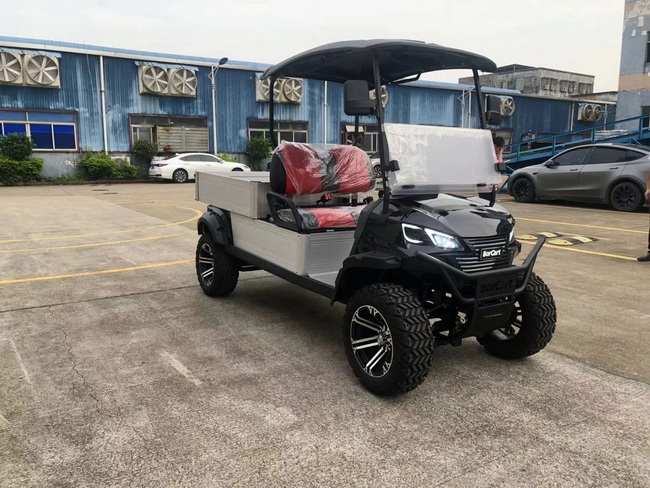
1. Are medium speed vehicles safer than street‑legal golf carts?
MSVs are subject to more stringent safety regulations than low‑speed vehicles in many US states, which typically results in stronger structures and expanded safety equipment. However, the real‑world safety level also depends on how and where the vehicle is operated. [en.wikipedia]
2. Can a street‑legal golf cart be upgraded to meet MSV standards?
In some cases, an LSV‑type golf cart platform can be upgraded with higher‑performance components and additional safety features, but meeting MSV rules may require deeper structural changes and new certification. OEMs often design separate variants on a shared chassis to balance cost and compliance. [en.wikipedia]
3. Which option is better for resorts and hotels?
Most resorts and hotels prefer street‑legal golf carts or LSV‑type vehicles because they offer open, friendly design, lower speeds, and highly customizable seating and styling, all at a competitive TCO. MSVs are usually over‑specified for this environment. [en.wikipedia]
4. How fast is the golf cart OEM market growing?
Research indicates the global golf cart OEM sector is expected to grow at about 4–5% CAGR through the next decade, driven by the expansion of golf facilities, tourism, and the adoption of electric utility vehicles in various sectors. [finance.yahoo]
5. Why should an overseas brand work with a Chinese OEM like BorCart for MSVs and golf carts?
Partnering with a specialized OEM in China offers economies of scale, flexible customization, and faster product development, allowing overseas brands to launch tailored MSV and golf cart ranges without building manufacturing capacity from scratch. This is especially advantageous in fast‑growing, innovation‑driven segments like electric light vehicles. [borcart.en.made-in-china]
1. Wikipedia – "Medium‑speed vehicle". [https://en.wikipedia.org/wiki/Medium-speed_vehicle] [en.wikipedia]
2. MSVDealer – "About Medium Speed Vehicles". [https://msvdealer.com/about.html] [msvdealer]
3. Spherical Insights via Yahoo Finance – "Global Golf Cart OEMs Market Size To Exceed a Significant …". [https://finance.yahoo.com/news/global-golf-cart-oems-market-060000587.html] [finance.yahoo]
4. Lexsong EV – "2026 Golf Cart Industry Trends: From Course Companion to Community Mobility Solution". [https://www.lexsong-ev.com/2026-golf-cart-industry-trends-from-course-companion-to-community-mobility-solution] [lexsong-ev]
5. NisonCo – "4 Tips to Electrify your EV SEO Strategy". [https://nisonco.com/tips-electrify-ev-seo-strategy/] [nisonco]
6. Panem Agency – "SEO for an Electric Vehicle Importer From the Ground Up". [https://panem.agency/seo-for-an-electric-vehicle-importer-from-the-ground-up] [panem]
7. BorCart – "Street Legal Golf Carts In 2026 – Expert Guide, Top Features, And OEM Insights". [https://www.borcart.com/street-legal-golf-carts-in-2026-expert-guide-top-features-and-oem-insights.html] [borcart]
8. BorCart product listings on Made‑in‑China – examples of electric golf cars and LSVs. [https://borcart.en.made-in-china.com] [borcart.en.made-in-china]


