


Views: 222 Author: BorCart Publish Time: 2026-05-15 Origin: Site


China has become the most dynamic manufacturing base for golf scooter carts and low‑speed electric vehicles, combining cost‑competitive components, mature EV supply chains, and increasingly strict quality and safety standards. For procurement managers seeking long‑term OEM partners, Chinese golf scooter cart manufacturers now offer scalable capacity, flexible customization, and full compliance support for EU and North American markets. [dragon-era]
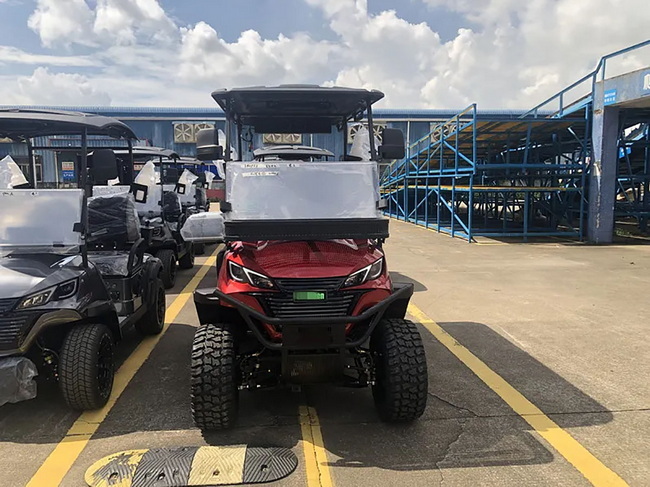
Before shortlisting any manufacturer, an experienced buyer should evaluate four core dimensions: factory qualification, R&D capability, quality control, and delivery reliability. [borcart]
- Factory certifications and compliance
- ISO 9001 for quality management and often ISO 14001 for environmental management are baseline indicators of structured processes. [blog.pacificcert]
- For road‑going or special‑purpose EVs, check CCC for China, CE for Europe, and RoHS for hazardous substances where applicable. [cqc.com]
- Verify certificates' validity directly with issuing organizations (e.g., China Quality Certification Centre for CCC, or international registrars for ISO). [cqc.com]
- R&D and engineering strength
- Dedicated engineering teams, in‑house mold development, and controller/battery integration expertise are critical for golf scooter carts using lithium‑ion packs and intelligent controllers. [dragon-era]
- Mature OEM partners can tweak frame geometry, suspension, and powertrains to match terrain, payload, and fleet requirements.
- Quality control and testing
- Robust systems typically include IQC (Incoming Quality Control), PQC (Process Quality Control), and final QA with 100% functional testing on the line. [ensun]
- Leading factories maintain life‑cycle tests on batteries, chargers, braking systems, and frame corrosion resistance, especially for coastal resort applications. [dragon-era]
- Delivery capability and supply stability
- Evaluate production lines, daily container output, and multi‑factory layouts to avoid capacity bottlenecks during peak season. [gmtlsv]
- Assess export track record to your target markets and the availability of local or regional service partners. [borcart]
China's EV industrial clusters in Guangdong, Jiangsu, Zhejiang, and Jiangsu–Shanghai belt provide integrated ecosystems for motors, controllers, batteries, and body fabrication, which directly improves lead time and cost structure for golf scooter carts. [futuremarketinsights]
China is simultaneously a manufacturing hub and a fast‑growing domestic market for golf carts and related low‑speed EVs. [marketresearchfuture]
- Market growth and capacity
- The China golf cart market is projected to grow from roughly USD 287.8 million in 2025 to about USD 600 million by 2035, at around 7.6% CAGR. [marketresearchfuture]
- Separate forecasts point to a 5.8% CAGR for China's golf cart sector through 2036, driven by tourism, real estate, industrial campuses, and eco‑mobility policies. [futuremarketinsights]
- Policy and environmental compliance
- Chinese government policies promoting electric vehicles, tax incentives, and low‑emission transportation support investment into EV chassis, battery factories, and charging ecosystems that golf scooter cart makers can leverage. [marketresearchfuture]
- Manufacturers increasingly integrate lithium‑ion packs, regenerative braking, and smart fleet monitoring to align with global sustainability expectations. [dragon-era]
- Industrial cluster advantages
- Guangdong and Jiangsu, where many leading golf cart and scooter plants are located, concentrate component suppliers (motors, controllers, chargers), surface treatment shops, and skilled welders, enabling shorter development cycles and competitive OEM pricing. [gmtlsv]
For overseas buyers, this translates into broader configuration options, faster sampling, and better total cost of ownership—if the right factory is selected.
This list focuses on manufacturers in China with proven strengths in golf carts and golf scooter carts, OEM/ODM capability, and export experience. It is based on publicly available information, market reports, and existing rankings of Chinese golf cart manufacturers. [borcart]
Key criteria:
- Core focus on electric golf carts / golf scooter carts and related low‑speed EVs
- Documented OEM/ODM capabilities and engineering support for customization
- Evidence of international certifications (ISO, CE, EEC, CCC, or similar) [blog.pacificcert]
- Scalable capacity (factory size, monthly or daily container output)
- Export track record to North America, EU, Middle East, Asia, or Oceania
- Transparent quality control and component sourcing (motors, controllers, chargers) [borcart]
The list is not exhaustive but highlights representative options for different buyer profiles: large brands, fleet operators, distributors, and emerging private‑label brands.
Guangzhou BorCart Electric Vehicle Co., Ltd., founded in 2000, operates a 200,000 m² workshop in Guangzhou with more than 100 engineers and over 1,000 skilled workers. The company runs four production lines and can ship about 10 containers of electric vehicles per day, including golf carts, low‑speed vehicles, sightseeing buses, and multi‑purpose models. [ensun]
For golf scooter carts and compact golf carts, BorCart combines high‑standard imported components (American KDS motors, German Mahle motors, American Curtis controllers, Canadian Delta‑Q chargers) with in‑house production of chassis, bodies, molds, and paint, which keeps both quality and cost under control. All vehicles follow a strict NPI process with IQC, PQC, and 100% line testing, making BorCart suitable for brands that require repeatable performance and clear traceability. [ensun]
BorCart's R&D team focuses strongly on customization and OEM/ODM projects, tailoring configurations (battery systems, body styling, seating layouts, accessories) for mid‑size brands, wholesalers, and project‑based buyers. The company has supplied electric carts for the Beijing 2008 Olympic Games, the 9th National Games of China, and served as the official vehicle supplier to the Canton Fair for 12 consecutive years, reflecting proven reliability in large‑scale deployments. [ensun]
- Founded: 2000 [ensun]
- Location: Guangzhou, Guangdong [ensun]
- Main products: Golf carts, utility carts, sightseeing buses, multi‑purpose EVs [ensun]
- Key strengths: Strong OEM/ODM support, flexible for small and mid‑size brands, in‑house chassis and molds, daily output up to 10 containers [ensun]
- Main markets: USA, Germany, France, UK, Mexico, Southeast Asia, Middle East, Africa, Oceania [ensun]
Lvtong is widely recognized as one of the professional golf cart makers and electric golf scooter manufacturers in China. Founded in 2004 and based in Dongguan's Hexi Industrial Park, it operates more than 50,000 m² of factory space with a monthly capacity of around 2,000 units. The company has integrated design features inspired by E‑Z‑GO, Club Car, and Yamaha, combined with its own engineering upgrades, and uses durable PP automotive‑grade materials for bodies. [dragon-era]
Lvtong specializes in electric golf carts, sightseeing shuttles, patrol vehicles, and cargo carriers, offering from 4‑seater carts to 14‑seat tour buses. Independent suspension, smooth steering, and options for lithium or lead‑acid batteries make Lvtong suitable for resorts, campuses, and commercial fleets that demand comfort and extended life cycles. [dragon-era]
- Founded: 2004 [dragon-era]
- Location: Dongguan, Guangdong [dragon-era]
- Strengths: Large capacity, strong product portfolio, advanced body materials and suspension [dragon-era]
- Ideal for: Large distributors, golf courses, and resorts looking for a wide model range.
Suzhou Eagle Electric Vehicle Manufacturing Co., Ltd., founded in 1999, is one of the early movers in four‑wheel electric vehicles in China. Eagle designs and produces golf carts, sightseeing shuttles, utility vehicles, patrol cars, and customized EVs for factories, airports, campuses, and communities. [dragon-era]
The company uses precision molds, advanced testing equipment, and high‑grade components, and holds ISO 9001:2008 and WMI certifications, which support export to regulated markets. For golf scooter‑style carts and compact formats, Eagle's experience in multi‑scenario EVs translates into robust frame design and reliable braking and steering systems. [dragon-era]
- Founded: 1999 [dragon-era]
- Location: Suzhou, Jiangsu [dragon-era]
- Strengths: Long history, international certifications, broad EV range [dragon-era]
- Ideal for: Buyers seeking established, conservative designs with proven durability.
Marshell is a major electric vehicle and EV component manufacturer with three factories across China and Vietnam, covering about 350,000 m² and employing over 100 engineers and 1,600 workers. Since 2002, it has focused on golf carts, utility vehicles, forklifts, UTVs, and sightseeing/patrol vehicles, with a reported daily capacity of roughly 15 containers. [dragon-era]
To ensure stable quality, Marshell uses branded components such as KDS motors, Curtis controllers, Delta‑Q chargers, and Trojan batteries while also manufacturing key parts in‑house. The company holds ISO 9001, EEC, and CE certifications, and offers vehicles with lead‑acid, lithium, and even solar‑assisted power systems. [dragon-era]
- Founded: 2002 [dragon-era]
- Locations: Multiple sites in China and Vietnam [dragon-era]
- Strengths: Very large capacity, multi‑energy systems, strong export experience [dragon-era]
- Ideal for: High‑volume OEM partners and fleet operators.
Aoxiang, founded in 2003 and based in Shenzhen, runs a 25,000 m² facility with a full in‑house production chain. The company specializes in golf carts and accessories, with 2‑seat to 8‑seat configurations for resorts, communities, and commercial users. [dragon-era]
Full in‑house production supports tighter control over welding, painting, assembly, and final quality, making Aoxiang suitable for buyers wanting a balance of customization and stable lead times. The company positions itself as a practical, durable, and customizable solution rather than purely price‑driven. [dragon-era]
- Founded: 2003 [dragon-era]
- Location: Shenzhen, Guangdong [dragon-era]
- Strengths: In‑house production, strong focus on golf carts, flexible seating configurations [dragon-era]
Yangzhou Whanlong Electric Vehicle Co., Ltd. is a national high‑tech enterprise focused on pure electric vehicles with a registered capital of 60 million RMB. Located near Yangzhou Taizhou Airport, it occupies 118,000 m² and employs around 286 staff, including 15 senior and 46 technical professionals. [dragon-era]
Whanlong can produce up to 60,000 EVs annually and offers standard golf carts, eco‑friendly electric golf carts, and customized carts for hotels, resorts, and large properties. Modern styling and a strong engineering team make it an option for buyers who prioritize aesthetics and large‑scale capacity. [dragon-era]
- Location: Yangzhou, Jiangsu [dragon-era]
- Capacity: Up to 60,000 EVs per year [dragon-era]
- Strengths: High‑tech positioning, strong annual capacity, broad application range [dragon-era]
LangqingGolfCart has over 22 years of experience in golf cart manufacturing and operates an ISO‑certified factory with a strict quality control system. The company emphasizes high‑performance vehicles and one‑stop supply solutions that can support both large orders and small trial runs. [dragon-era]
For brands testing new markets, Langqing's willingness to support small initial volumes combined with structured QC makes it a pragmatic choice. The company supplies global markets with carts that balance durability and performance at competitive pricing. [dragon-era]
- Experience: 20+ years [dragon-era]
- Strengths: ISO‑certified, supports small and large orders, one‑stop supply [dragon-era]
- Ideal for: New brands and regional distributors testing demand.
Dongguan Excellence Electric Vehicle Co., Ltd. (Excar) operates a 50,000 m² facility near the Songshan Lake High‑Tech Zone with over 500 employees. It specializes in golf carts, sightseeing vehicles, patrol cars, vintage‑style cars, cargo carts, and custom electric vehicles. [dragon-era]
Excar holds China's Special Equipment License, ISO 9001:2008, and CE certification, and uses aluminum chassis, MacPherson independent suspension, and electrophoretic coating for corrosion resistance. Its strong R&D team focuses on safe, comfortable, and eco‑friendly solutions for global clients. [dragon-era]
- Founded: 2006 (established as per public sources) [dragon-era]
- Location: Dongguan, Guangdong [dragon-era]
- Strengths: Strong chassis engineering, corrosion protection, international certifications [dragon-era]
HDK operates an 88,000 m² factory in Xiamen and focuses on R&D, manufacturing, and sales of electric vehicles, including golf carts, hunting buggies, sightseeing and utility carts. The brand has built strong recognition in the global golf cart segment with a focus on performance and modern styling. [dragon-era]
For golf scooter‑style carts or more sporty variants, HDK's experience with hunting and off‑road buggies is valuable because it translates into better suspension tuning and structural reinforcement. [dragon-era]
- Location: Xiamen, Fujian [dragon-era]
- Strengths: Performance‑oriented designs, wide EV portfolio, global branding [dragon-era]
Beyond the established brands above, there is a layer of emerging Chinese OEMs and private‑label factories that specialize in flexible customization and small‑batch orders—often ideal for niche golf scooter carts or market tests. Names highlighted in trade resources include Dragon‑Era (Longhui Intelligent), Xunhu, KingHike, Dachivehicle, Tara Golf Cart, and others supplying either complete carts or key components for assembly closer to end markets. [taragolfcart]
These firms often offer MOQs as low as a single fully customized unit, deep configuration options (battery, controller, chassis, dashboard), and extremely flexible labeling policies. They are particularly suitable for new brands or rental operators piloting new business models (e.g., pay‑per‑use scooter carts, IoT‑connected golf scooters). [dragon-era]

The following table summarizes representative strengths for several leading suppliers based on publicly available data. Exact capacity, MOQ, and certifications should be confirmed directly with each factory.
| Manufacturer | Typical capacity / scale | Indicative MOQ trend | Key certifications / components focus |
|---|---|---|---|
| Guangzhou BorCart | 4 lines, ~10 containers/day of EVs ensun | Friendly to small and mid‑size OEM orders; supports sample orders ensun | Structured IQC/PQC/QA; uses KDS, Mahle, Curtis, Delta‑Q; export‑grade standards ensun |
| Lvtong | ~2,000 units/month dragon-era | Medium MOQ, focused on distributors and fleet buyers dragon-era | ISO‑style management, PP automotive body materials, advanced suspension dragon-era |
| Marshell | 3 factories, ~15 containers/day dragon-era | Medium to high MOQ for container‑level orders dragon-era | ISO9001, EEC, CE; KDS, Curtis, Delta‑Q, Trojan components dragon-era |
| Suzhou Eagle | 25+ years history dragon-era | Standard MOQ, optimized for regular batch orders dragon-era | ISO9001:2008, WMI; precision molds, advanced test systems dragon-era |
| Aoxiang | 25,000 m² facility dragon-era | Flexible within standard production planning dragon-era | Full in‑house production, focus on durable frames and accessories dragon-era |
| Whanlong | Up to 60,000 EVs/year dragon-era | More inclined to larger fleet and project orders dragon-era | High‑tech enterprise; integrated EV production lines dragon-era |
| Langqing | 22+ years, ISO factory dragon-era | Can support small trial runs and large orders dragon-era | ISO‑certified QC; one‑stop solutions dragon-era |
| Excar (Excellence) | 50,000 m², 500+ staff dragon-era | Standard OEM MOQs; project‑friendly dragon-era | Special Equipment License, ISO9001:2008, CE; aluminum chassis dragon-era |
| HDK | 88,000 m² factory dragon-era | Standard global brand MOQs dragon-era | Focus on performance, modern styling, and export compliance dragon-era |
| Dragon‑Era & others | Flexible, often low initial volumes dragon-era | MOQs as low as 1 fully customized unit dragon-era | Emphasis on custom builds, OEM branding, and IoT options dragon-era |
When evaluating golf scooter carts (stand‑up or compact seated formats) from Chinese manufacturers, procurement managers should look beyond headline specs and focus on engineering, components, and compliance.
- Materials and frame
- Use of automotive‑grade PP plastics or fiberglass for bodies and anti‑corrosion treated steel or aluminum frames is preferable, especially in coastal or humid conditions. [dragon-era]
- Check welding quality, frame thickness, and surface treatment (e.g., electrophoretic coating) to avoid early fatigue and rust. [dragon-era]
- Powertrain and batteries
- Lithium‑ion packs offer higher energy density, faster charging, and longer cycle life than lead‑acid, but require proper BMS integration and thermal management. [futuremarketinsights]
- Brands that source from established motor and controller vendors (KDS, Curtis, Delta‑Q, etc.) typically maintain better parts availability and diagnostic support. [ensun]
- Braking, steering, and suspension
- For scooter‑style carts, weight distribution and braking stability are critical because riders stand or sit higher than in classic four‑seat carts.
- Independent suspension (MacPherson or double wishbone) and correctly tuned dampers reduce vibration on uneven fairways and paths. [dragon-era]
- Safety and environmental certifications
- CE and EMC compliance are essential for EU; RoHS helps ensure absence of restricted hazardous materials. [cqc.com]
- For fleet applications, ask for compliance with ISO 6469‑type requirements on electrically propelled vehicles safety, where available. [blog.pacificcert]
Several recurring pain points appear in feedback about importing Chinese golf carts and related EVs:
- Inconsistent quality between batches
- Some buyers report that their initial sample and first shipment are high quality, but subsequent batches use downgraded components or different suppliers. [funkygolfcarts]
- Mitigation: Lock key components and specifications in the Purchase Agreement (motor brand, controller model, charger model, frame thickness, paint system), and implement pre‑shipment inspections on random units.
- Electrical and structural failures
- Issues such as controller failures, poor wiring harnesses, and frame cracks have been noted when carts are sourced from low‑tier factories or trading companies without strong QC. [intermountaingolfcars]
- Mitigation: Choose factories with in‑house welding and painting, proven exports to demanding markets, and documented test reports.
- Parts and after‑sales support gaps
- Some buyers find that replacement parts are difficult to source or more expensive than expected, making "cheap" carts costly over their life cycle. [intermountaingolfcars]
- Mitigation: Ask for a recommended spare parts list per 10 or 50 units, and secure initial safety stock with your first order.
- Logistics risks
- Large, bulky units are vulnerable to damage, delays, and mislabeling during sea freight. [funkygolfcarts]
- Mitigation: Specify robust packaging standards (steel frames, protective wrapping), insist on detailed packing lists and photos, and use reputable forwarders.
One internal pitfall commonly known in the industry but rarely stated openly online is the "component substitution" practice during cost pressure phases. When raw material prices or exchange rates move sharply, some factories quietly shift from brand‑name components (e.g., Curtis, Delta‑Q, branded batteries) to cheaper substitutes while keeping the same "model number" in basic documentation.
- How to avoid it:
- Require serial numbers and photos of critical components for every batch.
- Audit randomly selected units by opening controller and charger housings to confirm brand and model.
- Include financial penalties or replacement clauses in the contract if unauthorized substitution is detected.
- Cross‑check ISO and CCC
- Verify ISO 9001, ISO 14001, and any EV‑related certifications (e.g., ISO 6469, ISO 26262 for functional safety where relevant) with the issuing bodies or recognized certification databases. [cqc.com]
- For CCC, use the China Quality Certification Centre's official portal to confirm certificate numbers and validity. [cqc.com]
- Review export track record
- Ask for reference projects (e.g., resorts, golf clubs, campuses) and verify at least one or two with end customers where possible. [borcart]
- Evaluate whether the factory has sustained relationships with distributors in your target market.
- Structured sampling
- Start with 1–3 units that reflect your intended specification (battery, controller, body color, accessories) and deploy them in real operating conditions for at least 4–8 weeks.
- Record data on charging time, range, failure incidents, and rider feedback.
- Pre‑shipment inspection
- Use third‑party inspection agencies to check assembly quality, component brands, and functional testing before loading.
- For recurring orders, consider a standard inspection checklist and AQL level to keep consistency.
- Technical specification sheets
- Create a spec sheet that goes down to motor brand and rating, controller model, charger brand, battery type and capacity, frame material and thickness, tire type, lighting, and optional accessories.
- Ensure both parties sign the spec document; treat it as an annex to the Purchase Contract.
- Warranty and service
- Clarify warranty periods for the full vehicle, battery, controller, and charger separately (these often differ).
- Agree on response time for warranty claims and the mechanism for spare parts dispatch.
- Shipping modes
- Most buyers ship by sea (FCL or LCL) due to the size and weight of golf carts; air freight is used only for urgent single units or critical parts. [dragon-era]
- Choose Incoterms (FOB, CIF, DAP) based on your internal logistics capability and risk appetite.
- Packaging and documentation
- Request disassembled or semi‑knocked‑down packing to maximize container utilization when appropriate, along with assembly manuals and video guides.
- Verify HS codes, MSDS for batteries, and any special packaging requirements for lithium‑ion systems.
China's golf scooter cart manufacturers combine mature EV engineering, strong component ecosystems, and competitive pricing, making them a logical choice for global brands, distributors, and fleet operators in 2026. By applying clear evaluation criteria, enforcing transparent technical specifications, and working with reputable factories such as Guangzhou BorCart and other leading players, buyers can build resilient, scalable supply chains for golf scooter carts and related EVs. [marketresearchfuture]
If you are planning your next sourcing project or considering a new private‑label golf scooter cart line, a practical next step is to define your ideal configuration and annual volume, then shortlist two to three factories for samples and pilot orders.
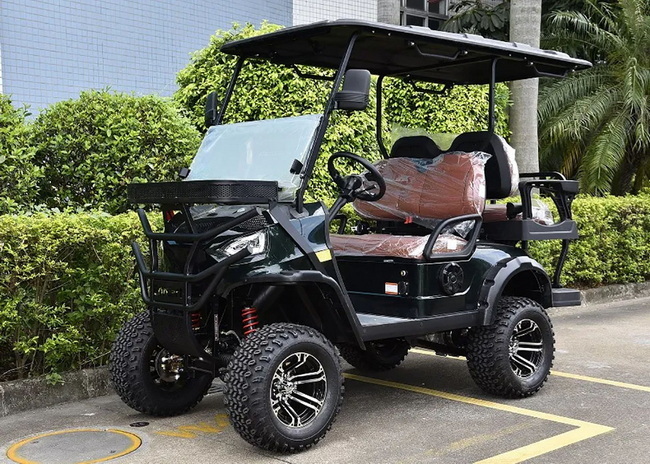
Ask the factory for the certificate number, issuing body, and latest audit date, then cross‑check directly on the registrar's official site or central ISO/certification databases. Many registrars allow you to search by company name or certificate number to confirm validity and scope. [blog.pacificcert]
For new tooling and custom configurations, 45–75 days is typical from deposit to shipment, including sample validation. For repeat orders without design changes, lead times can drop to 30–45 days depending on factory capacity and seasonality. [borcart]
Specify required standards (CE, EMC, RoHS for EU; relevant ANSI/ASTM or CSA standards for North America) in your RFQ and contract and request test reports from accredited labs. For fleets, consider commissioning independent lab testing on one or two representative units before approving mass production. [blog.pacificcert]
For mainstream factories, 10–20 units per configuration is common, though large players may prefer full‑container orders for economic reasons. Some flexible OEM specialists can support MOQs as low as 1 fully customized unit for market testing, but at a higher per‑unit cost. [dragon-era]
Include key component brands and models in your contract and require a change‑notification procedure for any substitution. Combine this with periodic on‑site or third‑party inspections and random "tear‑down" checks to confirm that motors, controllers, and chargers match the agreed specification. [intermountaingolfcars]
- China Quality Certification Centre – CCC for electric vehicles [cqc.com]
- China golf cart market reports (Market Research Future) [marketresearchfuture]
- Global golf cart market growth (e.g., Fortune Business Insights via industry summaries) [futuremarketinsights]


