


Views: 222 Author: Leah Publish Time: 2026-01-21 Origin: Site


Content Menu
● How to Identify 36V, 48V, or 72V
● Battery Types in Club Car Golf Cars
● Why Voltage Matters for Performance
● Choosing the Right Voltage for Your Application
● Typical Club Car Voltage Configurations
● Performance and Range Expectations
● Upgrading a 36V Club Car Golf Car to 48V
● Accessories, Voltage Reducers, and 12V Loads
● Battery Care and Maintenance Across Voltages
● Safety Tips When Working on Golf Car Voltage Systems
● OEM and Fleet Considerations for BorCart Customers
● FAQ
>> 1. How do I quickly check the voltage on my Club Car golf car?
>> 2. Is a 48V Club Car golf car better than a 36V model?
>> 3. Can I convert my 36V Club Car golf car to 48V?
>> 4. Do lithium batteries change the voltage of a Club Car golf car?
>> 5. What happens if I use the wrong charger on my Club Car golf car?
Most modern electric Club Car golf car models are 48‑volt vehicles, while older Club Car golf car designs commonly use 36‑volt systems and a smaller group of newer, high‑performance platforms use 72‑volt packs. Understanding whether a Club Car golf car is 36V, 48V, or 72V is essential when you select batteries, chargers, controllers, and accessories, or when you order OEM golf car units from a manufacturer such as BorCart for international markets.
A Club Car golf car's voltage defines how much electrical potential is available to drive the motor, which directly affects torque, acceleration, hill‑climbing ability, and range. For golf courses, resorts, gated communities, and commercial fleets that rely on stable and efficient transport, choosing the right voltage for each Club Car golf car is one of the most important early decisions.
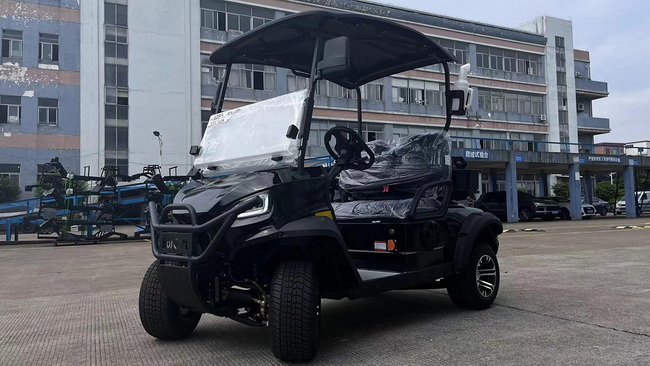
Most current Club Car golf car models built for golf courses and residential communities are based on a 48V battery system using six 8‑volt batteries connected in series. Earlier generations of Club Car golf car fleets were widely produced with 36V systems, and some of those golf car vehicles are still in daily use on flatter, shorter courses.
In recent years, Club Car and other premium platforms have also introduced 72V systems in select utility and high‑performance golf car models. These 72V Club Car‑style golf car platforms are designed to deliver stronger torque and higher top speeds, particularly for hilly resorts, hunting applications, and multi‑purpose work environments where a conventional 48V golf car may not be enough.
The most reliable way to identify the voltage of a Club Car golf car is to check the batteries under the seat. Count how many batteries are installed, read the voltage printed on one battery, and multiply the number of batteries by that value to get the total pack voltage; for example, six 6‑volt batteries equal 36V, six 8‑volt batteries equal 48V, and six 12‑volt batteries equal 72V.
If the battery labels are missing or faded, you can count the cell caps on each battery: three caps generally indicate a 6‑volt unit, four caps indicate 8 volts, and six caps indicate 12 volts. After confirming the voltage of a single battery, multiply by the number of batteries in the Club Car golf car to determine the system voltage. When in doubt, technicians can also read the markings on the motor controller and solenoid, or consult the owner's manual, which normally states whether the Club Car golf car is configured for 36V, 48V, or 72V.
Club Car golf car vehicles have traditionally relied on deep‑cycle flooded lead‑acid batteries, and many fleets around the world still operate on this technology. In a typical 48V Club Car golf car, six 8‑volt lead‑acid batteries are wired in series, providing the voltage and energy capacity required for a full day of golf or light transport.
Today, more Club Car golf car models and compatible OEM platforms can also be configured with lithium‑ion batteries. In those cases, the cart still operates at a nominal 48V or 72V, but uses a single integrated lithium pack or modular lithium units with an internal battery management system. For golf car operators, lithium offers reduced maintenance, faster charging, lower weight, and more stable voltage under load, which translates into a more consistent driving experience throughout the discharge cycle.
Voltage is one of the core elements that determine how a Club Car golf car behaves on the course or on the road. For a given power level, a higher voltage system will draw less current, which reduces heat in cables, connectors, and motors; this is why 48V and 72V Club Car golf car platforms can run cooler and more efficiently than comparable 36V systems at similar performance levels.
In practical terms, a 48V Club Car golf car often offers stronger acceleration, better hill‑climbing ability, and more usable range compared with a 36V golf car built with similar components. Typical stock speeds for many course‑ready golf car models are in the range of about 12–15 mph, while upgraded 48V systems, especially those paired with performance controllers and motors, can reach 18–23 mph or more, depending on local regulations and tire size.
Selecting the right voltage for a Club Car golf car depends on terrain, load, usage frequency, and budget. For standard golf course duty on relatively flat terrain, 48V has become the dominant choice, giving an excellent balance between cost, power, and range in everyday golf car usage.
In hilly resorts or for multi‑passenger shuttles and maintenance golf car vehicles that regularly carry heavy loads, 72V systems provide noticeably stronger torque and better sustained performance on climbs. However, components for a 72V Club Car golf car, including batteries, controllers, chargers, and wiring, tend to be more expensive, so this configuration works best when the added performance has clear commercial value.
Different Club Car golf car platforms and compatible OEM chassis are built around a few common voltage configurations:
1- 36V
- Usually built with six 6‑volt lead‑acid batteries connected in series.
- Often found in older Club Car golf car models and basic fleet golf car carts on relatively flat courses.
- Lower upfront cost but reduced torque and range compared with 48V systems.
2- 48V
- Typically built with six 8‑volt lead‑acid batteries or a dedicated 48V lithium pack.
- The mainstream choice for modern Club Car golf car fleets used on golf courses, in residential communities, and at resorts.
- Offers more power, better efficiency, and longer range for most golf car use cases.
3- 72V
- Built with six 12‑volt lead‑acid batteries or a purpose‑designed 72V lithium pack.
- Used in high‑performance, off‑road, and heavy‑duty utility golf car platforms where maximum torque and speed are needed.
- Best suited for demanding commercial operations and specialty applications.
On a well‑maintained golf course or community path, a standard 36V Club Car‑style golf car usually delivers enough power for casual driving, but its range and hill‑climbing performance are more limited. Healthy 36V golf car packs may realistically cover around 8–12 miles under moderate conditions before the voltage drops enough to affect performance, especially with older lead‑acid batteries and uneven terrain.
A 48V Club Car golf car, by contrast, can often achieve 20–30% more usable range and sustain stronger torque on hills because the system draws fewer amps to provide the same or greater power. When equipped with a high‑capacity 48V lithium pack, a golf car can comfortably cover multiple rounds of golf or a full day of resort transport with shorter charging windows between shifts.
For 72V performance golf car builds, speed and torque become even more impressive, making these systems ideal for demanding routes, large resorts with steep gradients, or off‑road hunting and adventure golf car applications. Operators should note that higher speeds may be governed by local regulations, so the controller in a Club Car golf car is often programmed to balance legal limits, safety, and battery life.
One of the most popular modifications among enthusiasts and fleet operators is upgrading an older 36V Club Car golf car to a 48V system. This conversion typically raises both torque and speed, often by around 3–4 mph on otherwise similar setups, and provides noticeably better hill‑climbing and acceleration.
A proper 36V to 48V conversion on a Club Car golf car involves more than just swapping batteries. In most cases, you should:
- Replace the existing 36V battery pack with an appropriate 48V pack (either six 8‑volt lead‑acid or a 48V lithium module).
- Upgrade or reprogram the motor controller to handle 48V operation and the desired current output.
- Install heavy‑duty cables and confirm that the solenoid, F/R switch, and other components are rated for 48V and the new current levels.
- Match the charger exactly to the new pack voltage and chemistry to ensure safe, consistent charging.
Many Club Car golf car motors are capable of operating on both 36V and 48V, and performance motors are often explicitly rated for this dual‑voltage use. The result is a golf car that starts harder, climbs better, and maintains higher speed under load, while drawing a more efficient current profile from the upgraded battery pack.
Most Club Car golf car accessories, such as headlights, tail lights, turn signals, stereos, and USB outlets, are designed to run on 12V. Because the traction pack in a Club Car golf car is usually 36V, 48V, or 72V, a voltage reducer is needed to provide a stable 12V feed for accessories without damaging them.
Instead of connecting accessories directly to a single battery in the pack (which would cause uneven discharge and premature failure of that battery), a high‑quality voltage reducer is wired across the full pack in the Club Car golf car. This device takes the higher DC voltage and steps it down to a regulated 12V output, often with built‑in protections like short‑circuit and over‑temperature safeguards.
For OEM builds and large fleets, specifying the correct voltage reducer and accessory harness from the factory is critical. This ensures that each Club Car‑style golf car can safely power lights, infotainment, work lights, and other add‑ons without compromising the traction batteries that move the golf car throughout the day.
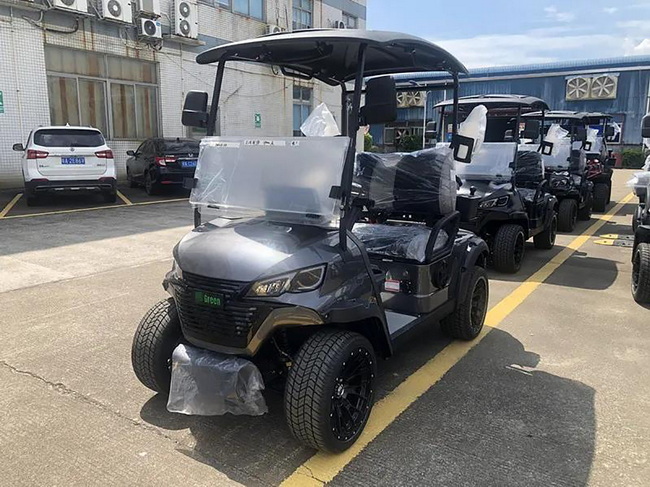
Proper battery care is essential regardless of whether the Club Car golf car is 36V, 48V, or 72V. For lead‑acid packs, the fundamentals remain the same: charge the golf car after each use, avoid deep discharges whenever possible, and never leave the pack in a partially discharged state for long periods.
Regular maintenance for a lead‑acid powered Club Car golf car includes checking electrolyte levels, topping up with distilled water when necessary, cleaning terminals to remove corrosion, and inspecting cables for looseness or damage. Poor connections and neglected water levels can lead to voltage drops under load, shorter run‑times, and, in extreme cases, permanent battery damage.
Lithium‑equipped Club Car golf car models simplify maintenance by eliminating watering and greatly reducing corrosion issues. These packs use a battery management system to manage cell balancing and protect against over‑charging and over‑discharging, which helps maintain pack performance over many more cycles. However, it remains important to use an appropriate charger and adhere to the manufacturer's recommendations for temperature and storage conditions.
Working on the electrical system of a Club Car golf car, especially 48V or 72V models, requires careful attention to safety. Even though the voltages involved are low compared with road vehicles, they can still deliver dangerous currents and cause severe damage if mishandled.
Before working on wiring or components in a Club Car golf car, you should:
- Place the Tow/Run switch in the Tow position (when equipped) to de‑energize the controller.
- Disconnect the main negative cable from the pack and secure it away from the terminal so the golf car cannot complete a circuit accidentally.
- Use insulated tools and remove metal jewelry that could bridge battery terminals.
- Verify with a multimeter that there is no significant voltage present at the points where you intend to work.
In addition, you should keep the workspace dry and well‑ventilated, especially when charging or servicing lead‑acid batteries in a Club Car golf car. Following these procedures reduces the risk of short circuits, arcing, or unintended movement of the golf car while you are working on it.
For brand owners, wholesalers, and golf car manufacturers that cooperate with BorCart for OEM production, voltage choice is central to product positioning. When designing a new Club Car‑style golf car model for international markets, deciding between 36V, 48V, and 72V early in the project ensures that frames, wiring, motors, and controllers are optimized from the start.
Most partners who target golf courses, hotels, and gated communities choose 48V for their primary OEM golf car line. This voltage fits global expectations for power and range, offers abundant battery and charger options, and keeps total system costs reasonable. For specialized products marketed as hunting golf car vehicles, off‑road adventure carts, or heavy‑duty utility golf car units, a 72V architecture can be specified to deliver an unmistakable performance advantage.
Because BorCart focuses on producing electric golf cars and various automotive components for overseas customers, detailed voltage discussions are often integrated into early engineering meetings. This alignment allows every OEM golf car platform—whether it is a compact golf car, a sightseeing shuttle, a low‑speed vehicle, a hunting cart, or a multi‑purpose work vehicle—to reach its performance targets without compromising reliability.
Most Club Car golf car models on the market today operate at 48 volts, with 36‑volt systems mainly found in older carts and 72‑volt powertrains reserved for high‑performance or heavy‑duty applications. Being able to identify the voltage of a Club Car golf car by counting batteries or checking labels is essential for choosing compatible batteries, chargers, and accessories.
For typical golf courses, communities, and resort fleets, 48V remains the best all‑around choice, delivering strong torque, solid range, and high efficiency at a manageable cost. In more demanding environments or specialized markets, 72V Club Car‑style golf car platforms unlock higher performance, particularly when paired with modern lithium packs and robust controllers. By understanding how voltage shapes performance, range, maintenance, and upgrade potential, owners and OEM partners can specify the ideal Club Car golf car solution for each unique use case.
Contact us to get more information!
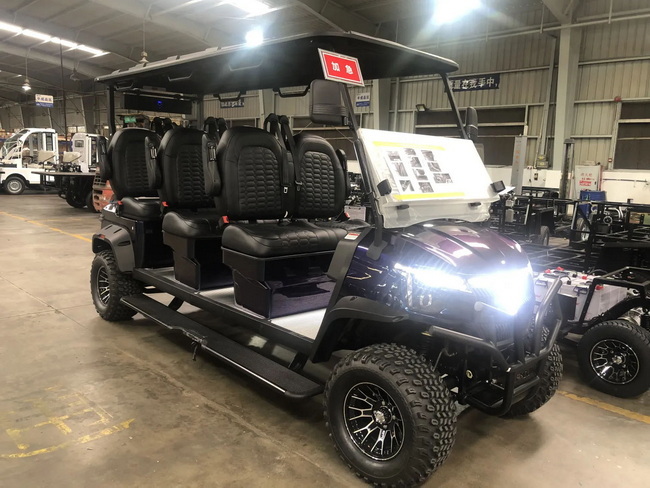
Lift the seat on your Club Car golf car and locate the battery pack. Count the number of batteries, read the voltage rating on one battery, and multiply the two values to calculate the total system voltage. For instance, six 8‑volt batteries indicate a 48V pack, while six 6‑volt batteries indicate a 36V configuration. If labels are missing, you can count the cell caps—three for 6V, four for 8V, and six for 12V—then multiply that voltage by the number of batteries in the golf car.
A 48V Club Car golf car generally offers stronger acceleration, better hill‑climbing performance, and more range than a similar 36V golf car system because it draws less current for the same power output. This efficiency means less heat, lower stress on electrical components, and improved performance under load, which is why 48V has become the standard for most modern golf car fleets. A 36V Club Car‑style golf car can still be a good budget‑friendly option for light use on flat terrain, but 48V is typically the superior choice for daily or commercial use.
Yes, many owners successfully convert 36V Club Car golf car models to 48V to gain better torque, range, and speed. A proper conversion typically involves installing a 48V battery pack, upgrading or reprogramming the controller, verifying that the motor can handle 48V, and replacing cables and the solenoid with appropriately rated components. When done correctly, a converted Club Car golf car often gains a few miles per hour in top speed and accelerates more confidently on hills, making the upgrade worthwhile for frequent or demanding use.
Lithium batteries do not change the nominal operating voltage of a Club Car golf car; they simply replace the traditional lead‑acid pack while keeping the same system voltage, typically 48V or 72V. What changes is the weight, charge time, and discharge behavior, as lithium packs are lighter, charge faster, and maintain higher voltage under load. As a result, a lithium‑equipped 48V Club Car golf car usually feels more responsive throughout the entire charge cycle and can deliver more consistent performance and range with less routine maintenance.
Using a charger that does not match the voltage or chemistry of your Club Car golf car can lead to serious problems. A 36V charger connected to a 48V pack will under‑charge the batteries, reducing range and potentially causing sulfation in lead‑acid units, while a higher voltage charger can over‑charge the pack and damage batteries, controllers, and wiring. Always confirm that the charger's voltage rating and charge profile are exactly matched to your Club Car golf car's battery pack—whether it is 36V, 48V, or 72V, and whether it is lead‑acid or lithium—to ensure safe, reliable operation and long battery life.
1. https://diamondgolfcars.com/a-closer-look-at-the-48v-vs-36v-golf-cart/
2. https://www.vatrerpower.com/blogs/news/how-to-tell-if-your-golf-cart-is-a-36-or-48-volt-the-great-voltage-detective-game
3. https://www.liyuebattery.com/blog/what-kind-of-battery-does-a-club-car-golf-cart-use/
4. https://www.golfcartgarage.com/what-is-my-golf-cart-battery-voltage-volts/
5. https://www.golfcarttiresupply.com/club-car-batteries/
6. https://wheelzllc.com/blogs/golf-cart-news/pros-cons-48-volt-golf-cart-vs-36-volt-golf-cart
7. https://www.clubcar.com/en-us/lithium-ion
8. https://www.ddmotorsystems.com/ClubCar.php
9. https://cloudnewenergy.com/blog/is-a-48-volt-golf-cart-better-than-a-36-volt-golf-cart/
10. https://www.golfcartgarage.com/blog/how-to-make-your-golf-cart-go-faster/
11. https://bslbatt.com/blogs/36v-vs-48v-vs-72v-lithium-golf-cart-battery-comparison/
12. https://www.continentalbattery.com/blog/how-to-keep-your-golf-cart-battery-in-top-shape/
13. https://taraelectricvehicles.com/blog/2025/10/20/how-to-safely-work-on-a-golf-cart-electrical-system/


