


Views: 222 Author: Leah Publish Time: 2026-01-21 Origin: Site


Content Menu
● Why Club Car Golf Cars Use Multiple Batteries
● Typical Battery Counts in Club Car Golf Cars
● How Voltage and Battery Count Work Together
● Battery Setups in Key Club Car Platforms
>> Club Car Precedent Golf Car
>> Club Car Tempo and Onward Golf Cars
● Lead‑Acid vs. Lithium: What Changes in Battery Count?
● How to Check How Many Batteries Your Golf Car Has
● Why Battery Count Matters for Performance and Cost
● Best Practices for Specifying Batteries in OEM Golf Car Projects
● Maintenance Tips for Club Car‑Style Golf Car Batteries
● Upgrading an Older Golf Car to a Different Battery Configuration
● FAQ
>> 1. How many batteries are in a 48V Club Car golf car?
>> 2. How many batteries does a 36V Club Car DS golf car use?
>> 3. Can a Club Car golf car run on a single lithium battery pack?
>> 4. How do I know which replacement batteries my Club Car golf car needs?
>> 5. Is upgrading from lead‑acid to lithium worth it for a Club Car golf car?
Electric Club Car golf car models use multiple deep‑cycle batteries wired in series to create 36‑volt, 48‑volt, or 72‑volt systems, rather than a single large battery. The exact number of batteries in a Club Car golf car depends on the specific model, the system voltage, and whether the vehicle uses traditional lead‑acid batteries or a modern lithium pack.
For OEM customers, fleet managers, and brand owners working with manufacturers like BorCart to develop custom electric golf car solutions, understanding how many batteries are inside a Club Car‑style golf car is essential. Battery count affects not only performance and range, but also maintenance schedules, charging infrastructure, and long‑term operating cost.
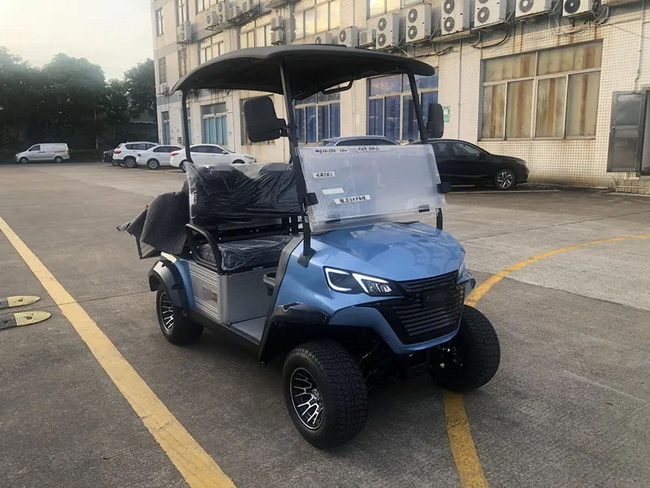
A Club Car golf car is designed around a system voltage, typically 36V, 48V, or in some performance applications 72V. Instead of using one extremely large battery, the vehicle relies on several smaller deep‑cycle batteries connected in series to reach that total voltage. This multi‑battery architecture makes it easier to source components, maintain the pack, and manage weight distribution in the golf car chassis.
In a traditional lead‑acid setup, the most common building blocks are 6‑volt, 8‑volt, and 12‑volt batteries. By combining these in different quantities, the manufacturer arrives at the desired pack voltage. For example, six 8‑volt units create a 48‑volt system, and six 6‑volt units make a 36‑volt system. Understanding this simple voltage arithmetic helps any golf car buyer or OEM partner quickly interpret spec sheets and quotations from suppliers.
Lithium‑powered golf car platforms often consolidate this multi‑battery arrangement into a single sealed module. In that case, the question “How many batteries are in this Club Car golf car?” can literally have the answer “one,” even though the internal lithium cells function collectively as a pack.
Club Car has produced several key platforms over the years, including the DS, Precedent, Tempo, and Onward lines, each of which may use different battery arrangements. Even within the same series, there can be variations depending on model year, trim level, and whether the vehicle is configured for personal, fleet, or utility use.
In many popular configurations, the pattern looks like this:
- A 36V Club Car DS golf car generally uses six 6‑volt deep‑cycle batteries wired in series to reach 36 volts.
- A 48V Club Car Precedent, Tempo, or similar fleet golf car typically uses six 8‑volt batteries for a total of 48 volts.
- Some 48V Club Car models, especially in certain years, were fitted with four 12‑volt batteries instead of six 8‑volt batteries.
- Modern lithium options for Onward, Tempo, and Carryall utility golf car platforms often use a single high‑voltage lithium pack to replace all of the individual lead‑acid batteries.
While these patterns are common, they are not universal. Over years of production, Club Car has updated designs, introduced special editions, and worked with fleets that requested specific battery configurations. This is one reason why fleet buyers and OEM partners should always verify the exact pack specification on any golf car they are evaluating or sourcing.
To understand battery count in a Club Car golf car, it helps to start with voltage. Most electric golf car powertrains are designed around either 36V or 48V:
- 36V systems are traditional and are commonly found in older DS golf cars.
- 48V systems are now the mainstream standard, offering better torque, speed consistency, and overall efficiency than many 36V setups.
Voltage is calculated by adding the nominal voltage of each battery in series. For example:
- Six 6V batteries connected in series: 6 × 6V = 36V.
- Six 8V batteries connected in series: 6 × 8V = 48V.
- Four 12V batteries connected in series: 4 × 12V = 48V.
From this, a rule of thumb emerges: if you know the system voltage, and you know the voltage of the individual batteries, you can determine the battery count. This is very practical in the field when inspecting a used golf car or checking a demo unit from a supplier:
- If you lift the seat and see six 8V labels, you are looking at a 48V golf car with six batteries.
- If you see six 6V labels, you are almost certainly looking at a 36V golf car pack.
- If you see four large 12V battery cases, that is another style of 48V golf car.
Lithium systems change the packaging but follow the same basic principle. A 48V lithium golf car pack usually operates around 51–52 volts nominal, but the OEM and BMS (battery management system) manage this internally. From the user's view, there is just one compact module, and the golf car is still considered a 48V vehicle.
Because the question “How many batteries?” is asked most often about specific models, it is helpful to summarize how several well‑known Club Car platforms are commonly configured.
The DS is one of the classic Club Car platforms and has been widely used on courses and in private communities for decades. In many 36V versions, the DS uses six 6‑volt batteries. Some later DS models and conversion projects run at 48V, either with six 8‑volt batteries or, in some unusual setups, with other combinations.
For a 36V DS golf car:
- Count: 6 batteries
- Individual battery voltage: 6V
- Total system voltage: 36V
For a 48V DS golf car using 8V batteries:
- Count: 6 batteries
- Individual battery voltage: 8V
- Total system voltage: 48V
Some DS golf car owners experiment with non‑standard configurations, but for OEM spec work and fleet planning, it is safest to treat six‑battery packs as the norm for both 36V and many 48V DS units.
The Precedent platform replaced the DS in many applications and became a popular choice for both course fleets and personal golf car users. Most modern Precedent golf cars in 48V form use six 8‑volt batteries. Earlier production years and certain trim levels sometimes used four 12‑volt batteries.
Common patterns include:
- 48V Precedent with six 8V batteries: 6‑battery pack.
- 48V Precedent with four 12V batteries: 4‑battery pack.
When an OEM manufacturer like BorCart builds a Club Car‑compatible golf car targeted at markets familiar with the Precedent, matching the popular six‑8V configuration helps ensure compatibility with existing chargers and customer expectations.
Tempo and Onward are newer platforms aimed at both commercial and personal users. They can be built with lead‑acid batteries or with factory lithium options. In lead‑acid form, these models generally follow the same pattern as Precedent 48V golf cars (six 8V in many cases). In lithium form, the multi‑battery tray disappears and is replaced by a single sealed module.
In practice:
- Lead‑acid Tempo / Onward: often six 8V batteries (6‑battery pack).
- Lithium Tempo / Onward: one lithium pack, plus internal cells and BMS, but from a buyer's viewpoint effectively one “battery.”
For dealers and OEM customers, this flexibility allows them to specify traditional multi‑battery lead‑acid packs for cost‑sensitive fleets, or a single lithium module for premium personal golf car builds.
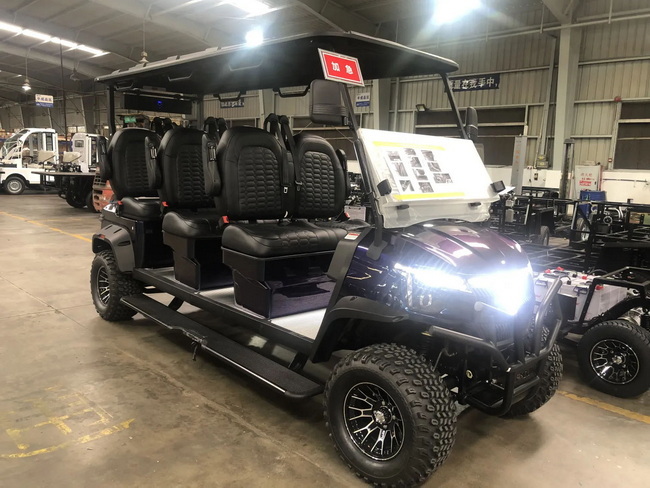
In a lead‑acid golf car:
- The pack is made up of multiple flooded or AGM deep‑cycle batteries.
- Each battery has removable caps for checking water levels (in flooded types).
- Owners or maintenance staff must regularly inspect and water the cells.
Because there are usually six separate batteries in a 48V Club Car‑style golf car, there are also many individual cells that require attention, and more interconnecting cables that must be kept tight and corrosion‑free.
In a lithium golf car:
- The battery pack is one enclosed module.
- There are no caps to remove or cells to water.
- The BMS monitors voltage, temperature, and charging to protect the pack.
This simplifies the answer to the battery‑count question, but it also changes how owners think about maintenance and lifespan. A lithium golf car pack typically lasts for significantly more cycles than a comparable lead‑acid pack, which can offset its higher initial cost over time.
For OEM clients working with a manufacturer such as BorCart, choosing lithium for a golf car means specifying:
- Desired voltage (for example, 48V).
- Target capacity (Ah or kWh) based on the range requirement.
- BMS features, charger type, and any integration required with the golf car's onboard electronics.
Once those decisions are made, the physical battery count becomes very straightforward: one pack per vehicle, even though that pack contains many internal cells.
For any Club Car golf car, the fastest and most reliable way to know how many batteries are installed is direct inspection. This is true whether the golf car is new, used, or a sample unit sent by a supplier.
Follow these steps:
1. Park the golf car on level ground and engage the parking brake.
2. Lift the seat base to expose the battery compartment.
3. Count the number of separate battery cases visible in the tray.
4. Look at the labels or case markings to see whether each unit is 6V, 8V, or 12V.
5. Multiply the number of batteries by their voltage to confirm total system voltage.
For example, if you count six cases and read “8V” on each label, the golf car is a 48V unit with six batteries. If you see only four cases and each one is 12V, that is also a 48V golf car but with four batteries. If there is a single rectangular module with safety and BMS markings, you are most likely looking at a lithium golf car pack.
This simple inspection method is invaluable when assessing trade‑ins, verifying the configuration of a pre‑owned Club Car golf car, or checking that an OEM shipment matches the agreed specification.
Battery count in a golf car is more than just a technical detail. It influences how the vehicle behaves, how it is serviced, and how much it costs to operate over its lifetime.
Key impacts include:
- Range and runtime: A properly sized 48V pack with six 8V batteries usually offers better performance and range than an older 36V pack with six 6V batteries, assuming comparable battery quality.
- Torque and hill climbing: Higher system voltage and healthy batteries give a golf car stronger response on slopes and when carrying multiple passengers or cargo.
- Maintenance workload: A six‑battery lead‑acid pack demands regular watering and cleaning, while a single lithium pack dramatically reduces routine maintenance tasks.
- Replacement cost: Replacing six high‑quality deep‑cycle batteries may be more affordable initially than buying a new lithium module, but lithium can deliver more total cycles before needing replacement.
For a manufacturer like BorCart that supplies OEM customers around the world, optimizing battery configuration is central to designing a golf car that meets local expectations. A resort in a coastal region might prioritize low‑maintenance lithium golf cars to avoid corrosion issues, while a municipal fleet might choose six‑battery lead‑acid packs to minimize upfront cost.
When overseas brand owners, wholesalers, or other manufacturers work with a dedicated golf car producer, battery specification should be included in the earliest project discussions. Clear communication avoids misunderstandings and ensures that the delivered golf car matches the target market's dominant standard.
Consider the following best practices:
- Define system voltage at the start: 36V for light‑duty applications, 48V for mainstream and higher‑performance golf car models.
- Choose battery chemistry according to market positioning: lead‑acid for cost‑sensitive fleets, lithium for premium or long‑life golf car lines.
- Specify battery count explicitly in lead‑acid builds (for example, “48V with 6 × 8V deep‑cycle units”).
- Clarify charger type, connector standard, and any smart‑charging requirements.
- Ensure that replacement batteries or packs will be easy to source in destination markets.
By following these guidelines, a BorCart‑style manufacturing partner can produce electric golf car models that closely mirror the familiar Club Car configurations while still allowing for customization in styling, accessories, and performance tuning.
Knowing how many batteries your golf car has is only the first step. Keeping those batteries in good condition is essential for safety, reliability, and long‑term value.
For lead‑acid golf car batteries:
- Check electrolyte levels regularly and refill with distilled water when needed, after charging.
- Keep terminals clean, tight, and free of corrosion.
- Avoid deep discharges whenever possible; frequent low‑state‑of‑charge operation shortens battery life.
- Charge the golf car after each use rather than letting it sit partially discharged.
For lithium golf car packs:
- Use only the charger recommended or approved for the pack.
- Avoid extreme temperature storage; moderate conditions support longer life.
- Follow the manufacturer's guidelines for long‑term storage and state‑of‑charge.
Whether the golf car uses six lead‑acid units or one lithium pack, careful attention to charging and storage practices will pay off in longer service life and more consistent performance.
Many owners consider upgrading older 36V or lead‑acid golf car platforms to newer configurations. For example, a 36V DS golf car might be converted to 48V for better performance, or a six‑battery lead‑acid pack might be replaced with a lithium module.
Common upgrade paths include:
- Converting a 36V golf car with six 6V batteries to a 48V golf car by installing six 8V batteries, plus a compatible controller and charger.
- Replacing a 48V lead‑acid pack (six or four batteries) with a drop‑in lithium system, reducing battery count to a single module.
- Re‑configuring the pack from four 12V batteries to six 8V units to improve usable capacity and longevity, while still remaining at 48V.
Any such upgrade should be planned carefully. Components like controllers, chargers, solenoids, and sometimes even onboard computers may need to be matched to the new voltage and battery type. For OEM‑scale projects, this is handled at the design stage, but individual owners upgrading their own golf car should work with experienced technicians or follow detailed technical guidance.
Most modern electric Club Car golf cars use a 48V system built from six 8‑volt deep‑cycle batteries, although some DS and Precedent models, especially in earlier years or special trims, use four 12‑volt batteries or other combinations. Older 36V DS golf cars typically rely on six 6‑volt batteries, while the newest Tempo and Onward platforms can replace all individual lead‑acid units with a single factory lithium pack. Whether a golf car contains four, six, or one main battery module, the configuration determines how the vehicle performs, how it is maintained, and how much it will cost to operate over its service life.
For fleet operators, dealers, and overseas brand owners working with manufacturers like BorCart, treating battery specification as a core design parameter is crucial. By clearly defining voltage, chemistry, and battery count, they can ensure that each golf car delivered to the market aligns with local expectations, supports efficient maintenance, and delivers the performance that modern users demand.
Contact us to get more information!
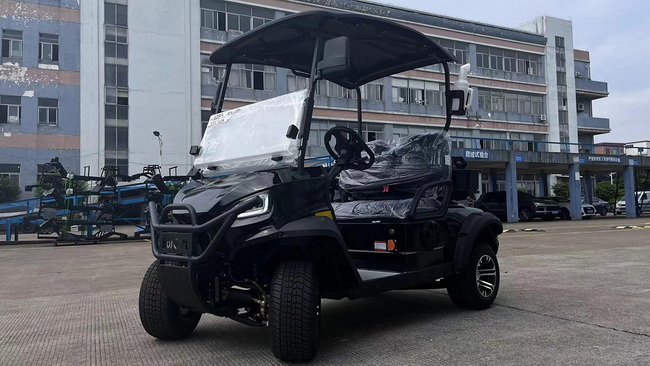
Most 48V Club Car‑style golf cars use six 8‑volt deep‑cycle batteries wired in series for a total of six batteries. Some versions, particularly certain Precedent or DS variants, may instead use four 12‑volt batteries, so the exact count is either four or six depending on the specific configuration and model year.
A typical 36V Club Car DS golf car uses six 6‑volt batteries connected in series to achieve 36 volts. This six‑battery arrangement has long been a standard in classic 36V golf car platforms and is still widely supported by battery suppliers.
Yes, many modern Club Car‑style platforms can run on a single integrated lithium pack instead of multiple lead‑acid batteries. In these setups, the multiple cells are housed inside one sealed module managed by a built‑in battery management system, so from an owner's perspective the golf car has just one main battery unit.
To select the correct replacement batteries, you should confirm the golf car's system voltage, count how many batteries are currently installed, and check the voltage rating on each battery's label. Matching these details to a trusted supplier's replacement chart will ensure you choose batteries with suitable dimensions, capacity, and terminal layout for your specific golf car.
Upgrading from lead‑acid to lithium is often worthwhile for heavily used golf car fleets or high‑end personal vehicles because lithium packs deliver more cycles, charge faster, and require very little routine maintenance. While the initial cost of a lithium pack is higher than replacing a set of lead‑acid batteries, the longer lifespan and reduced servicing can make the total cost of ownership competitive or even lower over time.
1. https://www.golfcartgarage.com/club-car-batteries/
2. https://tidewatercarts.com/club-car-precedent-battery-set-up-changes-by-model-year.html
3. https://www.golfcarttiresupply.com/club-car-batteries/
4. https://leochlithium.us/club-car-golf-cart-battery-replacement-what-makes-it-different-and-how-to-upgrade-the-right-way/
5. https://www.clubcar.com/en-us/lithium-ion
6. https://www.usbattery.com/replacement-batteries-for-club-car-golf-carts/
7. https://ecobattery.com/collections/battery-bundles
8. https://www.buggiesgonewild.com/showthread.php?t=110655
9. https://www.batterystuff.com/files/1388-battery-saver-install-guide-24v-36v-48v-series.pdf
10. https://thebatterydude.com/club-car-ds-36v-set-of-6-volt-us-batteries/
11. https://www.golfcarttiresupply.com/6-volt-golf-cart-batteries-trojan-battery-6v-225ah-t-105-6-pack-36v/
12. https://www.youtube.com/watch?v=rCCQFUJ0Ak0


