


Views: 222 Author: Leah Publish Time: 2026-01-13 Origin: Site


Content Menu
● Understanding Club Car Golf Cart Speed
● Typical Top Speeds by Configuration
>> Standard Course Fleet Golf Cars
>> Private Use & “Speed Code” Club Cars
>> Heavily Upgraded Performance Golf Cars
● What Affects How Fast a Club Car Golf Cart Goes?
>> Motor, Controller, and Voltage
>> Tire Size, Tread, and Weight
● Legal Limits for Street‑Use Golf Cars
>> Speed Caps for Street‑Legal Use
>> Safety Equipment Requirements
● How to Make a Club Car Golf Cart Faster
>> Motor and Controller Upgrades
>> Battery and Drivetrain Enhancements
● Why OEM Manufacturing Matters for Golf Car Speed
>> BorCart's Golf Car Engineering Capabilities
>> Custom Speed Profiles for Different Markets
● FAQ
>> 1. What is the normal top speed of a Club Car golf cart?
>> 2. How fast can a street‑legal Club Car golf cart go?
>> 3. Can I increase the speed of my Club Car golf cart safely?
>> 4. Why does my Club Car golf cart feel slower than advertised?
>> 5. How can BorCart help with custom‑speed golf car OEM projects?
When most golfers ask “How fast does a Club Car golf cart go?”, the simple answer is that a standard Club Car golf car usually runs about 12–14 mph in golf‑course configuration, and can be tuned or upgraded to around 19–23 mph for private use, with street‑legal low‑speed vehicles (LSVs) capped at about 25 mph.[1][2][3]
As a professional Chinese OEM manufacturer, BorCart designs and builds electric golf car platforms that can be configured within these common speed ranges to match different markets, terrains, and legal requirements worldwide.[4][5]

A typical, stock electric Club Car golf car used on a course is factory‑set to about 12–14 mph to protect turf, improve safety, and keep fleet maintenance predictable. Many fleets even lock carts to “golf mode” with lower speed limits depending on course policy.[6][1]
For personal use, many owners request “private speed” settings or upgrades that raise the top speed into the high‑teens, which is why you will see Club Car golf car models advertised at 19–20 mph when delivered for neighborhood or resort use.[1][6]
Different Club Car golf car configurations reach different speeds depending on motor, controller, battery, and tire size. The following scenarios cover the most common speed ranges owners experience in everyday golf car use.[2][1]
Most standard fleet Club Car golf car models are limited to about 12–14 mph as delivered for use on golf courses, reflecting a balance between pace of play and on‑course safety. Some courses enforce even lower limits (around 10 mph) to manage hilly layouts, narrow paths, or high traffic, using controller settings or fleet management systems to slow each golf car.[6][1]
In addition, many course operators use GPS‑based control systems that can automatically reduce golf car speed in high‑risk zones such as near greens, steep slopes, or parking areas. This keeps each golf car predictable and helps protect both players and course staff.[7]
Many modern electric Club Car golf cars use programmable “speed codes” that adjust maximum speed while keeping torque under control, allowing one platform to serve both conservative fleets and private owners. Dealers commonly apply a higher speed code (such as 4) to take a Club Car golf car from roughly 12–14 mph up to about 19–19.5 mph for private users who drive mainly in residential communities.[1]
In practice, this level of performance is often ideal for a neighborhood or resort golf car, because it feels noticeably quicker than a pure course‑fleet golf car without crossing the legal threshold where more complex regulations start to apply. For many owners, a 19–20 mph Club Car golf car offers the right mix of speed, safety, and simplicity.[8][7][1]
When a Club Car golf car is configured and certified as a low‑speed vehicle (LSV), it is typically set to 25 mph, which aligns with widely used LSV standards in markets such as the United States. These LSV‑type golf cars are allowed on many roads posted at 35 mph or below, assuming required safety equipment, registration, and insurance are in place.[3][9][10][2][7][8]
This 25 mph cap is important because it defines the golf car as a distinct category separate from conventional passenger vehicles. Once a golf car is capable of sustained speeds above that limit, additional vehicle classifications and stricter rules may apply, making the ownership experience more complex for the typical golf car user.[7][8]
With upgraded motors, controllers, high‑capacity batteries, and larger‑diameter tires, customized golf cars can reach around 23 mph while still remaining practical for neighborhood and resort driving. Some enthusiasts push the limits much further, building extreme performance golf cars that achieve spectacular speeds far beyond normal use cases.[1]
However, such extreme builds are highly specialized and no longer behave like a conventional golf car in terms of braking distance, stability, or safety margins. For most users, keeping a Club Car golf car within the 20–25 mph range offers a safer and more controllable driving experience, especially when carrying passengers or operating in mixed traffic.[8][7]
Many owners notice that two golf cars with similar labels can feel very different in real‑world speed, especially once they leave the course. Several technical and environmental factors shape how fast a Club Car golf car will actually go on the fairway or street.[7][1]
Standard electric Club Car golf cars usually use motors and controllers tuned for efficiency and smooth acceleration rather than outright performance, which helps extend battery life and reduce component stress. Higher‑power motors, performance controllers, and 48‑volt electrical systems generally support higher golf car top speeds than older 36‑volt platforms, especially under load or on inclines.[1]
In addition, many premium neighborhood or resort golf cars are delivered with controllers that can be easily reprogrammed by authorized dealers, making it possible to dial in different speed and torque profiles without changing the underlying hardware. This flexibility allows a single base golf car design to serve diverse markets and driving environments.[4][1]
Weak or aging lead‑acid batteries can drag a Club Car golf car down to well below its rated top speed, particularly when traveling uphill or carrying several passengers. Even if the motor and controller are capable of more, voltage sag from tired batteries will keep a golf car from reaching its theoretical maximum speed.[1]
Modern lithium battery conversions often improve acceleration and help a golf car maintain its peak speed more consistently over the length of a round or neighborhood trip, because lithium packs deliver higher usable capacity and more stable voltage. Owners who upgrade to lithium often report that their golf car feels stronger at the end of the day than comparable lead‑acid cars do after several hours of use.[6][8]
Larger‑diameter tires effectively “gear up” a Club Car golf car, increasing its theoretical top speed at a given motor RPM, but this usually reduces low‑speed torque and hill‑climbing ability. Conversely, smaller tires may feel more responsive off the line while limiting maximum speed.[1]
Aggressive off‑road tread, lifted suspensions, heavy roofs, rear seats, and cargo racks all add weight and rolling resistance, which can reduce real‑world speed even if the controller is set to a higher limit. Owners who want their golf car to feel quick often choose lighter accessories and more efficient tires to preserve acceleration and top speed.[7]
Steep hills, rough paths, and soft or wet turf all reduce the effective top speed of a Club Car golf car compared with what it might reach on flat, dry pavement. In hilly communities, an otherwise fast golf car may slow dramatically on climbs, especially as batteries deplete.[7]
Passenger count and cargo also matter, because four adults plus golf bags or utility loads place far more demand on the powertrain than a single driver. For fleet managers and OEM customers, these usage patterns are important when specifying motors, controllers, and batteries for a golf car program.[4][8][7]
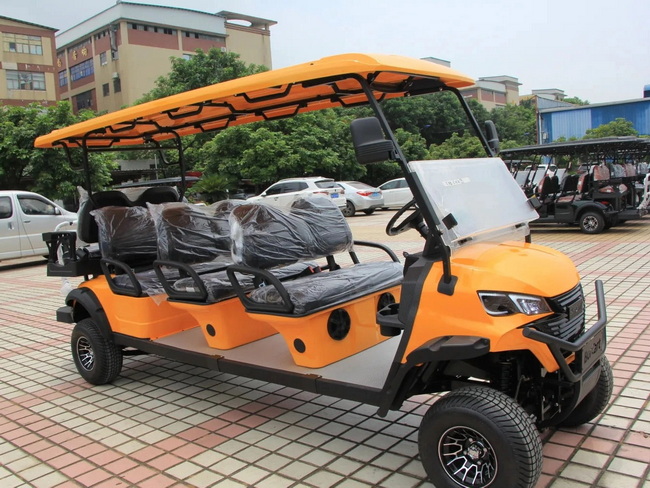
How fast a Club Car golf car can go and how fast it may legally go are not always the same, especially on public roads. Every golf car owner who leaves the course should understand local rules for low‑speed vehicles and neighborhood electric vehicles.[10][8][7]
In many markets that follow U.S.‑style LSV standards, golf cars and neighborhood electric vehicles are restricted to 20–25 mph when operated on public streets. Roads that allow street‑legal golf cars are typically posted at 35 mph or less so that slower‑moving traffic can mix safely with conventional vehicles.[11][10][8][7]
Operating a golf car faster than these limits on public roads can expose the driver to fines or reclassification of the vehicle into a more demanding regulatory category. For this reason, many manufacturers lock LSV‑type golf cars at or below 25 mph even when the underlying hardware could theoretically go faster.[9][2][3][10][11]
To be street‑legal, a golf car usually must be equipped with headlights, taillights, brake lights, turn signals, mirrors, a windshield, and often seat belts, along with a vehicle identification number, registration, and insurance. Traditional course‑only golf cars without this equipment are generally limited to private property or golf facilities.[10][8][7]
Once a lifted or modified Club Car golf car exceeds about 25 mph, it may no longer fit within simple low‑speed vehicle rules and can trigger additional vehicle or motorcycle‑type regulations depending on the jurisdiction. This makes it essential for owners and OEM clients to match golf car speed targets to the specific legal framework in each region.[11][8][4][7]
Many private owners want their Club Car golf car to feel more responsive for resort, residential, or light utility use. The right upgrade path depends on whether the golf car must remain course‑legal, street‑legal, or purely off‑road.[7][1]
The simplest way to increase speed on many modern Club Car golf cars is dealer programming: applying a higher “speed code” to the controller's software. This can often raise a golf car from 12–14 mph to around 19–20 mph without hardware changes, while preserving built‑in protections for the motor and batteries.[6][1]
Because this method stays within the design envelope of the original powertrain, it is usually the most cost‑effective option and preserves factory reliability. However, owners still need to verify that higher speeds comply with local course rules, community guidelines, and street‑use regulations before reprogramming their golf car.[8][7][1]
Enthusiasts who need more than 20 mph often install higher‑torque or higher‑RPM motors along with performance controllers designed to handle increased current and heat. These upgrades can transform a basic golf car into a more versatile neighborhood or resort vehicle capable of maintaining speed on hills and with heavy loads.[7][1]
Such performance packages should be installed with careful attention to wiring, fuses, contactors, and thermal limits, ensuring that the golf car remains reliable even on hot days or steep terrain. In many cases, upgrading brakes and suspension components is also advisable when seeking significantly higher golf car speeds.[8][7]
Upgrading to fresh, high‑capacity batteries—or converting to lithium—can restore or improve a golf car's ability to reach and hold peak speed through a full day of use, especially under heavier loads. Owners who combine better batteries with proper maintenance often enjoy a noticeably livelier golf car without touching the motor or controller.[6][8][1]
Adjusting gear ratios or fitting slightly larger tires can also provide a modest bump in top speed, but changes that are too aggressive may strain the motor, reduce hill‑climbing ability, and increase stopping distances. For most users, a balanced approach that combines moderate gearing changes with proper tires and good batteries keeps the golf car enjoyable and safe.[1][7]
For brands, wholesalers, and manufacturers planning their own labeled golf car lines, speed is not just a driver preference; it is a core engineering and compliance decision. As an established Chinese electric vehicle and automotive component manufacturer, BorCart builds OEM golf car platforms for global partners who need precise control over performance and regulations from the start.[5][12][4]
BorCart operates extensive production facilities and a large engineering team, designing and manufacturing golf cars, sightseeing buses, low‑speed vehicles, hunting vehicles, and multi‑purpose vehicles to international standards. Motors, controllers, chargers, and chassis components are sourced from globally recognized suppliers or produced in‑house, enabling stable quality and consistent golf car performance at different speed targets.[4]
By combining strict quality systems, including ISO9001 and multiple market certifications, with modern development processes, BorCart ensures that each golf car platform aligns with the safety and reliability expectations of overseas clients. This foundation makes it easier to tailor speed, range, and torque to the needs of specific courses, resorts, and communities.[5][4]
With strong R&D and OEM/ODM capabilities, BorCart can configure golf car powertrains, software speed limits, and safety equipment to match country‑specific rules for courses, resorts, gated communities, and LSV applications. This includes defining unique settings for fleet golf cars, personal golf cars, utility golf cars, and street‑legal neighborhood vehicles.[5][4]
Whether a client needs a turf‑friendly 12 mph fleet golf car or a 25 mph street‑legal neighborhood electric vehicle, BorCart can tune speed, range, and torque at the factory level and integrate the right components for each market. As a result, partners receive golf car products that are ready for branding and distribution without costly re‑engineering.[12][5][4]
A standard Club Car golf car on the course typically runs around 12–14 mph, with dealer programming and modest upgrades pushing it into the 19–23 mph range for private users who want a more responsive ride. Once configured as an LSV with full safety equipment, many Club Car‑type golf cars are legally capped at 25 mph on roads posted at 35 mph or below, balancing convenience with safety and regulation for neighborhood and resort use.[2][3][9][8][6][7][1]
For brands and distributors planning their own labeled golf car product lines, partnering with an experienced OEM such as BorCart makes it possible to define speed, range, and compliance from day one, ensuring every golf car suits its target course, resort, or community environment. By aligning engineering, components, and legal requirements early, BorCart helps clients deliver golf car solutions that feel fast enough, stay safe, and meet the expectations of demanding end users.[12][5][4]
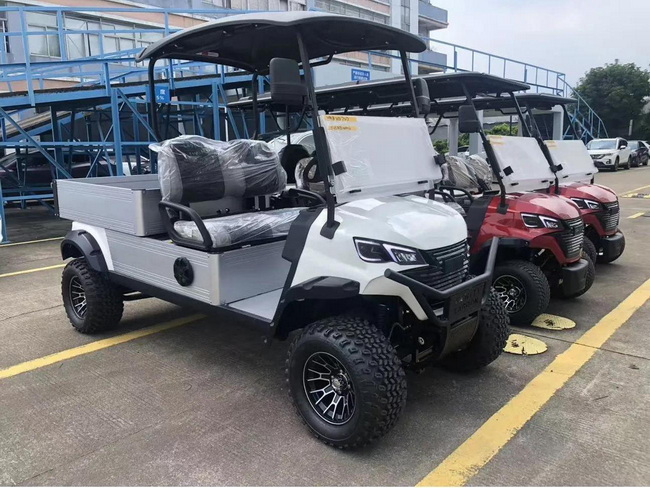
For most stock fleet configurations, a Club Car golf car is limited to about 12–14 mph in standard golf‑course use, which protects turf and keeps speeds manageable for mixed‑skill players. Some courses restrict controller settings further, so an individual golf car may feel even slower on tightly controlled fleets that emphasize safety.[6][1]
Street‑legal Club Car‑type golf cars configured as low‑speed vehicles are typically set to a maximum of 25 mph to comply with common LSV regulations. In many areas, these golf cars are only permitted on roads posted at 35 mph or less and must carry proper safety equipment, registration, and insurance to be used on public streets.[3][9][2][10][8][7]
Yes, many owners safely increase the speed of a Club Car golf car by dealer programming (higher speed codes), upgrading motors and controllers, improving batteries, or optimizing tires. Any modification should stay within local legal limits and respect the design limits of the golf car chassis, brakes, and suspension so the vehicle remains stable and controllable.[8][6][7][1]
Battery age, low charge, heavy passengers, hills, and restrictive controller settings can all make a golf car feel slower than its nominal rating on paper. Fleet operators sometimes intentionally cap golf car speed below factory defaults to reduce wear, protect turf, and minimize accident risk, so a golf car used on a course may be slower than a similar private‑use model.[6][7][1]
BorCart offers OEM and ODM services for international golf car brands, configuring motors, controllers, batteries, and software limits to deliver specific speed and range goals for each client. By integrating regulatory, terrain, and user requirements into the design phase, BorCart helps partners launch compliant, reliable golf car product lines for courses, resorts, and communities worldwide.[12][5][4]
[1](https://jsgolfcarts.com/blog/how-fast-can-golf-carts-go/)
[2](https://www.clubcar.com/pt-br/personal/street-legal-vehicles/onward-4-passenger)
[3](https://www.clubcar.com/en/personal/street-legal-vehicles/cru-neighborhood-electric-vehicle)
[4](http://www.clubcarev.com/mob/about.asp)
[5](https://borcart.com/fr/pages/about-us)
[6](https://www.reddit.com/r/golfcarts/comments/1p3om5n/2003_club_car_top_speed_advice/)
[7](https://taraelectricvehicles.com/blog/2025/05/26/understanding-golf-cart-top-speed-regulations-and-safety/)
[8](https://evtitan.com/can-electric-golf-carts-be-used-on-public-roads/)
[9](https://www.clubcar.com/en/personal/street-legal-vehicles)
[10](https://fernandojlopez.com/are-golf-carts-street-legal/)
[11](https://solanaev.com/are-golf-carts-street-legal/)
[12](https://www.borcartev.com/chinese-golf-cart-brands/)


