


Views: 222 Author: Leah Publish Time: 2026-01-09 Origin: Site


Content Menu
● How Jump Starting a Car Really Works
● Inside an Electric Golf Car Battery Pack
● Gas Golf Cars and Their 12‑Volt Batteries
● Technically, Can a Golf Car Jump Start a Car?
● Why Jump Starting From a Golf Car Is Usually a Bad Idea
● Proper Safe Alternatives to Using a Golf Car
● Operational Best Practices for Golf Car Fleets
● How a Professional OEM Can Support Safer Usage
● When a Golf Car Might Be Used as a Last Resort
● FAQ
>> 1. Can my electric golf car safely jump start a 12‑volt car?
>> 2. Is it safer to use a gas golf car for jump starting?
>> 3. Why are golf car batteries different from car batteries?
>> 4. Can I install regular car batteries in my golf car to gain flexibility?
>> 5. What is the best way to prepare a golf car fleet for battery‑related emergencies?
Electric vehicles are becoming an essential part of modern mobility, and the golf car is one of the most versatile examples. As a professional Chinese manufacturer of electric vehicles and automotive components, BorCart designs and produces golf cars, sightseeing buses, low‑speed vehicles, hunting vehicles, and multi‑purpose vehicles for international OEM and wholesale partners. In real‑world operations, fleet managers and drivers often ask a practical question: can a golf cart jump start a car? This article explores that question from a technical, safety, and operational perspective, helping you use every golf car in your fleet more intelligently and safely.

Jump starting a car means using an external 12‑volt source to supply enough current to the car's starter battery for a short period so the engine can crank and run on its alternator. A conventional passenger car starter can demand several hundred amps for a few seconds, so any jump source must deliver high current without collapsing in voltage or overheating. A typical golf car, whether electric or gasoline powered, is not designed for this primary purpose, even though it carries powerful batteries and wiring. Understanding the difference between a car starting system and a golf car traction system is the foundation for making safe decisions.
Most passenger cars and light trucks rely on a 12‑volt starting battery optimized for brief, high‑current bursts. In contrast, an electric golf car is built around long‑duration discharge to deliver smooth, quiet movement over a course, resort, or industrial park. The car battery is part of an engine‑based powertrain, while the golf car battery pack is the central energy source for the entire vehicle. These structural differences explain why a golf car is not simply a “bigger battery” for jump starting, but a different type of power system altogether.
Electric golf cars are typically equipped with battery packs operating at 36 volts or 48 volts, created by wiring multiple individual batteries in series. Common configurations include six 6‑volt batteries, six 8‑volt batteries, or even four 12‑volt batteries connected to form the total pack voltage required by the golf car controller. The batteries are deep‑cycle types, built with thicker plates, allowing them to be discharged and recharged many times over long daily duty cycles. This deep‑cycle design ensures that a golf car can run for hours in a resort, on a golf course, or within a gated community before returning to its charger.
The deep‑cycle characteristic also means that these golf car batteries are not optimized for the extremely high current spikes needed to crank a car engine. While they can deliver substantial current, their internal construction and expected use pattern differ from a car's starter battery. Additionally, the high pack voltage in a modern golf car is carefully matched with motor controllers, wiring, fuses, and contactors. Treating the pack as a simple general‑purpose power source can lead to dangerous voltage mismatches if an operator attempts to jump start a 12‑volt car directly.
Gasoline golf cars use a small internal combustion engine combined with a 12‑volt battery that looks more similar to a conventional automotive starter battery. This 12‑volt battery starts the engine, and once the engine is running, a small charging system keeps it maintained. Because the voltage is the same as a passenger car system, operators sometimes believe that using a gas golf car to jump start a car is safe and straightforward. In some cases, a healthy gas golf car battery can indeed provide enough current to crank a small gasoline car engine, especially if the car battery is only slightly discharged.
However, this possibility does not make the practice ideal. The battery in a gas golf car is smaller than many car batteries and is not intended to jump start large engines, repeated times, across a fleet. Over‑using a gas golf car to rescue car batteries can shorten its service life and leave the golf car itself without reliable starting power. For professional fleets and OEM customers, the correct approach is to treat the golf car battery as dedicated to vehicle operation, not as a general emergency supply for every other vehicle on site.
Under very specific conditions, a golf cart can sometimes help start a car, but it depends on configuration and careful handling. When a gas golf car has a good quality 12‑volt starting battery, and the car that needs assistance is a small gasoline vehicle with a moderately discharged battery, a careful jump connection using standard jumper cables may provide enough energy for one or two start attempts. The voltage alignment is the key here: both systems use 12 volts, so there is no fundamental mismatch as long as cables are connected correctly and contact points are secure.
With an electric golf car, the situation is more complicated. If the pack is made from multiple smaller batteries, such as 6‑volt units, it is sometimes possible for an experienced technician to isolate two batteries in series to create a 12‑volt segment. That segment could, in theory, be used as a jump source for a car battery. However, doing this requires opening the battery compartment, temporarily changing connections, and knowing exactly which terminals form the 12‑volt tap. Mistakes in this process can easily cause short circuits, sparks, or overvoltage conditions that damage both the car and the golf car. For everyday users, this level of modification is neither safe nor recommended.
Although there are special cases where a golf cart might succeed in starting a car, several strong reasons make it a poor general solution. The first is voltage mismatch. Most electric golf cars operate at 36 or 48 volts, and connecting such a system directly to a 12‑volt car battery can severely damage vehicle electronics, including engine control units, infotainment systems, and safety modules. Even tapping a partial section of the golf car pack requires precision and carries the risk that the wrong terminals will be used.
The second reason is battery design. Golf car batteries are designed to provide continuous power at moderate current for extended periods, not sudden, intense bursts. Subjecting them repeatedly to high cranking current can lead to internal heating, accelerated sulfation, or premature capacity loss. This shortens the life of expensive golf car batteries, increasing operating costs for fleets and individual owners. In contrast, dedicated car starter batteries and portable jump packs are built to withstand such stress regularly.
The third reason is warranty and safety liability. Many manufacturers, including suppliers of golf car electronics, specify that their systems are not intended for jump starting unrelated vehicles. If a controller, charger, or battery pack fails after serving as a makeshift jump source for a car, warranties may be limited or void. For a professional electric vehicle manufacturer like BorCart, advising customers to avoid such practices helps protect both property and personal safety. Professional fleets, resorts, and industrial users benefit from predictable, standardized procedures rather than improvised electrical connections in parking lots or workshops.
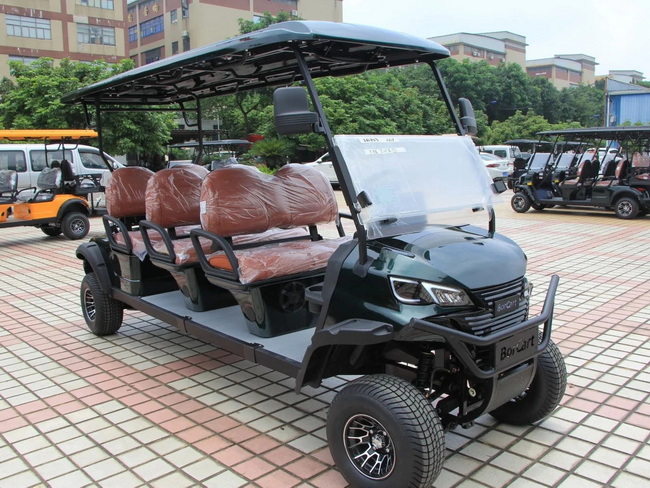
For both private owners and fleet managers, several safer alternatives exist that avoid the need to treat a golf car as a jump‑start device. The most effective option is a portable lithium jump starter. These compact devices are engineered specifically for starting vehicles, providing high current at 12 volts with built‑in protections such as reverse‑polarity warning, spark suppression, and overload safeguards. A good jump pack can start many cars on a single charge and can be easily stored in a supervisor's vehicle or maintenance office.
Another excellent alternative is a smart automotive battery charger. When a car battery is low but not completely failed, charging it over several hours with a modern, microprocessor‑controlled charger can restore capacity gently and safely. Workshop‑style chargers often include maintenance modes, desulfation functions, and winter settings that are far more beneficial than a quick jump for long‑term battery health. For facilities that operate a mixed fleet of golf cars, low‑speed vehicles, and conventional cars, maintaining at least one versatile charger is an efficient strategy.
In addition, fleet policies can designate specific support vehicles that are authorized and equipped to provide jump assistance. For example, a maintenance pickup with a robust 12‑volt electrical system and proper jump leads can be used to help stalled cars within a resort or industrial park. This approach keeps the golf car fleet focused on transportation and hospitality duties, while a dedicated service vehicle handles emergency support. Clear training and documentation help staff understand that golf cars, even though they appear to have “big batteries,” are not the correct tool for starting stalled cars.
From an operational perspective, the best way to avoid risky jump‑starting scenarios is to manage batteries proactively. Every golf car in a professional fleet should follow a structured charging schedule. Operators can plug in vehicles immediately after daily use, ensuring the golf car pack is always ready for the next shift. Using chargers that match the golf car system voltage (such as 36‑volt or 48‑volt chargers) and are approved by the manufacturer is essential to protect battery life and prevent overheating or undercharging.
Regular inspections are equally important. Maintenance staff should check cable connections, look for signs of corrosion, inspect housings for cracks or swelling, and ensure fluid levels are correct in flooded lead‑acid batteries when applicable. Cleaning terminals and tightening connections at scheduled intervals reduces resistance and heat buildup, which helps both performance and safety. In the same way, car batteries used within the facility should be checked and replaced before they become unreliable.
Training is also a core best practice. Staff should be taught that a golf car is a purpose‑built machine with its own electrical system, not a universal emergency power supply. Clear instructions, including simple diagrams and internal guidelines, can show what to do when a car fails to start: verify battery condition, call the designated support team, and use approved equipment, not the nearest golf car. For international partners, BorCart can support these efforts with documentation and educational materials that align with local regulations and safety expectations.
As a specialist in electric vehicles and automotive components, BorCart can help distributors and brand‑label partners around the world manage their fleets more safely and efficiently. By designing golf cars and other low‑speed vehicles with clear labeling, accessible battery compartments, and robust charging interfaces, the manufacturer makes it easier for operators to avoid misuse. Documentation, including bilingual manuals and online resources, can emphasize the correct purpose of the golf car battery pack and offer recommended emergency procedures for car breakdowns.
BorCart can also work with partners to integrate compatible accessories that support safe operations. For example, a dedicated AC outlet in the depot area can be designated for a high‑quality automotive charger or a storage rack for portable jump starters. Training programs for fleet managers can include modules on battery selection, charging strategies, and the difference between traction batteries in golf cars and starter batteries in road vehicles. In this way, BorCart does more than build each golf car; it helps build a complete, professional ecosystem for electric mobility.
In addition, ongoing communication between the OEM and customers allows feedback on real‑world challenges. If some sites frequently experience cars with weak batteries, BorCart's technical support can advise on appropriate external equipment and policies rather than encouraging unsafe work‑arounds involving the golf car electrical system. This approach not only protects equipment but also strengthens the long‑term relationship between manufacturer, distributor, and end user.
There may be rare situations where no jump pack, charger, or support vehicle is available, and an operator considers using a golf cart in an emergency. Even in such cases, extreme caution is necessary, and safety must be the top priority. For a gas golf car with a 12‑volt battery, the safest possible approach is to follow conventional jump‑start procedures used between two cars, ensuring correct polarity and secure connections before attempting to start the stalled vehicle. After a successful start, both batteries should be tested as soon as possible.
In the case of an electric golf car, any attempt to tap a 12‑volt segment from a higher‑voltage battery pack should only be performed by a qualified technician who understands the wiring diagram and can isolate the correct terminals without bypassing protective components. Even when done correctly, this should be treated strictly as an emergency measure, not part of routine operations. As soon as proper equipment becomes available, staff should return to standard procedures and avoid repeating such improvised connections.
From a management standpoint, even discussing these “last resort” options should lead to a clear conclusion: the best solution is to prevent the need altogether by equipping the site with the right tools and training. By investing in appropriate support equipment, operators ensure that every golf car remains focused on its core tasks and that cars and other vehicles can be handled safely during starting difficulties.
In theory, a golf cart can sometimes jump start a car, especially when a gas golf car with a healthy 12‑volt battery assists a small gasoline vehicle. In practice, however, the technical differences between car starter systems and golf car traction systems, especially high‑voltage 36‑volt or 48‑volt electric packs, make this approach risky and inefficient. Voltage mismatches, deep‑cycle battery design, and the potential for warranty issues or damage to sensitive electronics all argue against using a golf car as an improvised jump‑start machine. For professional fleets, resorts, and industrial parks, the safest, most cost‑effective strategy is to treat each golf car as a dedicated mobility and logistics asset, while using purpose‑built jump packs, smart chargers, and support vehicles for starting stalled cars. This method protects equipment, reduces downtime, and aligns with the high standards of modern electric vehicle operations.
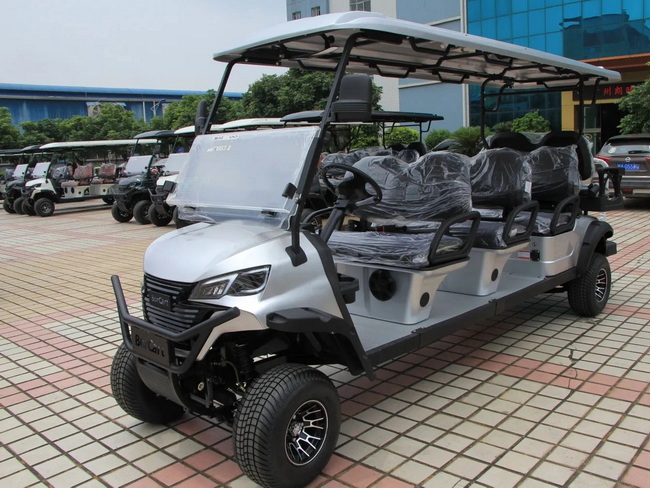
An electric golf car usually operates at 36 volts or 48 volts, far above a car's 12‑volt system, so a direct connection is unsafe and can seriously damage automotive electronics. Even tapping only two batteries to create a 12‑volt segment requires technical knowledge and carries risk, so it is not recommended for everyday users and should never replace proper jump‑start equipment.
A gas golf car uses a 12‑volt starting battery, so the voltage matches a car battery, which makes jump starting technically possible in some cases. However, the smaller size and different duty cycle of the golf car battery mean that repeated jump‑starting can shorten its life and leave the golf car unable to start, so it should not be relied on as a regular rescue tool.
Golf car batteries are deep‑cycle units designed to deliver moderate current for long periods, making them ideal for traction duty as the main power source of the vehicle. Car batteries are starter batteries engineered to provide short, high‑current bursts to crank an engine and are not designed to be deeply discharged and recharged every day.
While it is technically possible to wire 12‑volt car batteries in series to reach 36 volts or 48 volts, they are not suitable for long‑term traction use. Starter batteries deteriorate quickly under deep‑cycle conditions, leading to reduced range, frequent replacements, and higher operating costs, so specialized deep‑cycle or traction batteries remain the preferred choice for golf car applications.
The best strategy is to maintain clear charging routines, use approved chargers for both cars and golf cars, and keep at least one high‑quality portable jump starter or dedicated support vehicle available. Combined with regular inspections and staff training that discourages improvised jump‑starting from golf cars, these measures ensure safe, reliable operation across the entire fleet.


