


Views: 210 Author: BorCart Publish Time: 2026-07-11 Origin: Site


Content Menu
● Understanding the Two Vehicle Types
● Environmental Stress: Mud-heavy and Swampy Use Cases
● Electric Offroad Cart Maintenance: Key Requirements
>> Electrical System Protection in Wet Terrain
>> Battery Care Under Swampy Conditions
>> Driveline and Chassis in Mud
● Diesel Utility Vehicle Maintenance: Key Requirements
>> Engine and Fuel System in Mud-heavy Conditions
>> Cooling System and Thermal Stress
>> Drivetrain, Suspension and Underbody
● Direct Comparison Table: Electric Offroad Cart vs Diesel Utility
● Expert Insight: Preventive vs Reactive Maintenance
● Practical Maintenance Checklist for Muddy Operations
>> Daily Checklist – Electric Offroad Cart
>> Daily Checklist – Diesel Utility Vehicle
● Industry Case Perspective: Non-road Machinery Trends
● BorCart's OEM Perspective on Maintenance Optimization
● Advanced Maintenance Strategy: Data-driven Scheduling
● Choosing Between Electric Offroad Cart and Diesel Utility
● Summary for Buyers and Engineers
● Call to Action: OEM-configured Utility Carts for Harsh Terrain
● Frequently Asked Questions (FAQ)
Electric offroad carts and diesel utility vehicles behave very differently when you move from dry construction sites to mud-heavy and swampy environments, and their maintenance requirements can make or break uptime and total cost of ownership for fleet operators and OEM buyers. [rolandberger]
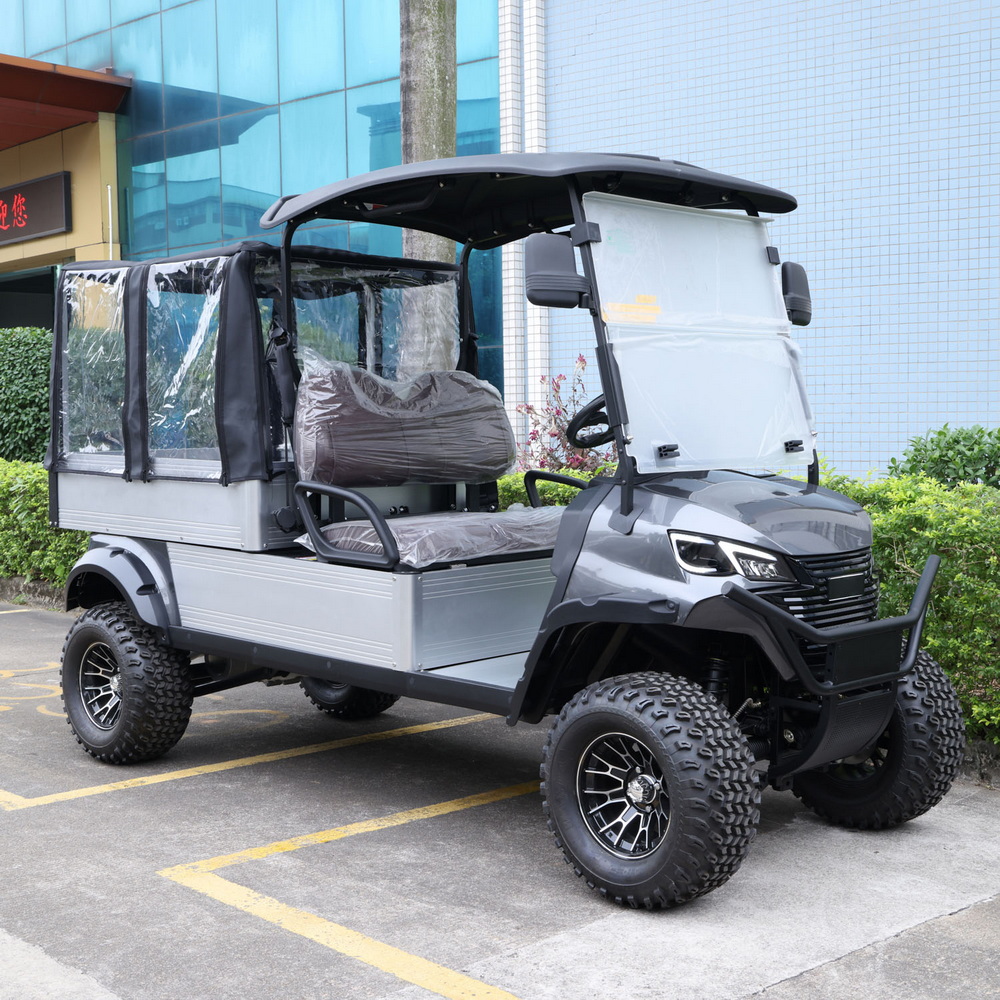
Electric offroad carts and diesel utility vehicles both sit in the "workhorse" category for industrial, agricultural and outdoor recreation applications, but their powertrain, maintenance logic and failure modes are fundamentally different. [aoteneng]
- Electric offroad carts typically use lithium or lead-acid battery packs, electric motors and solid-state controllers, offering quiet operation and fewer moving parts. [aoteneng]
- Diesel utility vehicles rely on internal combustion engines, complex fuel and exhaust systems, and high-temperature operation under load. [rolandberger]
For mud-heavy and swampy environments, this difference translates into distinct maintenance routines, inspection points and risk profiles that OEM buyers and fleet managers must factor into specification and TCO models. [rolandberger]
Mud and swamp conditions introduce continuous exposure to water, fine sediments and organic contaminants, which strongly affect both electric and diesel systems. [rolandberger]
Typical use cases include: [rolandberger]
- Construction access routes and temporary roads after heavy rain
- Agriculture and forestry operations in low-lying or irrigated land
- Outdoor resorts, hunting grounds and utility work in wetlands
In these scenarios, vehicles face persistent underbody immersion, wheel-well clogging and reduced cooling airflow, which directly shapes the maintenance requirements we compare below. [aoteneng]
For electric offroad carts, maintenance in wet and muddy conditions is mostly about protecting electrical integrity, battery health and mechanical robustness. [aoteneng]
High moisture and mud increase the risk of short circuits, connector corrosion and sensor malfunction. [aoteneng]
Main maintenance actions include: [aoteneng]
- Regular connector inspections for corrosion, ensuring seals and boots are intact.
- Cleaning and drying controller housings and junction boxes after deep mud operation.
- Protective dielectric grease on key terminals in high-splash zones.
In practice, operators who implement preventive checks on connectors and wiring harnesses see significantly lower failure rates than those who rely only on reactive repair. [aoteneng]
Battery packs are the heart of an electric offroad cart, and poor maintenance can quickly erode capacity. [aoteneng]
Essential routines include: [aoteneng]
- Keeping the state of charge between roughly 20–80% in daily use to prolong battery life.
- Avoiding deep discharge below about 10%, particularly after heavy-load runs in thick mud.
- Monitoring battery temperature, as high load in mud can increase current draw and heat build-up.
A typical lithium pack for industrial vehicles offers thousands of charge cycles under recommended operating conditions, but deep discharge, extreme heat and contamination can significantly reduce effective life. [aoteneng]
Even with fewer moving parts than diesel vehicles, electric offroad carts still need routine mechanical maintenance. [aoteneng]
Key focus points: [aoteneng]
- Drive motor cooling surfaces must be kept free from caked mud and debris.
- Wheel bearings and suspension components require inspection for grit intrusion and lubrication degradation.
- Underbody cleaning after swamp use to prevent long-term corrosion of mounting points.
Because electric drivetrains often deliver high torque from standstill, any mechanical drag caused by mud can increase stress on driveline components, so keeping them clean directly reduces maintenance costs. [aoteneng]
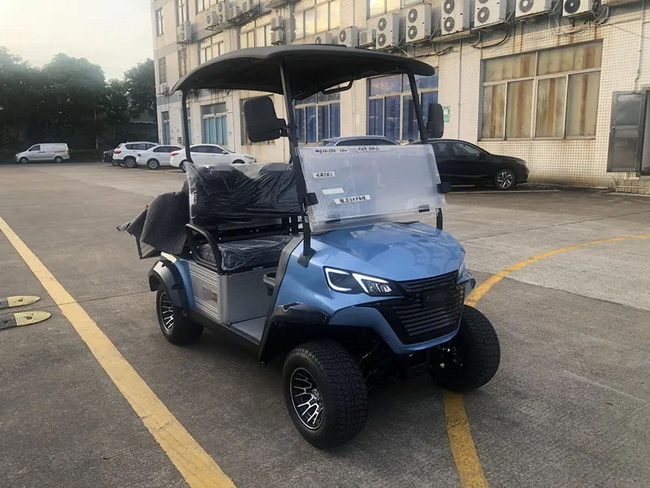
Diesel utility vehicles face a different set of challenges, centering on combustion reliability, filtration and cooling in contaminated environments. [rolandberger]
In mud-heavy terrains, diesel engines work harder and inhale more airborne contaminants. [rolandberger]
Standard maintenance steps include: [rolandberger]
- Frequent air filter checks and replacements to avoid power loss and over-fueling.
- Fuel filter inspection to prevent water and particulates from entering the injection system.
- Routine checks of turbo and exhaust components for blockage and corrosion.
If filters are not serviced at shortened intervals in muddy environments, operators often see increased fuel consumption, reduced output and greater risk of injector or turbo failure. [rolandberger]
Diesel engines generate substantial heat, and mud can obstruct radiators and cooling passages, risking overheating. [rolandberger]
Critical maintenance points: [rolandberger]
- Regular cleaning of radiator fins and front grills to maintain airflow.
- Inspection of hoses and clamps for degradation from temperature cycling and contaminants.
- Monitoring coolant levels and quality, especially in fleets operating at high duty cycles.
Failure to maintain the cooling system adequately in mud-heavy settings often results in unscheduled downtime, which directly affects productivity and TCO for industrial users. [rolandberger]
Diesel utility vehicles tend to be heavier, transferring more load into mud and water. [rolandberger]
Maintenance best practices include: [rolandberger]
- Frequent greasing of universal joints and pivot points to displace water and mud.
- Inspection of differentials and transfer cases for water ingress and lubricant contamination.
- Cleaning and anti-corrosion treatment of underbody components exposed to standing water.
In swampy operations, seal integrity is critical; if differential breathers are submerged without adequate protection, water intrusion can rapidly damage gears and bearings. [rolandberger]
Below is a simplified maintenance-focused comparison for mud-heavy and swampy environments. [aoteneng]
| Aspect | Electric Offroad Cart | Diesel Utility Vehicle |
|---|---|---|
| Powertrain complexity | Fewer moving parts, solid-state control (aoteneng) | Complex engine, fuel and exhaust systems (rolandberger) |
| Key maintenance focus | Electrical integrity, battery health, chassis cleaning (aoteneng) | Filtration, cooling, lubrication and seal protection (rolandberger) |
| Typical failure modes in mud | Connector corrosion, sensor faults, reduced battery life (aoteneng) | Filter clogging, overheating, water in driveline (rolandberger) |
| Daily checks | Visual inspection of wiring, battery SoC, underbody wash (aoteneng) | Filters, coolant level, visible leaks and mud blocking (rolandberger) |
| Service interval sensitivity | Strongly affected by contamination level and discharge depth (aoteneng) | Strongly affected by contamination level and thermal load (rolandberger) |
Across both platforms, industry data and field experience in non-road machinery show that preventive maintenance consistently outperforms reactive repair in terms of uptime and cost control. [rolandberger]
From an expert maintenance perspective: [aoteneng]
1. Define a structured inspection schedule that reflects actual mud exposure, not just operating hours.
2. Standardize checklists for electrical components (electric carts) and filtration/cooling systems (diesel utilities).
3. Train operators to recognize early warning signs such as reduced power, unusual heat or electrical anomalies.
OEMs and fleet managers who enforce disciplined preventive routines typically experience lower failure rates and smoother lifecycle planning, which is especially important for cross-border buyers working with Chinese manufacturers like BorCart. [rolandberger]
Below is a practical, field-ready checklist that maintenance teams can adapt for mixed fleets in swampy environments. [aoteneng]
1. Inspect battery state of charge and temperature after operation. [aoteneng]
2. Check exposed connectors and harnesses for visible moisture or mud. [aoteneng]
3. Wash underbody, wheel wells and motor housing to remove accumulated mud. [aoteneng]
4. Verify brake response and suspension travel after heavy loads. [aoteneng]
1. Inspect air intake and filter housing for clogging. [rolandberger]
2. Check radiator and front grill for mud buildup. [rolandberger]
3. Look for fuel, oil and coolant leaks around the engine bay. [rolandberger]
4. Briefly test driveline noise and vibration on level ground. [rolandberger]
These simple routines significantly reduce the risk of unexpected downtime in remote, wet sites, where repair logistics are inherently more complex. [rolandberger]
Recent industry analyses of non-road machinery highlight a clear trend toward electrification in offroad applications, driven by emissions regulations and reduced maintenance complexity. [rolandberger]
Key takeaways relevant to utility carts and diesel vehicles: [rolandberger]
- Electric platforms offer lower routine maintenance demands, but require robust electrical sealing strategies in muddy terrain.
- Diesel platforms remain preferred for extremely heavy-duty, long-duration operations, where fuel density and established service networks still outweigh electrification benefits.
For mud-heavy and swampy environments, these trends imply that electric offroad carts can be highly competitive when properly designed and maintained, particularly for utility, resort and light industrial applications. [aoteneng]
As a Chinese manufacturer focusing on utility carts, electric vehicles and automotive components, BorCart typically supports overseas brands and wholesalers with OEM customization and maintenance-centered engineering decisions. [borcartev]
From this OEM viewpoint, several design choices are critical for buyers planning deployment in mud-heavy and swampy environments: [borcart]
- Enhanced sealing on electrical connectors and control units for electric offroad carts.
- Elevated routing of wiring and vulnerable components to minimize immersion exposure.
- Service-friendly layouts for filters, radiators and inspection points on diesel utility vehicles.
By combining application-specific maintenance data with tailored OEM solutions, BorCart helps brands align product configuration with real-world environmental stress, improving both customer satisfaction and fleet reliability. [borcartev]
Modern fleets increasingly adopt data-driven maintenance scheduling rather than fixed-interval servicing, using telemetry and sensor data to refine decisions. [aoteneng]
For electric offroad carts: [aoteneng]
- Monitoring battery cycles, temperature and current draw enables smarter replacement planning.
- Tracking controller and motor fault codes helps identify emerging issues before failure.
For diesel utility vehicles: [rolandberger]
- Logging engine load, coolant temperature and filter differential pressures allows dynamic adjustment of service intervals.
- Tracking fuel consumption patterns reveals early efficiency issues often linked to maintenance neglect.
This data-centric approach offers OEM buyers a scalable framework for mixed electric–diesel fleets, especially in environments where mud and swamp conditions vary seasonally. [aoteneng]
From a fleet and OEM buyer perspective, the choice between electric offroad carts and diesel utility vehicles for mud-heavy and swampy environments should weigh maintenance capacity, environmental constraints and duty profiles. [rolandberger]
Electric offroad carts are generally preferable when: [aoteneng]
- Noise and local emissions are sensitive issues (resorts, nature reserves, residential zones).
- Maintenance teams can manage electrical system checks and battery care reliably.
- The duty cycle fits battery capacity and charging infrastructure.
Diesel utility vehicles remain strong candidates when: [rolandberger]
- Loads are very heavy and operating hours are long.
- Existing workshops are already optimized for combustion engine servicing.
- Fuel availability is more dependable than charging capability.
In practice, many fleets adopt hybrid strategies, using electric offroad carts for lighter, repeated tasks in wet terrain and diesel utilities for heavy transport and towing. [aoteneng]
For engineers, asset managers and purchasing teams, the critical maintenance insight is that mud-heavy and swampy environments amplify whatever weaknesses already exist in the vehicle's design and service regime. [rolandberger]
- Electric offroad carts reward disciplined electrical and battery care, delivering quieter operation and lower routine maintenance. [aoteneng]
- Diesel utility vehicles demand aggressive filtration, cooling and lubrication management, and will punish neglect with costly failures. [rolandberger]
Aligning vehicle choice, maintenance strategy and environment is the most effective path to lower lifecycle costs and higher reliability in these challenging conditions. [aoteneng]
If your brand or fleet operates in mud-heavy or swampy environments and you are comparing electric offroad carts vs diesel utility vehicles, this is the right moment to audit your maintenance capacity and environment profile. [rolandberger]
BorCart can work with you as an OEM partner to: [borcart]
- Configure electric utility carts with enhanced sealing, robust drivetrains and tailored battery specifications.
- Design diesel-based utility platforms or components with improved access to filtration and cooling systems.
- Provide maintenance-oriented documentation and checklists aligned with your local conditions.
Reach out to explore a customized utility cart solution that matches your terrain, duty cycle and maintenance resources, rather than forcing generic vehicles into harsh environments. [borcartev]
Q1: Are electric offroad carts reliable enough for daily use in swampy areas?
A1: Yes, provided that electrical sealing, connector protection and battery management are designed and maintained specifically for high-moisture environments. [aoteneng]
Q2: Do diesel utility vehicles always require more maintenance than electric carts?
A2: Diesel vehicles typically require more frequent attention to filtration, cooling and lubrication, but mature service networks can offset this for some operators. [rolandberger]
Q3: How often should I clean the underbody of vehicles used in mud-heavy operations?
A3: Many fleets implement at least daily underbody cleaning during wet seasons, because accumulated mud strongly accelerates corrosion and mechanical wear. [aoteneng]
Q4: Can one maintenance team handle both electric offroad carts and diesel utilities effectively?
A4: Yes, as long as the team is trained for both electrical diagnostics and engine–drivetrain servicing, with clear checklists separating the two platforms. [rolandberger]
Q5: What OEM options make electric carts more suitable for swampy terrain?
A5: Raised ground clearance, improved sealing of electronics, reinforced driveline components and optimized battery enclosures are highly effective OEM customizations. [borcart]
1. Roland Berger – Off-road machinery trends and non-road engine developments (PDF). https://www.rolandberger.com/publications/publication_pdf/Off-road-Report.pdf
2. Xinxiang Aotener – Electric transfer cart maintenance guide: reducing failure rate and maintenance cost. https://www.aoteneng.com/article-detail/electric-transfer-cart-maintenance-guide.html
3. BorCart – Golf Cart Utility Factory and Suppliers. https://www.borcartev.com/golf-cart-utility/
4. Made-in-China – Durable Utility Cart 2 Seats Electric Custom Golf Cart – BorCart video. https://www.made-in-china.com/video-channel/borcart_OxSpXwVcSrhj_Durable-Utility-Cart-2-Seats-Electric-Custom-Golf-Cart.html
5. BorCart – Offroad golf cart vs electric hunting scooter: group expedition stability vs single-rider maneuverability. https://www.borcart.com/ar/offroad-golf-cart-vs-electric-hunting-scooter-group-expedition-stability-vs-single-rider-maneuverabil


