


Views: 222 Author: Leah Publish Time: 2026-01-13 Origin: Site


Content Menu
● Legal Considerations for Towing a Golf Car
● Main Ways to Tow a Golf Car Behind a Car
>> Towing a Golf Car on a Trailer
>> Using a Tow Dolly for a Golf Car
>> Flat‑Towing a Golf Car Behind a Car
● Essential Equipment for Safely Towing a Golf Car
● Preparing a Golf Car for Towing
● Loading a Golf Car on a Trailer
● Driving Safely While Towing a Golf Car
● Risks and Damage From Incorrect Towing
● Situations Where You Should Not Tow a Golf Car Behind a Car
● How BorCart Golf Cars Are Designed With Transport in Mind
>> 1. Is it always legal to tow a golf car behind a car?
>> 2. What is the safest way to tow a golf car behind a car?
>> 3. Can an electric golf car be flat‑towed with all four wheels on the ground?
>> 4. How fast can you drive when towing a golf car?
>> 5. What towing capacity does my car need to pull a golf car?
Towing a golf car behind a car has become more common as owners use their golf cars for commuting inside gated communities, at resorts, in industrial parks and on large private properties. As a result, understanding how to tow a golf car safely, legally and efficiently has become an important topic for individual users and for professional buyers of OEM golf cars.
BorCart focuses on manufacturing electric golf cars, sightseeing buses, low‑speed vehicles, hunting golf cars and multi‑purpose golf cars for global OEM, wholesale and brand‑label partners. A clear towing strategy helps these partners deliver golf cars to end users with minimal risk, while also allowing end users to move their golf car behind a family car, SUV or pickup when needed.
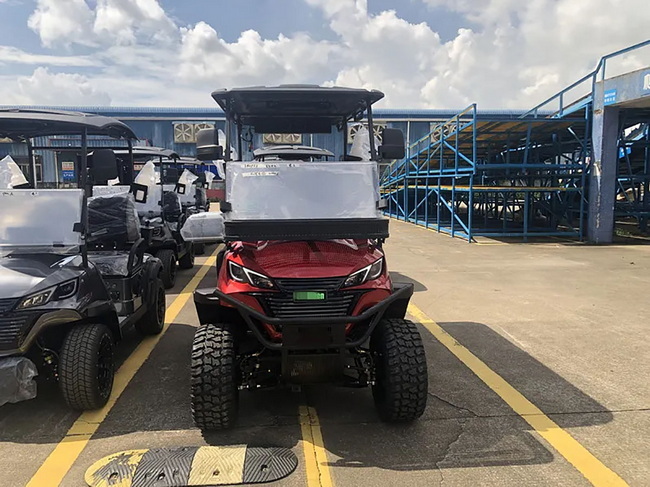
Before attaching any golf car behind a car, it is essential to confirm whether local regulations permit this type of towing. Some jurisdictions allow a golf car to be carried on a trailer and treated like any other small towed unit, while others prohibit towing a golf car with its wheels on the ground on public roads.
Important legal aspects include:
- Vehicle classification of the golf car (for example, low‑speed vehicle or off‑road vehicle) and whether that classification can be towed by a passenger car.
- Registration, lighting and reflector requirements for trailers or towed equipment that carry or pull a golf car on public streets.
- Maximum permitted towing speed, maximum gross trailer weight, and any restrictions on which roads or lanes a car with a towed golf car may use.
Private resorts, campuses and industrial parks may also define their own internal traffic rules for golf cars and trailers. Fleet managers who operate multiple BorCart golf cars inside such environments should ensure that private rules and public traffic laws are both respected.
There are three common ways to move a golf car behind a car: using a full trailer, using a tow dolly, or flat‑towing the golf car with all four wheels on the ground. Each method has different advantages and risks, and the choice depends on distance, speed and local regulations.
Transporting a golf car on a small utility trailer or a dedicated golf car trailer is usually the safest solution for both private owners and commercial users. In this setup, the golf car sits on the trailer deck, and only the trailer's wheels contact the road surface.
Benefits of trailer transport for a golf car include:
- The golf car motor, controller and differential are protected because they do not rotate at highway speeds.
- Trailer frames can provide built‑in tie‑down points and wheel chocks that make it easier to secure a golf car in a repeatable, professional way.
- Lighting, reflectors and license plates are installed on the trailer body, making it simpler to comply with traffic regulations while carrying a golf car.
BorCart golf cars used for resort shuttles, sightseeing and campus transport are often moved on trailers from local distributors to the customer site. Standardizing trailer sizes and tie‑down locations allows OEM partners to move several identical golf cars efficiently and safely.
A tow dolly supports the front wheels of the golf car on a small platform while the rear wheels roll on the road. Tow dollies are more commonly used for compact cars, but some users consider them for golf cars when a full trailer is not available.
Before using a tow dolly with a golf car, operators should:
- Confirm that the golf car manufacturer allows extended rolling with some wheels on the road and that the drivetrain can handle this without damage.
- Put the electric golf car into the correct free‑wheel, tow or service mode so that the motor is not accidentally driven by wheel rotation.
- Verify that the combined weight of the tow dolly and the golf car does not exceed the towing capacity of the car.
Even when allowed, a tow dolly for a golf car is generally better suited to short‑distance, low‑speed travel than to long highway journeys.
Flat‑towing means pulling a golf car directly behind a car using a tow bar, with all four golf car wheels on the ground. This method is convenient in some private settings, but it carries the highest risk for electric golf cars.
Flat‑towing a golf car is usually limited to:
- Very short distances on private roads at low speeds, such as moving a golf car from a storage area to a nearby golf course entrance.
- Emergency situations where a golf car must be moved and no trailer is available, provided that the manufacturer's tow procedure is strictly followed.
For modern electric golf cars, including those produced by BorCart, long‑distance flat‑towing on public roads is rarely recommended. The high rotational speed at road speed can generate heat and mechanical stress in components that were designed for much lower operating speeds.
Safe towing of a golf car depends on having the right equipment and ensuring that each component is correctly rated for the total weight involved. A single overloaded link—such as a weak hitch, under‑rated coupler or worn strap—can lead to serious incidents.
Key equipment items include:
- A properly rated hitch on the car, matched to the manufacturer's specified towing capacity and installed with correct hardware.
- A trailer, tow dolly or tow bar with a load rating greater than the combined weight of the golf car and any accessories or cargo.
- Safety chains or cables that connect the trailer or tow bar to the car, designed to prevent separation if the primary coupling fails.
- Working brake lights, tail lights and indicators at the rear of the towed unit so that other drivers can see braking and turning signals clearly.
- Strong ratchet straps or wheel straps that secure the golf car to the trailer, attached only to structural frame members or designated tie‑down points.
When BorCart golf cars are supplied to international OEM partners, it is good practice to include documentation that identifies recommended tie‑down locations on each golf car model. This ensures that future transport operations follow a safe, consistent method.
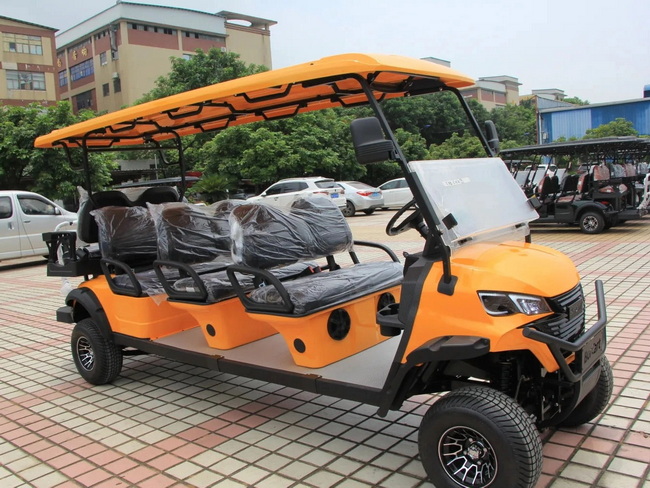
Correct preparation of the golf car protects its mechanical and electrical systems and prevents loose items from becoming hazards. A short checklist can dramatically reduce risk whenever a golf car is towed behind a car.
Typical preparation steps for an electric golf car include:
- Removing or firmly securing detachable accessories such as seat cushions, storage boxes, coolers, hunting racks and removable windshields.
- Inspecting golf car tires for proper inflation and general condition so that they can safely support the vehicle on the trailer or dolly.
- Placing the vehicle into the correct tow, neutral or service mode according to the manufacturer's instructions to avoid motor damage.
- Using the parking brake appropriately: releasing it when loading, and engaging it firmly once the golf car is positioned on the trailer deck.
- Locking or restraining the steering wheel so that the golf car does not steer unexpectedly during transport.
Fleet operators managing many BorCart golf cars can embed these steps into a written standard operating procedure and train staff accordingly, reducing the chance of overlooked details.
Loading is one of the most critical moments when moving a golf car behind a car. The combination of ramps, gravity and narrow trailer decks can produce tipping or sliding if the process is rushed or performed on uneven ground.
A safe loading sequence usually includes:
- Parking the towing car and trailer on a level surface, engaging the car's parking brake and chocking the trailer wheels before loading.
- Checking that ramps are correctly aligned, locked or pinned to the trailer and able to support the full weight of the golf car.
- Driving the golf car slowly up the ramps in a straight line, with a spotter guiding the driver to keep the wheels centered.
- Positioning the golf car so the weight is slightly forward of the trailer axle, which helps maintain stable tongue weight on the hitch.
- Applying the golf car parking brake, placing chocks at the wheels, and then attaching ratchet straps at the front and rear to compress the suspension slightly.
For larger sightseeing or multi‑row golf cars, using additional straps around the body frame can help control sway and vibration, especially at higher road speeds.
Once the golf car is loaded and secured, safe towing depends on conservative driving and regular checks. A car with a towed golf car accelerates more slowly, needs more distance to stop, and reacts differently in corners than an unladen car.
Key safe‑driving practices when towing a golf car include:
- Reducing speed below normal highway limits, especially on rough roads or in strong crosswinds, to keep the trailer or dolly stable.
- Allowing extra following distance so that there is enough time to brake smoothly if traffic slows unexpectedly.
- Avoiding sudden steering corrections, tight turns and quick lane changes that might cause trailer sway or overload the hitch.
- Making wide, gradual turns at intersections so that the trailer wheels do not strike curbs or obstacles.
- Stopping regularly on long journeys to check that straps are tight, lights are working and tires on the trailer and golf car remain cool.
Drivers should also be aware that backing up with a trailer carrying a golf car requires practice and patience. Whenever possible, plan routes to minimize the need for reversing while the golf car is in tow.
Incorrect towing can damage both the golf car and the towing vehicle, and it may cause traffic incidents. Many of these problems can be prevented by respecting the mechanical limits of the golf car and using only approved towing methods.
Typical risks include:
- Overheating the electric motor and controller of a golf car if it is towed at high speed with the drivetrain engaged or set incorrectly.
- Premature wear on wheel bearings, tires and suspension components when a golf car is towed long distances with its wheels on the ground.
- Cracked body panels or bent frames if straps are attached to decorative parts instead of structural members.
- Reduced braking effectiveness and loss of control when the total trailer and golf car weight exceeds the towing car's rated capacity.
OEM partners that implement strict towing policies for their fleets of BorCart golf cars generally experience fewer warranty claims related to transport damage and longer service life from each golf car.
There are cases where towing a golf car behind a car is not advisable, regardless of equipment or driver experience. Recognizing these situations and choosing an alternative transport method protects both people and assets.
Examples include:
- Regions where regulations specifically forbid towing low‑speed vehicles or golf cars, even on trailers, without special permits.
- Long‑distance or high‑speed highway trips that would expose a lightly built golf car or trailer to continuous vibration, side winds and high loads.
- Use of a small passenger car with minimal towing capacity to pull a heavy trailer carrying a large golf car, sightseeing shuttle or utility golf car.
In such cases, professional transport solutions such as flatbed trucks or enclosed carriers may be a better fit, particularly when moving new BorCart golf cars from the factory to overseas distributors.
BorCart builds electric golf cars, low‑speed vehicles, hunting golf cars and multi‑purpose utility golf cars for international OEM and wholesale clients. Many of these clients then arrange their own logistics from ports or regional warehouses to end users.
To support efficient and safe transport, BorCart golf cars can be specified with features such as:
- Reinforced frame areas suitable for repeated tie‑downs, helping ensure that straps are always attached at structurally strong points.
- Optional towing or lifting eyes that make it easier to position a golf car on trucks, trailers and stacking systems.
- Electrical configurations with clearly labeled tow or service modes, allowing technicians to prepare the golf car correctly before loading.
These design choices help large buyers organize stable, repeatable procedures for moving golf cars behind cars, on trailers, on trucks and in containers.
Towing a golf car behind a car is certainly possible, but it must be approached with respect for legal requirements, equipment limits and safe‑driving practices. Choosing an appropriate towing method, preparing the golf car correctly and loading it carefully are all essential steps for protecting both the golf car and the towing vehicle.
In most cases, carrying the golf car on a properly rated trailer is the safest and most versatile method, suitable for private owners and for large fleets of BorCart golf cars. By following clear procedures, using correct tow modes on electric golf cars, and training drivers thoroughly, owners and operators can move each golf car reliably between golf courses, resorts, campuses and workplaces with minimal risk.
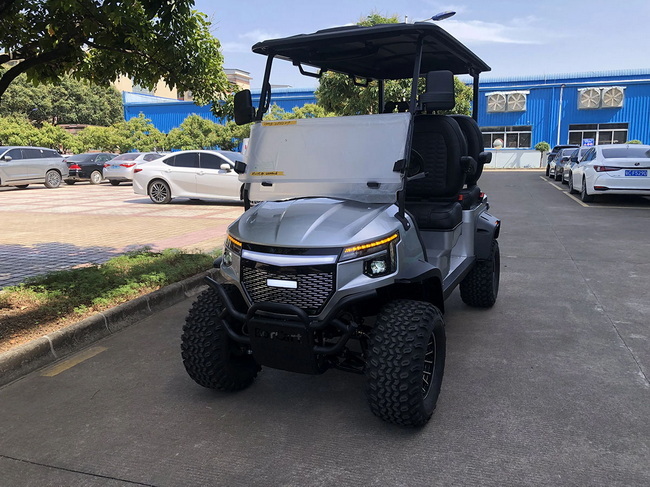
No, it is not always legal, because each region defines its own rules for towing low‑speed vehicles and golf cars on public roads. Some areas require the golf car to be carried on a registered trailer, while others may prohibit towing a golf car entirely on certain road types.
For most users, the safest way is to place the golf car on a properly rated trailer that has suitable ramps, tie‑down points and working lights. This method avoids spinning the golf car drivetrain at high speed and allows the towing car to handle braking and stability in a more controlled manner.
An electric golf car can sometimes be moved slowly in a special tow or service mode, but long‑distance flat‑towing at road speeds is generally not recommended. Maintaining high wheel speed for an extended period can overheat the motor or controller, so a trailer is usually preferred for serious transport of an electric golf car.
The correct speed depends on local laws, road conditions and the equipment used, but best practice is to drive substantially slower than normal speed limits when towing a golf car. Reducing speed helps prevent trailer sway, shortens stopping distances and lowers stress on the hitch, trailer and golf car frame.
Your car must safely handle the combined weight of the trailer and the golf car, plus any accessories or cargo placed on or in the golf car. Always check the towing section of your car's owner's manual and ensure that the hitch, trailer and any brakes are rated above that combined weight before towing a golf car.


