


Views: 222 Author: BorCart Publish Time: 2026-06-16 Origin: Site


Content Menu
● Why More Farmers Are Upgrading to Farm Golf Carts
● Step 1 – Choose the Right Farm Golf Cart Platform
>> What to Look for in a Farm‑Ready Base Cart
● Step 2 – Customize Your Farm Golf Cart for Real‑World Chores
>> Lift Kits, Tires, and Suspension for Off‑Road Performance
>> Cargo Boxes, Racks, and Farm‑Specific Storage
>> Stretch Kits and Seating for People and Teams
● Step 3 – Winches, Hitches, and Hauling Power
>> How to Choose the Right Winch for a Farm Golf Cart
>> Hauling and Towing With Farm Golf Carts
● Step 4 – Battery, Range, and Maintenance Planning
>> Lithium Batteries vs Traditional Packs for Farms
>> Maintenance Checklist for Optimal Performance
● OEM vs Aftermarket Parts for Farm Golf Carts
>> Example – OEM Farm Configuration vs DIY Build
● Safety and Compliance Considerations for Farm Golf Carts
● Real‑World Use Cases From Farm and Ranch Customers
● How OEM Manufacturers Like BorCart Add Value for Global Farm Brands
● Checklist – Building Your Ideal Farm Golf Cart
● Call to Action – Design Your Next Farm Golf Cart With an OEM Partner
● FAQ – Farm Golf Carts and OEM Solutions
As an OEM electric vehicle manufacturer working with global farm and ranch brands, I have seen farm golf carts become one of the most cost‑effective tools on modern farms in the last few years. Instead of relying only on noisy UTVs or tractors for every task, more growers now use quiet electric carts to move people, tools, feed, and harvest bins across their land. [trailbuggy]
Compared with traditional utility vehicles, electric golf carts cut fuel costs, reduce maintenance, and minimize animal disturbance while still providing enough torque and range for daily chores when properly specified. For overseas dealers and brand owners, a well‑designed farm golf cart with reliable OEM parts has also become a high‑margin product line that fits both small family farms and larger commercial operations. [cunninghamgolfcar]
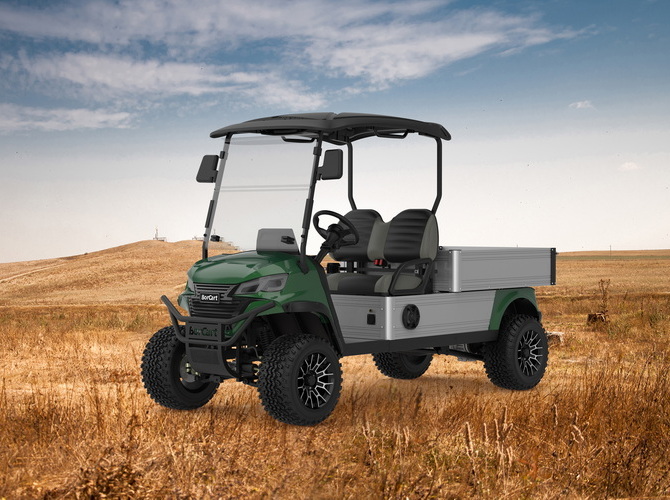
Choosing the right base vehicle is the single most important decision for any farm golf cart setup. While gas‑powered UTVs can handle heavy loads, they are often loud, higher maintenance, and over‑specified for light‑to‑medium farm tasks. [trailbuggy]
A modern electric farm golf cart offers several advantages:
- Lower operating cost due to reduced fuel and oil consumption. [cunninghamgolfcar]
- Very low noise, which is critical around livestock and in residential farm areas. [trailbuggy]
- Strong low‑end torque from electric motors for stop‑and‑go work and short inclines. [morgolfmn]
- Simpler powertrain with fewer moving parts, meaning fewer breakdowns when maintained correctly. [cunninghamgolfcar]
From an OEM manufacturer's perspective, a dedicated farm‑ready platform should combine a reinforced frame, off‑road suspension, and a high‑capacity battery system as the starting point, instead of treating agriculture as an afterthought to a standard golf course cart. [trailbuggy]
When selecting a cart for farm use, consider these priority specifications:
- Payload and towing capacity: Check the rated load for both the rear cargo bed and the tow hitch to match your heaviest typical tasks. [trailbuggy]
- Ground clearance: Farms rarely offer perfectly manicured fairways; a lifted chassis reduces underbody damage and improves access on muddy tracks. [golfcartstuff]
- Motor and controller: For hills or soft ground, a high‑torque motor and programmable controller provide smoother, safer power delivery. [golfcartstuff]
- Battery technology: Lithium batteries, while more expensive upfront, deliver longer range per charge, faster charging, and lower lifetime maintenance compared with traditional lead‑acid packs. [morgolfmn]
For example, carts like the Beast‑style models described in the original article combine a sturdy frame, integrated cargo systems, and a powerful electric system designed specifically for heavier farm use rather than occasional yard work.
Once you have selected the right platform, customization is where a standard golf cart becomes a true farm utility vehicle. In practice, most farm customers end up upgrading three main areas: terrain capability, cargo management, and passenger capacity. [morgolfmn]
The original article correctly highlights lift kits and all‑terrain tires as essential upgrades for farm use, but from an OEM perspective, it is critical to treat these as a system rather than isolated add‑ons. [golfcartstuff]
For a reliable off‑road farm golf cart setup, we usually recommend:
- Moderate lift kit (not extreme) to balance ground clearance with stability on side‑slopes. [golfcartstuff]
- All‑terrain tires with appropriate ply rating for puncture resistance in fields with stones, stalk stubble, or debris. [golfcartstuff]
- Reinforced suspension components, especially leaf springs and shackles, to handle constant loaded operation. [morgolfmn]
Over‑lifting a cart may look impressive, but it can raise the center of gravity and increase rollover risk, especially with heavy loads in the rear bed. Working with an OEM who has tested matched suspension kits for agricultural use significantly reduces this safety risk. [extremekartz]
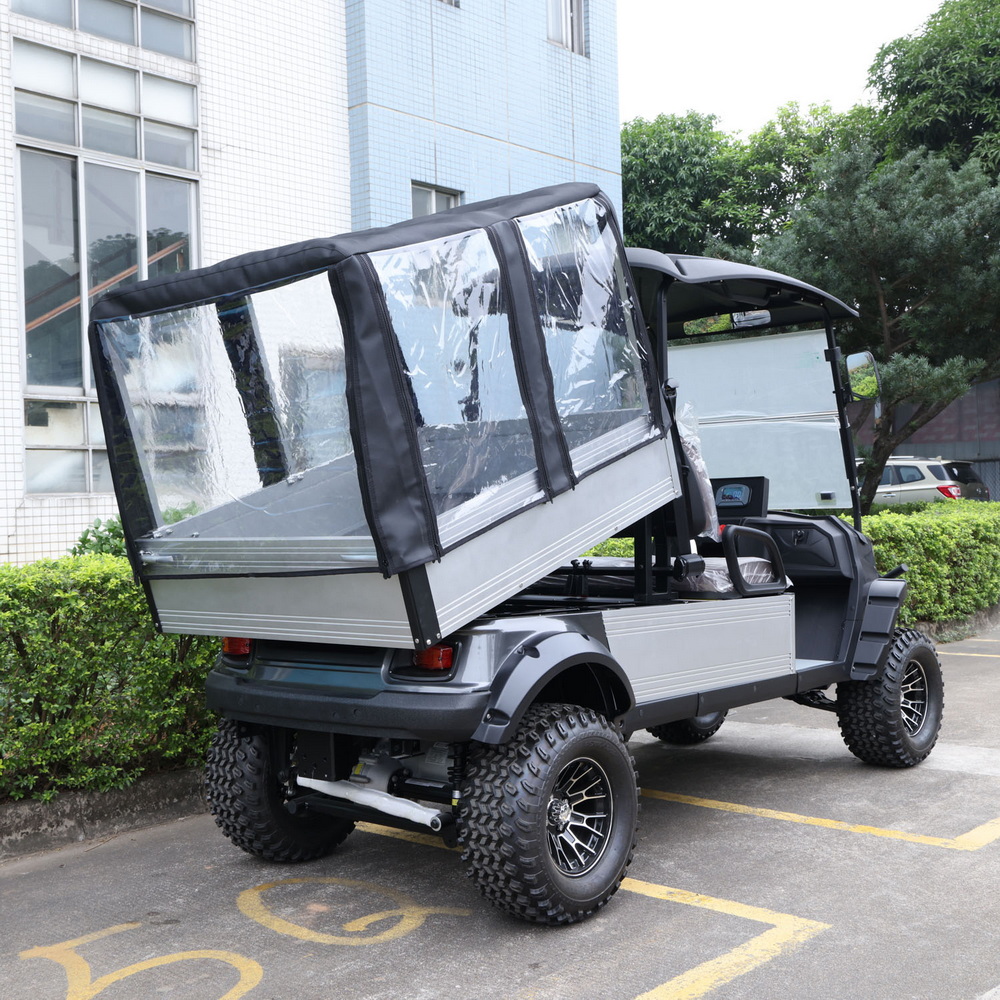
A farm golf cart without smart storage quickly becomes messy and inefficient. The original article mentions aluminum cargo boxes and baskets, which are indeed best‑practice choices for durability and weight management. [trailbuggy]
For professional users, we usually design or specify:
- Rear cargo bed with tailgate, sized for typical feed bags, crates, or small harvest bins. [trailbuggy]
- Front clay basket or tool rack for frequently used hand tools, sprayers, or fencing equipment.
- Roof‑mounted cargo rack for lightweight but bulky items like tarps or plastic trays. [morgolfmn]
Using aluminum instead of steel wherever possible keeps weight down, improves corrosion resistance in humid or coastal climates, and supports longer service life for OEM parts. [cunninghamgolfcar]
Many farms need to move small groups of workers between fields, barns, and storage areas. A stretch farm golf cart with an extra row of seats can significantly increase labor efficiency, especially during harvest or seasonal projects. [trailbuggy]
Key points when adding extra seating:
- Ensure that seating and grab rails meet relevant safety standards in your target market. [extremekartz]
- Use high‑back seats with armrests for better stability over rough ground.
- Consider modular seat‑and‑cargo combos, so rear seats can fold into a flat bed when not needed for passengers. [morgolfmn]
For OEM buyers, modular seating systems are a strong selling point because dealers can easily configure units for "people mode" or "cargo mode" with minimal workshop time. [nativerank]
The original article rightly recommends adding a winch to your farm golf cart if you expect "sticky" situations. Based on field feedback from ranch and orchard users, a properly sized winch and hitch system can turn a cart into a rescue tool, a light‑duty recovery vehicle, and even a mobile anchor for fencing or small construction tasks. [facebook]
When sizing a winch, we generally follow this formula:
- Calculate the gross weight of your loaded cart.
- Multiply by 1.5 to 2.0 to define your minimum rated line pull. [extremekartz]
For example, if your loaded farm golf cart weighs 450 kg, a winch rated between 675 kg and 900 kg is a realistic range for safe recovery. Also look for: [extremekartz]
- Weather‑sealed construction to handle mud, dust, and occasional water exposure. [extremekartz]
- Simple, glove‑friendly controls mounted within easy reach of the driver seat. [extremekartz]
- Pre‑engineered winch pads or mounting plates supplied by the OEM to avoid frame damage or unsafe DIY modifications. [cunninghamgolfcar]
Some advanced OEM farm models now integrate the winch pad into the front brush guard or XO cage, reducing installation time and improving structural integrity. [extremekartz]
Hauling is one of the main reasons farmers choose a golf cart for farm use. At the OEM level, we design for: [trailbuggy]
- High payload rear beds with reinforced sub‑frames.
- Standard tow hitches compatible with small trailers or sprayer carts. [trailbuggy]
- Durable off‑road tires to maintain traction even with a loaded trailer on wet or uneven ground. [golfcartstuff]
The crucial point is to never exceed the manufacturer's payload and tow ratings; this ensures you maintain braking performance, steering control, and reasonable battery consumption. [morgolfmn]
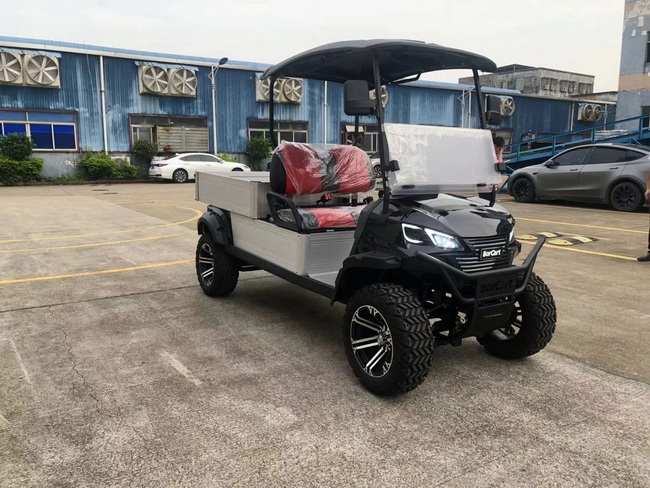
Farm work is not like a short golf round; carts may run all day between long rows, barns, and storage sheds. That is why battery strategy and proactive maintenance are central to a great farm golf cart experience. [morgolfmn]
The original article notes that lithium batteries deliver extended range, which aligns with broader industry data on electric vehicle duty cycles. For farm use, the main advantages of lithium include: [golfcartstuff]
- Longer usable range per charge, especially under load. [golfcartstuff]
- Faster charging, supporting opportunity charging during lunch or breaks. [golfcartstuff]
- Lower maintenance, as they do not require regular water top‑ups or equalization cycles. [cunninghamgolfcar]
Although lead‑acid remains a lower‑cost option, many commercial farms now calculate total cost of ownership over a 5–7 year period and find that lithium packs, combined with OEM‑grade chargers, deliver a better overall return. [cunninghamgolfcar]
To keep a farm golf cart running reliably season after season, we recommend a simple routine:
1. Daily or weekly checks
- Inspect tire pressure and tread wear, especially after hauling heavy loads. [morgolfmn]
- Check lights, horn, and safety equipment before early‑morning or night work.
2. Monthly checks
- For lead‑acid packs, check water levels and clean any corrosion on terminals. [cunninghamgolfcar]
- Inspect suspension, steering joints, and brake components for wear. [morgolfmn]
3. Seasonal service
- Test battery capacity and replace weak cells or packs before the busiest season. [golfcartstuff]
- Review all bolts on racks, winch mounts, and hitch points for tightness. [trailbuggy]
Storing the cart in a dry, sheltered area when not in use further extends both mechanical and cosmetic life, especially in regions with heavy rain or snow. [morgolfmn]
From a professional buyer's perspective, one of the most strategic decisions is how to balance OEM golf cart parts with aftermarket upgrades for farm applications. In critical areas such as braking, steering, structural components, and battery systems, OEM parts generally offer better compatibility, documented testing, and warranty support. [extremekartz]
On the other hand, reputable aftermarket brands may provide niche accessories like specialty racks, custom lighting, or region‑specific implements that OEMs do not cover. The best strategy for dealers and farm operators is to use OEM components for safety‑critical systems, and carefully selected aftermarket parts for non‑critical comfort and styling upgrades. [cunninghamgolfcar]
Below is a simplified comparison between a factory OEM farm golf cart package and a DIY‑upgraded standard cart:
| Configuration type | Base vehicle | Key features | Typical use case |
|---|---|---|---|
| OEM farm package | Factory‑engineered farm cart (trailbuggy) | Reinforced frame, tested lift kit, matched tires, integrated winch mount, OEM cargo system (cunninghamgolfcar) | Commercial farms, overseas dealers needing warranty and consistency |
| DIY upgraded cart | Standard golf course cart (morgolfmn) | Aftermarket lift, mixed‑brand tires, generic cargo box, bolt‑on winch (golfcartstuff) | Hobby farms, low‑intensity use where budget is primary constraint |
This table reflects feedback we regularly hear from international partners: serious agricultural users usually prefer OEM packages because they reduce installation errors, warranty disputes, and unexpected downtime during peak season. [cunninghamgolfcar]
As farm golf carts become more powerful and carry more load, safety and regulatory compliance are gaining attention in many markets. Key areas to consider include: [facebook]
- Rollover protection: XO‑style cages and overhead guard systems help protect occupants in the event of a rollover on uneven terrain. [trailbuggy]
- Lighting and visibility: LED headlights, taillights, and reflective markings support dawn, dusk, and night operation, as well as transit on farm roads. [trailbuggy]
- Speed control: Many OEMs now offer programmable speed limits or geofencing to reduce risk in specific areas, especially where pedestrians or livestock are present. [nativerank]
For international OEM buyers, documenting conformity with local standards (for example, lighting, braking, or ROPS structures) not only protects end users but also strengthens brand trust and reduces liability risk. [nativerank]
Feedback from farm and ranch users consistently shows that a well‑designed farm golf cart can replace or support heavier machinery in more tasks than initially expected. Common use cases include: [facebook]
- Daily feed runs for livestock, especially in poultry, goat, and horse operations. [trailbuggy]
- Transporting tools and small hardware between fields, greenhouses, and maintenance sheds. [trailbuggy]
- Supporting irrigation checks, fence line inspections, and spot spraying with portable equipment. [facebook]
Online communities dedicated to modified golf carts often share images of carts equipped with custom racks, winches, and lighting for exactly these purposes, confirming a strong and growing demand for robust farm‑ready configurations. [facebook]
As a China‑based OEM manufacturer of electric vehicles and auto parts, a company like BorCart can support overseas brands, wholesalers, and assemblers in building their own private‑label farm golf cart lines. In practice, that value often includes: [nativerank]
- Customizable chassis and body designs optimized for farm or ranch work rather than general recreation. [trailbuggy]
- Engineered parts packages (lift kits, baskets, cargo boxes, winch pads) that have been tested together for durability and safety. [cunninghamgolfcar]
- Flexible OEM branding options, from logos and colors to market‑specific accessories for North America, Europe, or other regions. [nativerank]
By combining manufacturing expertise with feedback from real farm users, OEM partners can shorten time‑to‑market for new farm golf cart models while keeping quality and compliance under control. [cunninghamgolfcar]
To summarize the practical steps for building a professional farm golf cart:
1. Define your primary use cases
- People transport, hauling, towing, or a mix of all three. [trailbuggy]
2. Select an appropriate electric base cart
- Confirm payload, towing capacity, ground clearance, and motor torque. [golfcartstuff]
3. Add off‑road capability
- Install a tested lift kit, all‑terrain tires, and reinforced suspension components. [golfcartstuff]
4. Upgrade cargo and storage
- Choose rear cargo beds, front baskets, and roof racks sized to your daily loads. [trailbuggy]
5. Install winch and hitch systems
- Use OEM‑approved mounts and size the winch correctly for your loaded vehicle weight. [extremekartz]
6. Plan for battery life and maintenance
- Consider lithium upgrades and establish regular inspection intervals. [cunninghamgolfcar]
Working through this checklist with an experienced OEM partner helps ensure that your final farm golf cart is not only versatile but also safe, reliable, and profitable to operate. [cunninghamgolfcar]
If you are a farm equipment brand, distributor, or dealer looking to expand your product line, partnering with an experienced golf cart OEM manufacturer is the fastest way to launch a high‑performance farm golf cart that stands out in your market. By co‑developing a platform that integrates off‑road capability, smart cargo solutions, and proven battery technology, you can deliver a product that genuinely helps farmers work faster, safer, and more sustainably. [nativerank]
Reach out to our engineering and sales team to discuss your ideal farm golf cart configuration, including branding, parts packages, compliance requirements, and annual volume targets, so we can turn your concept into a reliable, scalable product line. [nativerank]
Q1: Are electric farm golf carts powerful enough for hilly farms?
A: Yes, when specified with high‑torque motors, appropriate controllers, and matched gearing, electric farm golf carts deliver strong low‑speed pulling power suitable for most moderate hills and loaded operation. [golfcartstuff]
Q2: How far can a lithium farm golf cart typically run on one charge?
A: Range depends on terrain, load, and driving style, but lithium‑equipped carts used on farms commonly achieve significantly longer daily range than comparable lead‑acid carts under similar conditions. [golfcartstuff]
Q3: Can I retrofit a winch and cargo bed onto a standard golf cart?
A: Retrofitting is possible, but for safety and durability it is best to use OEM‑approved winch mounts, cargo systems, and suspension upgrades, or choose a factory farm package already engineered for these loads. [extremekartz]
Q4: Are OEM farm golf carts more cost‑effective than UTVs for small farms?
A: For light‑to‑medium chores such as hauling feed, tools, and small trailers, a properly configured electric farm golf cart often provides lower purchase cost, lower operating cost, and less noise than a gas UTV. [cunninghamgolfcar]
Q5: How can dealers differentiate their farm golf cart offerings in a competitive market?
A: Dealers can differentiate by partnering with OEMs to create farm‑specific configurations, offering tested parts packages, focusing on battery quality, and providing usage‑based packages for livestock, orchard, or greenhouse operations. [nativerank]
- GOLFCARTS.COM – "3 Tips to Make a Great Farm Golf Cart" (accessed 2026) – base content and product examples for farm‑ready carts.
- Trail Buggy – "Farm Golf Carts: Everything You Should Know" – use cases and customization options for farm golf carts. [trailbuggy]
- GolfCartStuff – "Top golf cart modifications to boost style and performance" – modification trends and lift/tire recommendations. [golfcartstuff]
- Cunningham Golf Car – "The Benefits of Buying OEM Parts for Golf Carts" – advantages of OEM parts for reliability and performance. [cunninghamgolfcar]
- ExtremeKartz – "Aftermarket vs OEM Golf Cart Parts Guide" – best practices for choosing and installing golf cart parts. [extremekartz]
- MOR Golf – "Guide to Customized Golf Cart Modifications" – practical advice on step‑by‑step cart customization. [morgolfmn]
- Native Rank – "Golf Cart Dealership Websites" – guidance on integrated SEO strategy for golf cart businesses. [nativerank]
- Fast Hippo Media – "SEO for Golf Cart Dealerships" – content strategy for golf cart‑related search intent. [fasthippomedia]
- Da‑Vinci Digital – "SEO Study: Content and UX Guidelines" – recommendations on headings, structure, and keyword usage. [da-vinci.com]


