


Views: 222 Author: Loretta Publish Time: 2025-12-22 Origin: Site


Content Menu
● Why electric mobility matters on campus
● Environmental benefits: cleaner, quieter campuses
● Financial advantages and total cost of ownership
● Safety and user experience advantages
● Types of in‑campus electric vehicles and their applications
● BEVs vs conventional vehicles on campus
● latest trends in campus electric mobility (2025–2026)
● practical implementation roadmap for campuses
>> Step 1 - Analyse current mobility patterns
>> Step 2 - Define vehicle mix and specifications
>> Step 3 - Plan charging strategy
>> Step 4 - Safety, regulations, and policies
>> Step 5 - Select the right campus EV manufacturer / OEM
● choosing the right battery technology for campus fleets
>> Lead‑acid vs lithium batteries
● Branding, student engagement, and campus image
● Optimised Call to Action (CTA)
● FAQs
>> Q1: Are battery operated campus vehicles powerful enough for hilly campuses?
>> Q2: How far can in‑campus electric vehicles travel on a single charge?
>> Q3: What maintenance do battery operated electric vehicles require?
>> Q4: Can campuses integrate fleet charging with public EV charging stations?
>> Q5: How should a campus choose between different electric campus shuttle bus models?
>> Q6: Are subsidies or incentives available for campus BEV fleets?
Modern campuses are under pressure to cut emissions, reduce noise, control operating costs, and still offer safe, convenient mobility for students, staff, patients, and visitors. Battery-operated electric vehicles (BEVs)—including electric golf carts, shuttles, and utility buggies—have become the most practical, scalable solution for in‑campus transportation.[1][2][3]
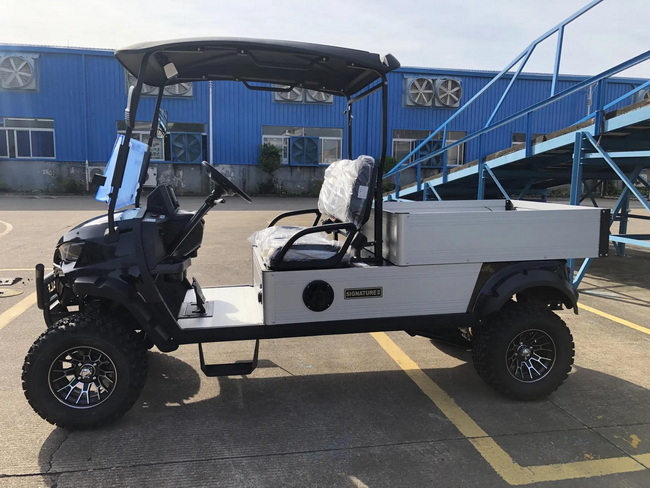
Every large campus—university, school district, hospital, resort, business park, or industrial estate—faces the same mobility challenge: how to move people and goods efficiently without damaging the environment or inflating operating costs.[4][1]
Traditional petrol or diesel vans, minibuses, and auto‑rickshaws bring several problems:
- Rising fuel prices and unpredictable cost fluctuations
- Higher maintenance costs and more frequent breakdowns
- Local air pollution and CO₂ emissions
- Noise that disrupts classes, recovery wards, or hotel guests[5][1]
Battery operated electric vehicles for campus directly address these pain points by delivering zero tailpipe emissions, low running cost, and quiet operation on short‑distance routes.[2][1]
The strongest argument for battery operated electric vehicles on campus is environmental impact.[1][4]
- Zero tailpipe emissions: Electric golf carts and shuttles produce no exhaust fumes, immediately cutting local CO₂ and harmful pollutants around classrooms, dorms, wards, and offices.[3][1]
- Lower lifecycle emissions: When paired with renewable electricity or solar‑assisted charging, BEVs can dramatically reduce lifecycle emissions compared with internal combustion vehicles used for the same trips.[6][7]
- Noise reduction: Electric drivetrains are almost silent, which improves concentration in academic spaces and supports a calm healing or hospitality atmosphere.[6][1]
Many institutions now publish sustainability plans with carbon neutrality targets; in‑campus electric vehicles are one of the most visible ways to demonstrate progress towards these goals.[5][1]
On paper, an electric shuttle or golf cart often costs more than a small petrol or diesel vehicle. However, total cost of ownership (TCO) over 5–7 years is typically much lower for battery operated campus vehicles.[8][4][1]
Key financial benefits:
- Lower running cost
- Electricity per kilometer is usually a fraction of the cost of petrol or diesel.[1][5]
- Night‑time charging can further reduce energy costs where off‑peak tariffs exist.[9][10]
- Reduced maintenance
- Fewer moving parts compared with engines and gearboxes.
- No oil changes, no exhaust systems, fewer filters.[4][1]
- Less downtime and more predictable service intervals.
- Long‑term ROI
- Studies and case experience show that campus BEV fleets recover higher upfront costs through fuel savings and lower maintenance within several years.[8][6]
- Some regions offer subsidies or tax incentives for electric fleets, improving payback periods.[8][5]
For CFOs and facilities managers, this makes a battery operated campus vehicle fleet a long‑term investment rather than a short‑term expense.[11][8]
Safety on mixed‑traffic, pedestrian‑heavy roads is a core reason to switch to in‑campus electric vehicles.[3][1]
Typical BEV campus vehicles offer:
- Controlled top speeds around 20–25 km/h, which is much safer for pedestrian zones than conventional vans or cars.[1][3]
- Better low‑speed torque for smooth starting on inclines without sudden acceleration.[12][4]
- Excellent visibility from elevated seating positions and large windows in shuttles and golf carts.[13][3]
- Options for seat belts, handrails, step lighting, and non‑slip steps to protect passengers, especially seniors and differently abled people.[13][2]
In addition to safety, passenger comfort improves: quiet operation, smoother acceleration, and open or semi‑open body designs for sightseeing and campus tours.[6][1]
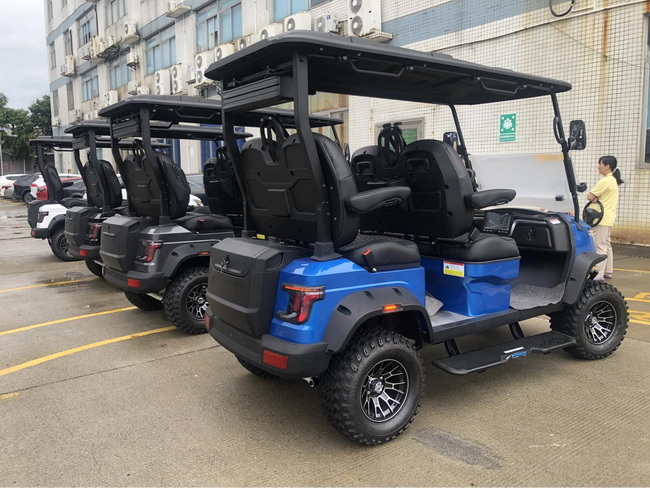
Different campuses need different vehicle configurations. A flexible electric fleet often combines several types of battery operated electric vehicles.[13][4][3]
- 2–4 seater electric golf carts for campuses - staff movement, security patrols, VIP transfers.[13][3]
- 6–14 seater electric shuttle for universities - student transport, dorm–classroom–cafeteria loops.[14][1]
- Cargo and utility buggies - maintenance teams, housekeeping, landscaping, catering, and internal logistics.[4][13]
- Wheelchair‑friendly or medical carts - hospitals and large healthcare campuses for patient transfer.[10][13]
- Multi‑purpose vehicles (MPVs) - configurable seating and cargo zones for events, sports facilities, or back‑of‑house operations.[2][13]
Battery operated electric vehicles vs conventional vehicles for campuses can be summarised clearly as follows.[4][1]
Factor | Battery operated electric vehicles (BEVs) | Conventional fuel vehicles |
Environmental impact | Zero tailpipe emissions; supports green campus initiatives | CO₂ and pollutant emissions; worsens local air quality |
Noise levels | Very quiet; maintains a calm learning and healing environment | Engine noise disrupts classrooms, offices, and guest areas |
Operating cost | Low per-km energy cost; stable electricity pricing | High and volatile fuel costs |
Maintenance | Fewer moving parts; lower servicing cost and downtime | Regular engine service, oil changes, higher mechanical wear |
Safety on campus | Speed-limited vehicles optimised for pedestrian zones | Higher speeds and longer stopping distances increase risk |
Flexibility and design | Multiple body types: shuttles, golf carts, cargo, ambulatory | Fewer campus-oriented designs; often oversized |
Image and branding | Demonstrates innovation and sustainability leadership | Viewed as outdated and less eco-conscious |
Recent data and market observations show that campuses are not only adding BEVs but strategically planning complete electric mobility ecosystems.[9][2]
Key trends:
- Integrated EV charging infrastructure: Universities and business parks are installing smart charging networks to support fleet vehicles and personal EVs, turning the campus into a regional charging hub.[15][10][9]
- Growth of electric golf carts as low‑speed EVs (LSEVs): Electric golf carts now serve as multi‑utility vehicles for tourism, real estate, campuses, and industrial parks, not just golf courses.[12][2][6]
- Data‑driven fleet management: Telematics and fleet software track vehicle utilisation, energy consumption, and maintenance, helping optimise fleet size and routes.[16][2]
These trends reinforce that campuses that move early on electric mobility gain operational experience, stronger brand positioning, and better access to future funding.[9][2]
Beyond “why”, decision‑makers need a clear view of how to deploy battery operated campus vehicles step by step.[11][4]
- Identify routes: student shuttles, staff commute loops, service corridors, parking–building connections.
- Measure trip frequency, peak times, passenger loads, and distances.[16][11]
- Document existing fleet size, ages, fuel consumption, and annual maintenance cost.
- Decide how many seats are needed per route (4, 6, 8, 11, 14+).
- Choose between open, semi‑closed, or fully enclosed bodies depending on weather.[3][13]
- Specify luggage racks, wheelchair ramps, stretcher mounts, or cargo beds for specialised use cases.[13][4]
- Assess daily driving range required and select appropriate battery capacity.[11][4]
- Decide between centralised depot charging vs distributed chargers near key buildings.
- Consider AC slow chargers for overnight fleet charging and a smaller number of faster chargers for quick turn‑around.[10][9]
- Set clear speed limits, designated EV routes, and shared zones with pedestrians.
- Provide driver training focused on low‑speed maneuvering and passenger safety.
- Ensure compliance with local regulations on low‑speed electric vehicles (where applicable).[10][11]
- Evaluate manufacturers on reliability, parts availability, customisation capability, and export experience where relevant.[2][4]
- For international campuses, long‑term support and easy access to spare parts are critical.
Battery choice directly affects range, charging time, maintenance, safety, and TCO.[7][6]
- Flooded lead‑acid batteries
- Lower initial cost.
- Require regular watering and maintenance.
- Heavier and less energy‑dense, which can limit range.[7][4]
- Lithium‑ion batteries
- Higher upfront price but longer cycle life and better energy efficiency.
- Faster charging and deeper discharge capability.
- Lighter weight, improving vehicle performance and payload.[7][6]
For most high‑utilisation campuses, lithium‑ion batteries increasingly offer better lifecycle value and easier daily operations, especially when vehicles run multiple shifts.[6][7]
Battery operated electric vehicles are not only transport tools; they double as moving billboards for the institution's brand and sustainability story.[8][6]
- Custom colours, logos, and mascots can turn shuttles into recognisable campus icons.
- On‑vehicle messaging can communicate sustainability milestones or campaign slogans.
- Student ambassadors and guided tours using electric shuttles can reinforce a modern, eco‑friendly image to prospective students, parents, and corporate partners.[2][8]
This combination of function and branding supports recruitment, alumni relations, and public affairs objectives.
Ready to electrify your campus fleet?
If your university, hospital, resort, or business park is planning to replace noisy, high‑cost fuel vehicles, now is the ideal time to evaluate battery operated electric vehicles for campus use. Work with an experienced campus electric vehicle manufacturer to design the right mix of electric golf carts, shuttles, and utility vehicles, specify the best battery technology, and plan charging infrastructure that fits your operations and budget.[2][1]
Request a Campus EV Fleet Proposal right now!

Yes. Modern electric golf carts for campuses and shuttles are designed with high‑torque motors and suitable gear ratios, so they can handle moderate slopes when correctly specified for passenger load and route profile.[12][3]
Range depends on battery capacity, passenger load, and terrain, but many campus‑focused electric golf carts and shuttles comfortably cover typical daily routes on one overnight charge, especially with lithium‑ion batteries.[4][3]
BEVs need periodic checks on tires, brakes, suspension, electrical wiring, and batteries; with lithium‑ion packs, maintenance is usually limited to inspection rather than regular fluid servicing, which reduces downtime.[7][1]
Yes. Many universities and business parks combine fleet depots for campus vehicles with public or semi‑public charging for staff and visitors, generating additional revenue and improving sustainability visibility.[15][9][10]
Decision‑makers should evaluate passenger capacity, accessibility features (ramps, low floors), battery type, range requirements, after‑sales support, and the track record of the campus electric vehicle manufacturer in similar projects.[14][2][4]
In many countries, government schemes support electric fleet adoption through grants, tax benefits, or discounted financing, especially when vehicles are used by educational or public institutions.[5][11][8]
[1](https://www.rootsev.com/blog/why-should-campuses-switch-to-battery-operated-electric-vehicles/)
[2](https://www.rootsev.com/blog/the-rising-demand-for-in-campus-golf-cart-manufacturers-2026-trends/)
[3](https://trielectric.in/electric-golf-cart-college-campuses.php)
[4](https://www.rootsev.com/blog/electric-golf-carts-for-campus-transportation-benefits-and-implementation/)
[5](https://cyberswitching.com/4-reasons-ev-charging-stations-on-college-campuses-makes-sense/)
[6](https://www.meekocars.com/knowledge/0-emissions-100-fun-personal-golf-cart-s-eco-impact-in-2025-revealed)
[7](https://www.epa.gov/greenvehicles/electric-vehicle-myths)
[8](https://www.rootsev.com/blog/7-benefits-of-using-an-in-campus-electric-vehicle/)
[9](https://btcpower.com/blog/ev-charging-on-campus-a-growing-need-for-modern-universities/)
[10](https://blinkcharging.com/blog/how-ev-charging-benefits-universities-and-communities)
[11](https://afdc.energy.gov/files/u/publication/wpc_charging_university_campuses.pdf)
[12](https://sutlejautomotives.com/blog/Indias-2025-Electric-Golf-Cart-Guide.php)
[13](https://trielectric.in/types-of-in-campus-electric-vehicles-and-its-uses.php)
[14](https://trielectric.in/in-campus-electric-mini-buses-india.php)
[15](https://bluewhaleev.com/ev-charging-stations-for-universities-supporting-campus-sustainability-goals/)
[16](https://www1.appa.org/FacilitiesManager/issues/facilities-manager/march-april-2022/evs-on-campus-are-you-prepared-for-electric-vehicles-and-a-zero-emission-fleet/)
[17](https://www.sciencedirect.com/science/article/abs/pii/S2214629624002160)
[18](https://www.reddit.com/r/electricvehicles/comments/v8ran7/the_contradictions_of_battery_operated_vehicles/)
[19](https://www.reddit.com/r/changemyview/comments/17q0f3d/cmv_the_focus_on_battery_electric_vehicles_as_a/)
[20](https://www.reddit.com/r/gatech/comments/zg6cjs/electrify_georgia_techs_fleet_vehicles/)


