


Views: 222 Author: Leah Publish Time: 2026-01-31 Origin: Site


Content Menu
● History of Bad Boy Buggies Golf Buggy Vehicles
● From Independent Brand to Textron Specialized Vehicles
● What Kind of Golf Buggy Is a Bad Boy Vehicle?
● How Textron Builds Bad Boy–Style Vehicles Today
● Global Demand for Golf Buggy and Utility Vehicles
● BorCart: A Professional OEM for Golf Buggy Manufacturing
● What a BorCart‑Built Golf Buggy Can Offer
● Why Overseas Brands Choose Chinese OEM Golf Buggy Partners
● How a Brand Can Launch Its Own Bad Boy–Style Golf Buggy Line
● Comparison: Bad Boy Buggies / Textron vs. BorCart OEM Golf Buggy Solutions
● FAQ About Bad Boy Buggies and Golf Buggy OEM Manufacturing
>> 1. Who originally made Bad Boy Buggies golf buggy vehicles?
>> 2. Who owns and builds Bad Boy–style vehicles now?
>> 3. Are Bad Boy Buggies considered American‑made golf buggy vehicles?
>> 4. Can overseas brands create their own Bad Boy‑style golf buggy line?
>> 5. What types of OEM golf buggy products can BorCart supply?
Bad Boy Buggies golf buggy vehicles were originally created and built in the United States by Bad Boy Enterprises in Natchez, Mississippi, and later manufactured under Textron Specialized Vehicles in Augusta, Georgia. Today, the brand has evolved into Textron Off Road–style utility and hunting vehicles, while companies like BorCart in China provide OEM golf buggy manufacturing for overseas brands.

Bad Boy Buggies began in 2003, when Joe Palermo and Bubba Kaiser set out to build a new type of electric all‑terrain vehicle that could move almost silently through hunting areas. They wanted a vehicle that was powerful enough to handle rough ground, but quiet and low‑emission so that it would not disturb wildlife during hunts. The result was an electric, low‑emission buggy with enough power to carry several passengers and gear into remote locations.
At first, they rebuilt existing golf cars, fitting them with independent suspension and high‑torque drivetrains to create a new off‑road golf buggy capable of four‑wheel‑drive performance. Once they saw demand growing, they began to design their own chassis and build complete vehicles from the ground up in Natchez, Mississippi. This step marked the transformation from modified golf car to a purpose‑built hunting and off‑road golf buggy platform.
Word of mouth among hunters and outdoor enthusiasts helped the brand grow quickly in those early years. The vehicles delivered something that traditional golf buggy models could not: serious off‑road ability combined with quiet electric operation and a compact footprint. As demand increased, Bad Boy Enterprises expanded production, invested in lean manufacturing methods, and pushed daily output from just a few units up to many times that volume.
By carving out this niche, Bad Boy Buggies effectively turned the golf buggy into a new type of recreational and work vehicle. Instead of staying on manicured fairways, the buggy moved into forests, farms, and large private properties, setting the tone for many later hunting‑style and utility golf buggy models across the industry.
As the brand grew, larger players in the light‑transport and powersports markets took notice. Textron, a major industrial group that already owned E‑Z‑GO and other mobility brands, saw an opportunity to strengthen its position in electric and off‑road vehicles. In 2010, a deal was completed in which E‑Z‑GO, based in Augusta, Georgia, acquired Bad Boy Buggies.
Initially, Textron kept the Natchez operation running while it evaluated how best to integrate the company into its broader vehicle business. Over time, the engineering and manufacturing strength of Textron Specialized Vehicles allowed the brand to benefit from more advanced facilities, improved design resources, and a more extensive dealer network. A large manufacturing complex in Augusta became the heart of production, and the Bad Boy Buggies line was gradually moved into this environment.
Textron later rebranded the off‑road product line from “Bad Boy Buggies” to “Bad Boy Off Road,” and eventually consolidated naming under the Textron Off Road identity for many models. The aim was to signal modern engineering, broader product coverage, and a stronger connection with Textron's heritage in high‑performance vehicles.
Although the naming has changed, the core idea remains similar: an off‑road machine that combines utility, durability, and a riding experience that began with the original electric hunting buggy. In this sense, the modern vehicles still reflect the DNA of the very first Bad Boy Buggies golf buggy platforms that rolled out of Mississippi.
The original Bad Boy vehicle can be thought of as a hybrid between a golf buggy and a full off‑road utility machine. It started life as a golf‑car‑based vehicle, but heavy modifications quickly pushed it into a different category:
- Dual‑motor electric drive with four‑wheel traction instead of simple rear‑wheel drive.
- Lifting kits, all‑terrain tires, and reinforced frames to handle ruts, mud, and hills.
- Bench seating for multiple passengers and rear cargo areas for equipment.
- Quiet electric operation, ideal for hunting, nature tours, and low‑noise environments.
Because of these features, many owners and dealers still call such units a “golf buggy,” even though they are used far beyond the golf course. They work on ranches, in forests, on large estates, and anywhere a compact but capable vehicle is needed. This is why the term “Bad Boy Buggies golf buggy” still appears frequently when people look for tough, lifted buggies or hunting carts.
Over time, Textron's line‑up expanded to include not only electric buggies but also gas‑powered side‑by‑side vehicles with higher speeds and larger cargo capacity. However, the concept of a rugged golf buggy remains important, because many customers still want a vehicle that feels familiar in layout to a golf cart but offers far more performance and flexibility.
Under Textron Specialized Vehicles, manufacturing takes place within a structured, large‑scale industrial environment. Textron designs, tests, and builds a range of vehicles, from classical golf cars to utility side‑by‑sides, and the Bad Boy‑inspired models are part of this portfolio. That means:
- Engineering teams work on chassis strength, braking systems, and suspension tuned for off‑road use.
- Production lines follow automotive‑style quality control, with inspections at every stage.
- Safety and compliance with U.S. regulations are built into the design and testing process.
- Dealers across North America provide sales, service, and replacement parts.
Textron also manages recalls and safety campaigns where necessary, as shown by past recall programs related to some Bad Boy and Bad Boy Off Road vehicles. This shows how an off‑road golf buggy line, once made by a small team in a single town, has grown into part of a global industrial operation.
For buyers in the U.S. who want an American‑made off‑road golf buggy, this structure is attractive. They can purchase through local dealers, rely on established service networks, and choose from a wide range of configurations that build on the legacy of the original Bad Boy Buggies concept.
While the Bad Boy story is rooted in the United States, global demand for golf buggy and low‑speed utility vehicles has grown sharply. Today, these vehicles are used in:
- Golf courses and country clubs.
- Resorts and hotels that transport guests and luggage.
- Large factories and logistics parks.
- Tourist attractions and sightseeing tours.
- Gated communities and campuses.
In many of these markets, buyers are not focused on a specific U.S. brand name. Instead, they want reliable, comfortable, and attractive golf buggy solutions that carry their own logo or match their local regulations and design preferences. This is where OEM manufacturing plays a crucial role, especially in regions far from North America.
China has become a major hub for electric golf buggy and low‑speed vehicle production. With a mature supply chain for motors, controllers, batteries, and steel fabrication, Chinese factories can produce large volumes of golf buggy and utility vehicles at competitive prices. Many Western brands and distributors work with these factories on an OEM or ODM basis to create their own ranges.
BorCart is an example of this new generation of specialized OEM manufacturers. Founded in 2000 and located in Guangzhou, China, BorCart focuses on the development and production of electric vehicles and automotive components, with a strong emphasis on golf carts, sightseeing buses, low‑speed vehicles, hunting vehicles, and multi‑purpose utility vehicles.
The company operates large workshops with multiple production lines, capable of delivering significant quantities of electric vehicles each day. Within these facilities, BorCart manufactures:
- Standard electric golf buggy models suitable for golf courses, private clubs, and residential communities.
- Lifted hunting buggies with higher ground clearance, larger tires, and reinforced frames.
- Sightseeing buses and multi‑row people movers for theme parks, scenic areas, and resorts.
- Low‑speed vehicles tailored for factories, campuses, and last‑mile logistics.
To ensure performance and reliability, BorCart integrates well‑known components such as KDS or Mahle motors, Curtis controllers, and Delta‑Q chargers, along with other parts selected to meet overseas standards. This approach helps overseas distributors obtain a golf buggy that aligns with local expectations for safety, durability, and comfort.
Just as important, BorCart offers strong OEM and ODM services. Rather than only selling finished vehicles under its own name, the company regularly customizes body shapes, seating layouts, dashboards, colors, and accessories to match each client's brand and market positioning.
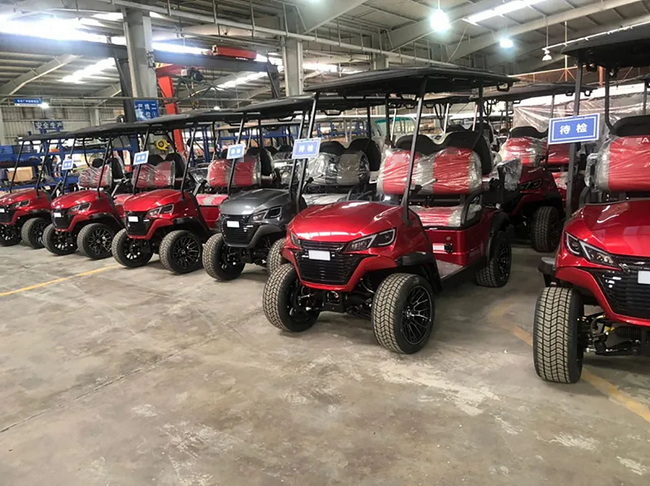
For a foreign brand owner or wholesaler, working with BorCart means gaining access to a flexible golf buggy platform that can be tuned to specific needs. Typical options include:
- Number of seats: from two‑seat and four‑seat golf buggy designs up to large multi‑row shuttles.
- Powertrain choices: different motor ratings, speed limits, and battery options for range and terrain.
- Styling: unique body panels, lighting, roof shapes, and wheel designs to create a recognizable look.
- Functional accessories: cargo boxes, hunting racks, windshields, enclosures, infotainment, and more.
This flexibility makes it possible to create a line of vehicles that delivers a rugged, “Bad Boy‑style” experience while still being unique in appearance and branding. For example, a European outdoor equipment company might commission a lifted, camouflaged golf buggy with extra storage and gun racks, branded fully with its own logos. A resort chain might request quiet, low‑speed golf buggy vehicles with luxury seating and custom colors that match its visual identity.
Because BorCart's production is built around OEM collaboration, changes in specification can often be introduced more quickly than they could in a traditional, brand‑driven factory. That is particularly valuable in fast‑moving markets or where regulations differ from country to country.
Choosing an OEM partner like BorCart for golf buggy production involves several clear advantages:
1. Cost effectiveness
Chinese manufacturing benefits from concentrated supplier networks, experienced labor, and efficient logistics. For golf buggy products, this means competitive unit pricing even at high levels of quality.
2. Speed to market
Because the basic engineering platforms already exist, new customers can reach production quickly. Custom bodywork or branding can be developed while the underlying chassis and electrical systems remain proven.
3. Scalability
An overseas brand can start with relatively small orders to test demand, then scale up to larger volumes without needing to invest in its own factory. BorCart's multiple production lines make it easier to adjust output.
4. Technical support and R&D
Dedicated engineering teams work on new golf buggy models, optional equipment, and improvements in batteries, controllers, and safety systems. This helps partners keep their product lines up‑to‑date.
5. Regulatory adaptation
For markets with specific requirements, such as lighting standards, braking rules, or certification processes, an experienced OEM can adapt the golf buggy design to pass local approvals.
These strengths explain why many brands that admire the performance of Bad Boy‑type vehicles choose not to import and resell the original U.S. machines. Instead, they create their own golf buggy ranges through Chinese OEM partners, tailored for local tastes, budgets, and regulations.
Launching a private‑label golf buggy line that captures the rugged, off‑road spirit of Bad Boy Buggies involves several steps:
1. Define positioning and target users
Decide whether you want a pure off‑road hunting buggy, a mixed‑use work and recreation buggy, or a more classic golf‑course buggy with upgraded looks. Your product brief should clarify terrain, load capacity, speed, and key features.
2. Select an OEM partner
Evaluate OEM factories like BorCart that specialize in electric golf buggy and low‑speed vehicles. Look at factory size, experience with overseas clients, component choices, quality systems, and sample products.
3. Customize design and branding
Work with the OEM's design and engineering team to define the body style, seating layout, color schemes, dashboard design, and branded elements such as logos and decals.
4. Confirm technical specifications
Agree on motor power, battery type and capacity, controller, braking system, suspension, and wheel options. Make sure the golf buggy can handle the local climate and typical driving conditions.
5. Test and certify
Request sample vehicles for testing. Check ride comfort, braking performance, range, charging time, and noise levels. Complete any necessary certification processes in your target country or region.
6. Plan distribution and after‑sales service
Organize a dealer or service network to handle end‑customer support. Work with the OEM to secure spare parts supply and technical documentation.
By following these steps, a brand can bring a distinctive, off‑road‑ready golf buggy series to market without building its own factory or compromising on customization. The final result is a product that delivers the kind of driving experience that made Bad Boy Buggies famous, but under a new name and design.
Although they occupy different segments of the value chain, it is helpful to compare the American brand and a Chinese OEM manufacturer:
- Brand origin and identity
Bad Boy Buggies grew from a small Mississippi company into a nationally recognized hunting vehicle brand, now part of Textron's family of off‑road products. BorCart, by contrast, is positioned as a professional electric vehicle manufacturing base in Guangzhou, built from the start to support multiple brands as an OEM and ODM partner.
- Manufacturing focus
Textron concentrates on building finished vehicles under its own brands, supplying them through dealer networks primarily to end users. BorCart focuses on manufacturing as a service, designing and producing golf buggy and low‑speed EV platforms that other companies can brand and sell.
- Product range
Textron's portfolio includes Bad Boy‑inspired off‑road buggies, side‑by‑sides, utility carts, and other powersports machines. BorCart's range spans standard golf buggy models, sightseeing buses, hunting vehicles, low‑speed industrial vehicles, and multi‑purpose utility carts, with strong emphasis on customization.
- Customer type
Textron sells mainly to end users via dealers and fleet buyers who want established U.S. brands. BorCart sells to overseas brand owners, importers, and wholesalers who wish to build their own product lines on top of BorCart's engineering and production capacity.
- Customization and branding
Textron offers options and accessories but keeps core design and branding under its own control. BorCart can develop unique body designs, special functions, and complete branding packages for each client, from logo placement to custom color palettes.
Despite these differences, both types of companies rely on the same fundamental technologies that define a modern golf buggy: electric drive systems, robust frames, comfortable seating, and safe braking and control systems. The choice between them depends on whether you want to buy a ready‑branded buggy or create your own brand from the ground up.
Bad Boy Buggies started as a small, innovative business in Natchez, Mississippi, when its founders transformed the humble golf buggy into a quiet but tough electric hunting machine. Over time, the brand grew into an important part of the American off‑road vehicle scene, eventually joining Textron Specialized Vehicles and benefiting from large‑scale industrial manufacturing and distribution.
Today, Bad Boy‑style vehicles live on through Textron's off‑road and utility product lines, offering customers in the United States and beyond a wide selection of rugged machines that trace their roots back to the original electric golf buggy concept. At the same time, rising demand for versatile, customizable golf buggy and low‑speed vehicles has opened the door for specialized OEM manufacturers like BorCart in China.
For overseas brands, wholesalers, and even other manufacturers, working with BorCart provides a way to create their own golf buggy series that delivers similar off‑road capability and practical utility, but with completely tailored styling and branding. By combining American inspiration with Chinese OEM expertise, the global golf buggy market now offers more choice, flexibility, and innovation than ever before.
Contact us to get more information!
Bad Boy Buggies were originally made by Bad Boy Enterprises, a four‑wheel‑drive electric vehicle manufacturer based in Natchez, Mississippi. The company grew out of the founders' efforts to modify and then redesign golf cars into powerful, quiet hunting buggies that could navigate rough terrain while carrying multiple passengers and equipment.
Today, the Bad Boy brand and its related off‑road vehicles are part of Textron Specialized Vehicles, the same group that owns E‑Z‑GO. Production is integrated into Textron's larger manufacturing operations, particularly in and around Augusta, Georgia, where the company designs, builds, and supports a wide range of golf buggy, utility, and powersports vehicles under its various brands.
Yes, Bad Boy‑style vehicles produced under Textron Specialized Vehicles are promoted as being developed and built in the United States. The company highlights its Georgia manufacturing base and engineering facilities as key strengths, which appeals to customers who value American‑made products and want a golf buggy or off‑road vehicle tied to U.S. design and production.
Overseas brands cannot use the Bad Boy or Textron trademarks, but they can develop their own golf buggy lines that offer similar off‑road capabilities and styling. By partnering with OEM manufacturers such as BorCart in China, they can specify performance, seating, and design features, then sell the finished vehicles under their own brand names in their home markets.
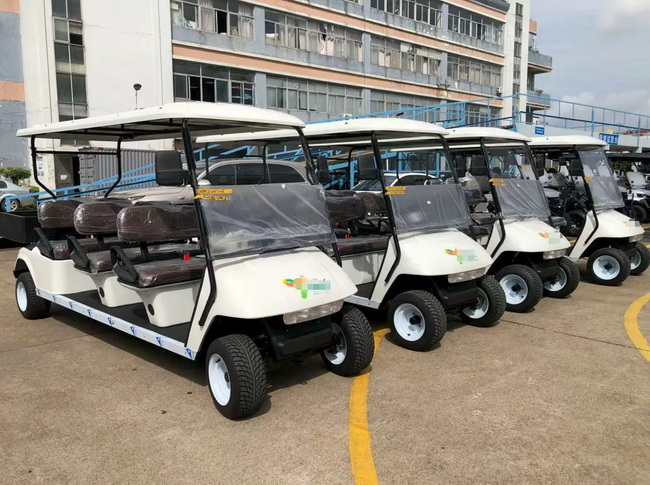
BorCart can supply a wide range of OEM golf buggy products, including standard golf course buggies, lifted hunting vehicles, low‑speed neighborhood and industrial vehicles, and multi‑row sightseeing shuttles. The company tailors body designs, seating layouts, colors, and accessories to each customer's needs, allowing brands to build a complete, distinctive golf buggy lineup without operating their own factory.
1. https://www.sos.ms.gov/images/spotlight/jul09/jul09.txt
2. https://picayuneitem.com/2010/11/bad-boy-buggies-sold-to-ga-company/
3. https://www.gilleystire.com/Services/Bad-Boy-Buggies
4. https://mma-web.org/News/bad-boy-enterprises
5. https://www.cpsc.gov/Recalls/2017/Textron-Specialized-Vehicles-Recalls-Bad-Boy-Off-Road-Utility-Vehicles
6. https://www.altenergymag.com/articles/07.08.01/badboys/contents.html
7. https://atvillustrated.com/work-hard-play-harder-new-textron-road-havoc-sidebyside/
8. https://www.utvplanet.ca/2017-bad-boy-off-road-stampede-xtr
9. https://borcart.en.made-in-china.com
10. https://www.borcart.com
11. https://www.borcart.com/top-10-electric-vehicles-manufacturers-in-china.html


